Accession No
3702
Brief Description
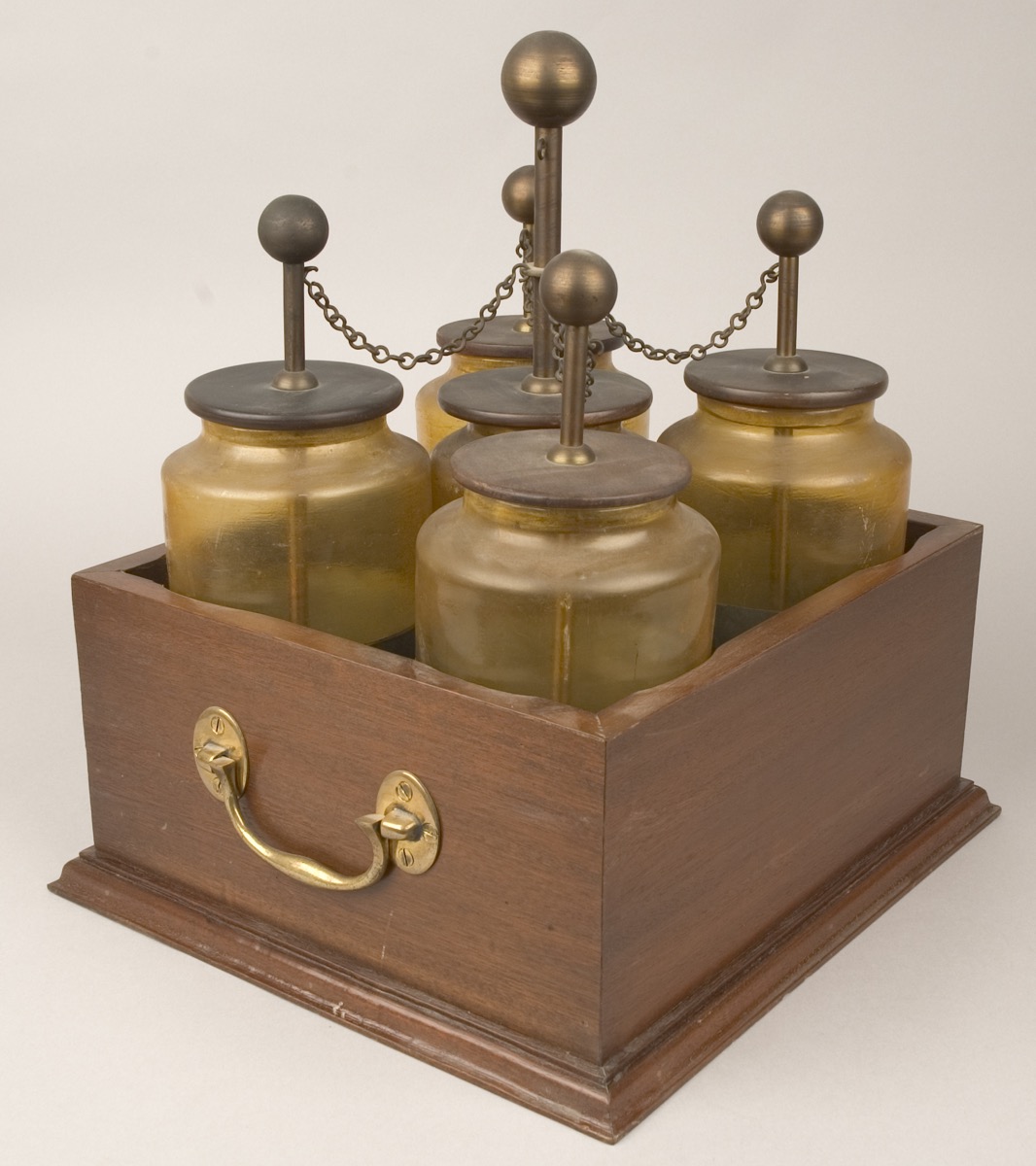
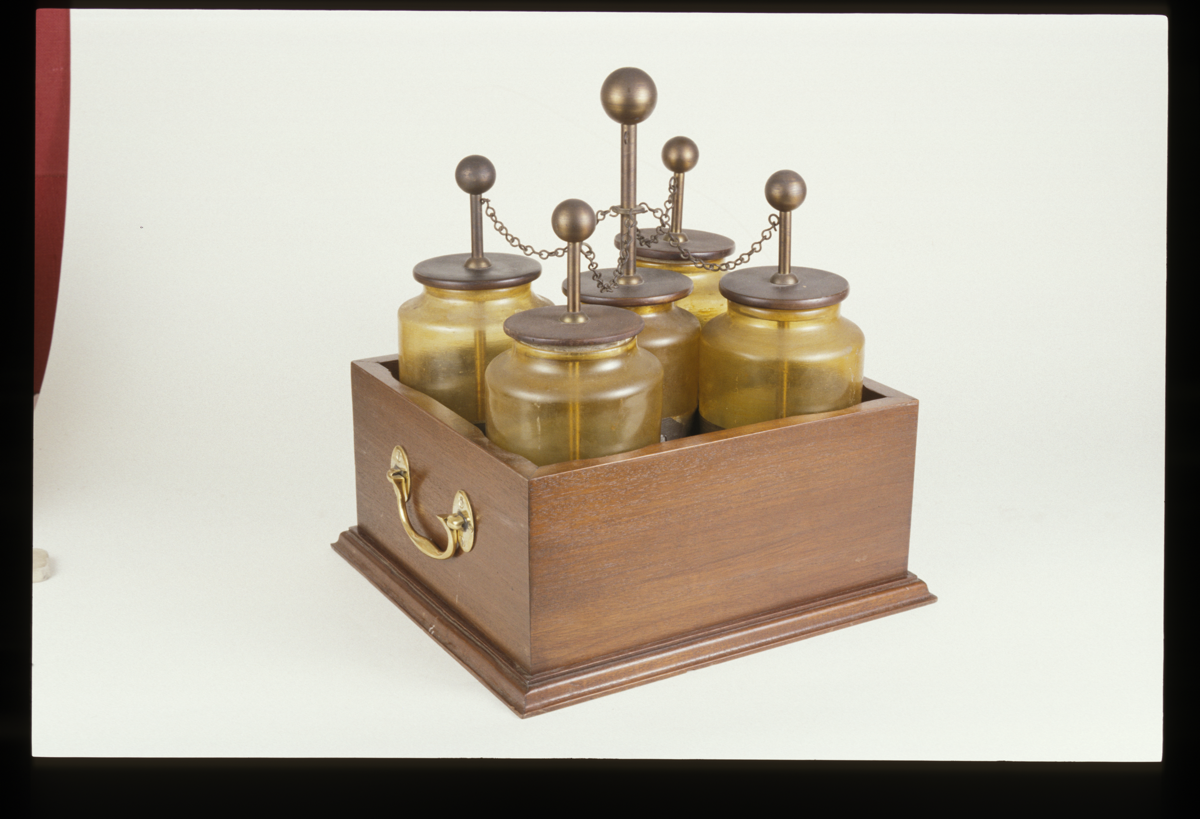
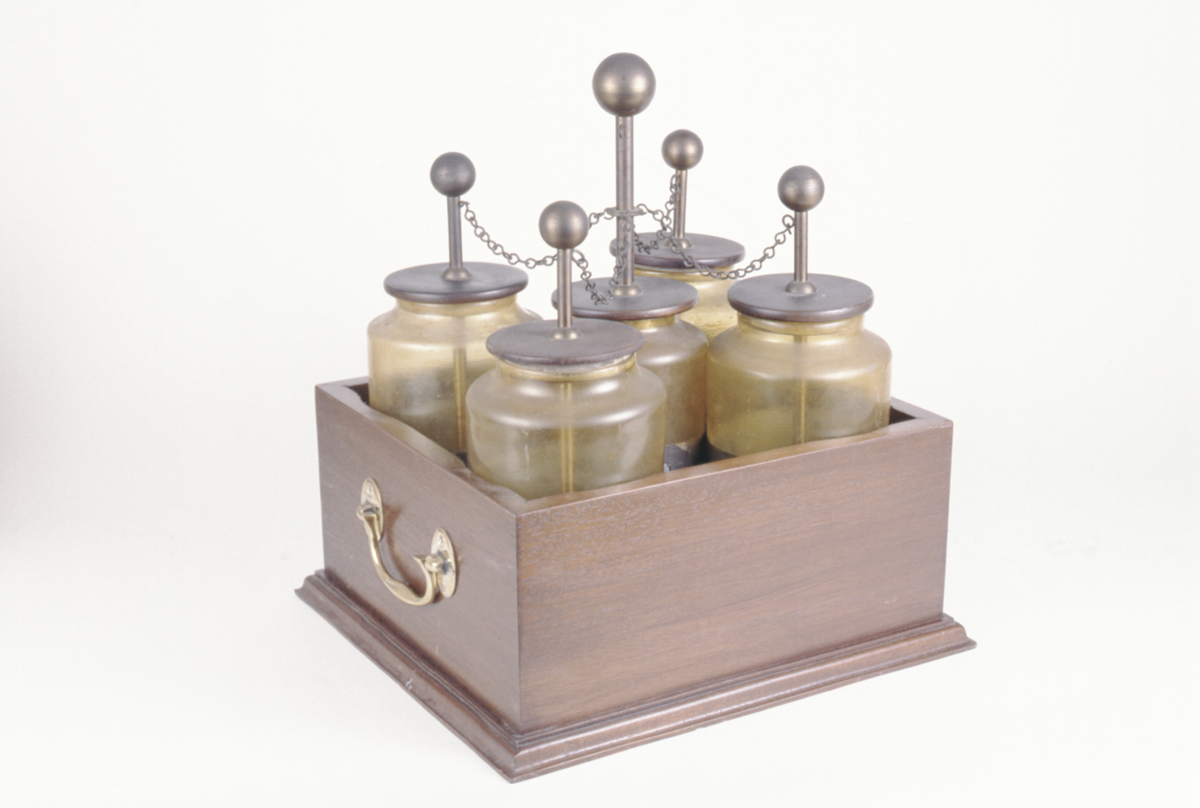
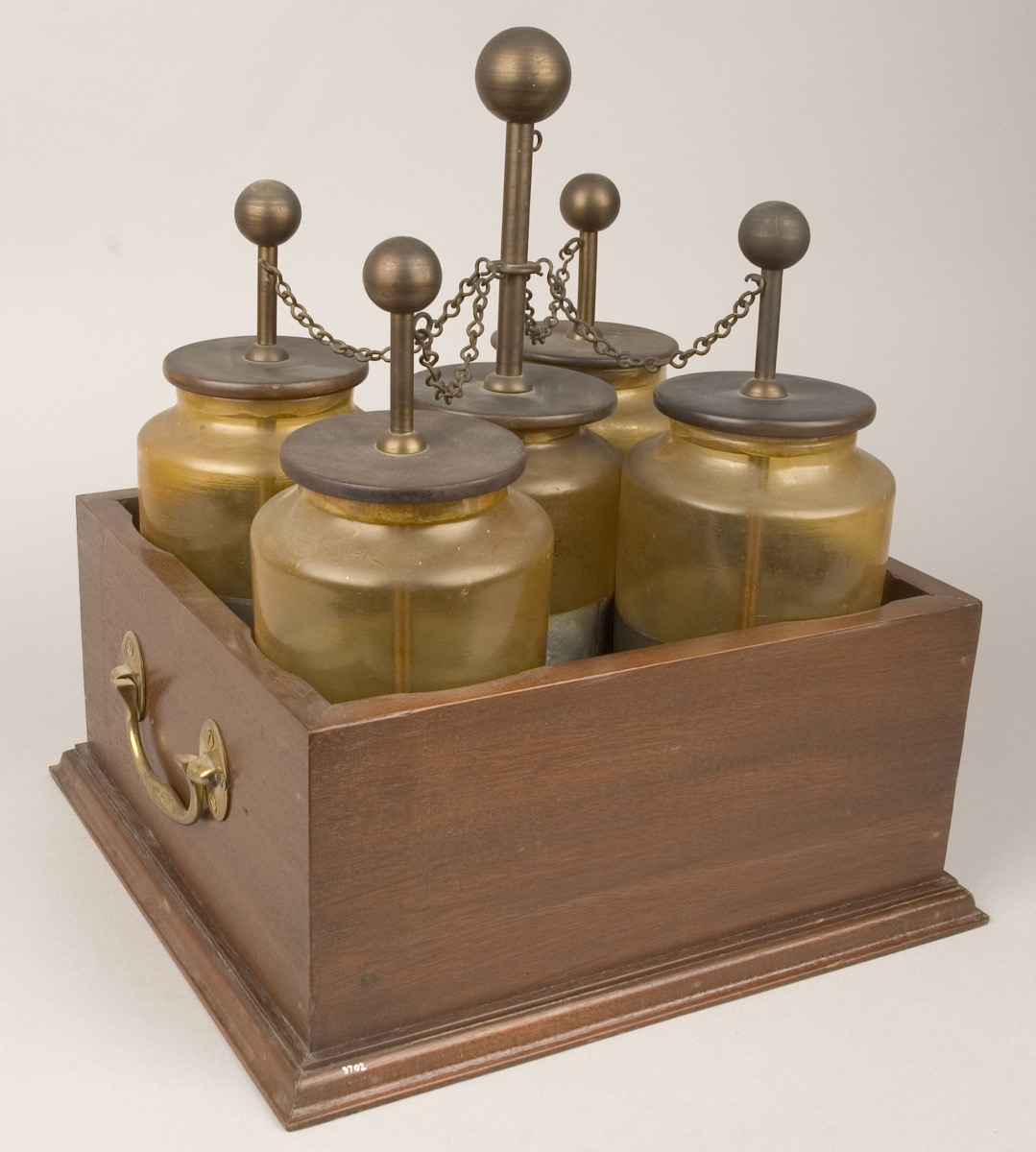
battery of five leyden jars, 1825-1875 (c)
Origin
Maker
Class
electrical
Earliest Date
1825
Latest Date
1875
Inscription Date
Material
wood; metal (brass, foil); glass
Dimensions
length 378mm; breadth 351mm; height 425mm
Special Collection
Provenance
Purchased, 1988.
Inscription
Description Notes
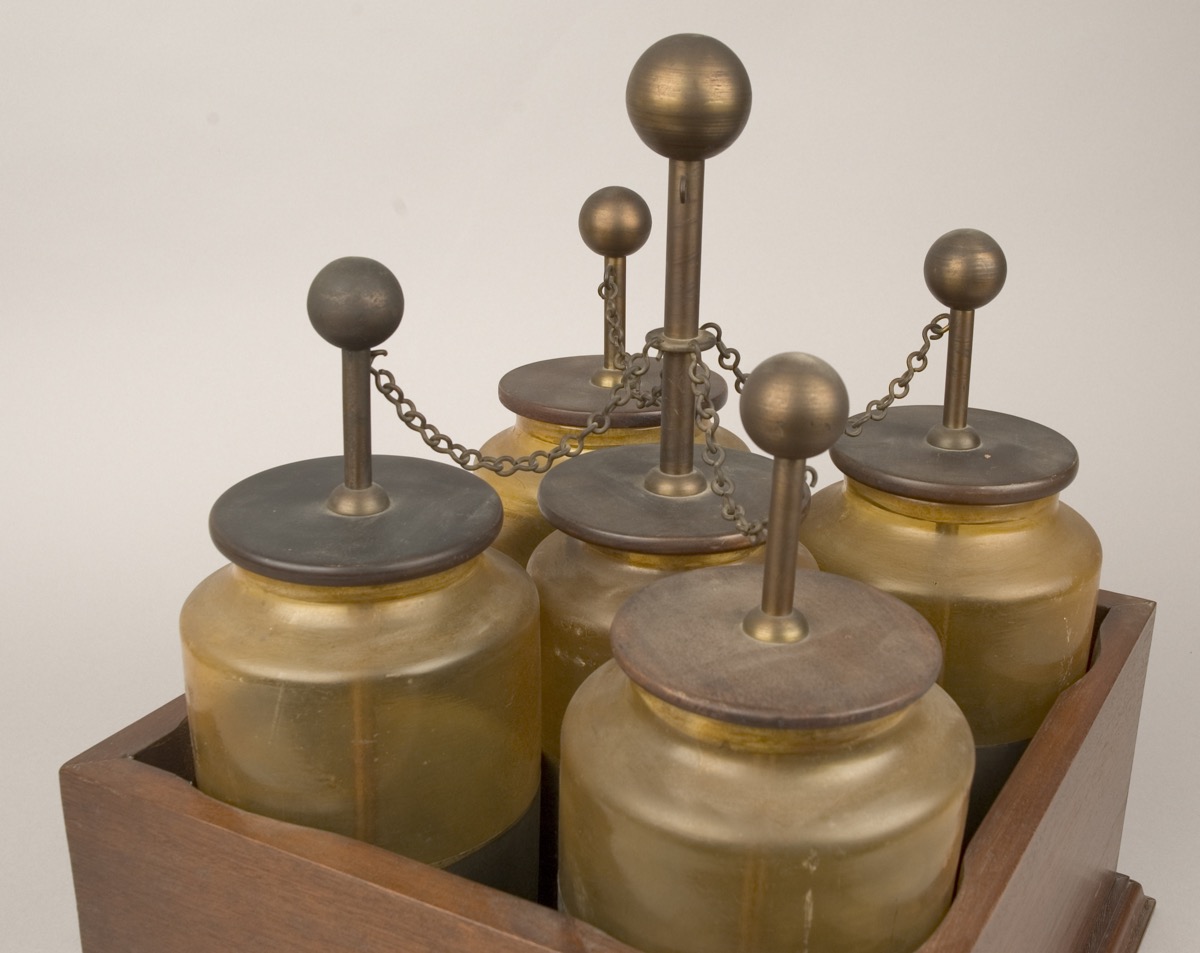
Rectangular wooden box, two brass handles on either side, without lid; four glass jars (130 mm dia.) in corners of box, slightly smaller (115 mm dia.) jar in centre; each jar with metal foil covering inner and outer surfaces approximately half way to top; hole in outer foil at bottom of each jar; each jar with circular wooden lid with central brass tube extending to within 2 cm of bottom of jar; brass sphere on top of each tube; brass chain connecting the tubes of the four outer jars to the tube of the central jar; inside lids of two outer jars marked ‘3’ and ‘4’ respectively. No inscriptions.
Complete.
References
Events
Description
Leyden jars are used to store electric charge and were a very early form of capacitor (a device used to store electric charge in electronic equipment such as a television or computer). The device was named “bouteille de Leyden”. This was after the first experiments that were carried out by Peter Musschenbroek and Andreas Cunaeus in Leyden, Holland in the 1740s.
The discovery of the leyden jar was very important in the development of electrical theory in the second half of the 18th century. It became possible to study more powerful electrical charges and develop new concepts such as the electrical circuit, the area of surface electrified and the amount of charge. Before the invention of the leyden jar the electric charges that were produced could not be contained anywhere for long enough to be used or studied.
To use the leyden jar, it would have been first charged by an electrostatic machine such as a Wimshurst machine. The electric charge flows down the metal chain or rod to a metal coating inside the jar, consisting of lead or tin foil. Because of the glass material of the jar the electricity cannot leak out and so builds up inside the jar. To discharge the jar a curved rod was used which would have been held near the metal ball on the lid and the outer foil of the jar which causes a spark to occur.
FM:41251
Images (Click to view full size):