Accession No
5175
Brief Description
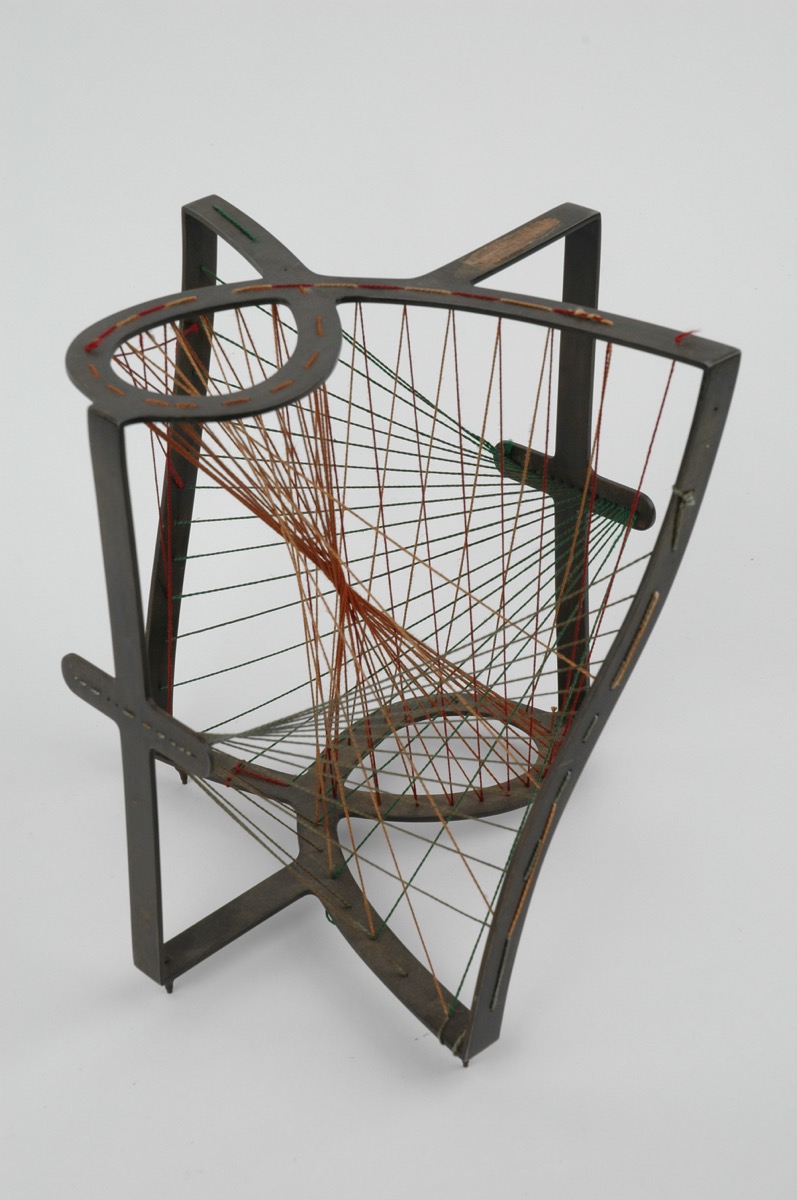
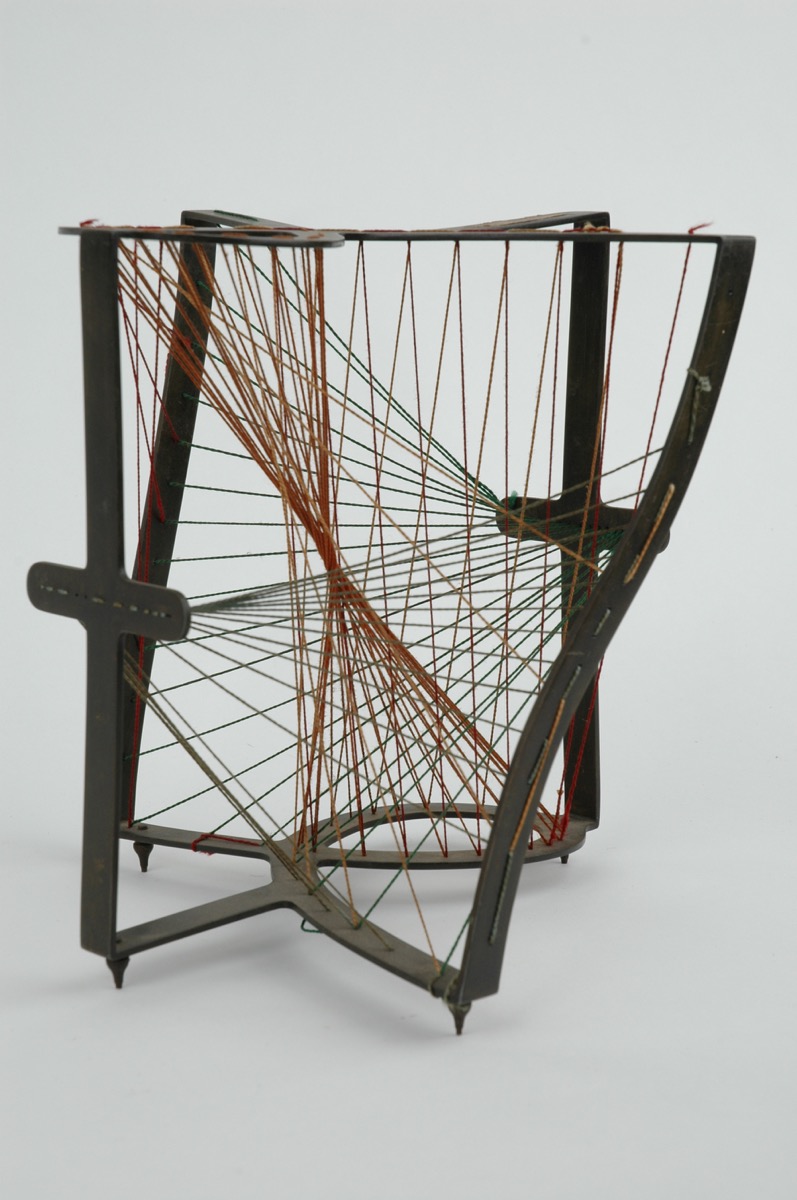
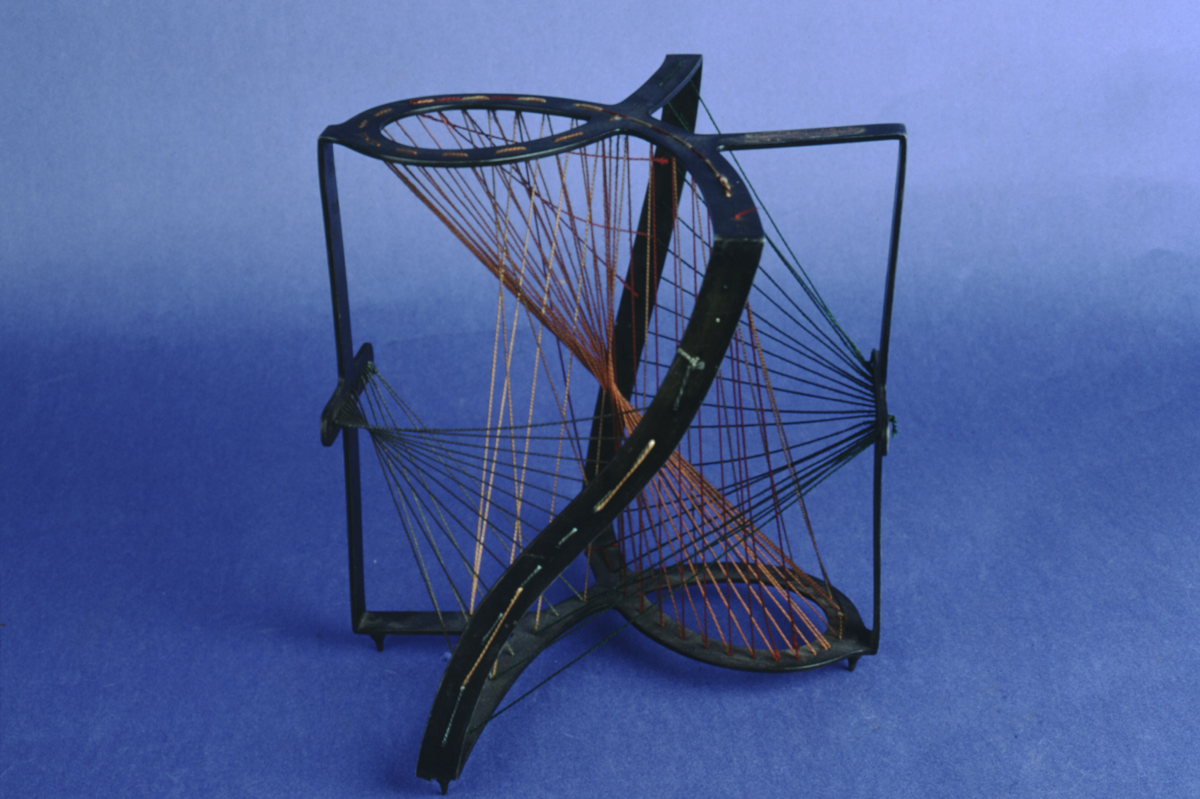
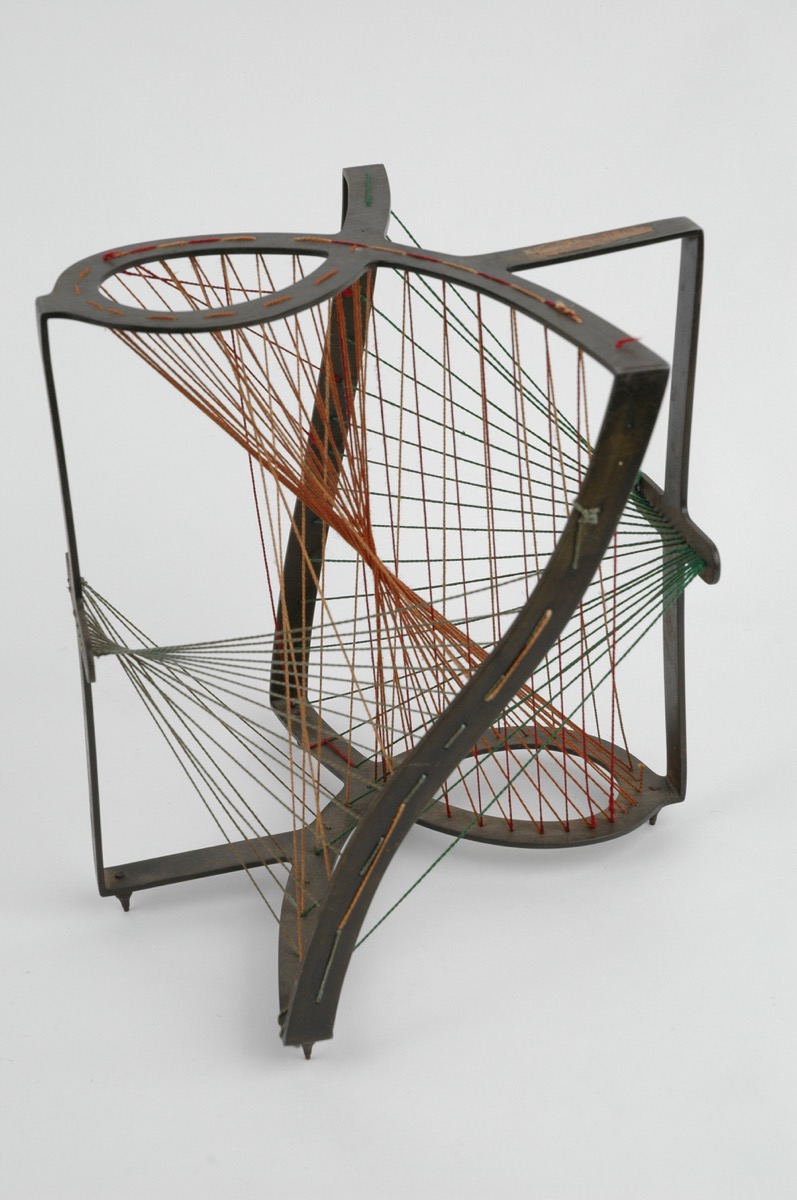
mathematical string model, form was devised by Christian Weiner, by Martin Schilling, German, late 19th century
Origin
Germany; Halle
Maker
Martin Schilling
Class
mathematics; demonstration
Earliest Date
1875
Latest Date
1900
Inscription Date
Material
metal (brass); thread (silk)
Dimensions
height 220mm; width 215mm
Special Collection
Provenance
Purchased from Tesseract Catalogue 57. Tesseract, Box 151, Hastings-on-Hudson, New York 10706, USA from 16/07/1997.
Inscription
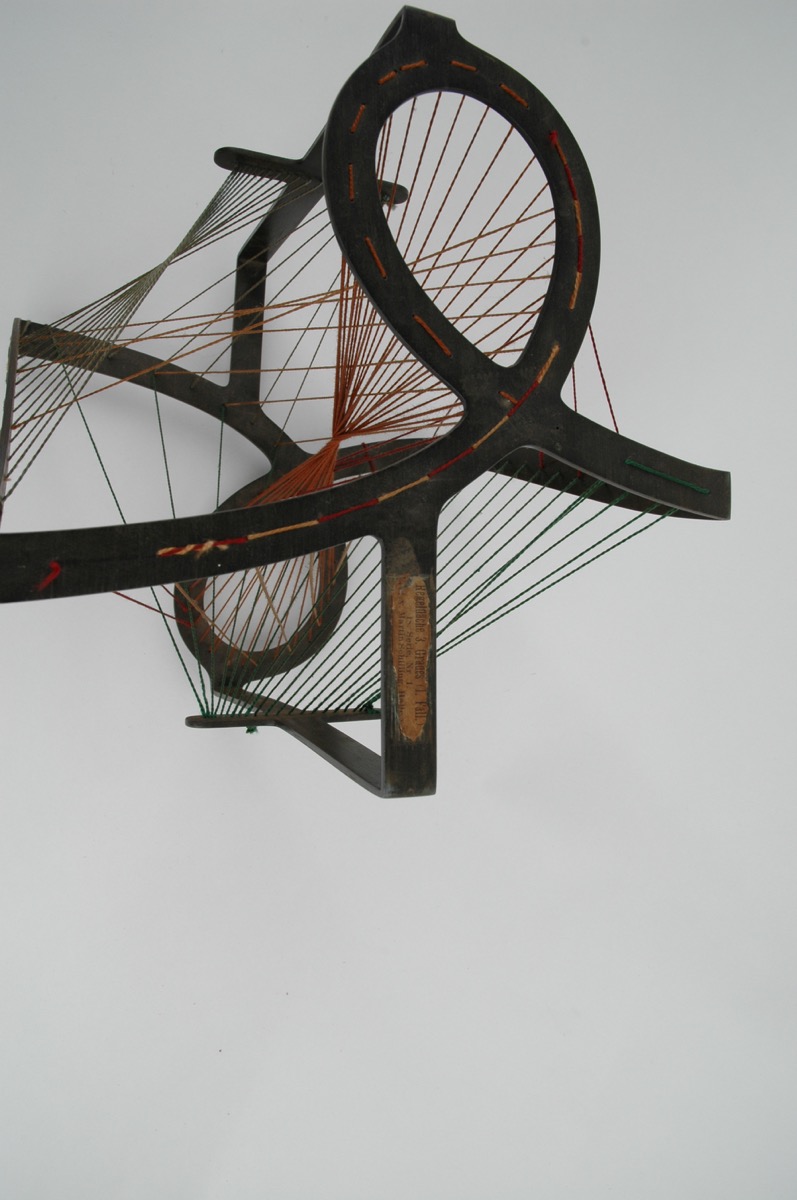
on a paper label on the top
‘Regelflach 3. Grades (1.Fall.)’
‘18. Serie, Nr. 1.’
‘V**l v. Martin Schilling, Halle a* S’
possibly ‘Halle am Salle’
Description Notes
Mathematical string model, by Martin Schilling, German, late 19th century
On a paper label on the top:
‘Regelflach 3. Grades (1.Fall.)’ ‘18. Serie, Nr. 1.’‘V**l v. Martin Schilling, Halle a* S’.
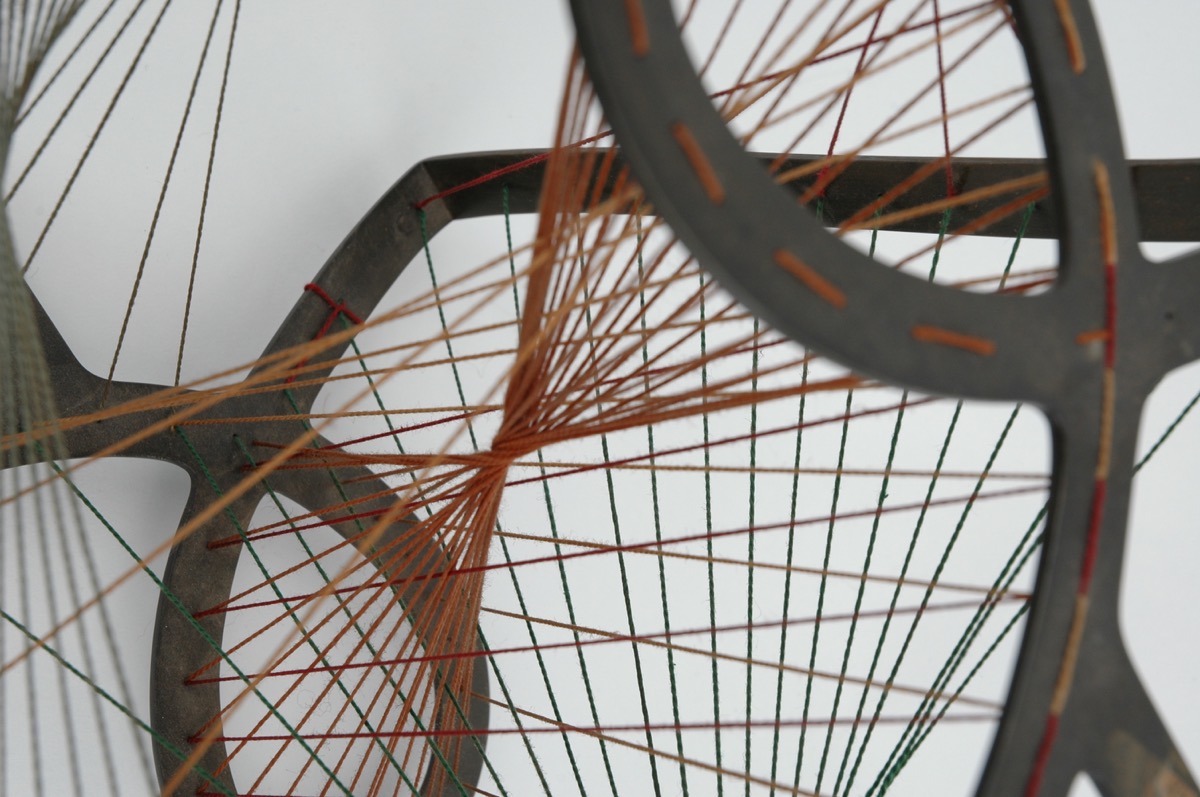
Made of a framework of chemically darkened brass laced with thread (string) of five colours (grass green, claret, gold, bronze and silver green). Only a few threads missing. One colour for one family of lines representing one complex three dimensional surface. These surfaces intersect and pass through each other.
The form was devised by Professor Chr. Weiner, circa 1890, and constructed by the Verlag Martin Schilling in Halle am Salle (which took over the firm of L. Brill in Darmstadt).
Complete.
References
Events
Description
Making mathematical models was an integral part of a mathematician’s research in the late nineteenth century. The practice of constructing mathematical models (like this string model) originated with Gaspard Monge (1746–1818) who invented descriptive geometry, which represented three-dimensional surfaces in two dimensions. He also worked at classifying ruled surfaces. In modeling, tightly stretched strings following the path of a generated line best described a ruled surface according to Monge. He and his student Théodore Olivier (1793–1853) designed and built such models. This model was produced in the late nineteenth century by the German firm Martin Schilling who made models produced by mathematicians commercially available. Its form was devised by Professor Christian Weiner (1826–1896) near the end of his life.
11/03/2014
Created by: Allison Ksiazkiewicz on 11/03/2014
FM:41639
Images (Click to view full size):