Accession No
4529.078
Brief Description
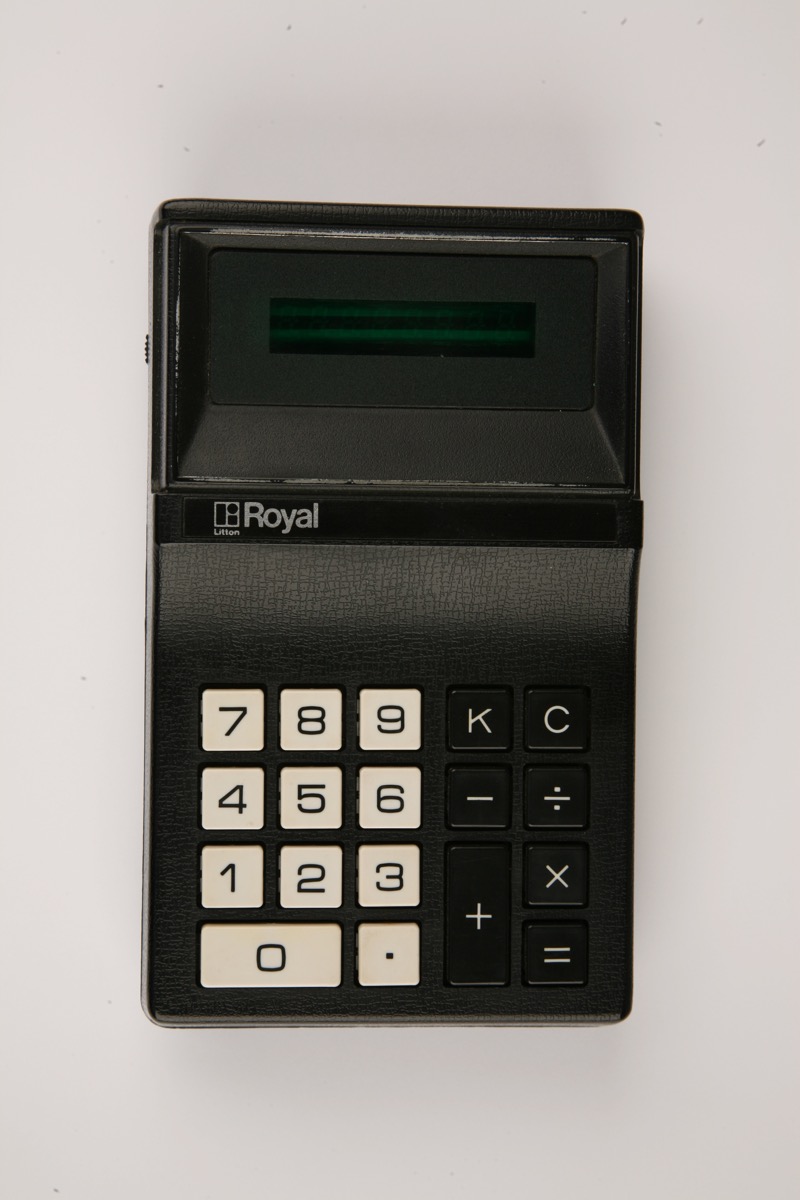
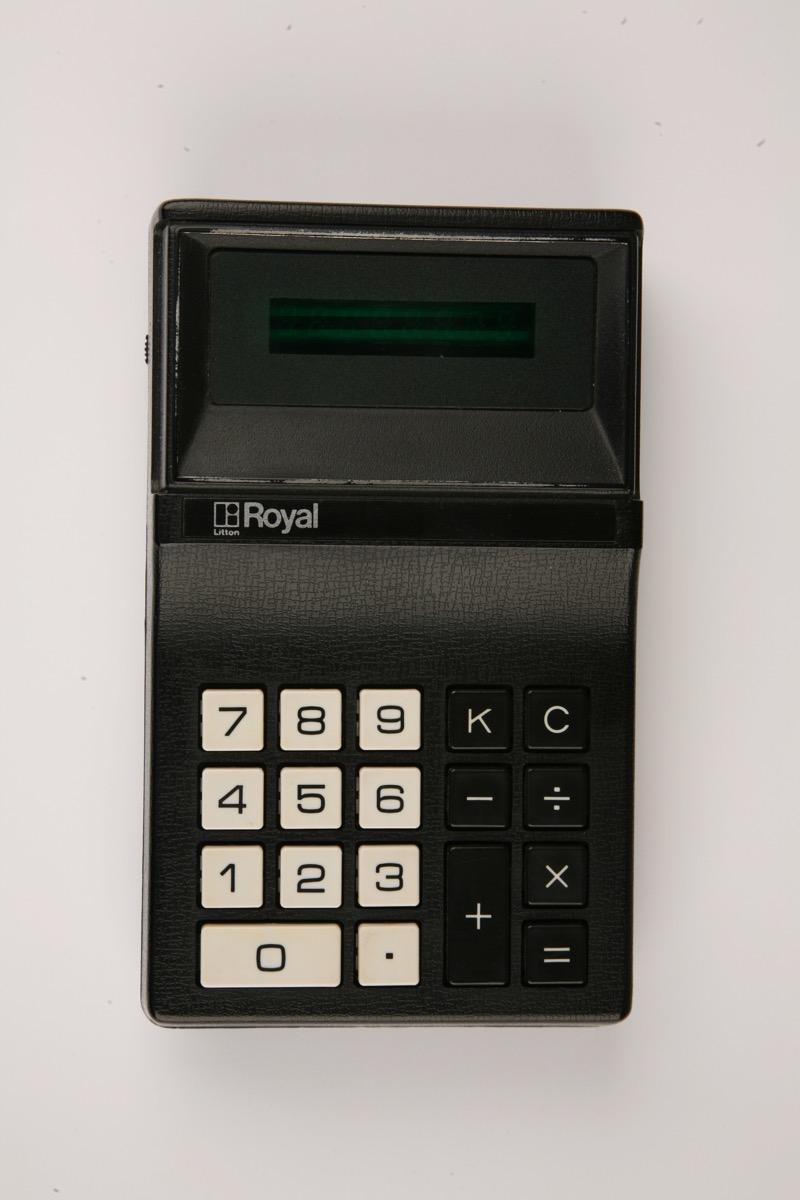
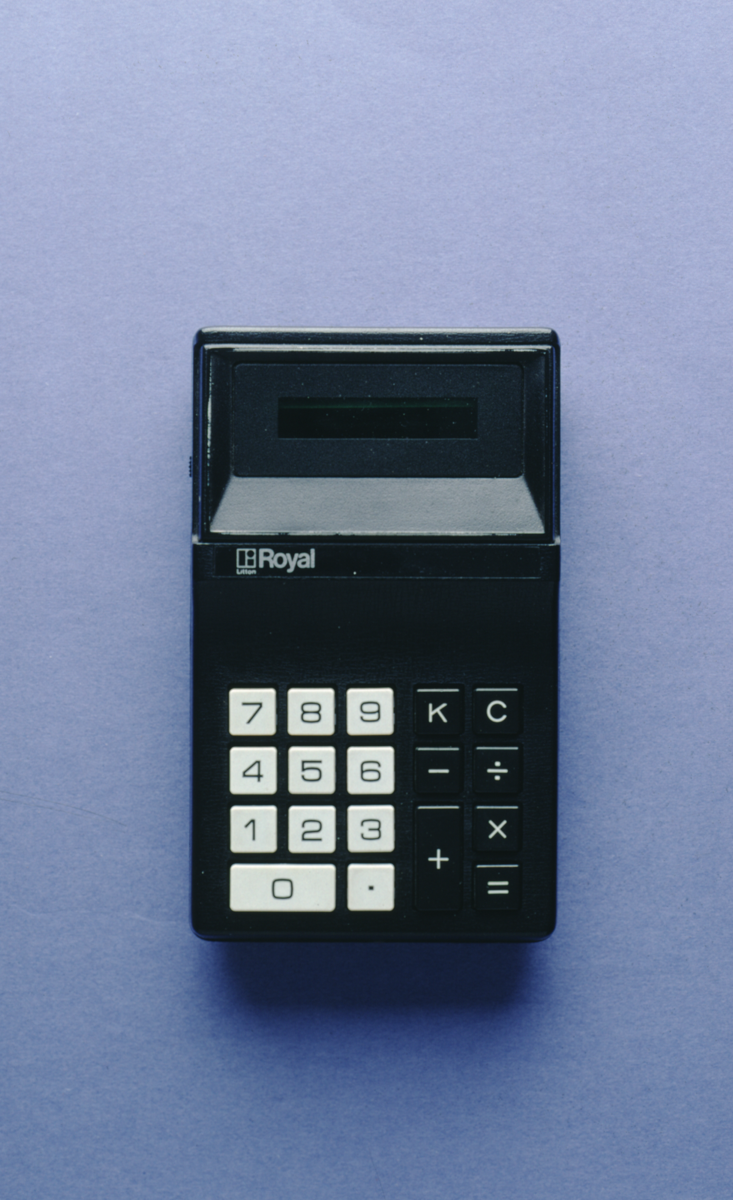
Royal electronic pocket calculator, by Litton for Imperial Typewriter Company Ltd., Japanese, 1973 (c)
Origin
Japan
Maker
Litton, for Imperial Typewriter Company Ltd.
Class
calculating; computer technology
Earliest Date
1973
Latest Date
1973
Inscription Date
Material
plastic
Dimensions
Length 149mm; width 89mm; thickness 37mm
Special Collection
Francis Hookham Collection of Hand Held Electronic Calculators
Provenance
Donated by Francis Hookham in 1987. Donated to Francis Hookham 04-08-1980 by Bob Dear & Co. Ltd.
Inscription
[Litton logo] “Litton Royal” (front, centre left)
Description Notes
Black Litton Royal, with leather-effect front casing, white number keys and black function keys. Along the left-hand side is a switch for changing between AC and DC.
8-digit green fluorescent display.
Panel on rear gives power supply details and serial number.
Keys are long travel, squashy, very light to the touch, and make a bright but hollow click upon depression (S Davis 6/7/2007).
References
Events
Description
Pocket Electronic Calculator
The pocket electronic calculator is now familiar to us all. However, these everyday objects were still a novelty in the early 1970s and priced out of the reach of most customers. To our modern eyes, the operation of a calculator is quite simple, at least for basic arithmetic. We just push the buttons and the machine does the hard part for us. Since calculators never make mistakes, we need never worry about what goes on inside.
Behind the buttons and screen lies a complex set of miniature circuits. It is the ability of electronics firms to make smaller and smaller components that has led to the success of the calculator. All the electronic circuits that provide the calculating power can now fit onto tiny ‘chips’ of silicon. By also developing the technology for liquid crystal displays (LCD’s), manufacturers were able to shrink calculators even further. When solar power arrived towards the end of the 1970s they could even be made without batteries. Prices fell whilst popularity soared.
Despite all this technology, successful use of the calculator still relies on the knowledge of the operator. The latest machines pack in countless functions and require a large instruction manual. Their increasing power has led to debates about their proper use in schools. The widespread use of calculators – at school, home and in the office – has been blamed for falling standards of arithmetic.
This is in contrast with the early days of calculator use. During the 1970s, a number of textbooks were published to encourage people to use what was still an unfamiliar instrument. These would give examples of how calculators could help with anything, from income tax forms to the weekly shopping list!
FM:41785
Images (Click to view full size):