Accession No
0915
Brief Description
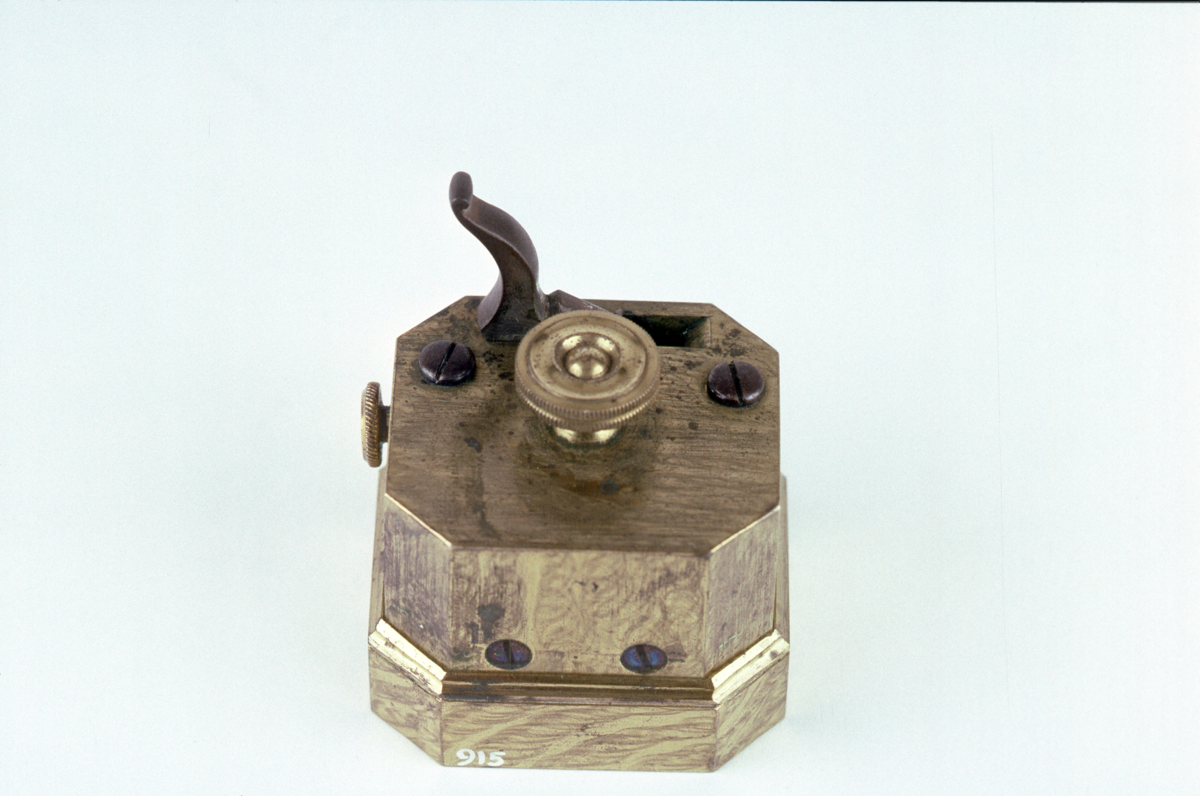
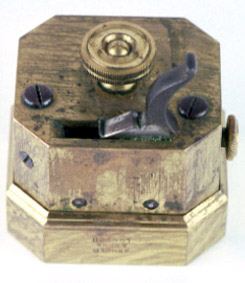
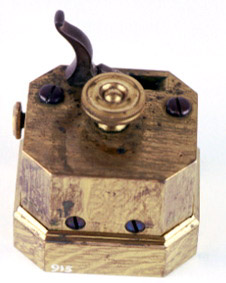
scarifier, by Arnold and Sons, English, c.1870 (post 1866)
Origin
England; London
Maker
Arnold and Sons
Class
medical
Earliest Date
1866
Latest Date
1870
Inscription Date
Material
metal (brass, steel)
Dimensions
length 53mm; breadth 48mm; height 65mm
Special Collection
Robert Whipple collection
Provenance
Inscription
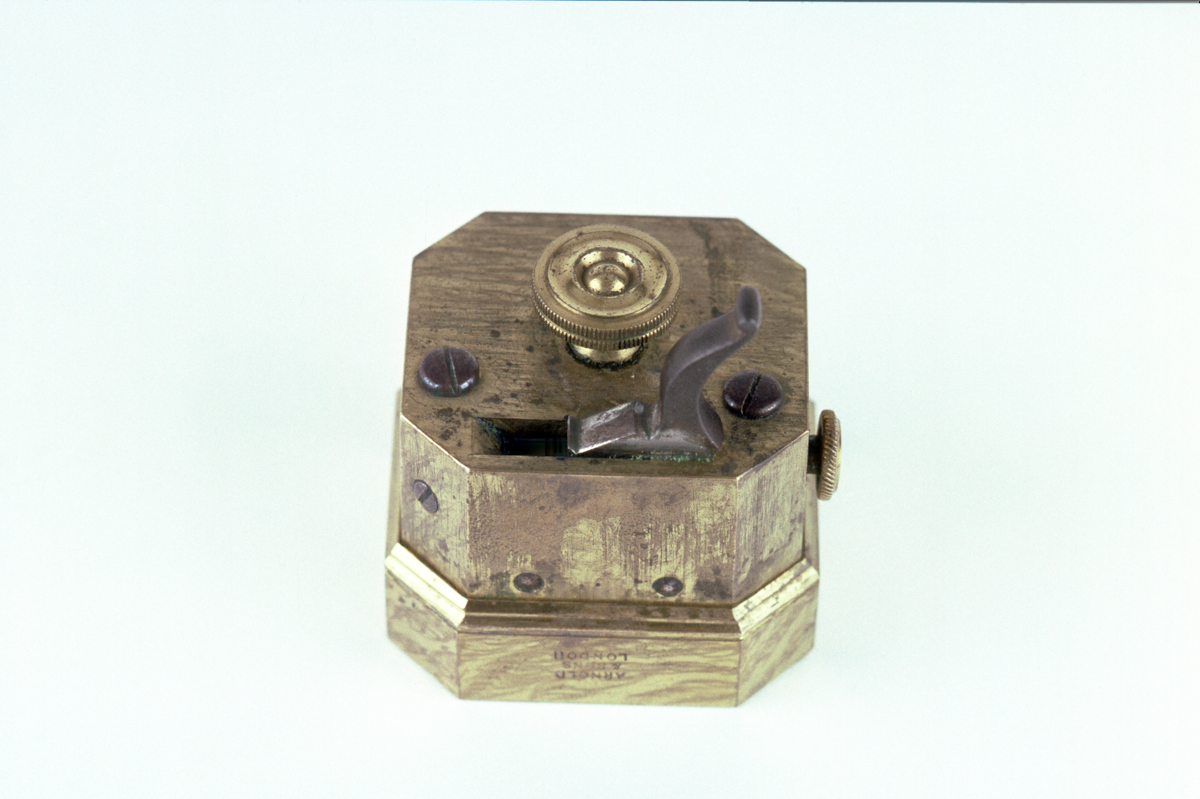
‘ARNOLD AND SONS LONDON’
Description Notes
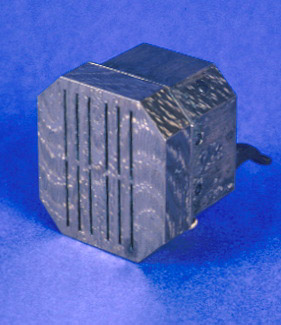
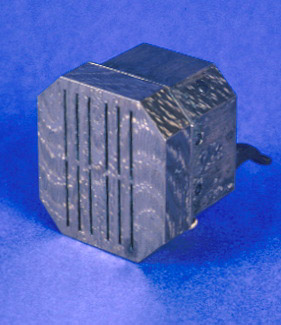
Brass case with six slots and two blades in each. Set by trigger and released by depression of milled button. Milled screw alters depth of blades. Random burnishing of surface producing decorative effect.
Condition some blades broken, lubricant has become coloured green with tarnish.
References
Events
Description
Bleeding was accepted as a cure for a wide variety of medical complaints since Hippocrates’ teachings in the 5th century BC. It continued to be a popular until the 20th century. Physicians were known to have kept and consulted complex charts that showed which parts of the body should be bleed for each illness.
Prior to the development of the spring scarificator in around 1710, the surgeon had followed ancient practice and made a series of parallel incisions with a lancet or surgical knife.
A scarificator consists of a brass box with 4 to 16 spring loaded blades which are released to make a series of cuts in the patient. A heated cupping glass is then applied over the cuts. As the cupping glass cools a vacuum is created. This vacuum draws the blood from the body and collects it within the cupping glass.
The ability to alter the depth of the blades was added in the mid-18th century and according to Bayfield, writing in 1823, depth settings should be 1/7” for cupping behind the ears, 1/8” for the temple, 1/6” for the scalp and 1/4” everywhere else.
11/08/2006
Created by: updated by Ruth Horry on 11/08/2006
FM:42133
Images (Click to view full size):