Accession No
3142
Brief Description
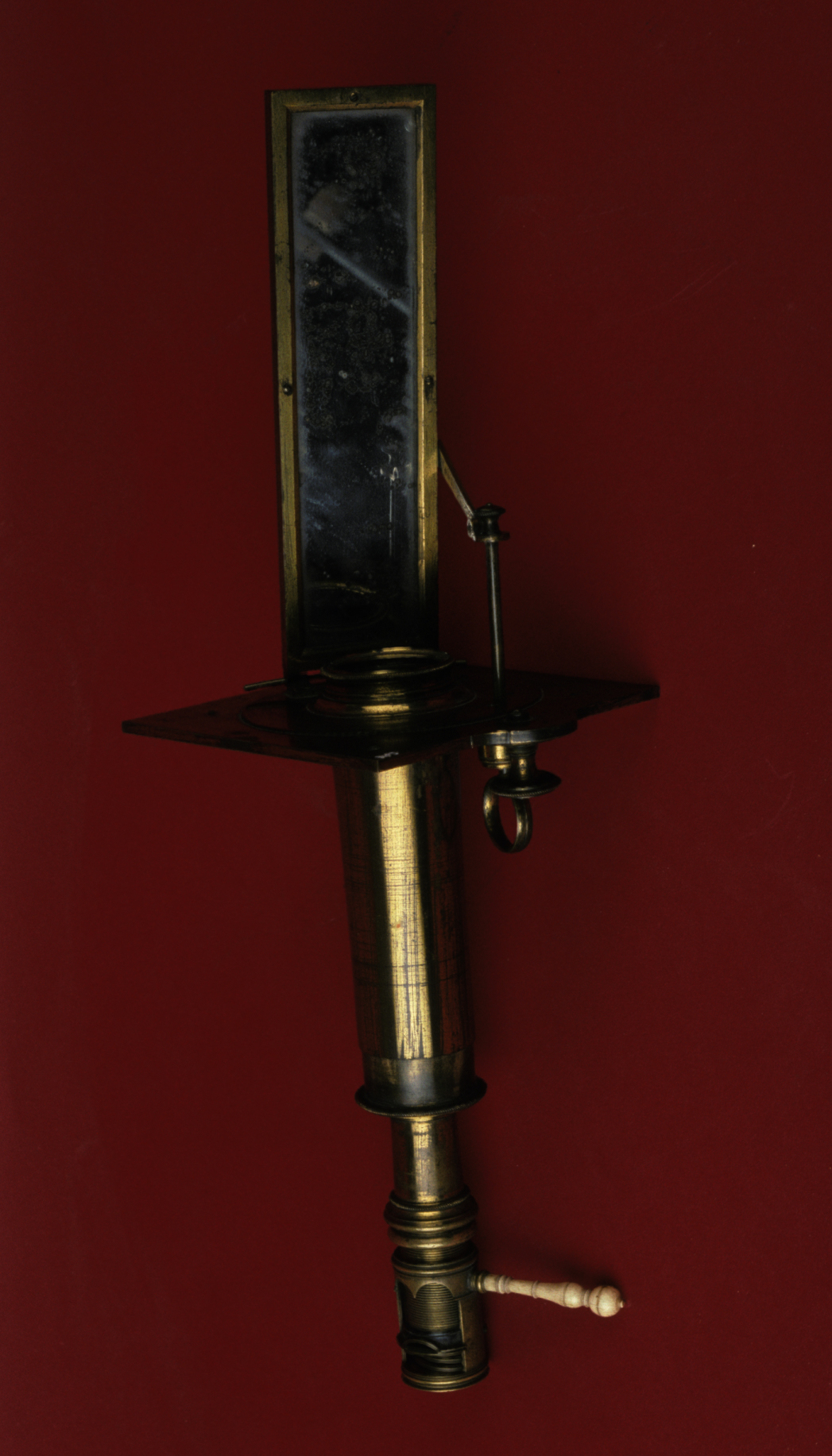
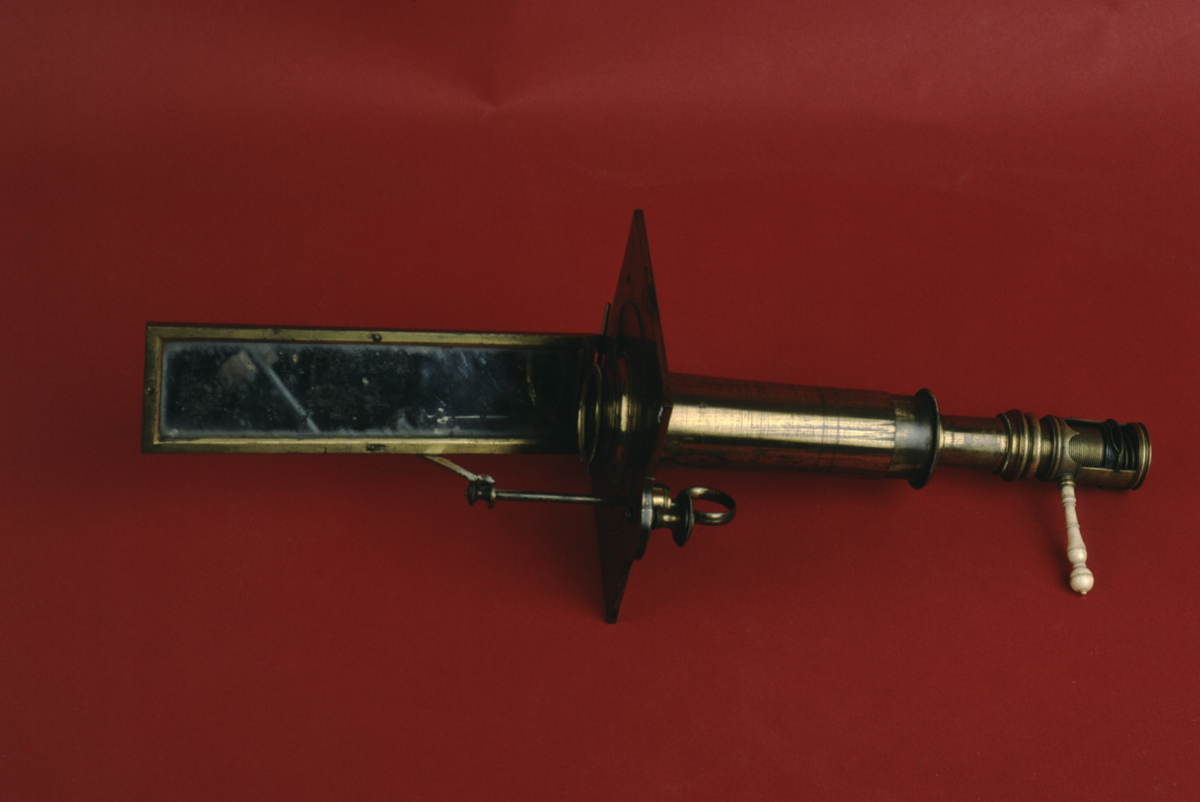
solar microscope, by John Cuff, English, 1742 - 1760
Origin
England; London
Maker
Cuff, John
Class
microscopes
Earliest Date
1742
Latest Date
1760
Inscription Date
Material
metal (brass); glass; ivory; wood (lignum vitae)
Dimensions
bag length 131mm; breadth 115mm; microscope length 345mm; breadth 140mm; height 200mm
Special Collection
Provenance
Purchased from Sotheby's Olympia, London, England, 28/5/2003. On loan to museum from 1984 to 20/2/2003.
Inscription
‘J. Cuff London’
Description Notes
Brass; square plate with hinged mirror; knurled screw rotates mirror and long rod with ring handle screws to an articulated arm on mirror to adjust the angle; screw-fit body with drawer tube; screw fit screw barrel microscope; ivory handle to brass ferrule; 3 part brass and lignum vitae stage bearing on brass spring; 3 objectives numbered 1, 3, and 4; [object holder] with handle; condenser [not original]; (screw fit lieberkuhn/objective not original).
Condition: good
References
Events
Description
To work a solar microscope, the mirror was placed outside a room via a hole in the window shutter, whilst the barrel remained in the room. The mirror reflected the sunlight through condensing lenses, the slide containing the object and projection lenses. The image was then projected onto a screen in the room.
From display label:
During the eighteenth century microscopy became a popular drawing-room pastime. Instruments such as the solar microscope—which allowed groups of people to view magnified images—sold in large numbers.
The solar microscope works by focusing sunlight via a large mirror. The slide is inserted into the small simple microscope on the right hand side of the instrument, and an image is projected onto a wall or screen.
03/07/2009
Created by: David Bud on 03/07/2009
FM:42678
Images (Click to view full size):