Accession No
1803
Brief Description
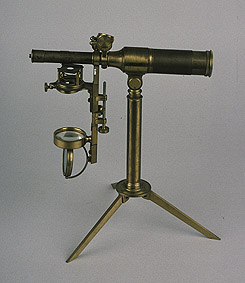
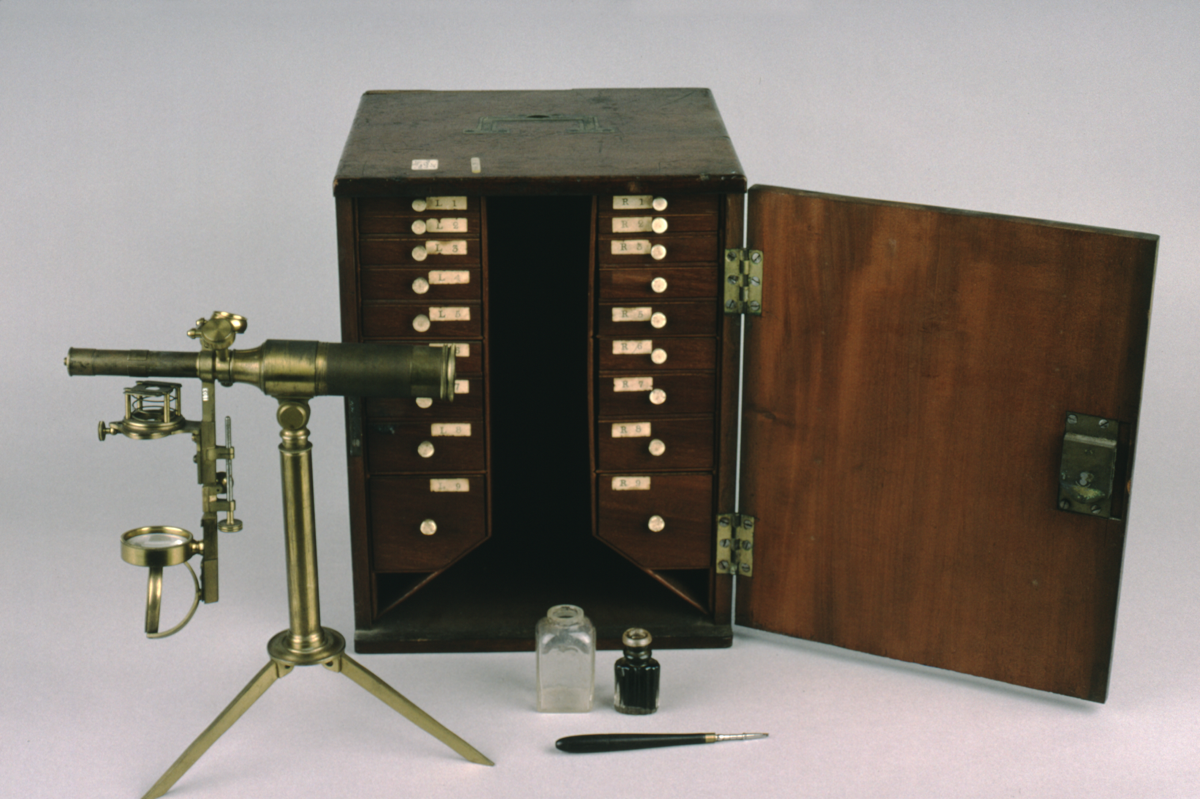
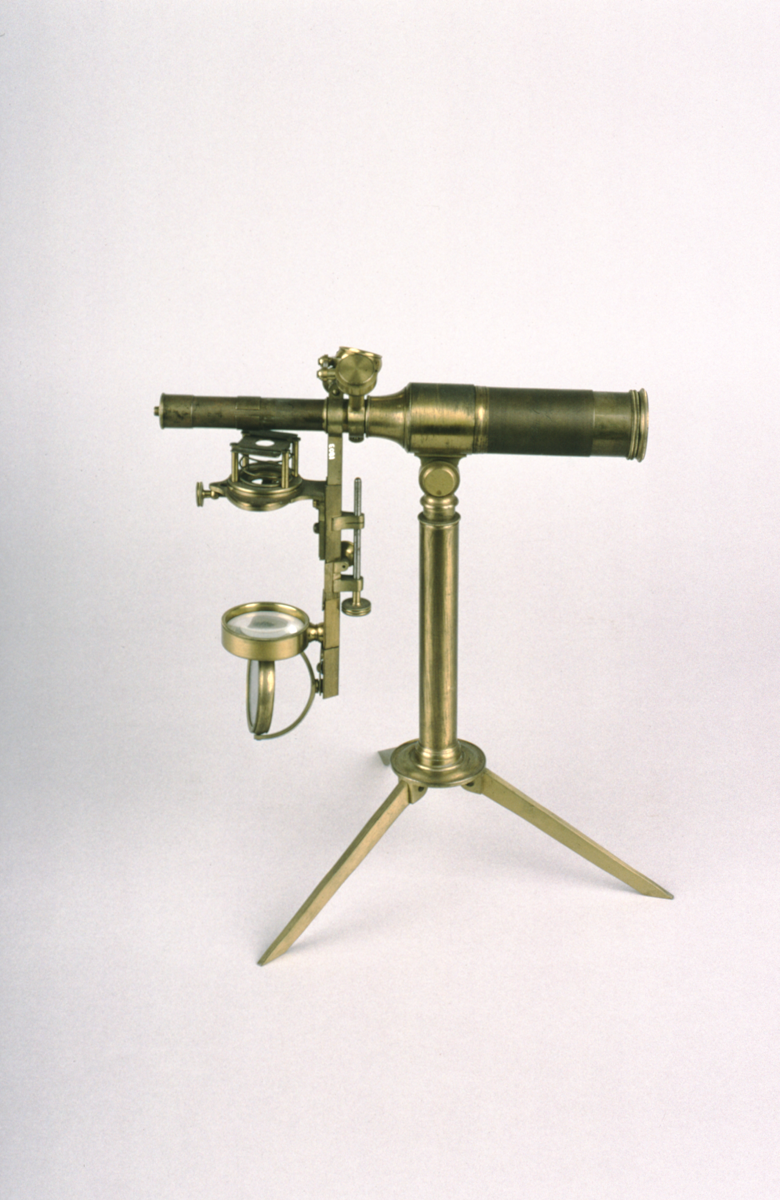
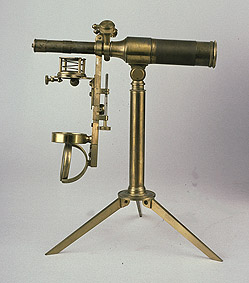
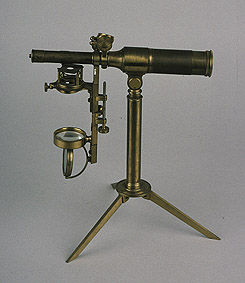
reflecting microscope, by John Cuthbert, English, 2/4 19th Century
Origin
England; London
Maker
Cuthbert, John
Class
microscopes
Earliest Date
1825
Latest Date
1850
Inscription Date
Material
metal (brass, oxidised brass); glass; wood; paper (cardboard); cork; ivory; stone (mica)
Dimensions
height 331mm; depth 256mm; breadth 251mm: accessories in bag length 125 mm; breadth 72 mm; thickness 30 mm
Special Collection
Heywood collection
Provenance
Purchased from the H.Heywood collection under estate duty exemption benefit with the assistance of a Science Museum grant-in-aid.
Inscription
‘John Cuthbert
London’
Description Notes
Brass; tripod stand; pillar to compass joint; collar; push fit body with push fit field lens and eyepiece unit; thread for reflecting head; vertical limb carries swinging plano concave mirror and condenser both on sliding shoes; shoes with clamp and long fine focus screw for a variety of stage fittings. Fitted wooden box with several drawers; 3 eyepieces; 6 objective reflectors; 3 stage plates with lever handles for mechanical sprung stage.; 3 live boxes and stage forceps; stage condenser on articulated arm; compressorium; 6 miniature brass compressoria; 3 lieberkuhns; glass specimen tube, 9 cardboard talc boxes, labelled in mss with a variety of contents, 6 glass jars; ink bottle; 12 specimens mounted in cork on pins; 5 ivory sliders; set of 16 4-object ivory sliders ‘1-16’; 4 oxidised brass 4 object slides; set of 5 miniature brass and mica slides with test objects; brass talc cutter.
References
Events
Description
During the 1820s an Italian professor, Giovan Battista Amici, was attempting to improve the optics of the microscope by introducing objectives with concave mirrors rather than lenses, and using a horizontal body. John Cuthbert, who saw Amici’s ideas, produced several ‘horizontal reflecting microscopes’ of this type from 1826 onwards.
FM:42971
Images (Click to view full size):