Accession No
1148
Brief Description
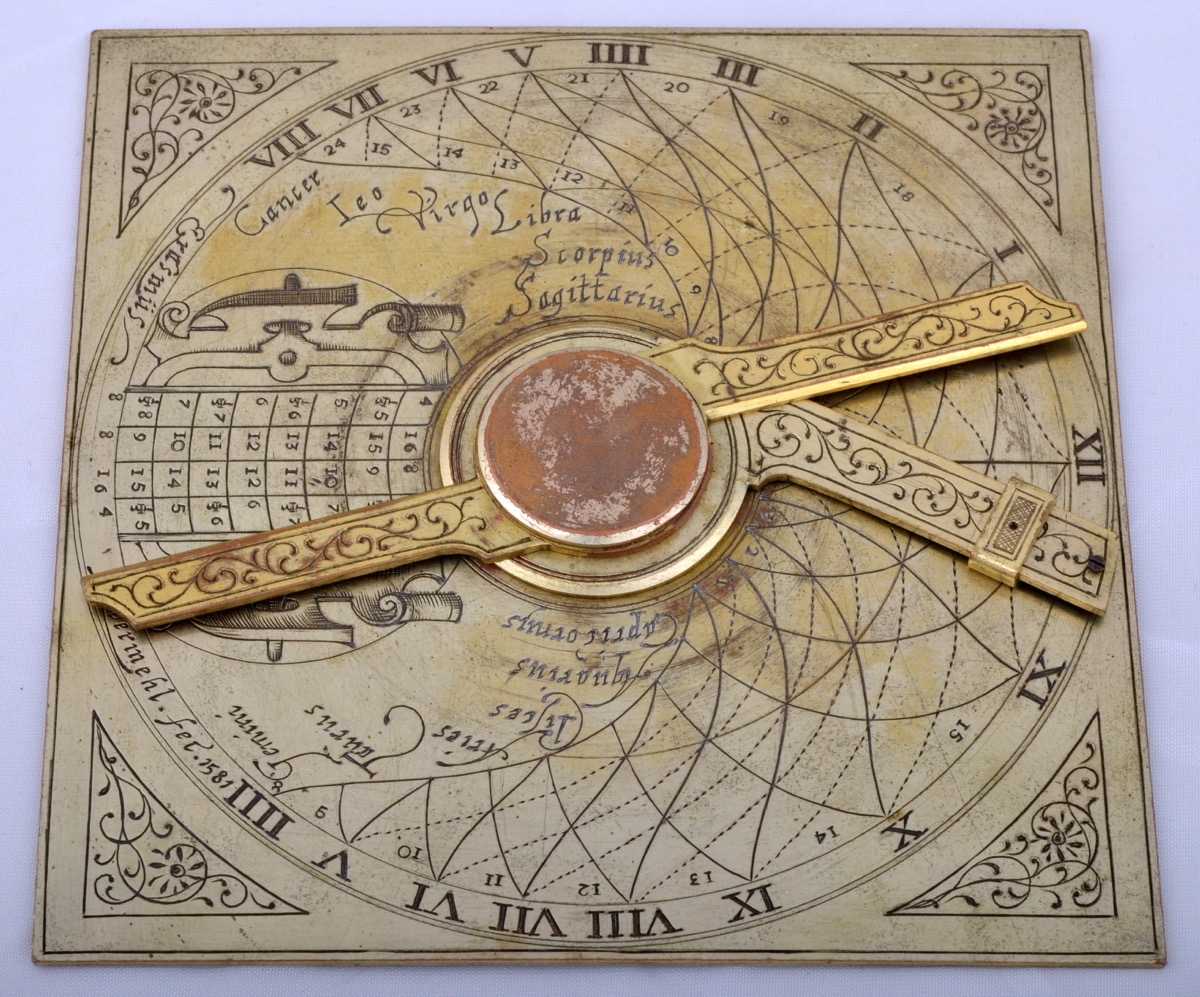
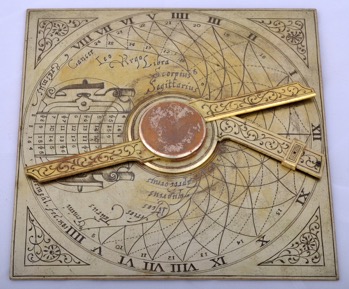
solar calculator (azimuth dial), purportedly by Erasmus Habermehl, 1581, but actually a c. 1920 fake
Origin
Netherlands; Amsterdam [possible, see Price 1956]
Maker
fake, unknown maker Habermehl, Erasmus [purported]
Class
dials
Earliest Date
1911
Latest Date
1925
Inscription Date
Material
metal (electroplated gilt copper)
Dimensions
length 119mm; breadth 119mm
Special Collection
Provenance
Derek de Solla Price, as part of his research into possible fakes in the Whipple collection published in 1956, asserts that this is a copy of the original solar calculator sold in sale of Strozzi Collection, 1911. Donated by Robert S. Whipple in 06/1952. Purchased by Robert S. Whipple from Antique Art Galleries, Grafton Street, London, in 06/1952.
Inscription
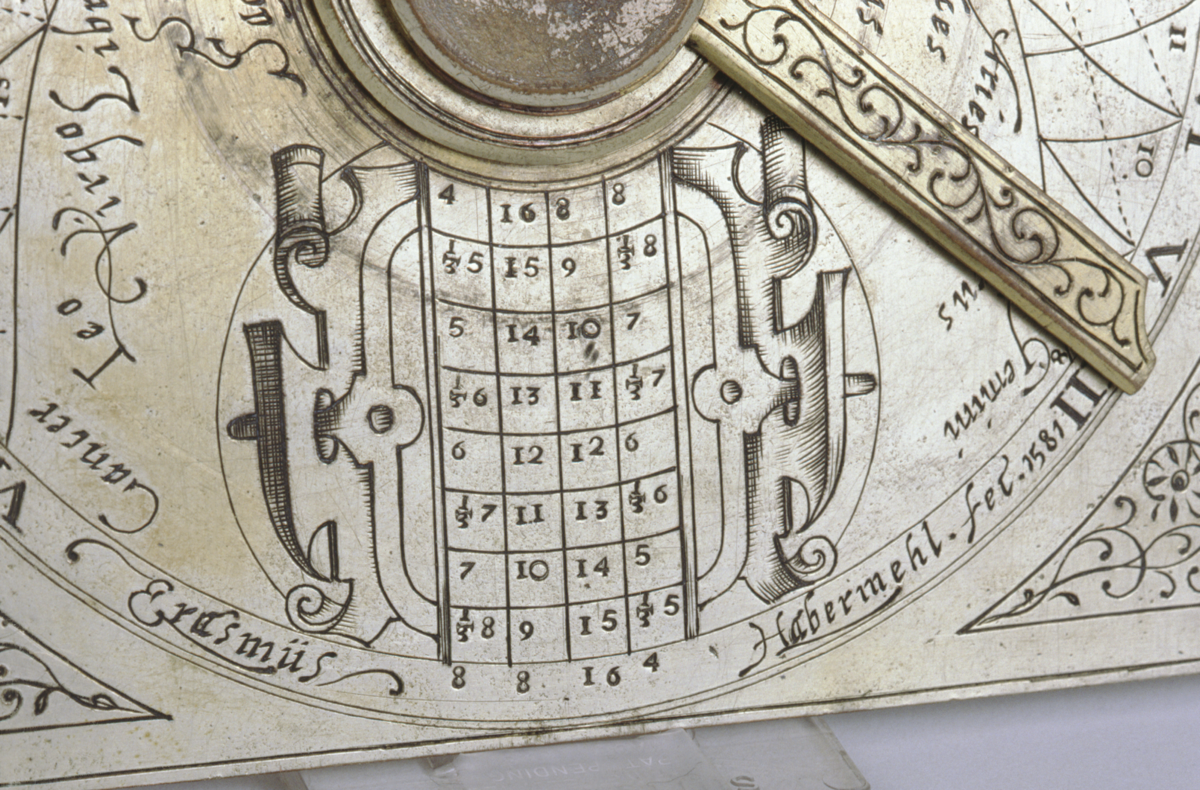
‘Erasmüs Habermehl . fec. 1581’
Description Notes
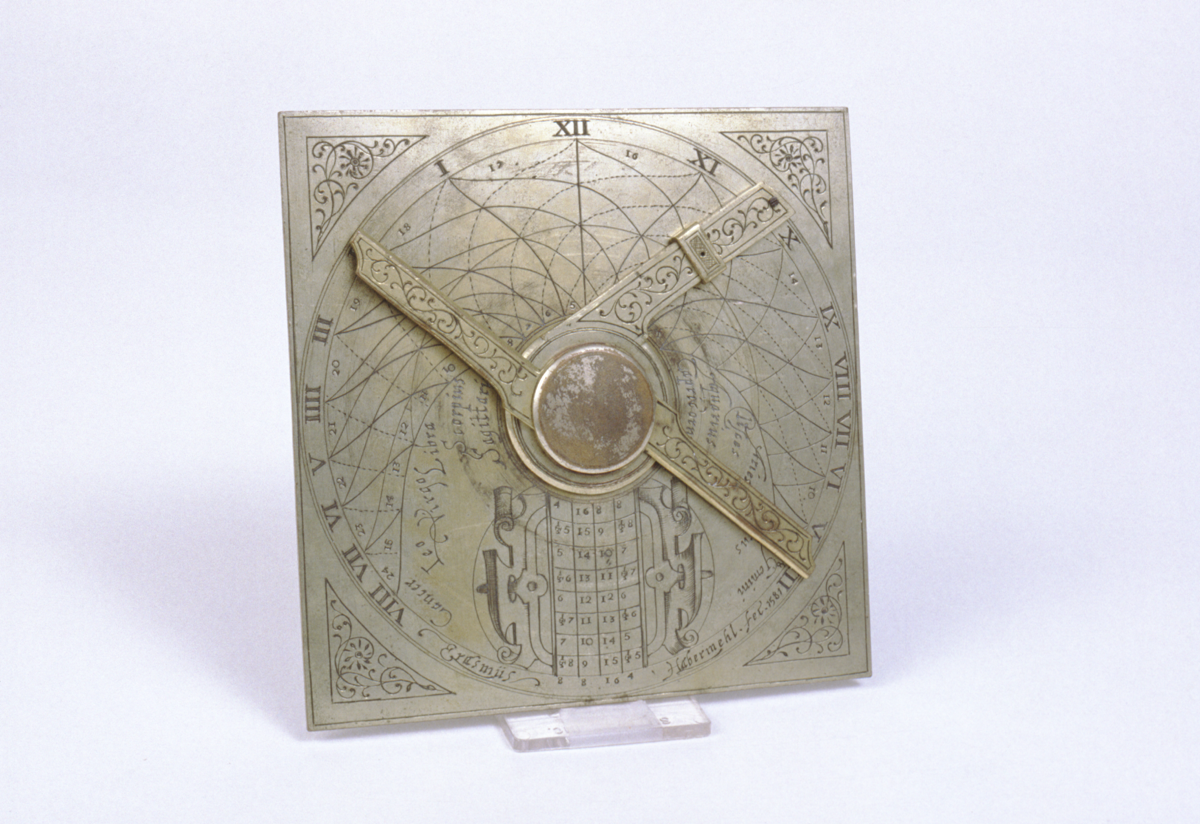
Solar calculator, fake, c. 1920, (purports to be by Erasmus Habermehl, 1581).
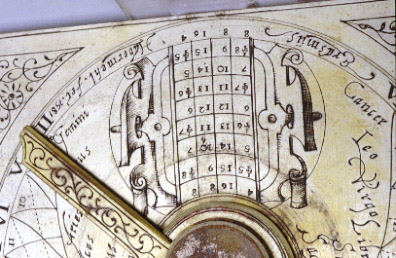
Brass square. Hour circle divided IIII - XII, I - VIII. Strange projection with the names of the zodiac and a table of figures. Lower index with sliding alidade; upper rotating index with two arms. All engraved with leaf scrolls.
U-shaped fasten on reverse.
Copy after the original in the Strozzi collection.
[NOTE: On 15/04/2015 XRF analysis was conducted on this instrument. Results and analysis are given in the ‘Notes’ field.]
References
Events
Description
The Whipple Museum was intended from its outset to be first and foremost an academic institution: “a cultural accessory to modern research”.
Since 1944, the Museum has been proud to honour and maintain this legacy. A vibrant Department of History and Philosophy of Science has flourished around the museum. This is just one of the objects from R.S. Whipple’s founding collection that remains a crucial resource for research into past science.
*The 'Mensing' fakes*
In the early 1950s as part of his PhD work, scholar Derek de Solla Price made a startling discovery. Amongst the many gems in the Whipple collection were a small number of forgeries. These were the first fake scientific instruments to have ever been publicly identified. Price explained his findings to R.S. Whipple, who "took it very well, understanding the various dubious points ... when his critical attention was drawn to them." More recently, curators in the Museum have extended Price's work and found at least two more fake pieces.
17/10/2025
Created by: Hannah Price on 17/10/2025
Description
Erasmus Habermel (1538-1606) was a much celebrated craftsman and engraver. He worked for Emperor Rudolph II in Prague, and is reputed to have made the finest instruments of his time. His instruments have been much sought after and numerous forgeries have turned up in collections around the world.
Here, the signature “Erasmüs Habermehl” is suspicious. While he used various different spellings of his name, he is unlikely to have used an umlaut (ü), which would change the pronunciation.
Furthermore, the calculator is only engraved on one side, whereas most objects of this kind have dials on both the front and reverse. Rather than being a direct copy of an object, this imitation has the same dimensions as a photograph taken in 1911 of an object and subsequently published in an auction sales catalogue. This explains why it is only engraved on one side.
Ironically, the object it is copying has also been determined to be a forgery.
FM:43126
Images (Click to view full size):