Accession No
1638
Brief Description
horodictical horary quadrant, purported to be 18th century, but actually a modern c. 1970 fake
Origin
England [?]
Maker
fake, unknown maker
Class
dials
Earliest Date
1950
Latest Date
1972
Inscription Date
Material
metal (brass)
Dimensions
radius 83mm; thickness 19mm
Special Collection
Provenance
Purchased from Christie’s, 8 King St., St. James’s, London, SW1Y 6QT, in 12/12/1972. Lot 47 in ‘Clocks, Watches and Fine Scientific Instruments’.
Inscription
‘LONDON 51˚ 31’
‘T.M’
Description Notes
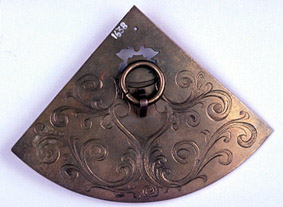
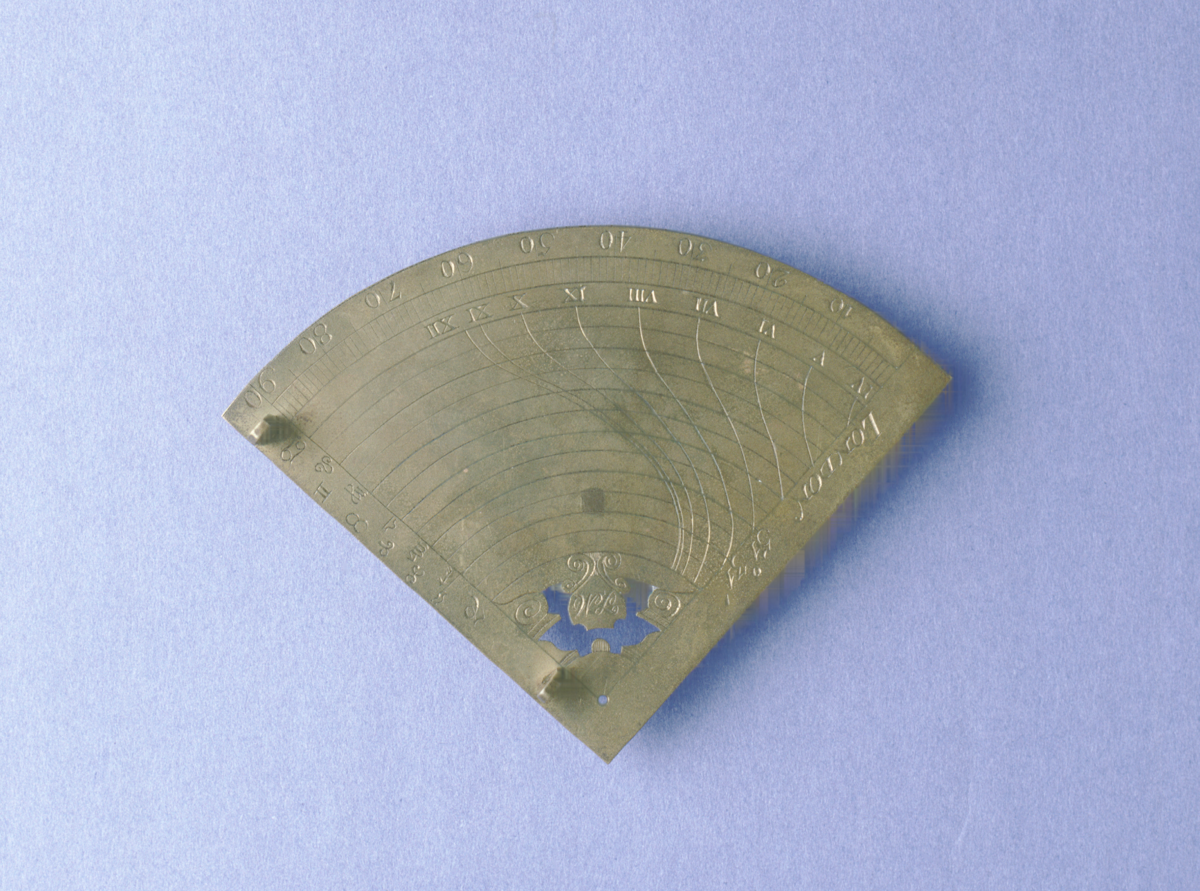
Horodictical horary quadrant, purporting to be C18th but fake, English, c. 1970
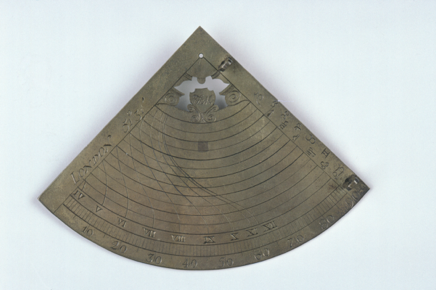
Circumference degree scale divided [0] - 90˚, numbered by 10˚, divided to 1˚. Zodiac arcs divided to symbol. Sinusoidal hour lines divided IV - XII, numbered by I. For 51˚ 31´. The face pierced close to the apex with slight decoration and the initials TM within shield. Pinhole sights. Decorated with scroll pattern and a handle set in.
‘This example appears to be of recent origin; the brass shows signs of chemical aging, the engraving is weak, the decoration on the verso and the handle and the pierced decoration suggest a familiarity with 18th century clockmaking. Genuine English dials to this design are not known. Probably an English forgery c 1970’ (catalogue)
Condition: fair.
References
Events
Description
Horary quadrants date back to about the seventh century. They were developed from the astrolabe as instruments for telling the time. Like the Pillar dial and the Ring dial they are altitude dials – they tell the time from the height of the sun in the sky.
This form of quadrant was designed in the seventeenth century by Edmund Gunter. It is normally known as a Gunter quadrant. The back often carried a Nocturnal for telling the time at night. Other lines on the front of the quadrant could be used for measuring heights and the bearing of the sun.
The use of this instrument is quite complicated. First it must be set for the date. To do this, the plumb line is laid across the correct date on the scale at the bottom. Then the bead is moved along the line until it sits on the 12 o’clock line. Once this has been done, the quadrant is raised vertically and tilted so that the sun’s rays fall through the two pinhole sights. Next, the string is clamped by a hand so that it cannot move. When the quadrant is lowered, the position of the bead in the hour lines will show the time of day.
FM:43165
Images (Click to view full size):