Accession No
1106
Brief Description
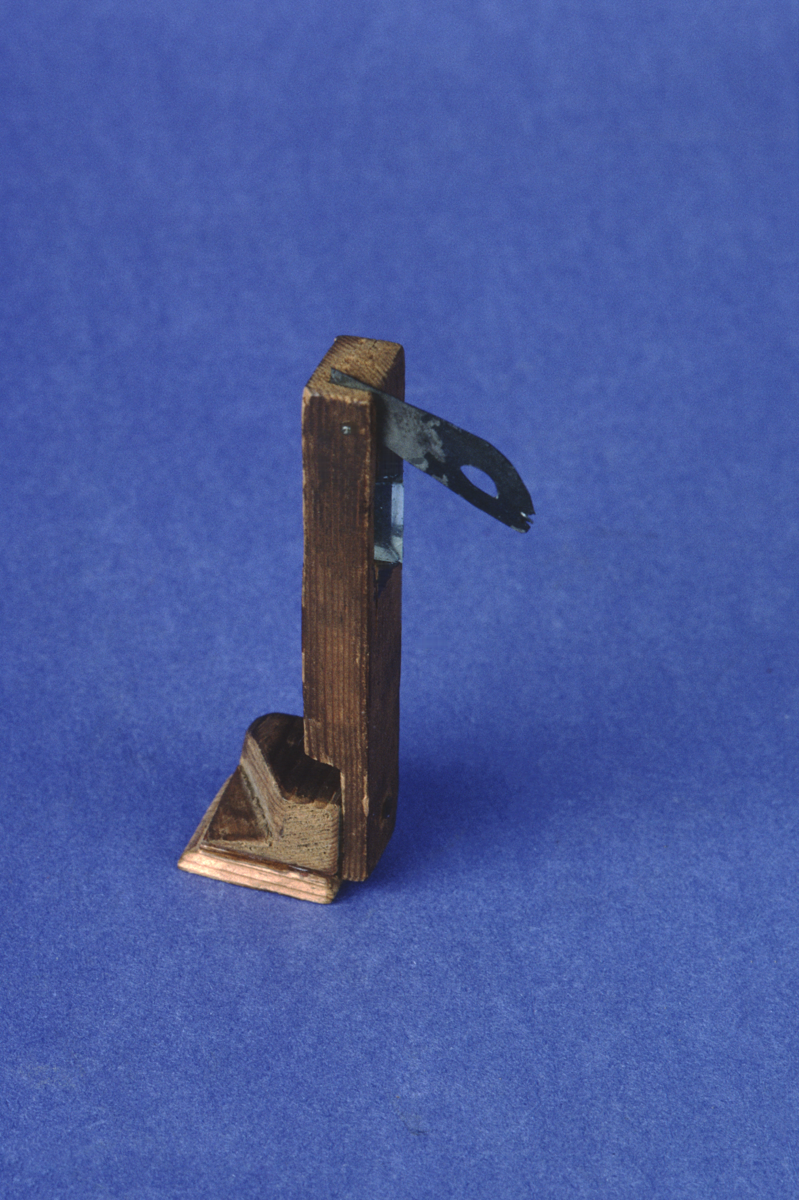
camera lucida, experimental prototype by William Hyde Wollaston, English, 1802 (c)
Origin
England
Maker
Wollaston, William Hyde
Class
optical
Earliest Date
1800
Latest Date
1806
Inscription Date
Material
wood; glass; wax (sealing wax); metal (tin)
Dimensions
100mm (height), 23mm (width), 40mm (depth)
Special Collection
Provenance
On loan from the Cavendish Laboratory, University of Cambridge. Belonged to William Hyde Wollaston (accessions register: ‘original model in wood of Wollaston’s Camera Lucida'). From Wollaston collection.
Inscription
Description Notes
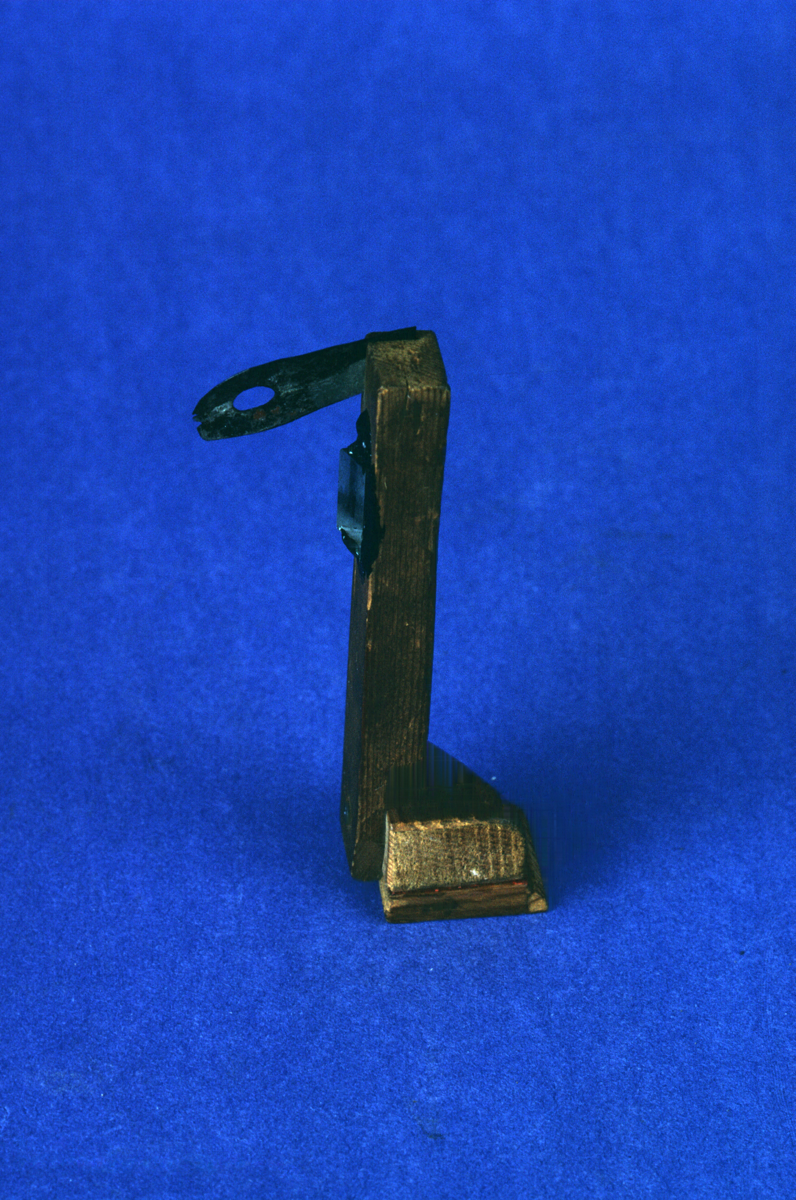
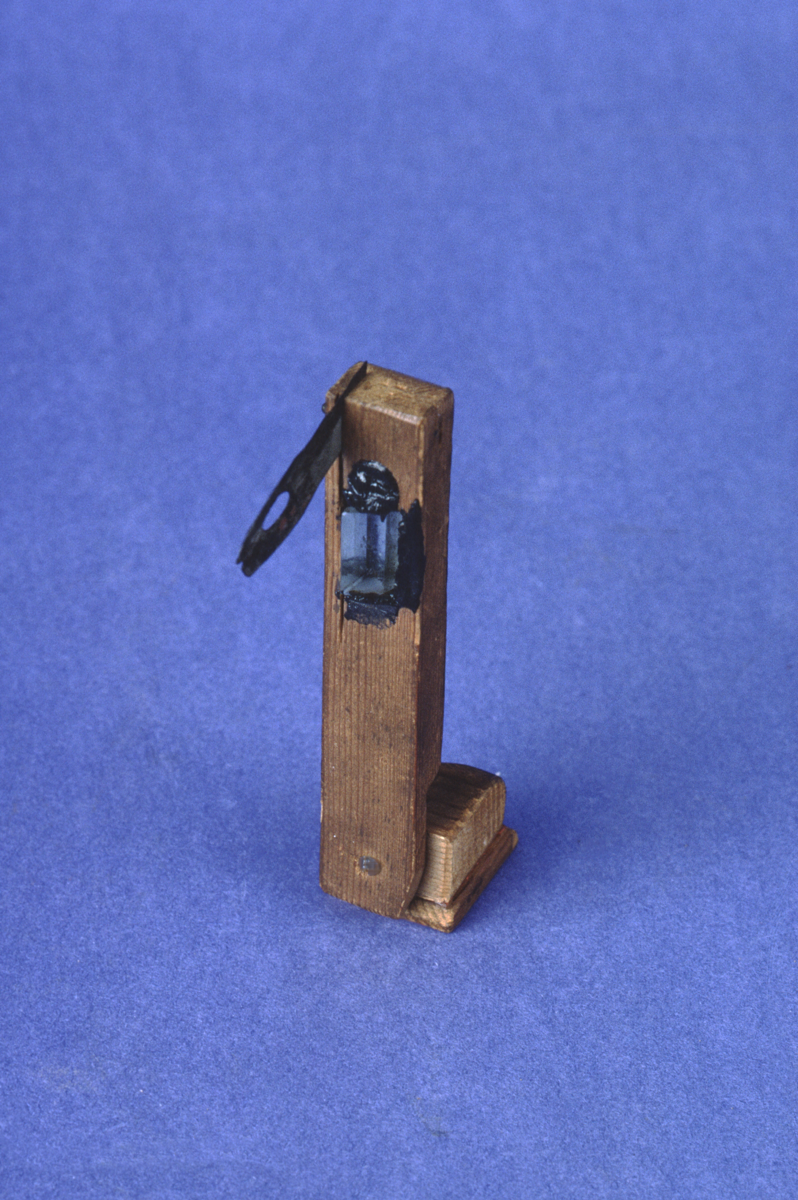
Camera lucida, experimental prototype by William Hyde Wollaston, English, c. 1802.
Wooden frame. Quadrilateral prism held in place by black sealing wax. Pivoting tin eyeshade. Frame screwed to small block at end opposite to prism.
Complete.
References
Events
Description
The camera lucida (meaning “room of light”) was an aid for artists, surveyors and architects. The camera lucida is a four-sided reflective prism on the end of a supporting arm. When positioned above a horizontal sheet of paper it worked by reflecting an image of the scene or document in front of the artist onto the paper to allow it to be copied, and the sliding bar could be adjusted to produce a reduced or enlarged image.
If an exact copy of an object was needed the prism would be positioned at equal distance from the object and the table. The further the object was from the table the more the image size would be reduced.
This particular camera lucida may have been made by William Hyde Wollaston, who originally invented them in the early 1800s.
Display label:
This drawing aid, possibly the prototype, was invented by
Dr. William Hyde Wollaston (1766-1828). It enables a person to draw in perspective or to reproduce any print or drawing. It consists of a four-sided prism mounted on the end of a supporting arm. When sited above a horizontal sheet of paper, it is possible to see a reflected image of the scene in front. By looking over the edge of the prism an artist can trace the image on the paper below.
Wollaston was a natural philosopher who studied at Cambridge (at Gonville and Caius College). He later became the Secretary of the Royal Society (1804-1816).
23/05/2002
Created by: Isabel Foote on 23/05/2002
FM:43182
Images (Click to view full size):