Accession No
1660
Brief Description
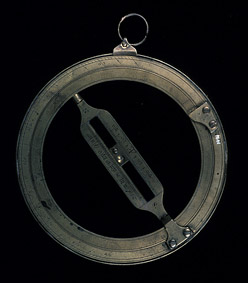
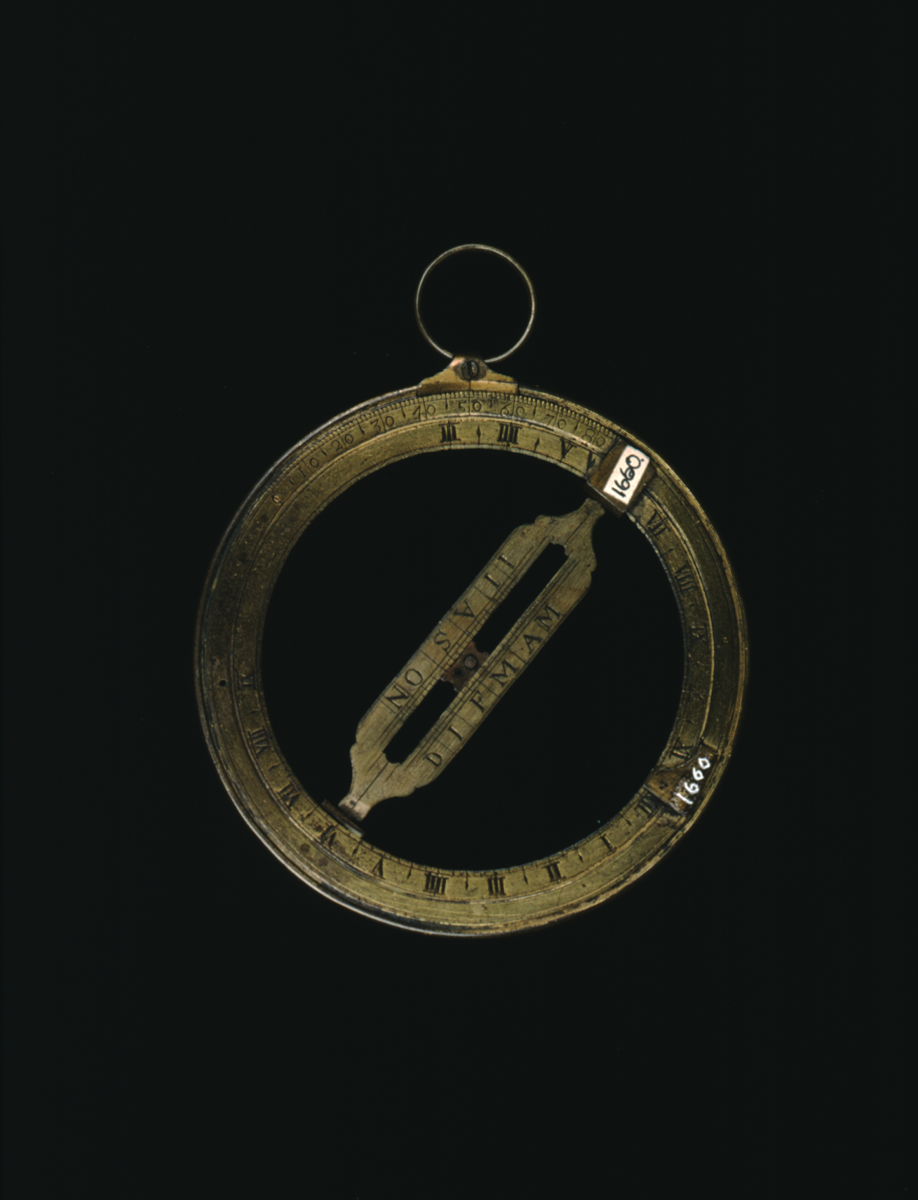
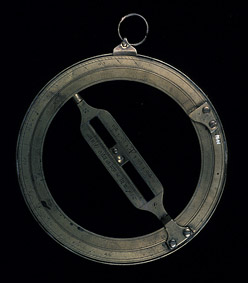
universal equinoctial ring dial, English, first half 18th century
Origin
England
Maker
Class
dials
Earliest Date
1700
Latest Date
1750
Inscription Date
Material
metal (gilt brass)
Dimensions
length 125 mm; diameter 101 mm
Special Collection
Fitzwilliam collection
Provenance
On loan from The Fitzwilliam Museum, University of Cambridge. Spencer George Percival Bequest, 1923.
Inscription
Description Notes
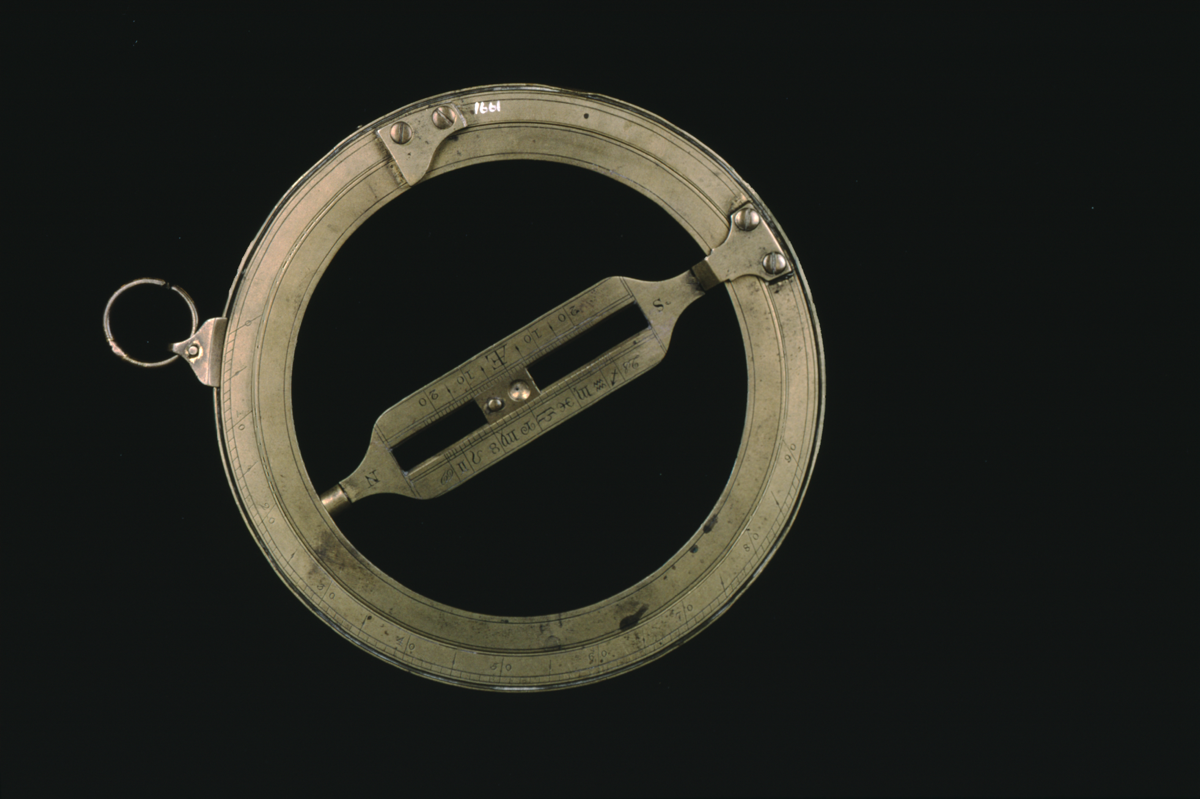
Meridian ring calibrated for northern latitudes, divided 0 - [90˚], numbered by 10˚, subdivided to 1˚. Suspension shackle with brass suspension ring. Equinoctial ring divided III - XII, I - IX, numbered by I, subdivided to 15 minutes; similarly divided on inner face. Pierced bridge with date scale divided to named (initialled) month, subdivided to 5 days; on reverse a declination scale divided [23˚ 30´] - 0 - [23˚ 30´], numbered by 10˚, subdivided to 1˚ (1st Aries = 10 March). Sliding pinhole gnomon.
(Reverse carries altitude quadrant divided 0 - 90˚, numbered by 10˚, subdivided to 1˚; 31-1-2000).
Condition: good; complete.
References
Events
Description
The universal equinoctial ring dial was designed by the English mathematician William Oughtred in the first half of the seventeenth century. It could be used at any latitude, so was a popular timekeeper for sailors and other travellers. It was really a much simplified version of the armillary sphere, only keeping the parts which were needed for telling the time.
The universal equinoctial ring dial consists of two rings and a bridging bar inside the inner ring. The outer ring represents a circle passing through the North and South celestial poles. The inner ring is called the ‘equinoctial’ ring because it represents the celestial equator. The bridging bar represents the axis of the world, just as the gnomon on an ordinary horizontal dial does. So the instrument is a very simple model of the heavens.
01/02/2001
Created by: Dr Hester Higton on 01/02/2001
FM:43197
Images (Click to view full size):