Accession No
0975
Brief Description
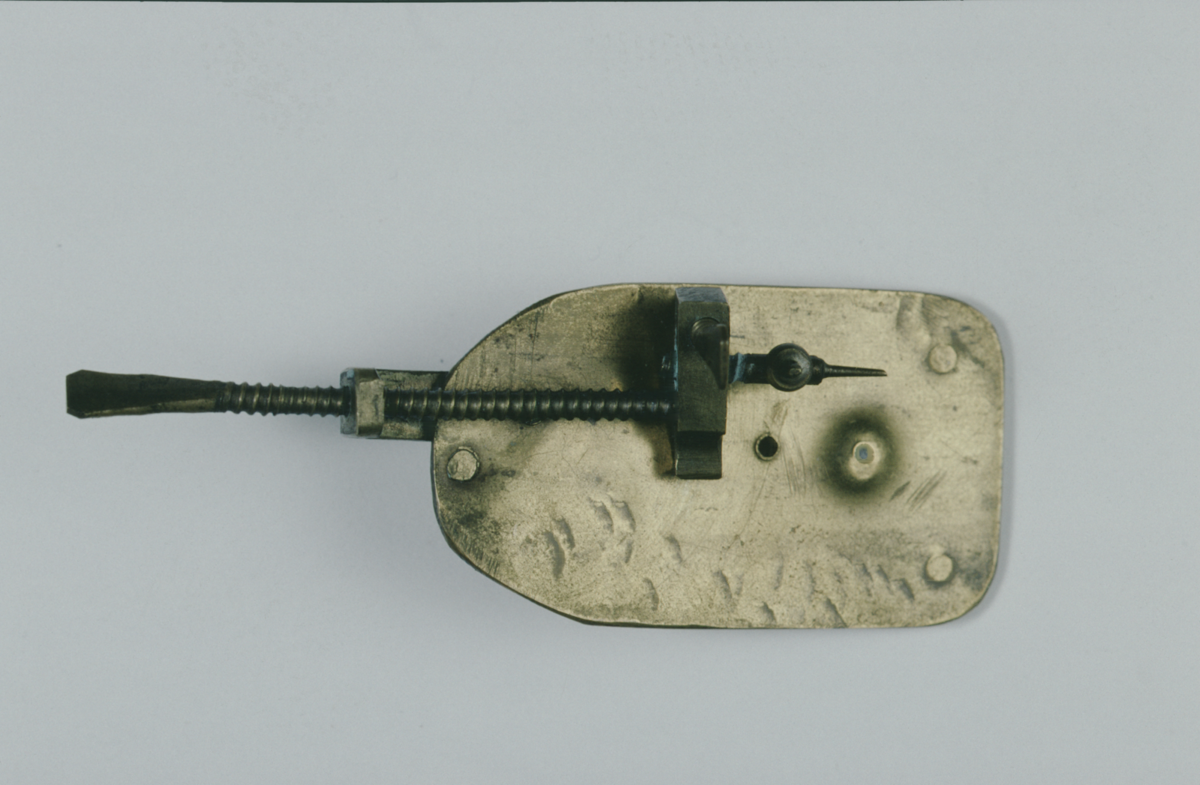
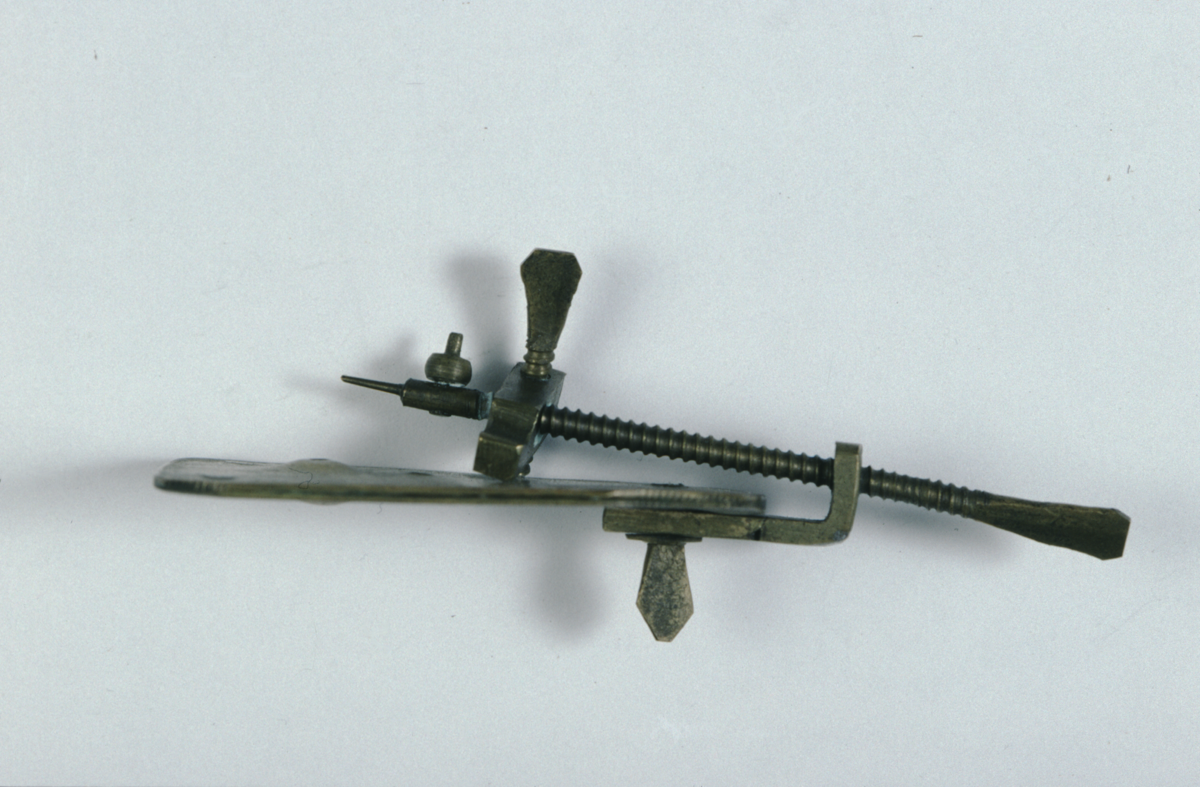
simple microscope, replica of Leeuwenhoek type, by John Mayall, English, 1886 (c)
Origin
England
Maker
Mayall, John
Class
microscopes
Earliest Date
1886
Latest Date
1886
Inscription Date
Material
metal (brass); paper (cardboard); hide (leather)
Dimensions
case height 81 mm; breadth 40 mm; depth 37 mm
Special Collection
Robert Whipple collection
Provenance
Inscription
Description Notes
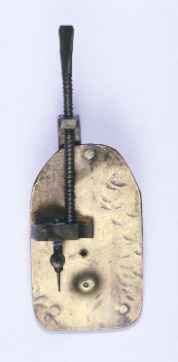
Simple microscope, replica leeuwenhoek type, by John Mayall, English, circa 1886.
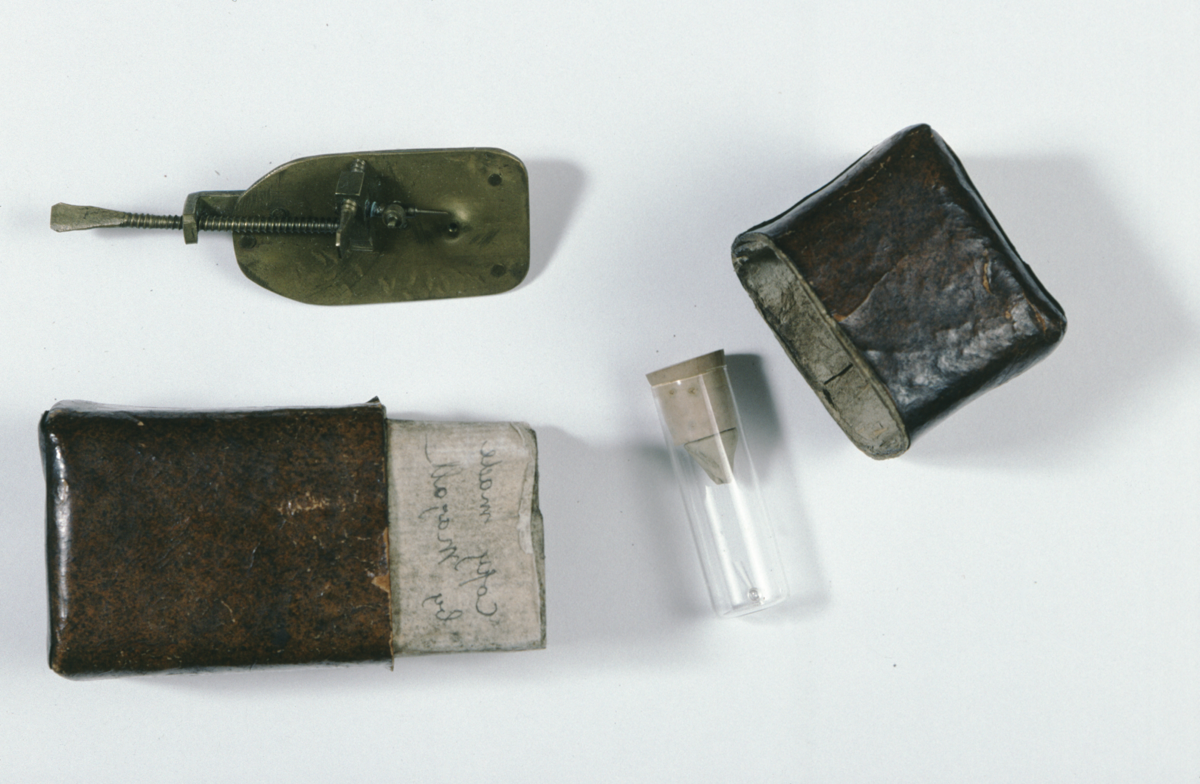
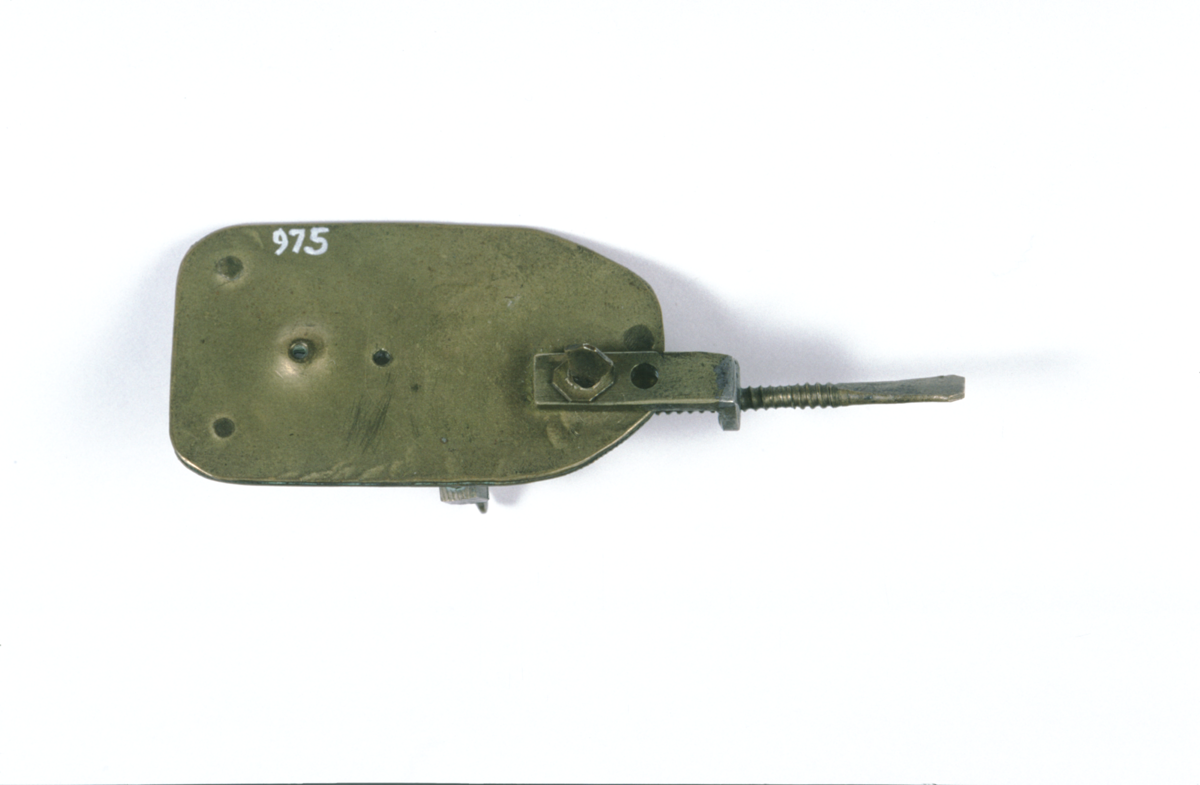
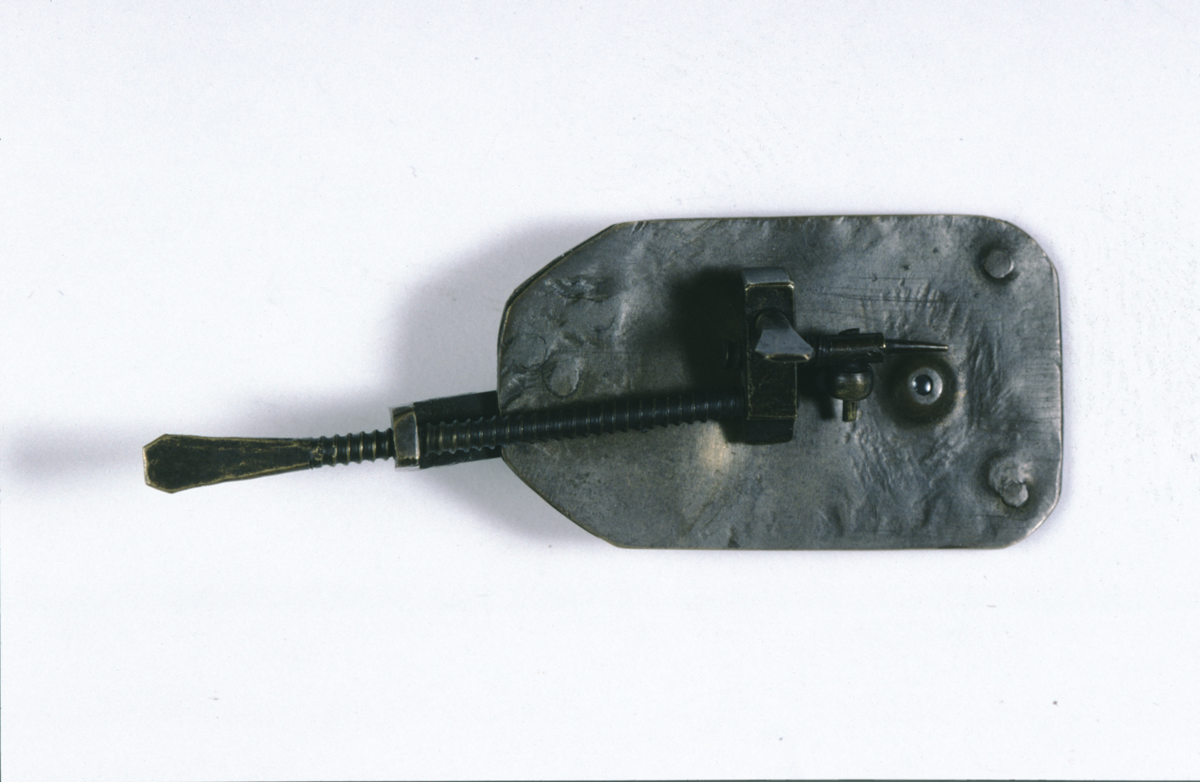
Two brass plates riveted together with lens between them; pin on threaded rod to a brass block; two further threaded rods adjust the position of the pin attached to the underside of the plates by an ‘L’-shaped brace.
Leather covered cardboard slip case.
References
Events
Description
R.S. Whipple had a particular interest in the history of optical instruments, especially microscopes. Over the course of his life Whipple would acquire more than two hundred examples—nearly 20% of the objects in his collection.
Antonie van Leeuwenhoek (1632-1723) was a pioneer in the field of microscopy. His small hand-made instruments are among the earliest examples of the instrument, with fewer than a dozen now known to survive. Robert Whipple wasn't able to acquire an original example, but he did get the next best thing: this precise replica.
08/10/2025
Created by: Hannah Price on 08/10/2025
Description
This simple microscope is a Leuuwenhoek copy made by John Mayall c. 1886. Antoni van Leeuwenhoek (1632-1723) was a cloth merchant from Delft and made the earliest surviving examples of a simple microscope. Leeuwenhoek crafted the lens from glass beads and mounted the lens in between metal plates. A spike was used to hold the specimen close to the lens and the microscope was then handheld in front of the eye. Leeuwenhoek was the first person to see bacteria.
From display label:
Antoni van Leeuwenhoek was one of the pioneers of microscopy. He was a cloth merchant from Delft (Netherlands), and in the late 17th century he began to make his own single-lens microscopes. During his lifetime he became famous for the quality of his observations, and the closely-guarded secret of how his lenses were made.
By the late 19th century only a handful of the many hundreds of instruments he made survived. John Mayall was a microscope enthusiast with an interest in early instruments. After seeing a Leeuwenhoek microscope brought from Utrecht to London, he began to make replicas, such as this.
FM:43309
Images (Click to view full size):