Accession No
0892
Brief Description
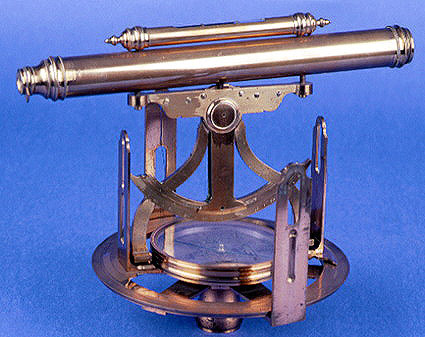
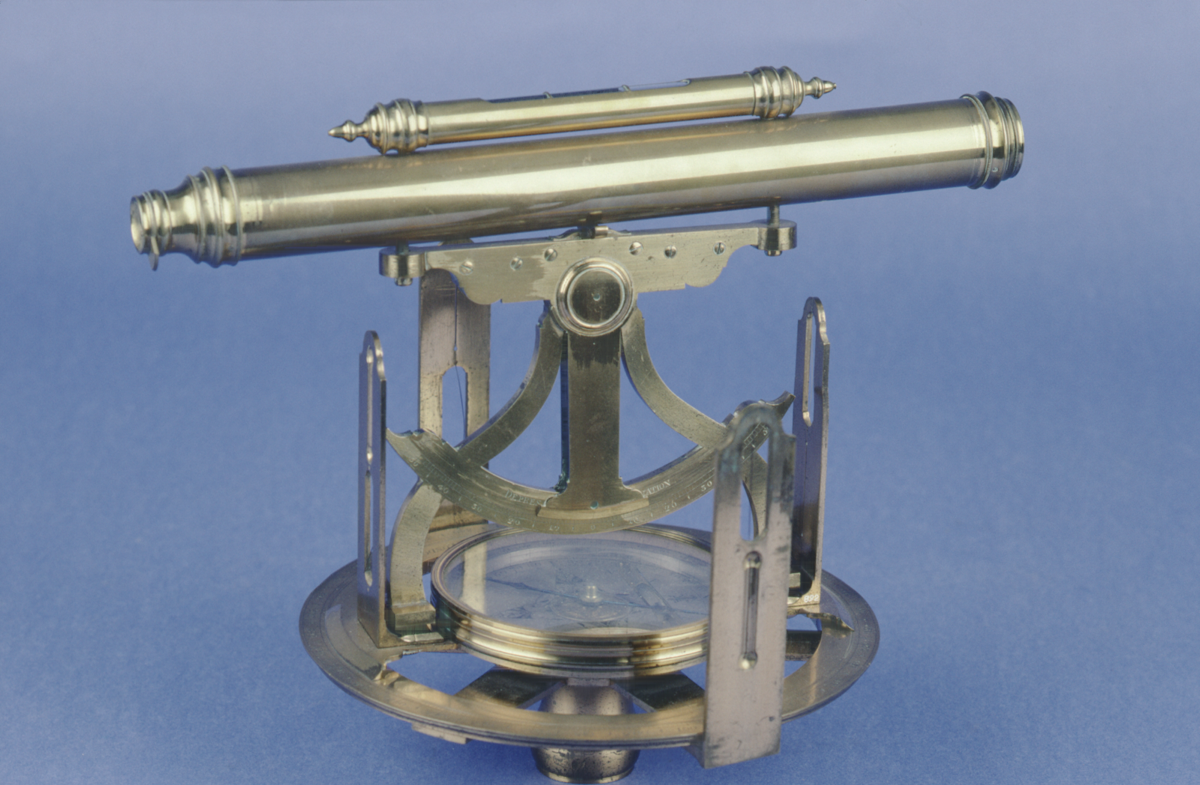
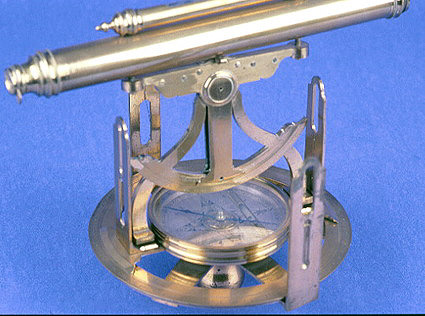
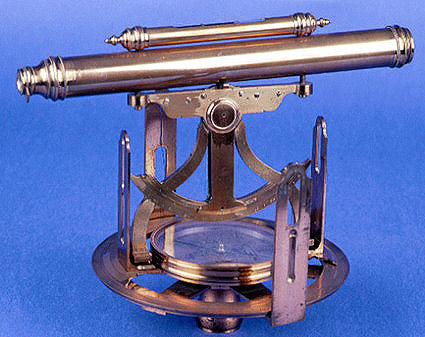
Altazimuth theodolite, by Benjamin Cole, English, 1750 (c)
Origin
England; London
Maker
Cole, Benjamin
Class
surveying
Earliest Date
1750
Latest Date
1750
Inscription Date
Material
metal (brass); glass
Dimensions
diameter 203mm; height 148mm telescope length 300mm; height 180mm; breadth 35mm box length 321mm; breadth 224mm; height 80mm
Special Collection
Robert Whipple collection
Provenance
Purchased by Robert Stewart Whipple in 06/1939.
Inscription
‘COLE MAKER LONDON’ (on circle)
Description Notes
Altazimuth theodolite, by Benjamin Cole, c. 1750.
Brass pierced circle graduated 0 -360˚ subdivided to 1. Read by vernier on alidade to 5’. Two fixed slit and window sights. Slit and window alidade. Compass mounted centrally on alidade; silvered 8 point rose; graduated 0 - 360˚ and 0 - 90 - 0˚ twice. Bubble set into compass face. Alidade sights can be unscrewed and replaced by fixed focus telescopic sight and altitude scale; sliding covers for eyepiece and objective; inverting telescope with cross hairs. Bubble mounted over telescope. The whole mounted on scale of ‘Elevation’ and ‘Depression’ graduated 50 - 0 - 50 subdivided to 1; and on verso ‘Links of chain’ graduated 30 - 0 - 30. Fitted wooden box.
References
Events
Description
The theodolite allows the surveyor to measure horizontal or vertical angles. For horizontal angles, point A is sighted through the telescope and its bearing noted from the graduated circumference; point B is then sighted, and its bearing noted. The difference between the two measurements is the angle between them.
For measuring vertical angles, a horizontal point A is taken with the bubble-level on the telescope; with the telescope tilted to point B, the angle of elevation is read from the graduated arch supporting the telescope.
Gemma Frisius proposed the idea behind the theodolite in 1533. At the time new methods of surveying were being used and by combining an Alidade, a magnetic compass and the degree scale on the back of an Astrolabe, the calculations made by modern theodolites could be observed. Unfortunately, this method was not practical due to the combination of instruments. The best of the attempts to simplify the process was the ‘theodolitus’, first described in print by Leonard Digges in 1571.
However, this instrument could only take measurements in the horizontal plane. Despite this it was still thought of as the ‘common’ Theodolite up to the late 18th century.
During the 19th century the Altazimuth Theodolite was considered the most useful theodolite, as it could measure on the horizontal and vertical planes. Three notable types of Altazimuth Theodolite were developed: The Everest Theodolite, the Plain Theodolite and the Transit Theodolite.
Jonathan Sisson (c.1690–1747) was the first maker of these telescopic theodolites, which were soon copied and improved by other craftsmen. Benjamin Cole (1695–1766) and his son of the same name were known for fine circumferenters and theodolites.
10/03/2009
Created by: Dr. Anita McConnell on 10/03/2009
FM:43330
Images (Click to view full size):