Accession No
0924
Brief Description
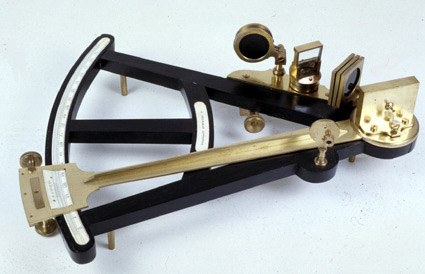
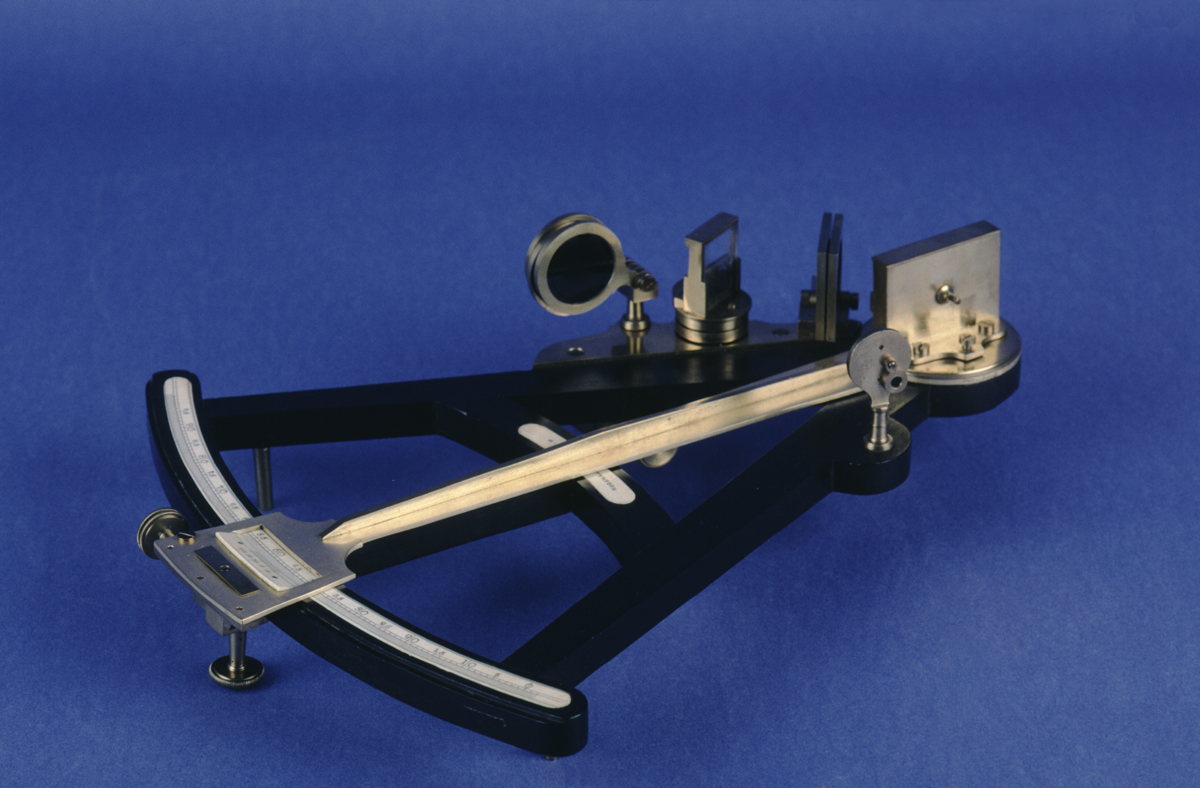
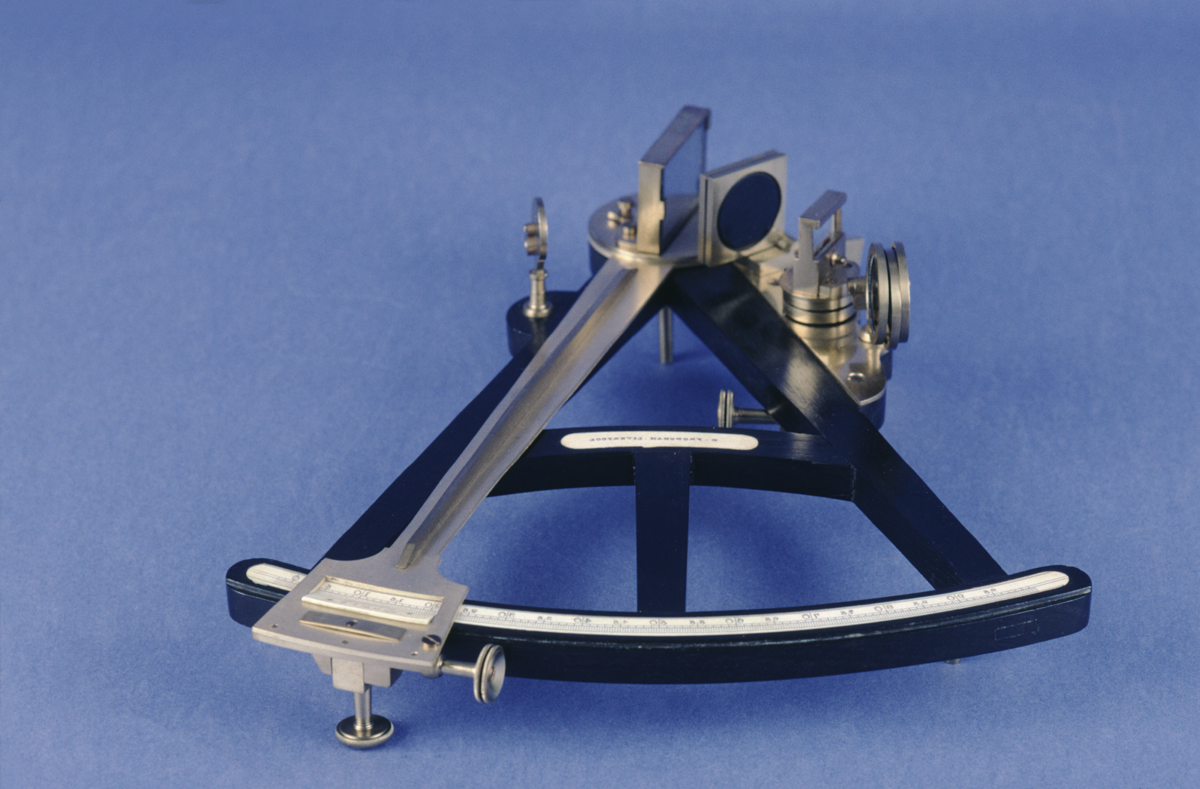
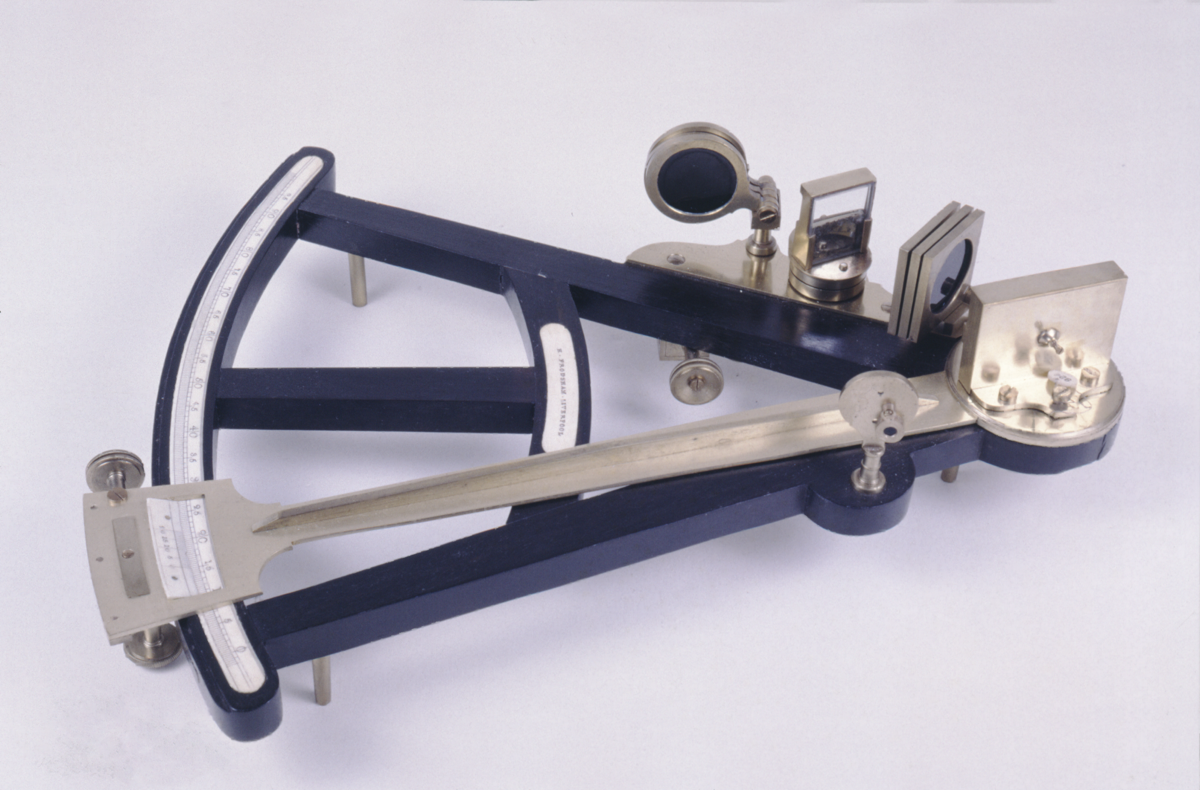
octant, by H. Frodsham, English, 1850 (c)
Origin
England; Liverpool
Maker
Frodsham, H.
Class
navigation
Earliest Date
1850
Latest Date
1850
Inscription Date
Material
wood (ebony); metal (brass); ivory; glass
Dimensions
length 310mm; breadth 265mm; depth 77mm
Special Collection
Provenance
Inscription
‘H. FRODSHAM LIVERPOOL’ (ivory plate on brace)
Description Notes
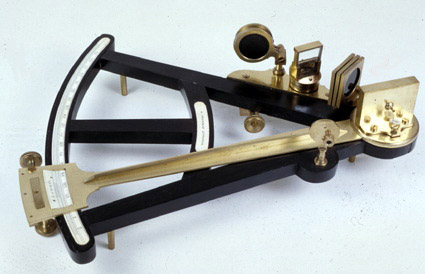
Ebony frame, ivory scale. Reinforced brass index arm with ivory, type-B vernier, brass clamp and tangent screw. Brass mounts for mirrors and shades, brass double pinhole sight. Adjustable index mirror with three shades. Horizon glass with three shades and lever adjustment moved by knurled screw. Second adjusting screw alters plane of horizon glass. Inset ivory plate with maker’s inscription. Inset ivory note plate on reverse. Three brass feet. Pencil hole in brace.
Condition ; incomplete (pencil missing)
References
Events
Description
John Hadley, an English seafarer, invented the octant (also called a Hadley quadrant) during the 1730’s. It was used to find latitude by measuring the altitude of the sun, moon or stars.
An octant is an angle of 45°, or an eighth of a circle. The octant was first made with mahogany frames and scales on inlaid boxwood. By the early 19th century ebony (a much more hard wearing wood) had replaced the mahogany to craft the frames which had brass index arms.
The octant is used in a similar way to a sextant. The observer raises the octant until the horizon can be seen through the horizon glass. The index arm and attached index glass are moved until the twice-reflected image of the sun or star can be seen superimposed on the horizon, enabling an angle to be read off.
Henry Frodsham (1802-58) of Liverpool, whose name apears on the ivory plate on the brace, was a chronometer maker who also kept a navigation warehouse. Although by the time that this octant was made, probably around 1850, brass sextants were readily available, their high cost led many seamen to prefer cheaper wooden-framed octants.
Created by: Corrina Bower & Dr Anita McConnell
FM:43357
Images (Click to view full size):