Accession No
3743
Brief Description
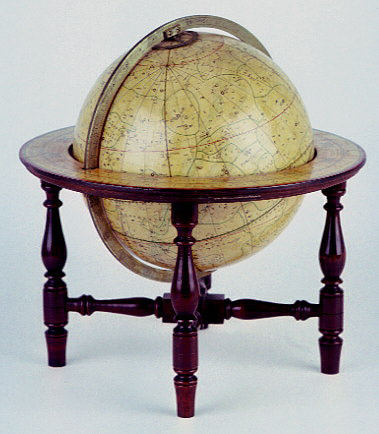
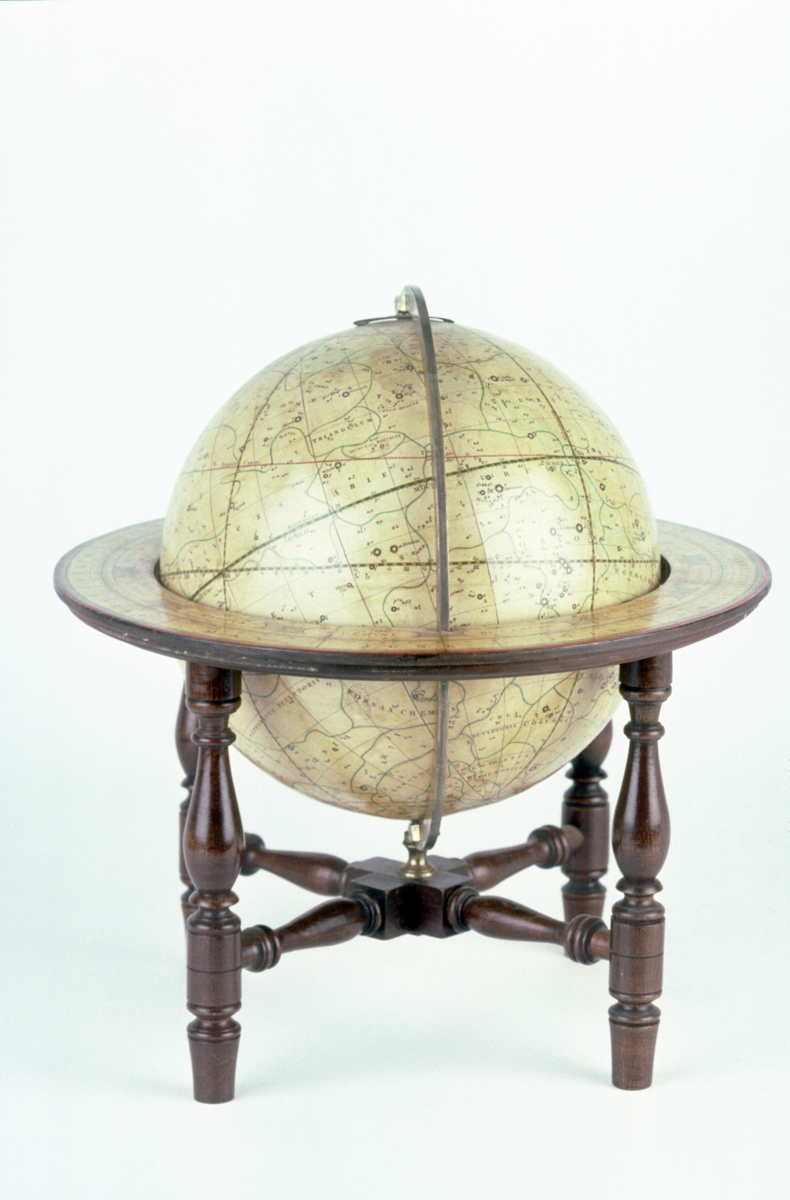
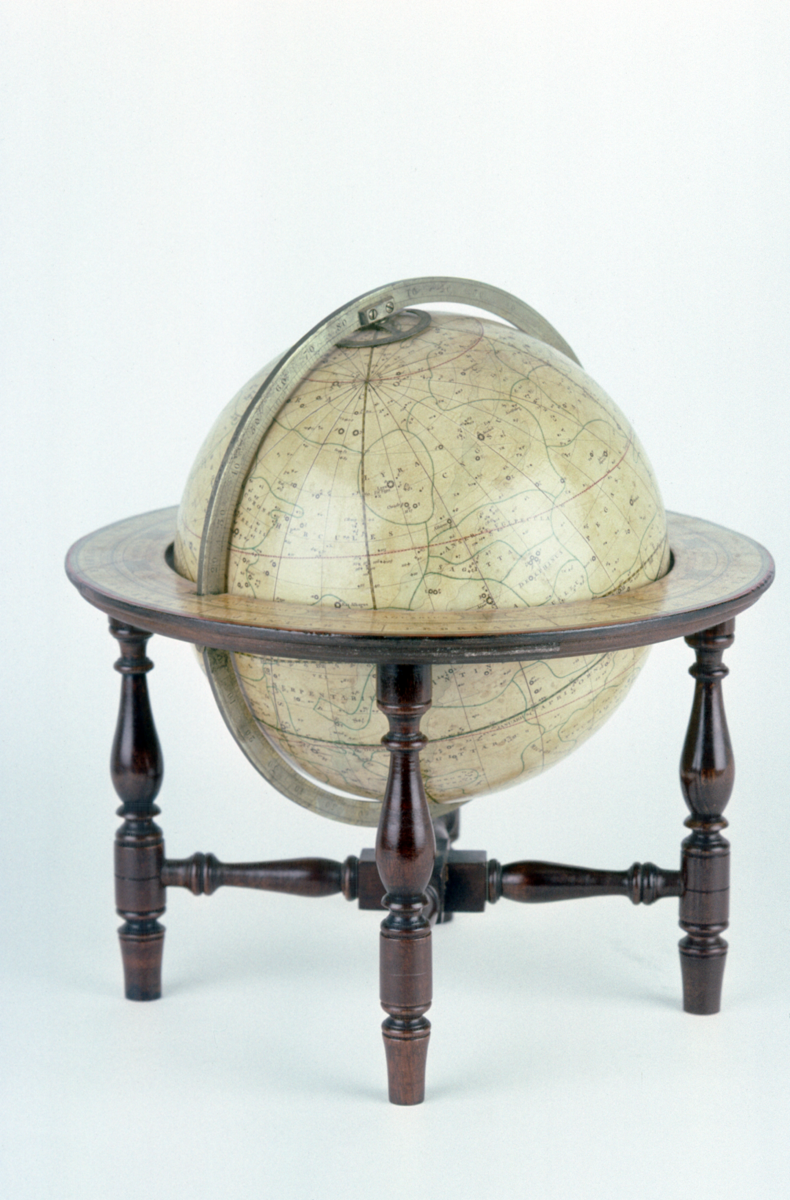
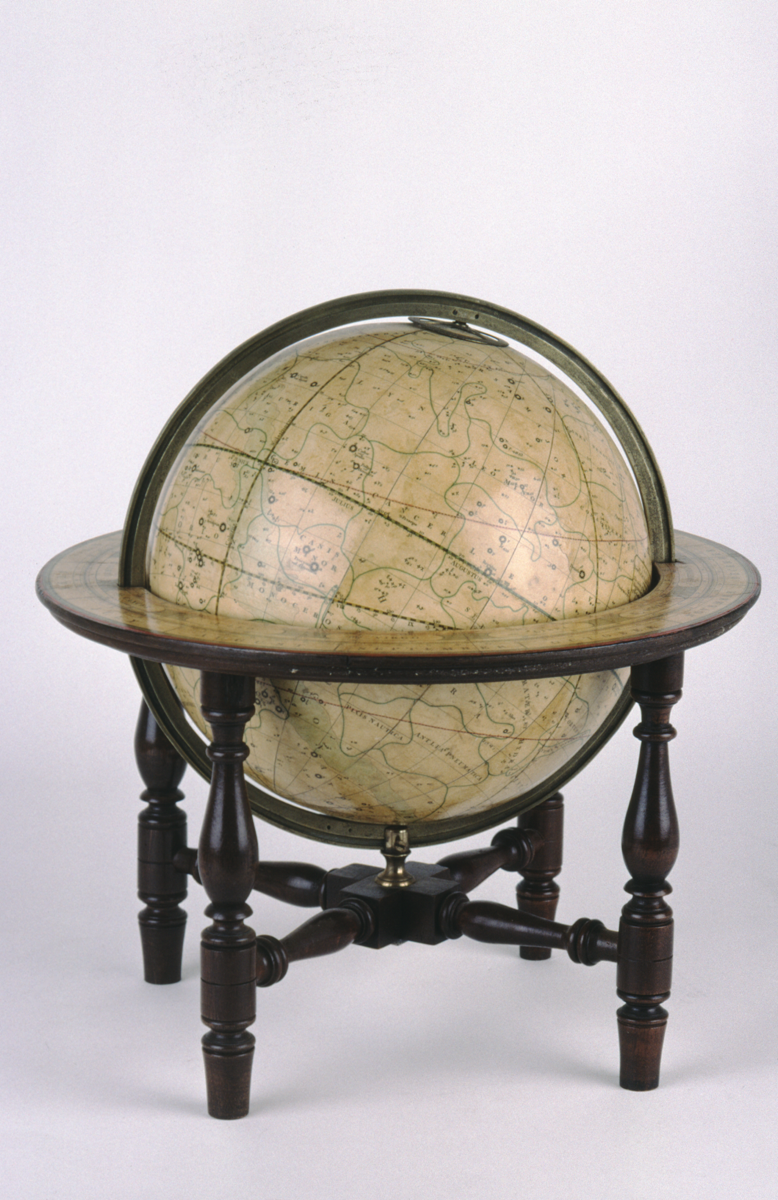
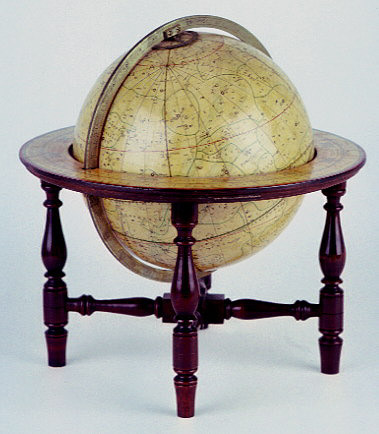
9-inch celestial globe, by J. and W. Cary, English, 1816
Origin
England; London
Maker
J. and W. Cary
Class
astronomy
Earliest Date
1816
Latest Date
1816
Inscription Date
Material
paper; wood; metal (brass)
Dimensions
height 350mm; horizontal ring diameter 330mm
Special Collection
Provenance
Purchased from Sotherby's, London, England; lot 288, 03/10/1988.
Inscription
‘CARY’S
New Celestial Globe
WITH
the whole of the Stars to the fifth
Magnitude inclusive’ (cartouche)
Description Notes
9-inch celestial globe, plaster sphere with printed paper gores, by J. & W. Cary, 1816.
12 paper gores. Brass meridian ring. Wooden horizon ring with zodiac signs and calendar ring. Globe has boundaries of constellations marked but not the pictorial representations. Set in 4-legged wooden stand with stretchers.
Complete.
References
Events
Description
Celestial globes modelled the heavens and the location of stars in relation to one another. Used to chart the location of the Earth in the universe and for geodesic calculations, these globes were useful in solving navigational and astronomical problems. The introduction of new printing technologies into the map-making industry rendered globes more widely available than earlier periods. Often they were sold as a set of two globes: celestial and terrestrial. The star-chart on this globe depicts stars to the fifth magnitude. The globe was produced by the instrument maker and map publisher John Cary (1755–1835) and his brother William Cary (1759–1825); the Cary firm became the leading globe-making producer in nineteenth-century Britain. In 1770, John began his apprenticeship to William Palmer of New Street Square London, and became a freeman in 1778. Three years later, John opened his globe-making business and convinced William to join him in the production of globes and planetaria; however, the two brothers maintained separate businesses with other projects.
14/01/2014
Created by: Allison Ksiazkiewicz on 14/01/2014
FM:43482
Images (Click to view full size):