Accession No
1109
Brief Description
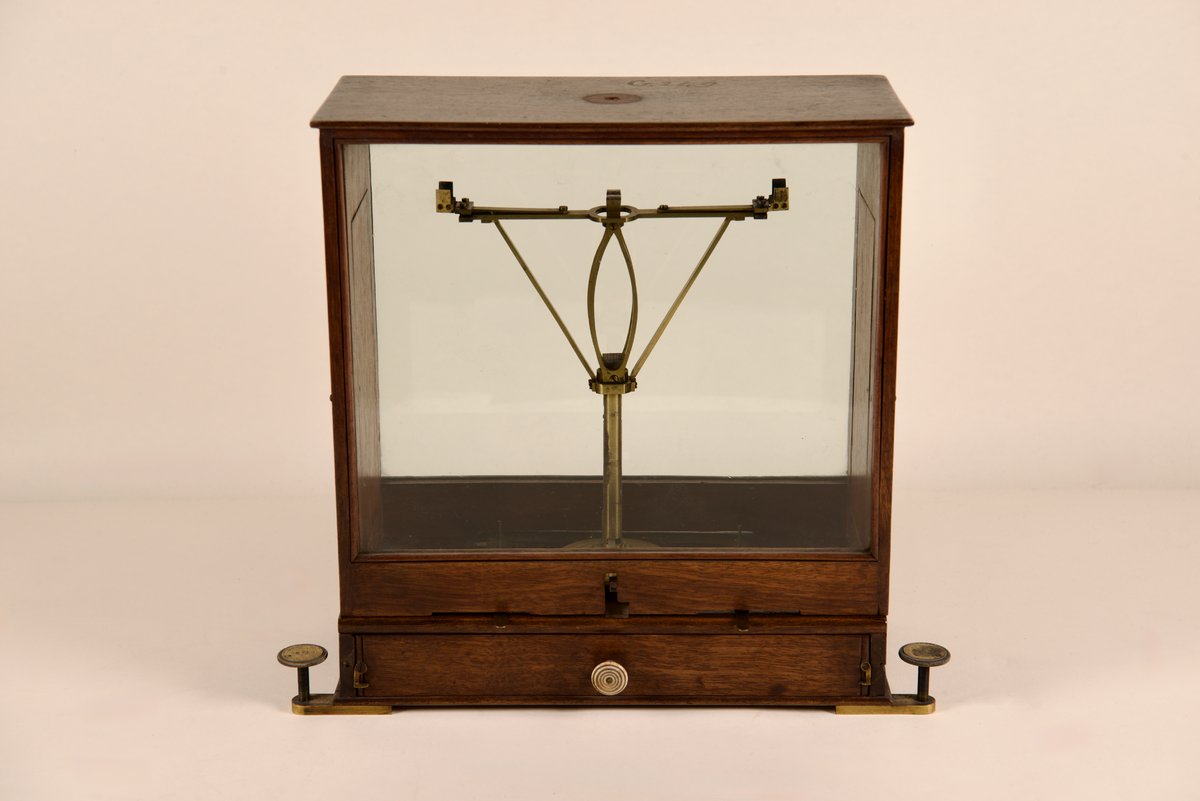
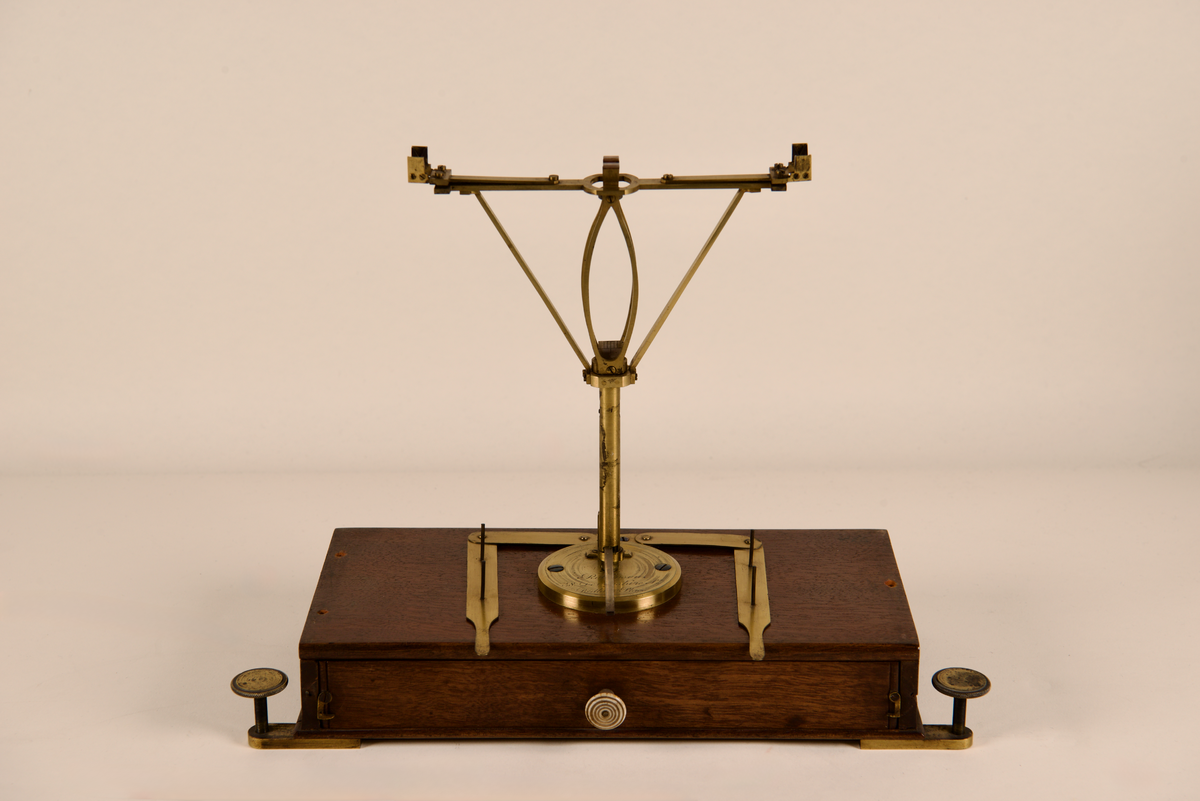
chemical balance, 5 1/2-inch beam, by Thomas Charles Robinson, English, 1825 (c)
Origin
38 Devonshire St; Portland Place; London; England
Maker
Robinson, Thomas Charles
Class
balances
Earliest Date
1825
Latest Date
1828
Inscription Date
Material
wood; glass; metal (brass, steel, silver); stone (agate); rope (string)
Dimensions
case length 280mm; breadth 135mm; height 252mm
Special Collection
Cavendish collection
Provenance
Transferred from the Cavendish Laboratory, University of Cambridge, from 10/1951. R. T. Gunther asserts that this was used by W. H. Wollaston (died 1828) in the Cavendish Laboratory. It is recorded in the Cavendish Laboratory's 1894 alphabetical catalogue of apparatus as being part of the Wollaston Collection.
Inscription
‘Robinson
38 Devonshire St
Portland Place’ (base of central pillar)
Description Notes
Chemical balance, 5 1/2-inch beam, by Robinson, English, c. 1825.
Brass. Open triangle-shape beam with steel centre knife and steel end knives with inclined-slit and steel pressing screw adjustment. Steel ‘J’ wires to disched circular pans on cords with steel suspension hooks. 1 spare ‘J’ wire. Pointer with screwed sensitivity bob turns over silvered scale. Wire flag adjustment over centre knife. Supported on circular brass column on circular base plate screwed to wooden base. Beam then on two verticals with elongated oval apertures and diagonals. Agate centre plane split into two halves. Base board with 3 brass levelling screws and fitted drawer for beam and pans containing tweezers, round box for ‘tenths and hundredths’ with some weights. Tweezers and two circular brass 100 grain weights. Screwdriver. Bubble level. Brass pan arrestment lever on case. Glazed cover with opening side door fits over base board.
Condition
References
Events
Description
The modern short-beam precision analytical balance is normally considered to have originated in 1866 with the theoretical analysis and practical achievements of the German engineer Paul Bunge. Whilst Bunge was the first to indicate the theoretical possibility of attaining a highly sensitive and stable short-beam balance, a London instrument maker, T.C. Robinson, had attained that end some 40 years earlier. By 1829 Robinson was advertising his 5 1/2inch beam balance was capable of bearing 400 grains in each pan with a sensitivity of .001 grain.
This early short-beam balance by Robinson dates from 1825 (c). The centre and end knives are in steel. The two-piece centre plane is agate, whilst the steel J-wire from which the pan is hung also acts as a two-piece end plane.
FM:43507
Images (Click to view full size):