Accession No
0296
Brief Description
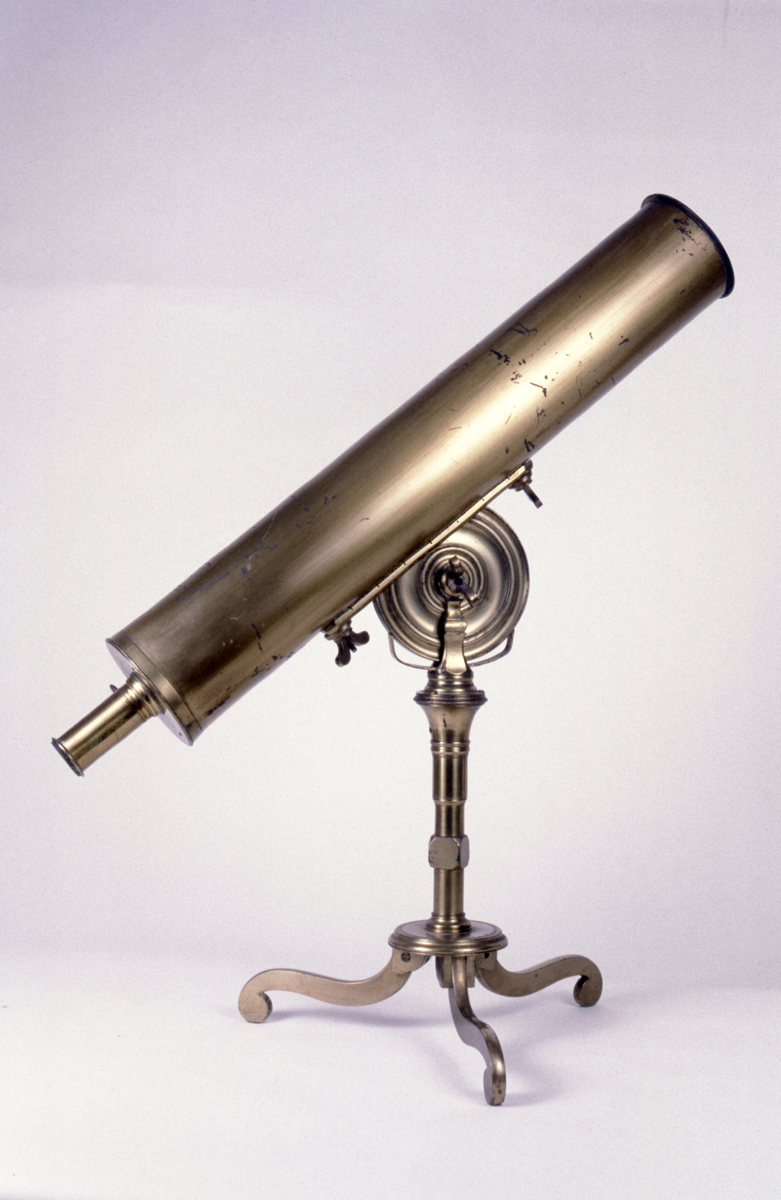
reflecting telescope, Gregorian, by Francis Watkins, English, circa 1750
Origin
Charing Cross; London; England
Maker
Watkins. F
Class
astronomy; optical
Earliest Date
1750
Latest Date
1750
Inscription Date
Material
metal (brass, speculum metal); glass
Dimensions
height 545mm; length 698mm; breadth 325mm
Special Collection
Robert Whipple collection
Provenance
Purchased by Robert Stewart Whipple from Ralph Beard, London, in 10/1926. Repaired by G. Green in 02/1927.
Inscription
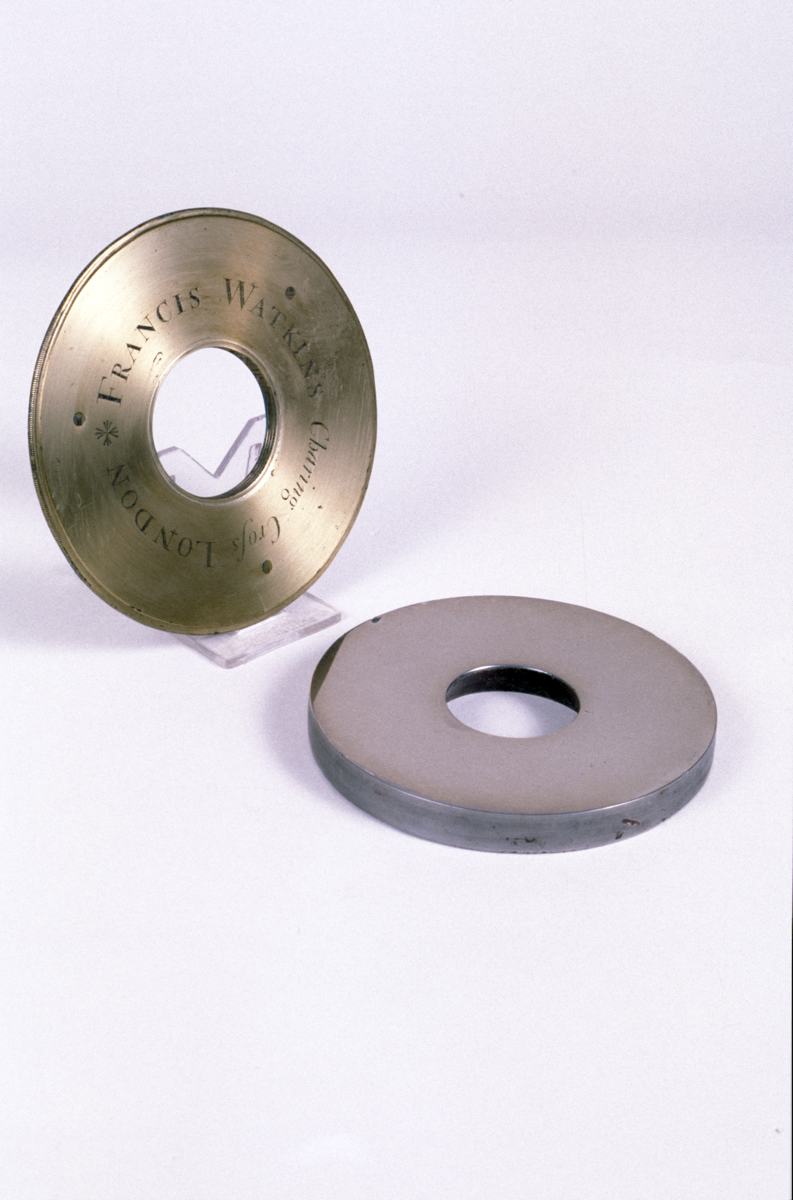
‘FRANCIS WATKINS Charing Cross LONDON’ (eye-end)
Description Notes
reflecting telescope, Gregorian, by Francis Watkins, English, circa 1750.
Gregorian reflecting telescope, brass. Barrel with push-on cover. Screw-in eye-end with screw-in eyepiece (threaded for eyepiece shade, missing). Three springs hold speculum metal primary mirror. Focus from eye-end by long screw moving speculum metal secondary mirror. Barrel secured by two brass wing nuts to altazimuth stand, with brass friction clamp and securing nut. Pillar and folding tripod stand.
References
Events
Description
Isaac Newton built the first reflecting telescope in 1669. Unlike a refracting telescope a reflecting telescope uses concave mirrors to focus light. The great advantage of using mirrors is that all colours of light are reflected equally. This was an improvement on the refracting telescope which used lenses to focus light. Here the light refracted at different angles to create a distorting fringe of colour around the image being observed.
At first high quality reflecting telescopes were difficult to make as the mirrors available to use degraded quickly and were unable to transmit enough light. But by the eighteenth century, methods of making mirrors had improved and instrument makers such as James Short had created hundreds of reflecting telescopes for sale.
There are three types of reflecting telescope: the Gregorian, the Cassegrain and the Newtonian. Both the Gregorian and Cassegrain telescopes are pointed directly at the object being viewed. But the Newtonian has a secondary mirror set at 45° to the objective so the observer stands at right angles to the telescope. Today modern telescopes (with apertures greater than one metre) are reflecting telescopes. Various innovations make them more powerful and accurate. Computer-controlled deformable mirrors can correct against changes due to atmospheric conditions or faults in the material.
Created by: Jenny Downes
FM:43514
Images (Click to view full size):