Accession No
0564
Brief Description
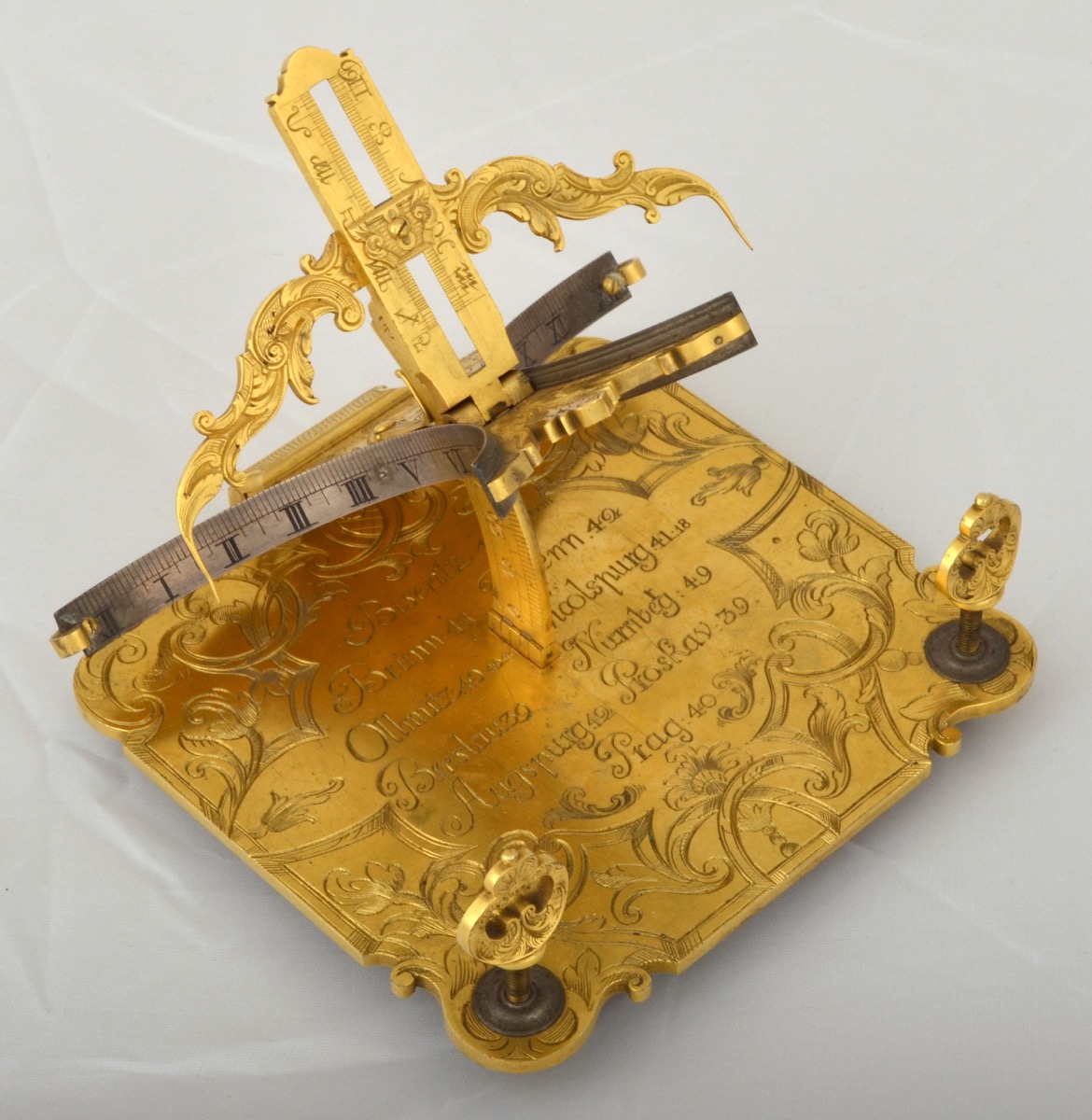
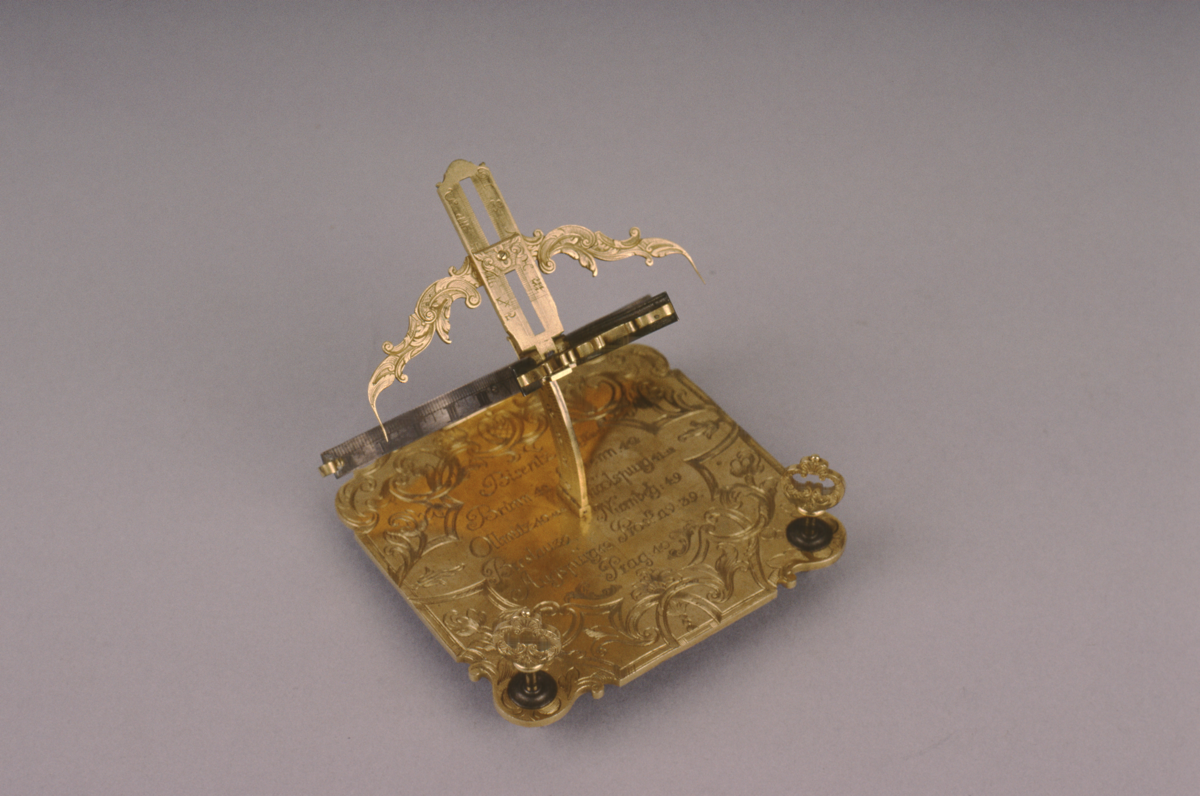
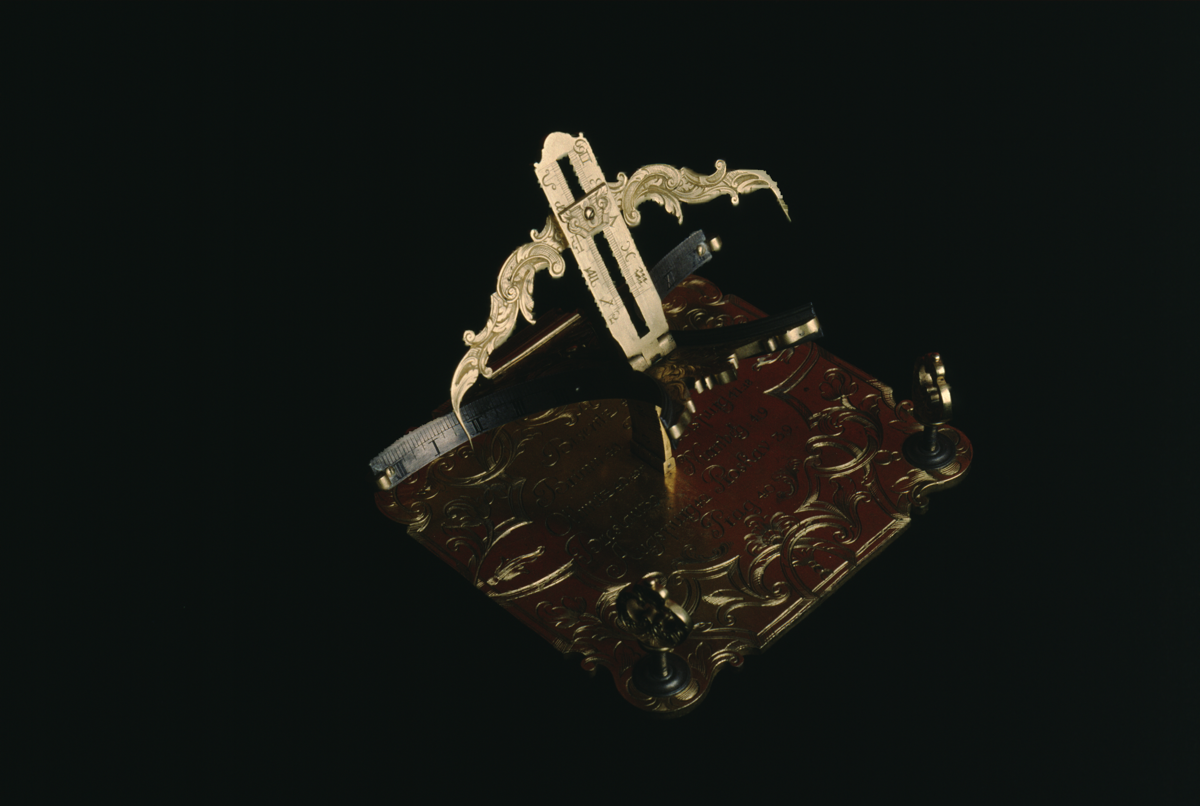
crescent dial, purportedly German, 18th Century, but actually a 1/4 20th Century fake
Origin
Germany [purported]; England [tentative attribution]
Maker
fake, unknown maker
Class
dials
Earliest Date
1900
Latest Date
1925
Inscription Date
Material
metal (gilt brass, silver); hide (leather); cloth (velvet)
Dimensions
box length 140mm; breadth 133mm; height 61mm
Special Collection
Robert Whipple collection
Provenance
Purchased from Antique Art Galleries, Grafton Street, London, England in 10/1929.
Inscription
Description Notes
Crescent dial, fake, 1/4 20th C.
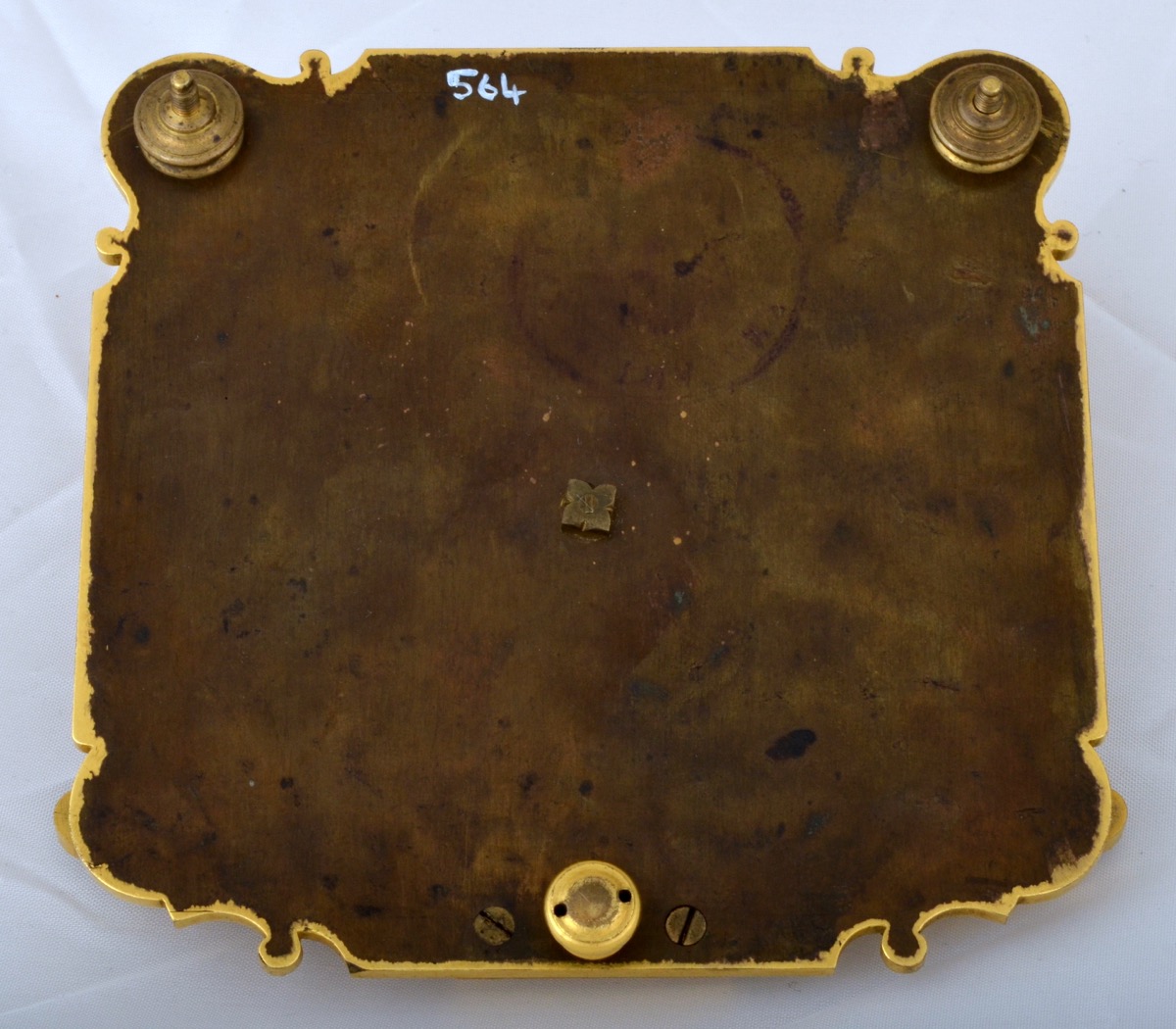
Gilt brass base plate on 3 feet (2 levelling screws). Hinged hour plate with 2 semicircular silver hour scale divided [III] - XII and XII, I - [IX], numbered by I, divided to 5 minutes. Gnomon sliding over declinations scale, divided to lettered month and zodiac symbol. Latitude arc divided [68˚] - 0, numbered by 10˚, divided to 1˚. List of 10 German and Eastern European towns with their co-latitudes (except Nürnberg which is given as latitude).
Fitted 18th-Century case covered with leather with gold tooling. (Appears to be a perfect fit, but for the lower section it was designed to house a compass, not required on this form of dial.)
‘Ostensibly German, 18th C, but the quality and style of the engraving, plus the use of co-latitudes and the manner of gilding, suggest a reproduction - compare that by H.A. Everard London, Sotheby & Co (1971), lot 81’ (catalogue)
[NOTE: On 15/04/2015 XRF analysis was conducted on this instrument. Results and analyses are given in the ‘Notes’ field.]
References
Events
FM:43525
Images (Click to view full size):