Accession No
3117
Brief Description
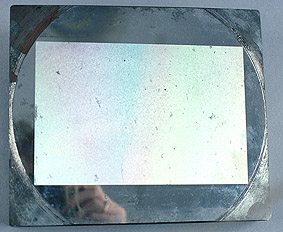
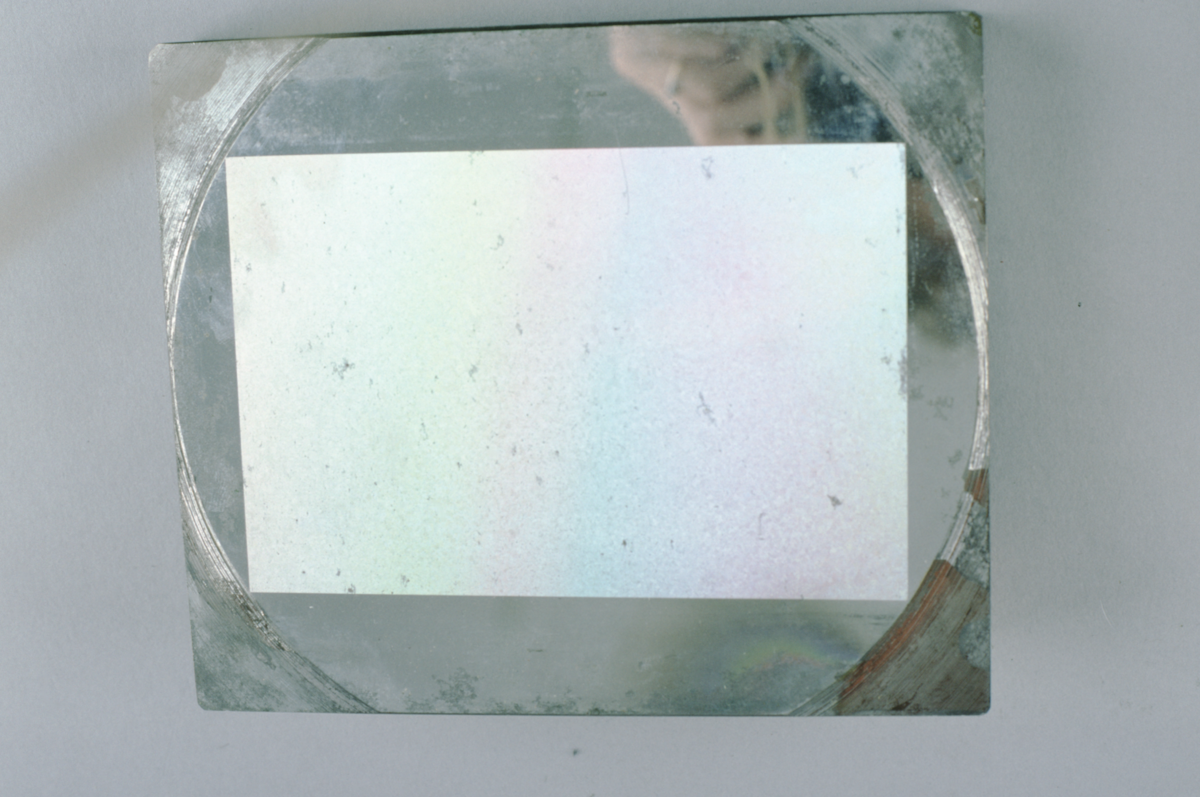
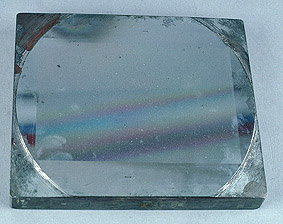
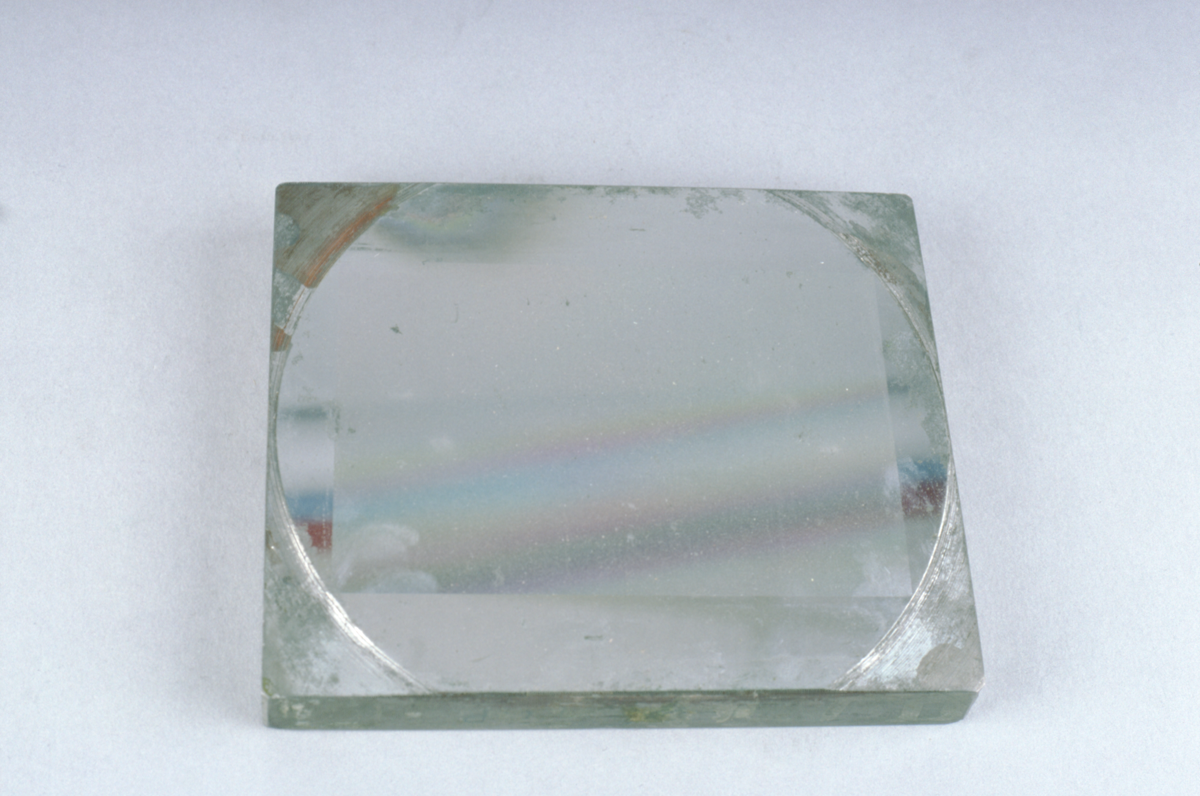
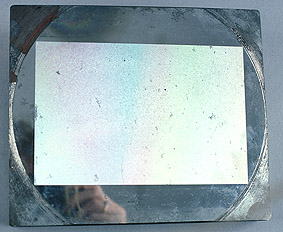
Diffraction grating, reflecting, early 20th C
Origin
Maker
Class
optical
Earliest Date
1900
Latest Date
1913
Inscription Date
Material
metal (speculum metal); wood
Dimensions
overall length 162mm; breadth 136mm; thickness 20mm; ruled surface 132 x 88mm box length 282mm; breadth 175mm; height 105mm
Special Collection
Provenance
Transferred from Institute of Astronomy, University of Cambridge, Cambridge, England, 12/1983. Transferred from Solar Physics Observatory, South Kensington to Institute of Astronomy, University of Cambridge, 1913 (?).
Inscription
‘Grating from
Spectroscope
in field
Take Case
SPO No 3’ (paper label on box)
Description Notes
Reflecting diffraction grating, early 20th C.
Speculum metal; rectangular plate, part circle raised and polished; rectangular ruled surface; box with paper label reading:
"Grating from
Spectroscope
in field
Take Case
SPO No 3".
References
Events
Description
Diffraction grating
Grimaldi (an Italian physicist) saw that the edges of shadows are not completely sharp, but have fringes. Only later, in 1785, when multiple edges were placed next to one another to form a grating, was the full importance of this observation elucidated.
A diffraction grating consists of very closely spaced lines on a reflecting surface (the line ruling process must be very precise). The lines disperse light into component wavelengths (much like a prism does) and this is useful for precise determination of the magnitude of wavelengths.
18/10/2002
Created by: Saffron Clackson on 18/10/2002
FM:43648
Images (Click to view full size):