Accession No
4521
Brief Description
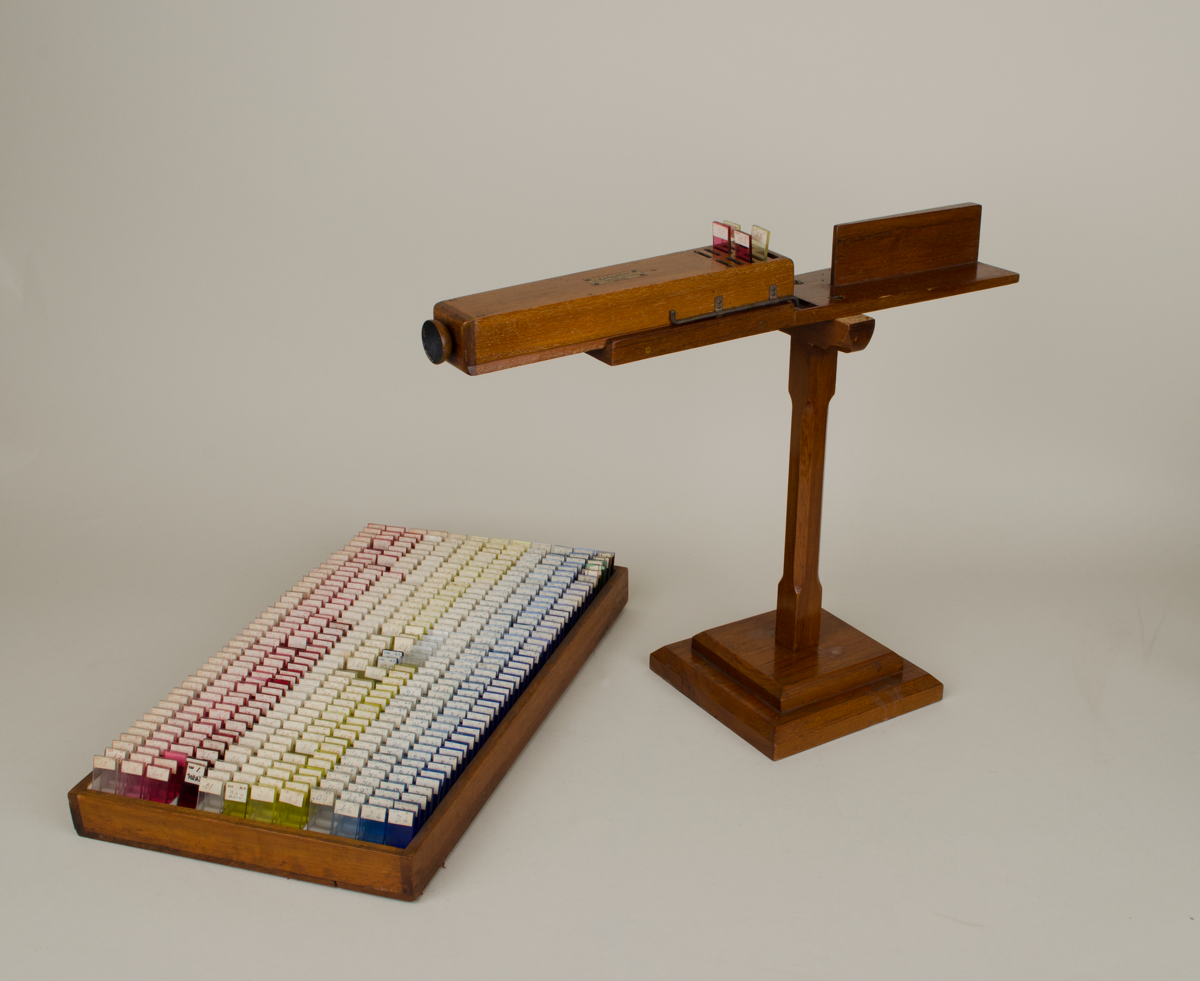
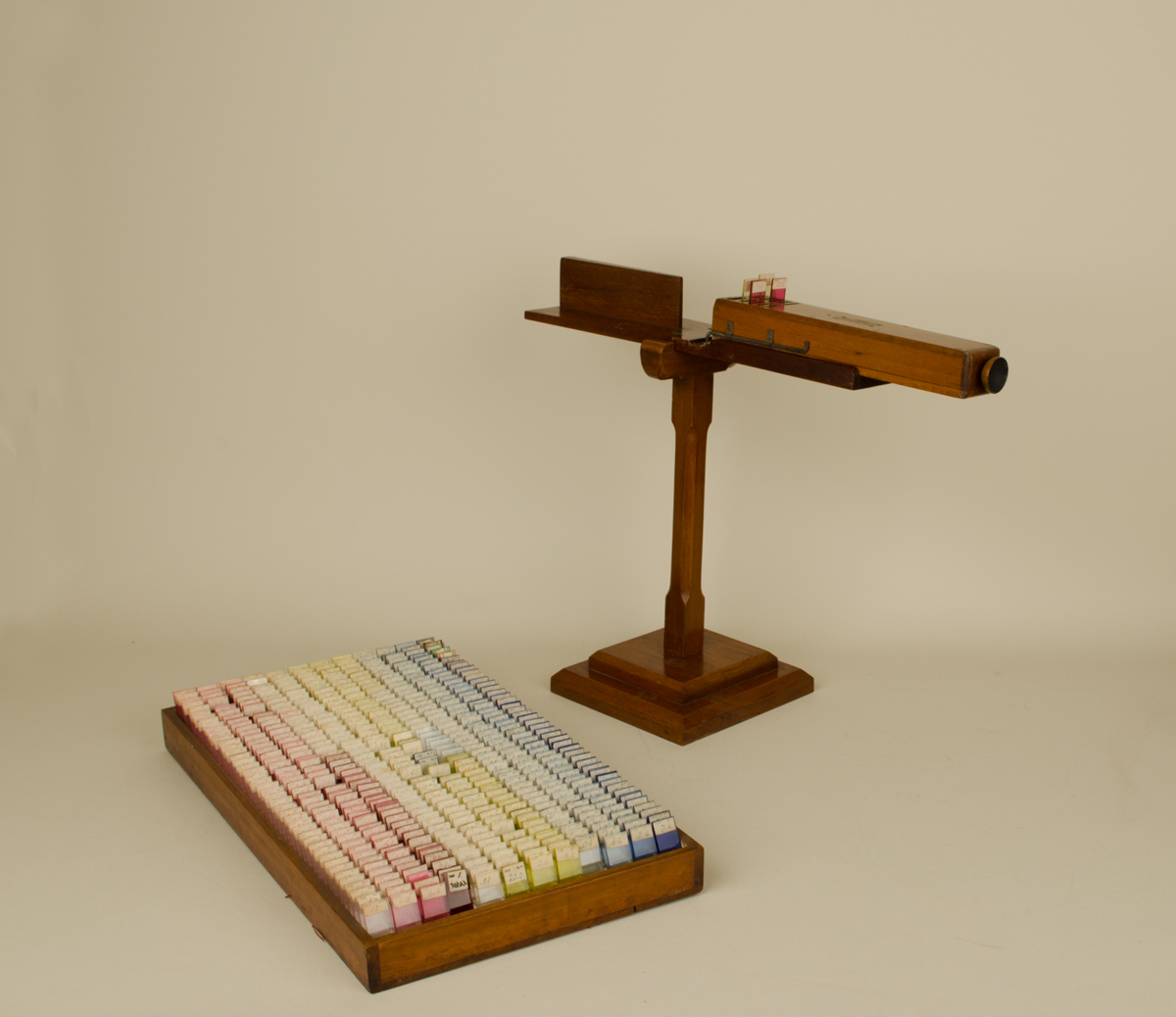
tintometer (colour comparator), by J. W. Lovibond Ltd., English, c. 1910
Origin
England; Salisbury
Maker
J. W. Lovibond Ltd.
Class
optical
Earliest Date
1900
Latest Date
1930
Inscription Date
Material
wood; metal (brass, white metal); glass; ceramic (tile); salts (unknown)
Dimensions
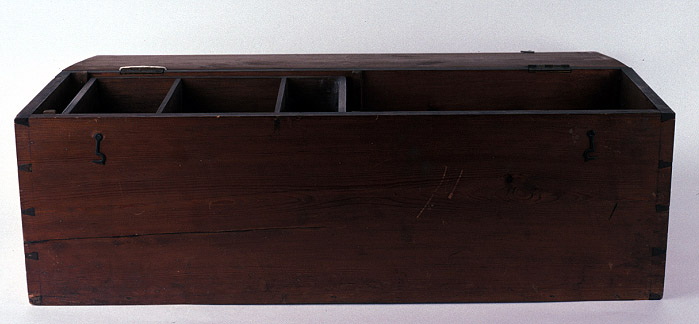
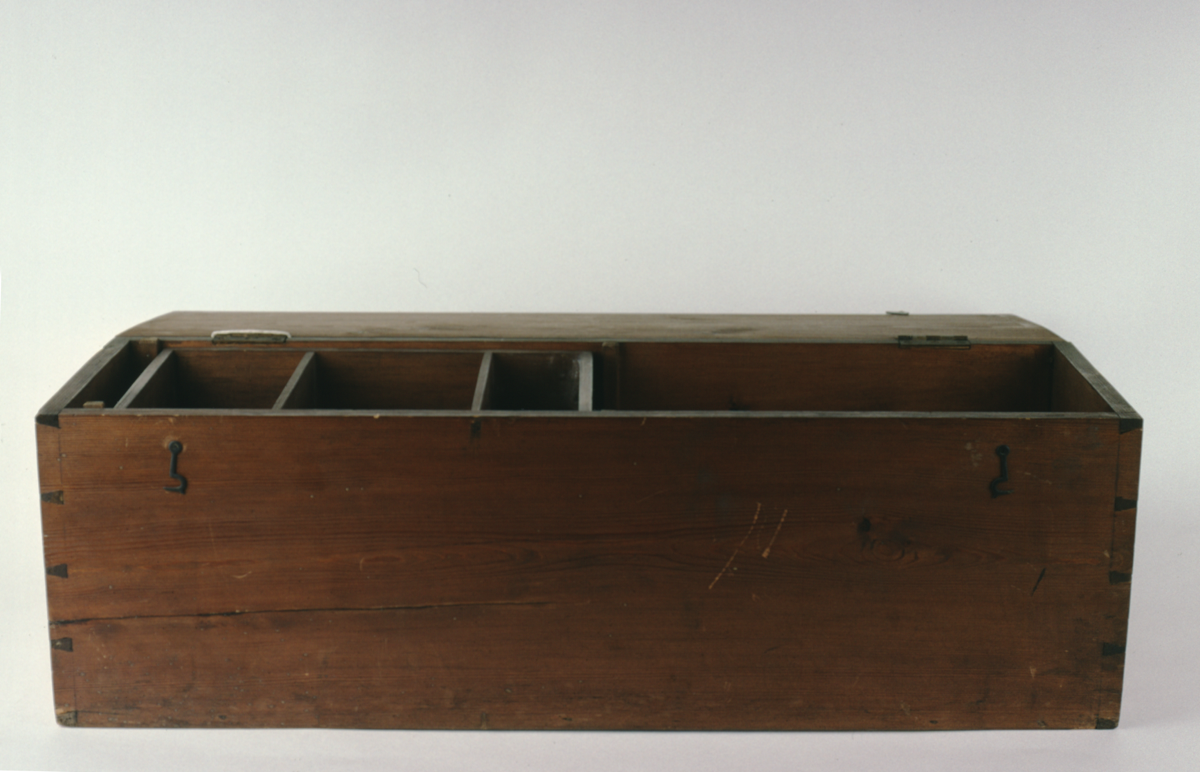
box length 705mm; breadth 225mm; height 235mm
Special Collection
Provenance
Inscription
on brass label on one of the wooden heads of the tintometer
J.W. LOVIBOND’s
PATENT TINTOMETER
THE TINTOMETER Ltd. SALISBURY
No. 2080
Description Notes
Tintometer (colour comparator), by J. W. Lovibond Ltd, English, c. 1910.
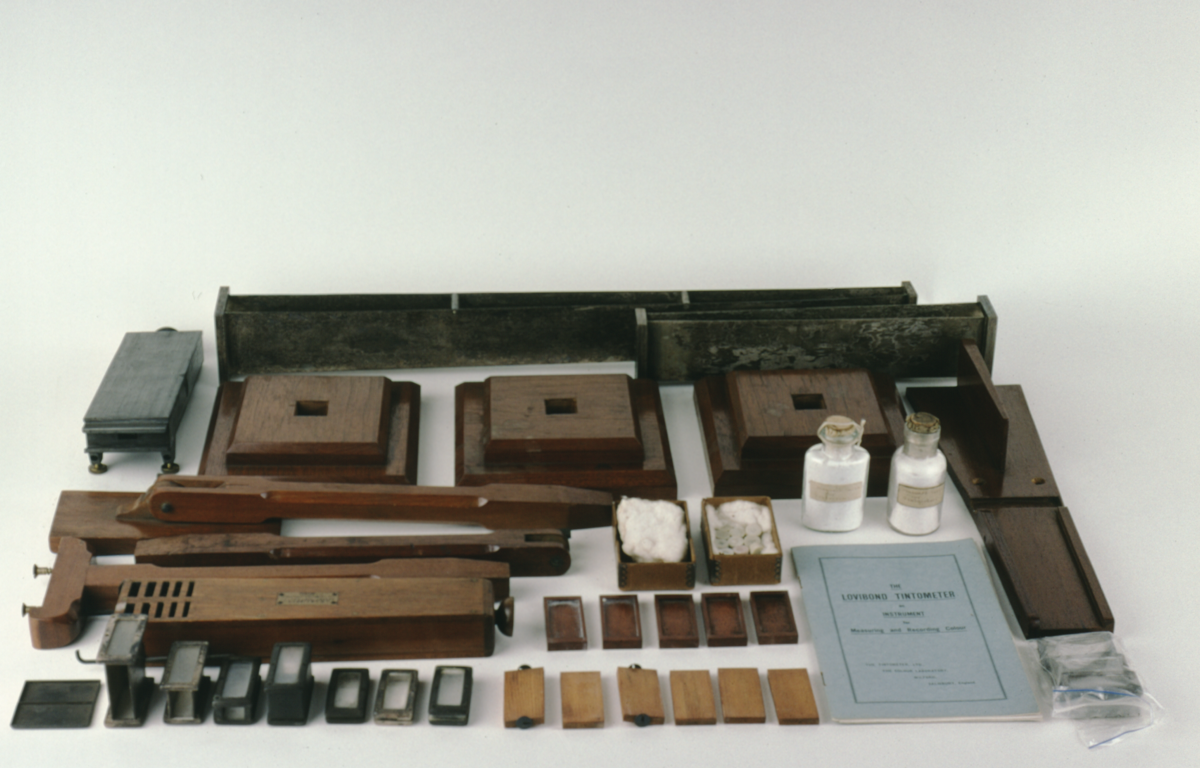
Various pieces in total 38. 2 bottles of Tintometer White. Box with ceramic numbered tiles. Three wooden bases, stands. Two wooden heads, one metal. 18-page booklet entitled: ‘The Lovibond Tintometer, an Instrument for Measuring and Recording Colour’, which includes 6 loose pamphlets tucked into it.
References
Events
Description
Joseph Williams Lovibond began developing the tintometer in the 1870s as a means to check the quality and consistency of the beer produced in his family’s breweries by comparing its colour to a standard scale. From his experiments, Lovibond developed and patented his Series 52 scale of brown glass, which remains the industry standard in the U.S. for the production of beer, whiskey, honey, and other brown liquids. Growing interest from a wide range of industries eventually led Lovibond to diversify the tintometer’s palette, allowing users to combine more than 200 graduated hues of red, yellow, and blue to make a target colour for their product that could then be compared to a sample specimen using the instrument’s viewer.
The tintometer also found uses beyond industry. In 1890 the Royal Society Committee on Colour Vision used the instrument to investigate colour blindness, leading them to recommend new safe standards for the use of colour signals in the maritime and railway industries. And in 1898 anthropologists from the University of Cambridge took a Lovibond tintometer to the Torres Strait in the Pacific, where they used it to test the colour vision of Melanesian islanders, as well as to accurately record their skin colour.
27/05/2015
Created by: Joshua Nall on 27/05/2015
FM:43653
Images (Click to view full size):