Accession No
4080
Brief Description
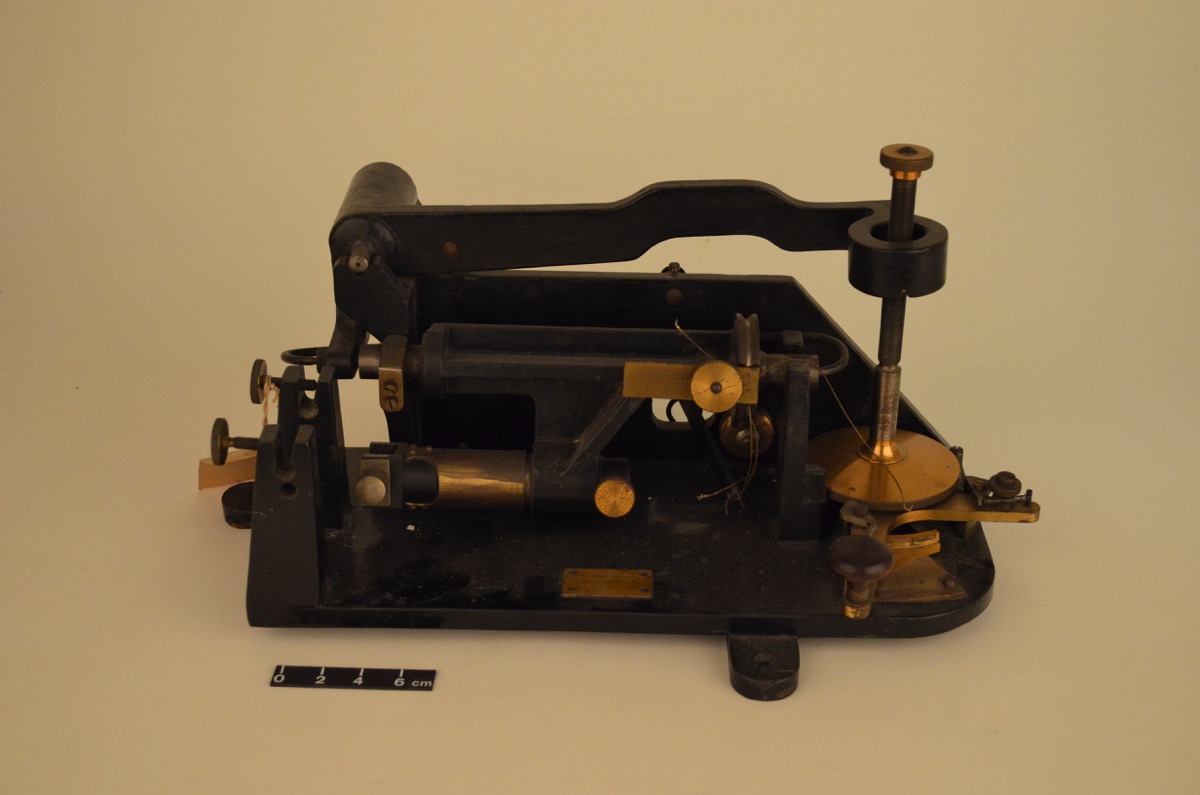
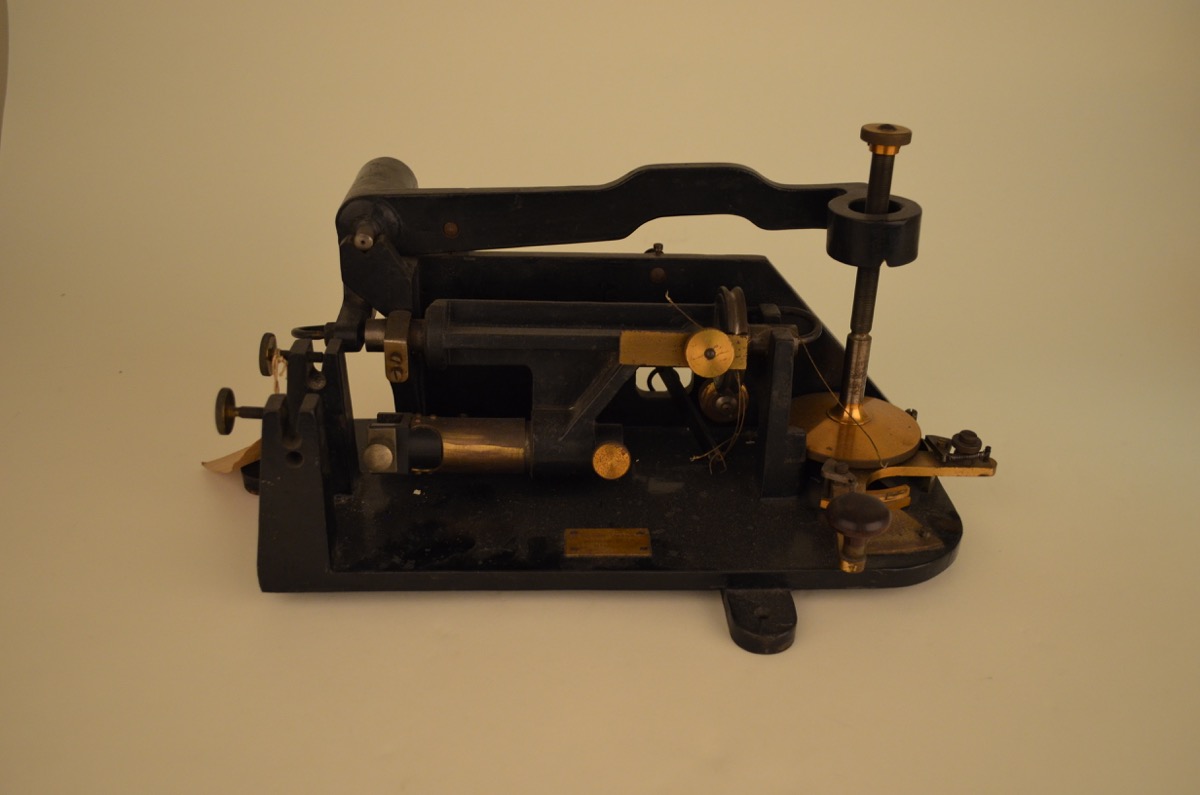
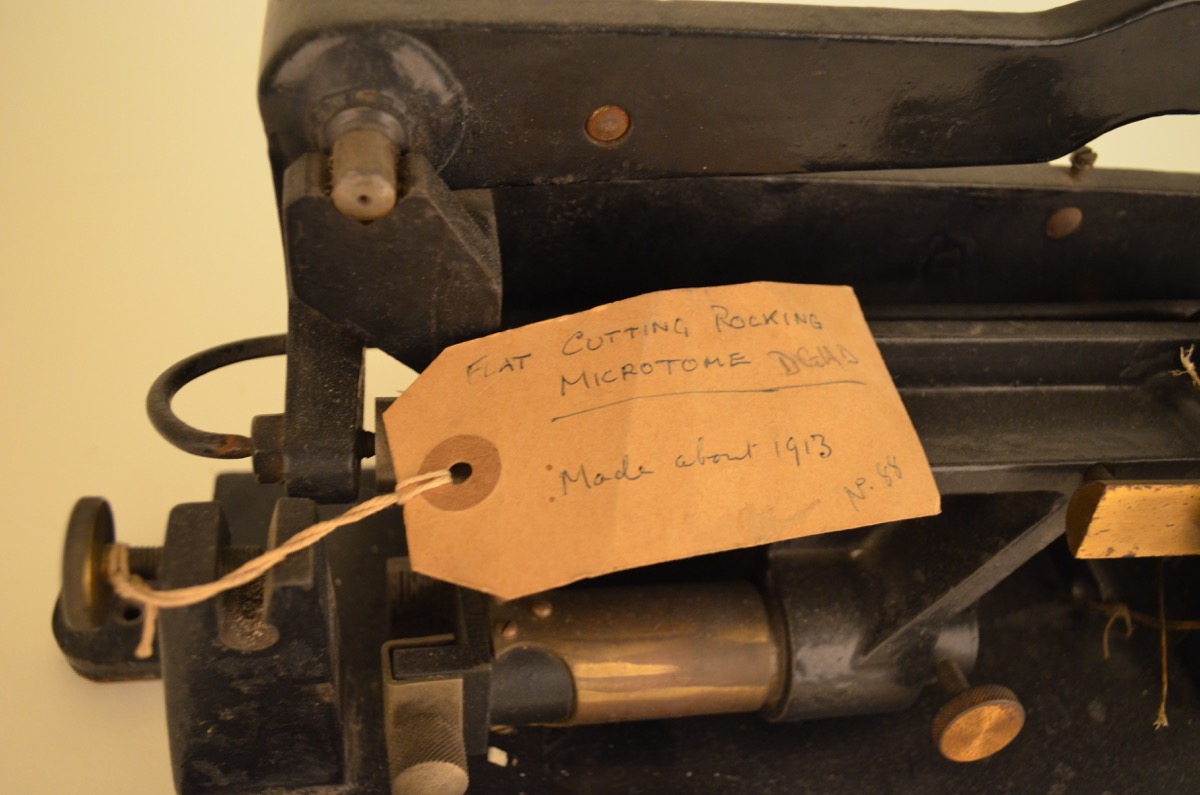
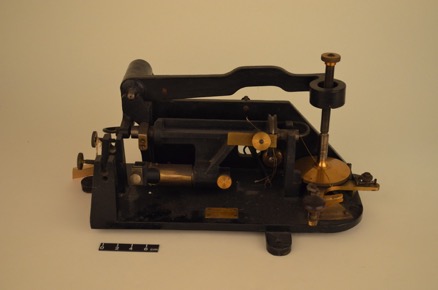
microtome, flat-cutting rocking, by Cambridge Scientific Instrument Company Ltd., English, 1913 (c)
Origin
England; Cambridge
Maker
Cambridge Scientific Instrument Company Ltd.
Class
laboratory apparatus; biology; microscopes
Earliest Date
1913
Latest Date
1913
Inscription Date
Material
metal (cast iron, brass, steel); wood
Dimensions
length 450mm; breadth 315mm; height 232mm
Special Collection
Cambridge Instrument Company Collection
Provenance
Donated by the Cambridge Instrument Company.
Inscription
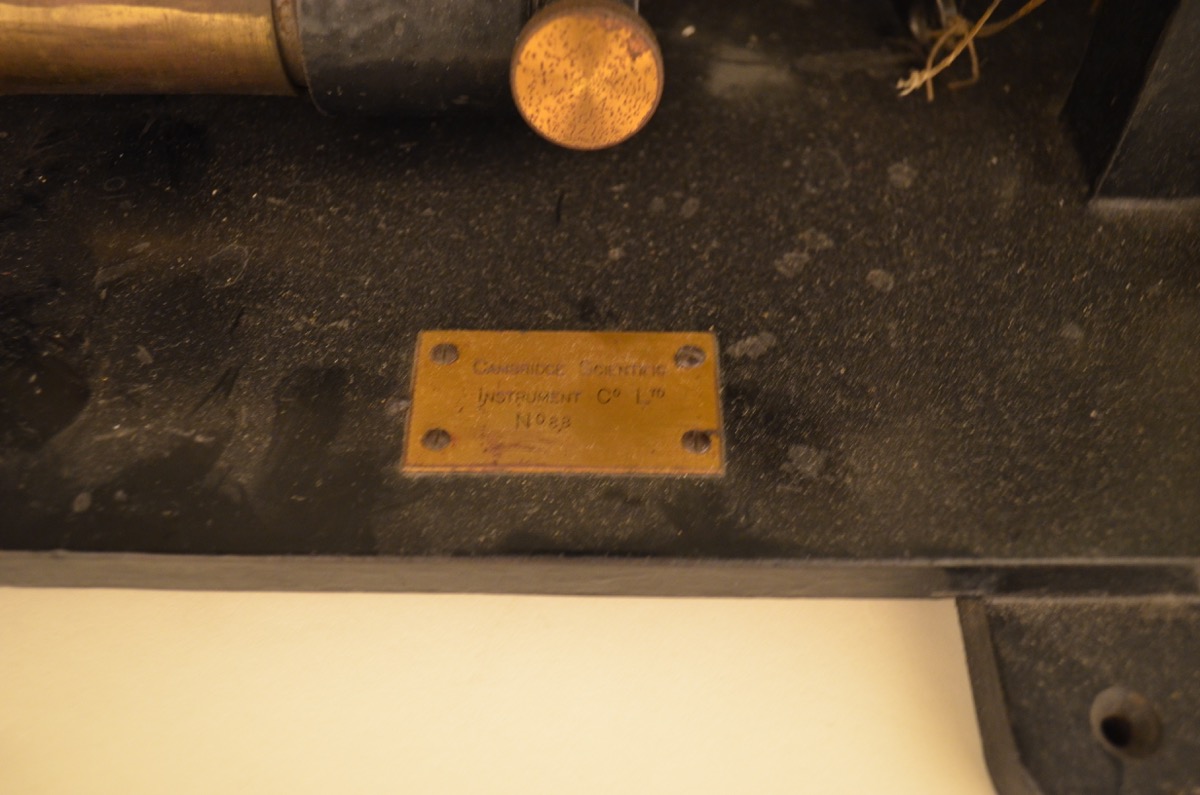
‘Cambridge Scientific
Instrument CO LTD
NO 88’ (brass plaque on base)
Description Notes
Microtome, flat-cutting rocking; made by the Cambridge Scientific Instrument Company; circa 1913.
Black-painted cast iron base. Cast verticals with knurled brass screw clamps for knife. Cast vertical for pivoting support for rocking arm. Supporting arm rests on threaded steel shaft with knurled brass screw at top; cog wheel at base moved by wooden handled brass arm. Scale on brass plate on base over which arm moves, divided 0 - 15 (where one division = 0.001mm), numbered by 5, subdivided to 1.Arm is attached to rocking arm by string via pulley system. Two heavy-duty springs from the base to the support. Rocking arm carries a grooved flat object holder for taking large flat objects for sectioning. Screw holes in feet for attachment to bench.
Condition good (some tarnishing); complete.
References
Events
Description
A microtome is a laboratory instrument used to cut extremely thin slices of material, called sections. These are usually cut from specimens of human or animal tissue (embedded in a soft material like paraffin wax), and are produced for inspection under a microscope. The “rocking” type of microtome was designed by Charles Darwin’s son, Horace Darwin. Horace co-founded the Cambridge Scientific Instrument Company with Albert George Dew-Smith in 1881, and the firm began manufacturing Horace’s microtome design from 1885. This design, with updates, continued to be produced well into the second half of the twentieth century. As a Cambridge Instruments sales catalogue boasted, “simplicity of operation makes it an ideal instrument for the use of students or for routine work and it has become the standard microtome for general use in laboratories all over the world.”
This particular model could cut sections between 0.002mm and 0.024mm thick.
14/03/2014
Created by: Joshua Nall on 14/03/2014
FM:43917
Images (Click to view full size):