Accession No
1088
Brief Description
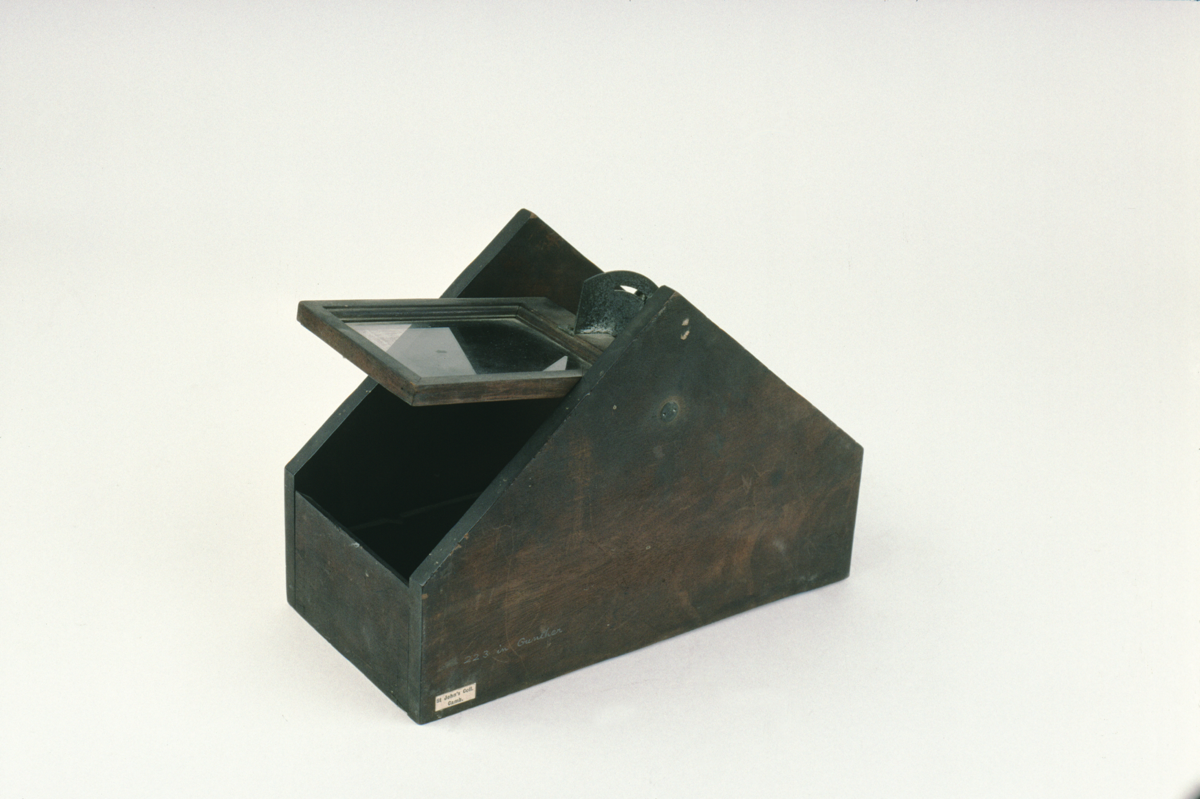
artificial horizon cover, 1800 (c)
Origin
Maker
Class
navigation
Earliest Date
1800
Latest Date
1800
Inscription Date
Material
wood; glass
Dimensions
length 253mm; breadth 121mm; height 178mm
Special Collection
Provenance
On loan from St. John’s College, University of Cambridge from 08/1951.
Inscription
‘St John’s Coll.
Camb.’ (label)
Description Notes
Wooden triangular framework once with two glazed frames (one now broken off) with overlapping arcs and clamp for setting angle.
References
Events
Description
Artificial horizon
An artificial horizon can be used in darkness, fog, or when the real horizon is obscured for any other reason. They were often used in conjunction with other instruments that need a horizontal level, such as a sextant or reflecting circle. There are records of use from the mid 16th century onwards.
The 2 basic types of artificial horizon were mercury with a glass cover – the top layer of the mercury always staying level (this type is not very practical for use on a ship) and bubble levels, where the position of bubbles in a liquid shows which way the axis is tilting.
18/10/2002
Created by: Saffron Clackson on 18/10/2002
FM:44181
Images (Click to view full size):