Accession No
3469
Brief Description
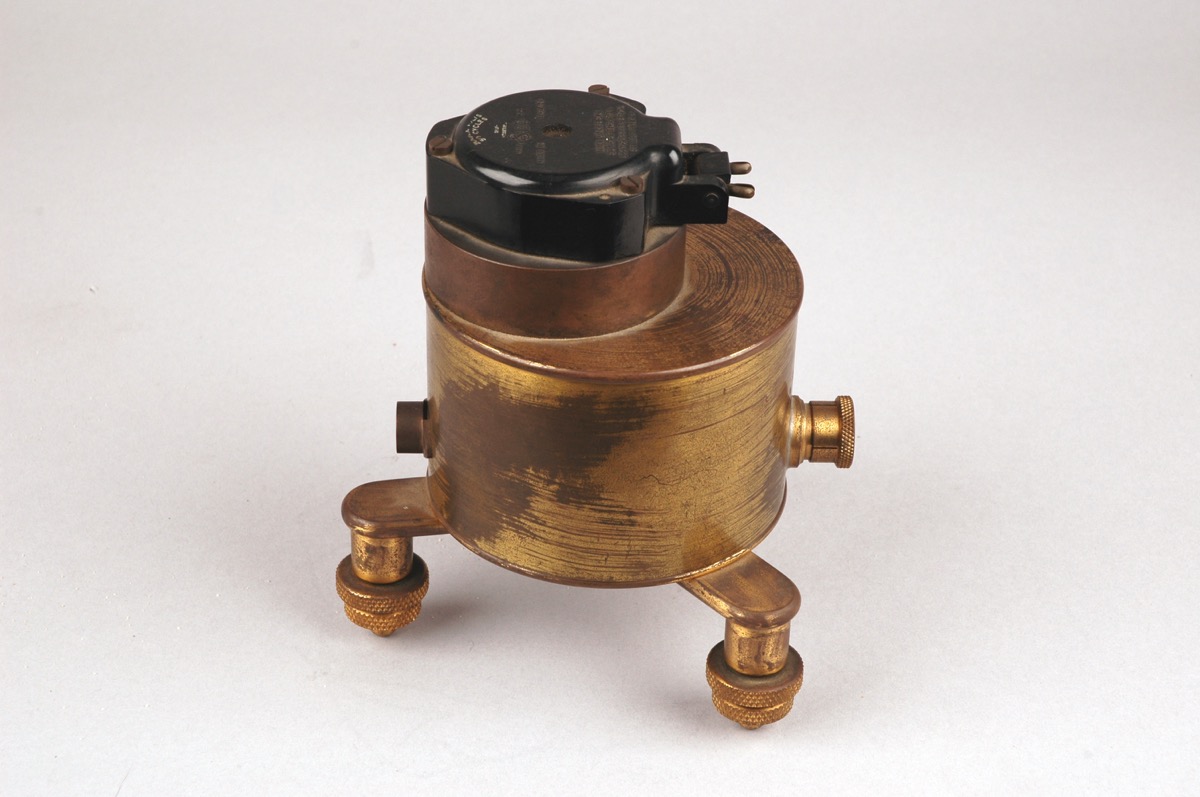
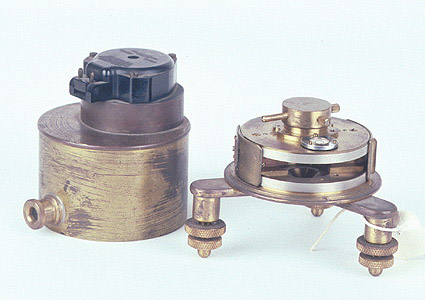
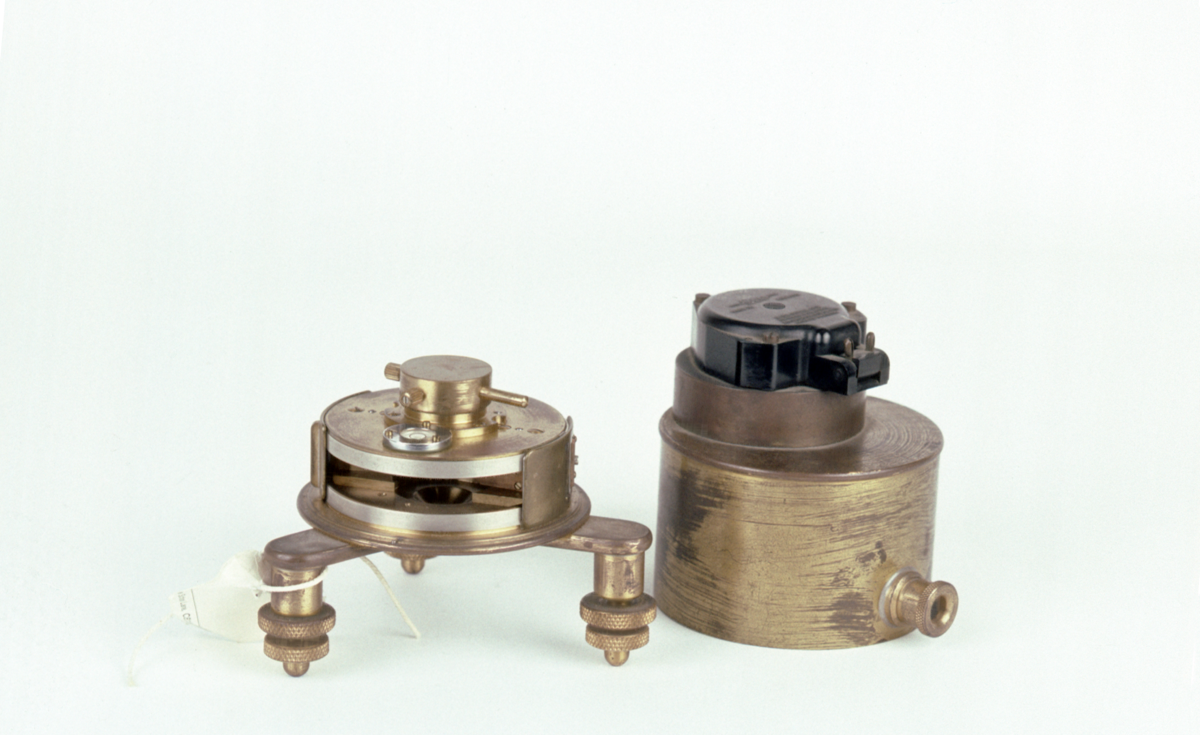
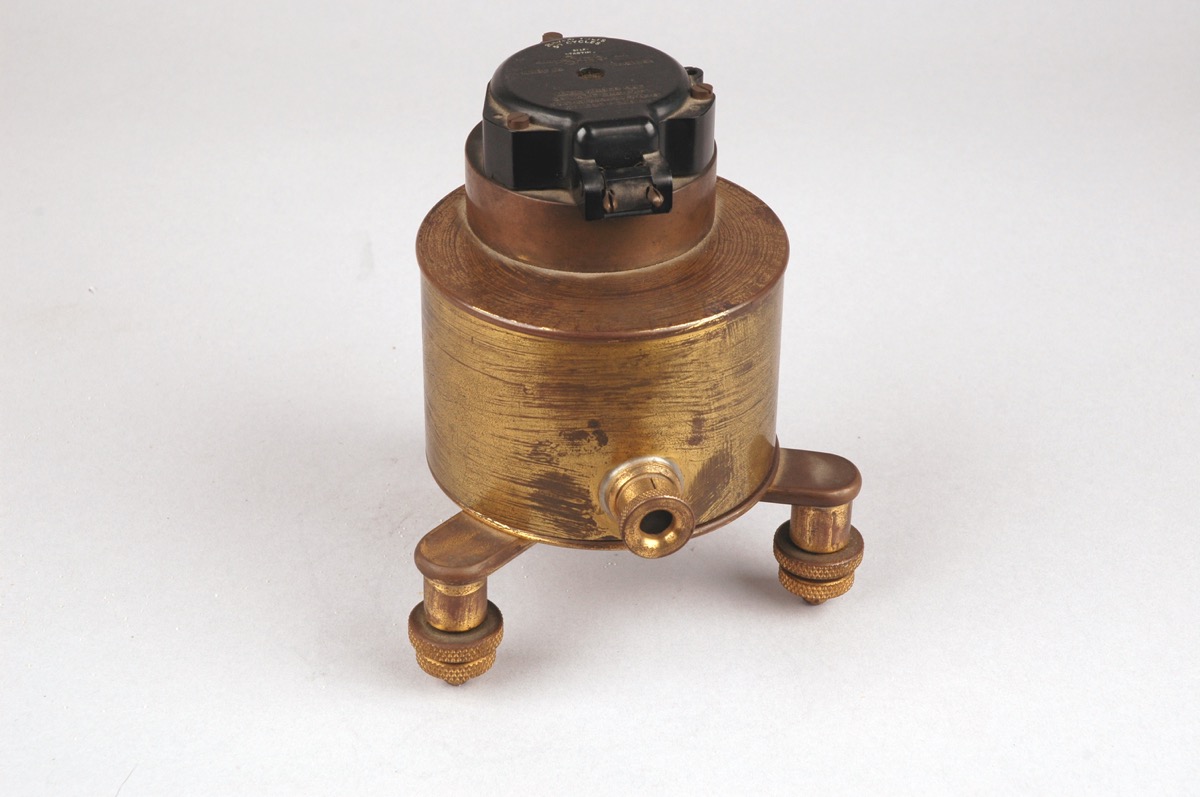
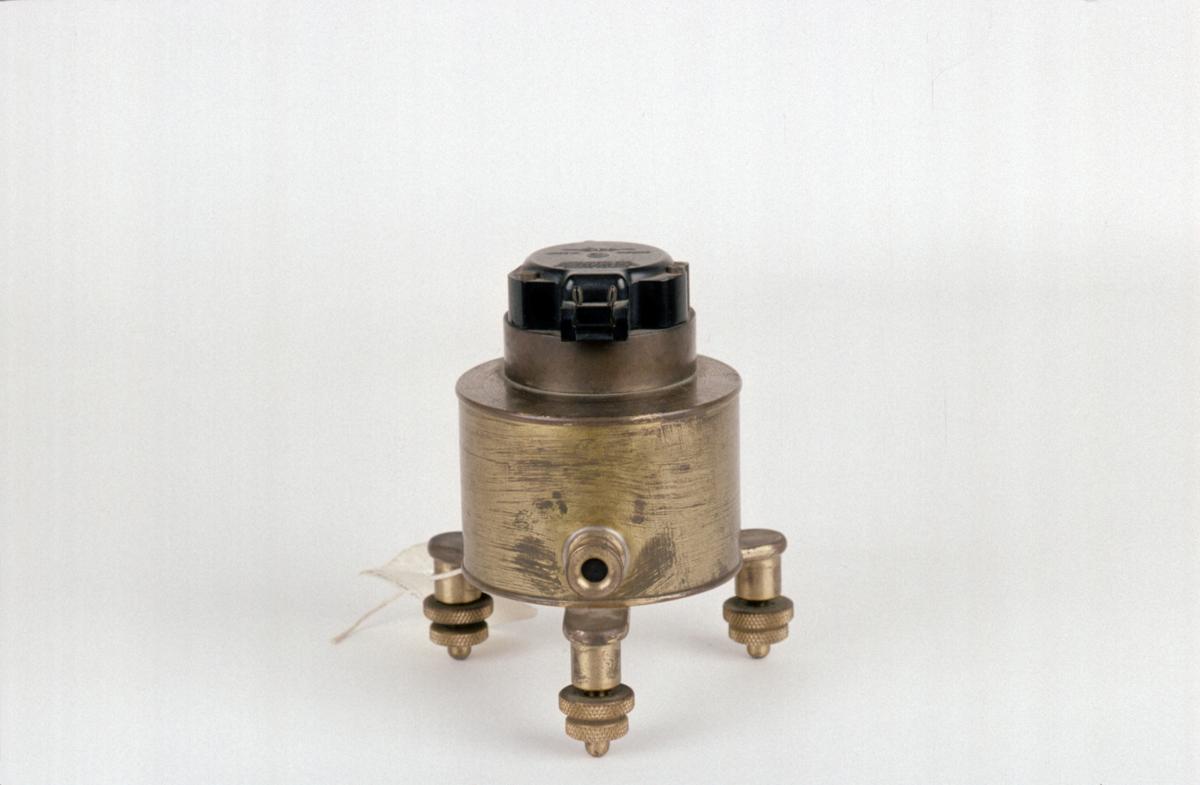
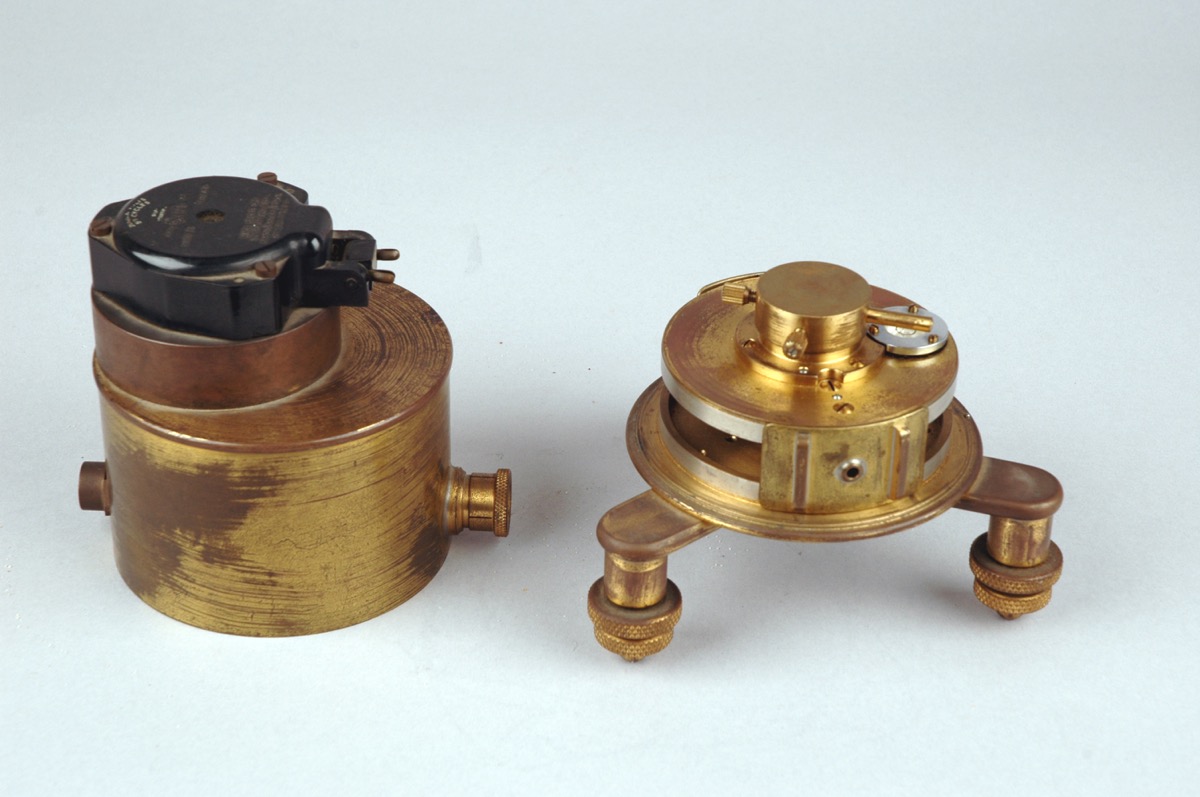
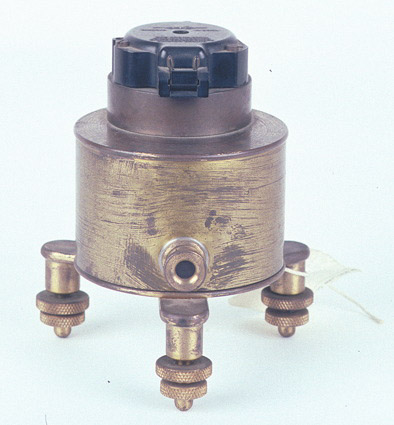
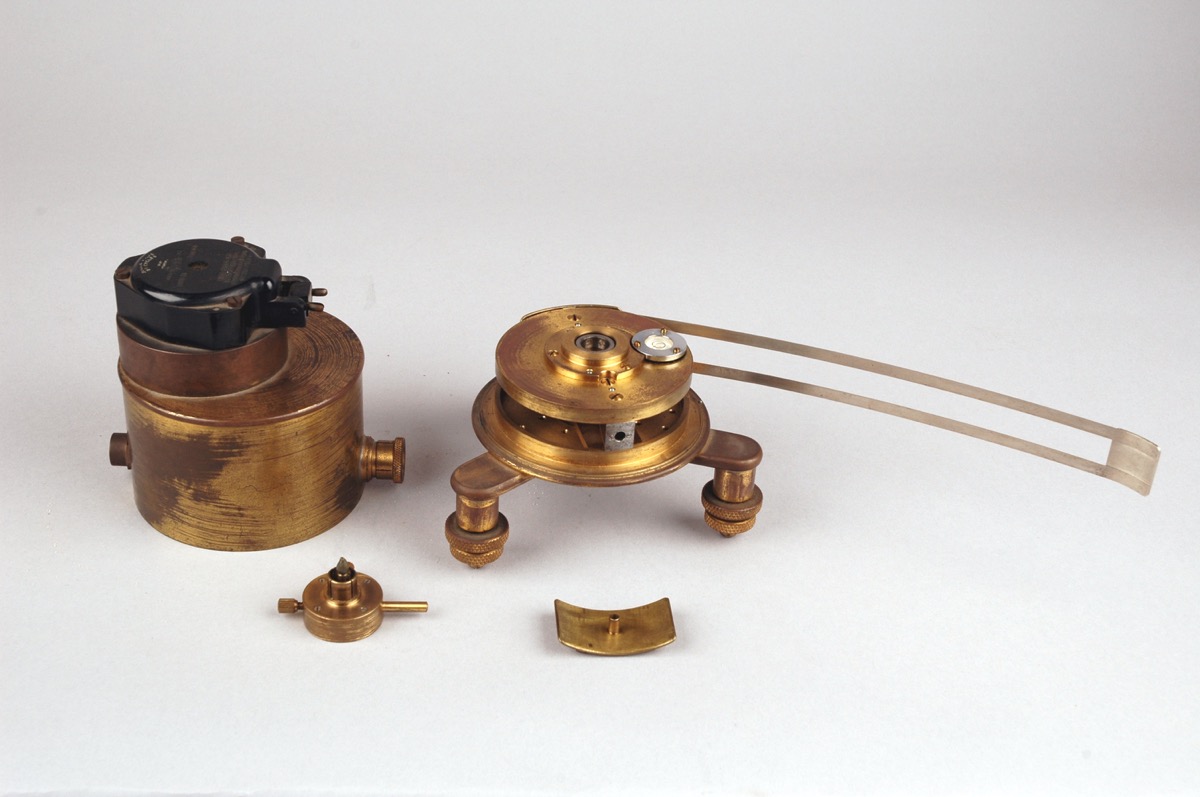
X-ray crystallography powder camera, made in Cambridge Earth Sciences Department, English, 1940s
Origin
Department of Earth Sciences; University of Cambridge; Cambridge; England
Maker
Class
crystallography; physics; earth sciences
Earliest Date
1940
Latest Date
1950
Inscription Date
Material
metal (brass, 3 types of white metal); plastic (bakelite); glass; liquid
Dimensions
height 178mm; diameter 128mm
Special Collection
Provenance
Transferred from Sedgwick Musuem, Department of Earth Sciences, University of Cambridge, Cambridge, England, 1987. Research by Robin Scheffler for his MPhil essay (see ‘Object Reading’ section for reference) indicates that this object was a 1930s 9cm powder diffraction camera, constructed either in a Cambridge department workshop (probably in the Crystallography Laboratory) or brought from Manchester with Bragg and his team in 1938. It was then modified in the early 1940s (including the addition of an electric motor) for use by W.A. Wooster in the Department of Mineralogy and Petrology (later to become part of the Dept. of Earth Sciences).
Inscription
‘Sec
MADE IN ENGLAND’ (motor)
Description Notes
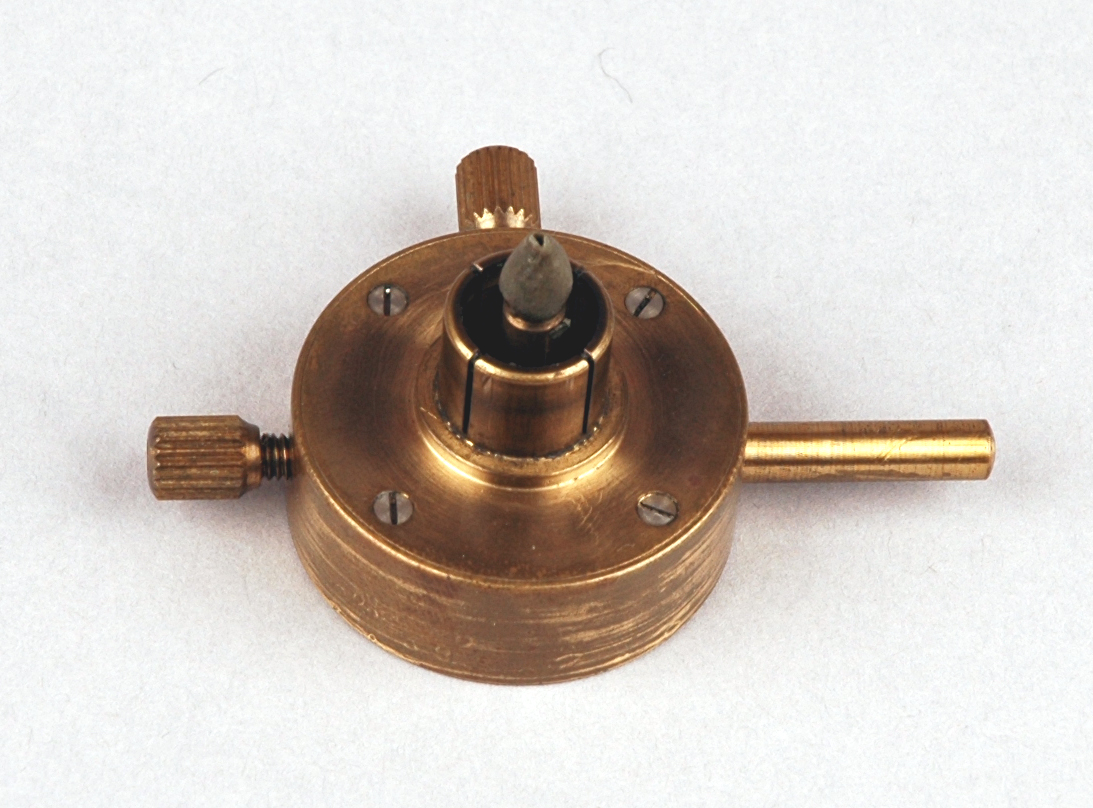
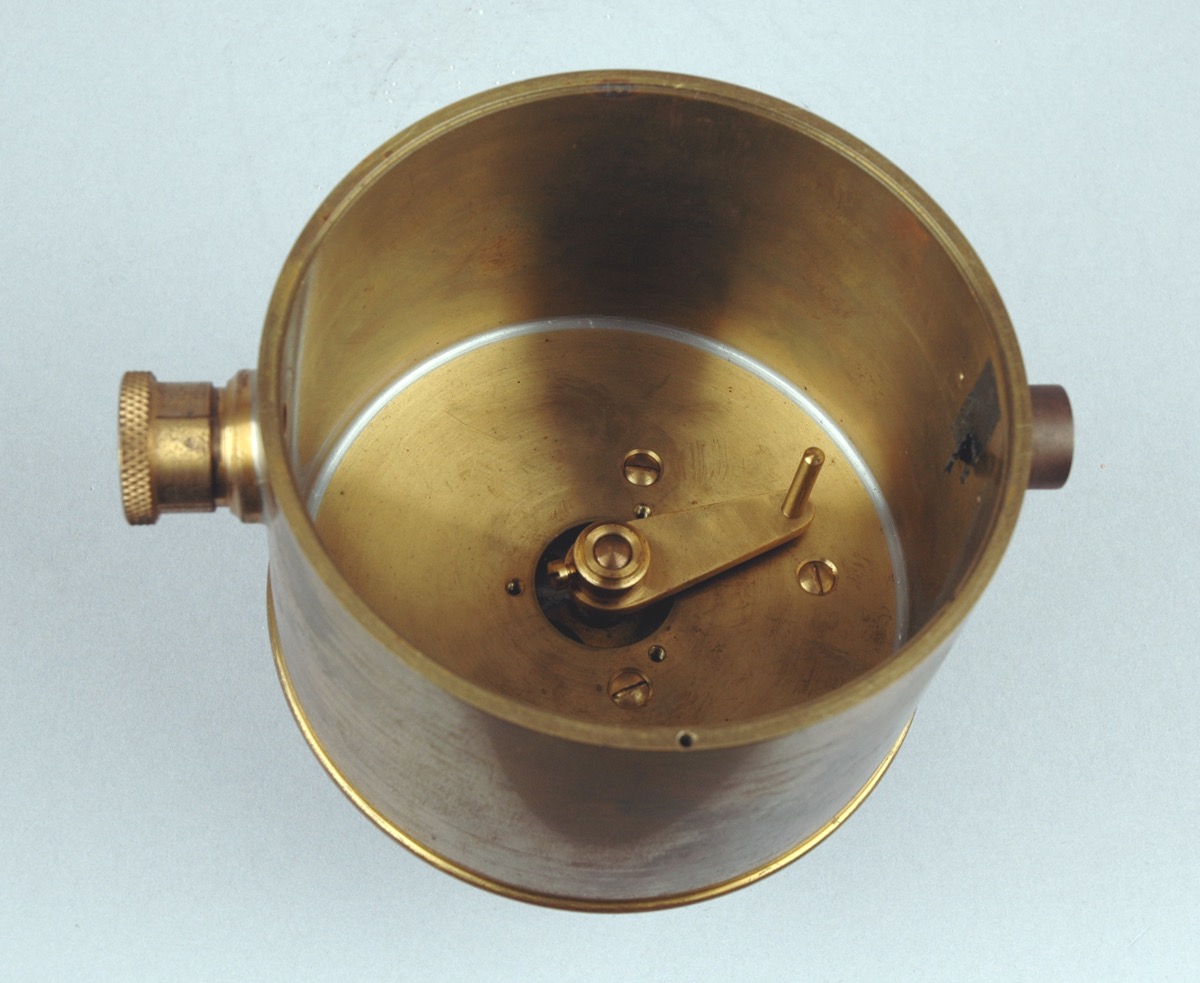
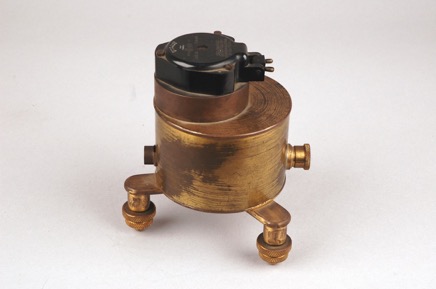
Tribrach limbs with levelling screws supporting circylar drum with open sides, on which is set a rotatable circular sample holder. (Sides would carry the film when in use). Twin white metal strips for holding film in place. Bubble level on upper surface. Hole in one side of drum for X-ray admission with screen on opposite face. Rod on sample holder connects to arm inside brass cover. Arm driven by self-starting motor set on top of cover. Holes in cover for X-ray admission.
Condition fair; complete.
References
Events
Description
During the inter-war period, Manchester was a leading center for studying structural features of metals and alloys, through the development of improved powder cameras. W. A. Wooster, member of the Manchester department, sought to direct his research towards military-industrial ends though the study of quartz synthesis. The camera, also known as the Debye-Scherrer camera, took photographs of powdered crystal samples using x-rays beams. Photographical paper was wrapped inside a circular drum and recorded the diffraction of the x-rays off the powdered crystal sample. The effect appeared as lines on the photograph that enabled scientists to compute the three-dimensional structure of a crystal’s lattice spacing. This photographic technique allowed for quick comparison of unknown substances; however, the structural information provided was not as exact as other methods available. Dated between 1930 and 1940, this instrument was acquired from the Department of Earth Sciences at the University of Cambridge.
08/07/2014
Created by: Allison Ksiazkiewicz on 08/07/2014
FM:44413
Images (Click to view full size):