Accession No
0224
Brief Description
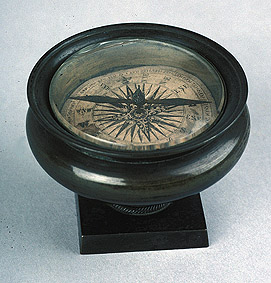
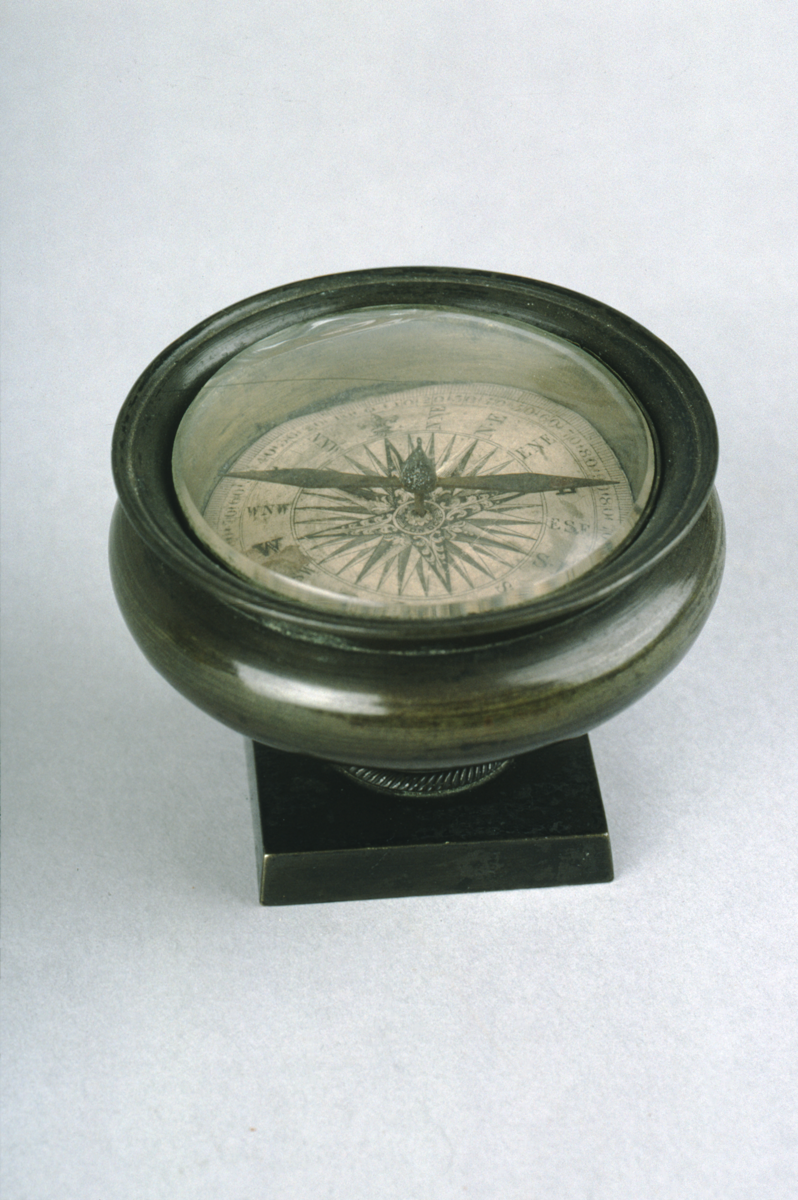
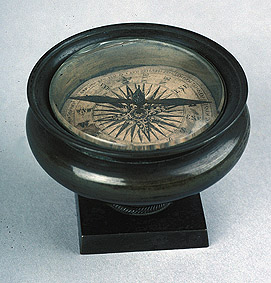
bronze vase with compass
Origin
Maker
Class
magnetism
Earliest Date
Latest Date
Inscription Date
Material
metal (bronze, iron, brass); glass; paper (card)
Dimensions
diameter 81mm; height 59mm
Special Collection
Robert Whipple collection
Provenance
Purchased by Robert Stewart Whipple from P. Webster, London, on 20/05/1925.
Inscription
Description Notes
Bronze vase shaped base on pedestal with square base. Brass dish with card compass rose. 16 points and divided 0 - 90˚ - 0 - 90˚ - 0, numbered by 10˚, subdivided to 1˚. Iron needle. Glass top (loose).
Condition
References
Events
Description
Magnetic compass
The magnetic compass consists of a magnetic needle attached to a compass card, graduated into angular points, and is used for navigation. The first known dry pivoted compass is dated as early as 1269.
The compass indicates the direction of the magnetic pole but there are problems caused by the difference between magnetic and true north (true north being the useful reading). The variation between the two must be calculated in order to obtain an accurate reading. True north was sometimes simply offset from the direction of magnetic north, but this did not allow for geographical variation. For this, charts were needed. The iron used in building ships during 19th century also led to problems because the magnetism of iron affected the compasses on board.
18/10/2002
Created by: Saffron Clackson on 18/10/2002
FM:44596
Images (Click to view full size):