Accession No
2392
Brief Description
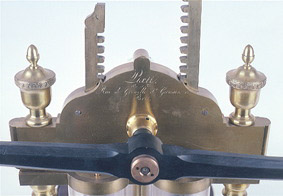
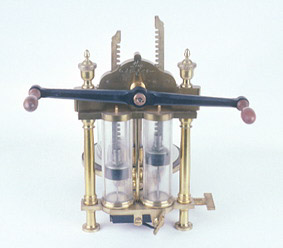
air pump by Pixii, Pere et fils, French, circa 1850
Origin
Rue de Grenelle; St Germain; Paris; France
Maker
Pixii
Class
physics
Earliest Date
1850
Latest Date
1850
Inscription Date
Material
metal (brass, mercury, iron, 2 white metals); glass; wood
Dimensions
length 565mm; breadth 470mm; height 510mm
Special Collection
Provenance
Purchased from Alain Brieux, 48 Rue Jacob, Paris, France; catalogue June 1976, no. 8595, 1976.
Inscription
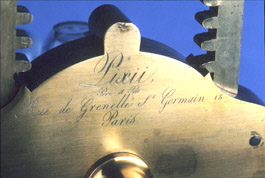
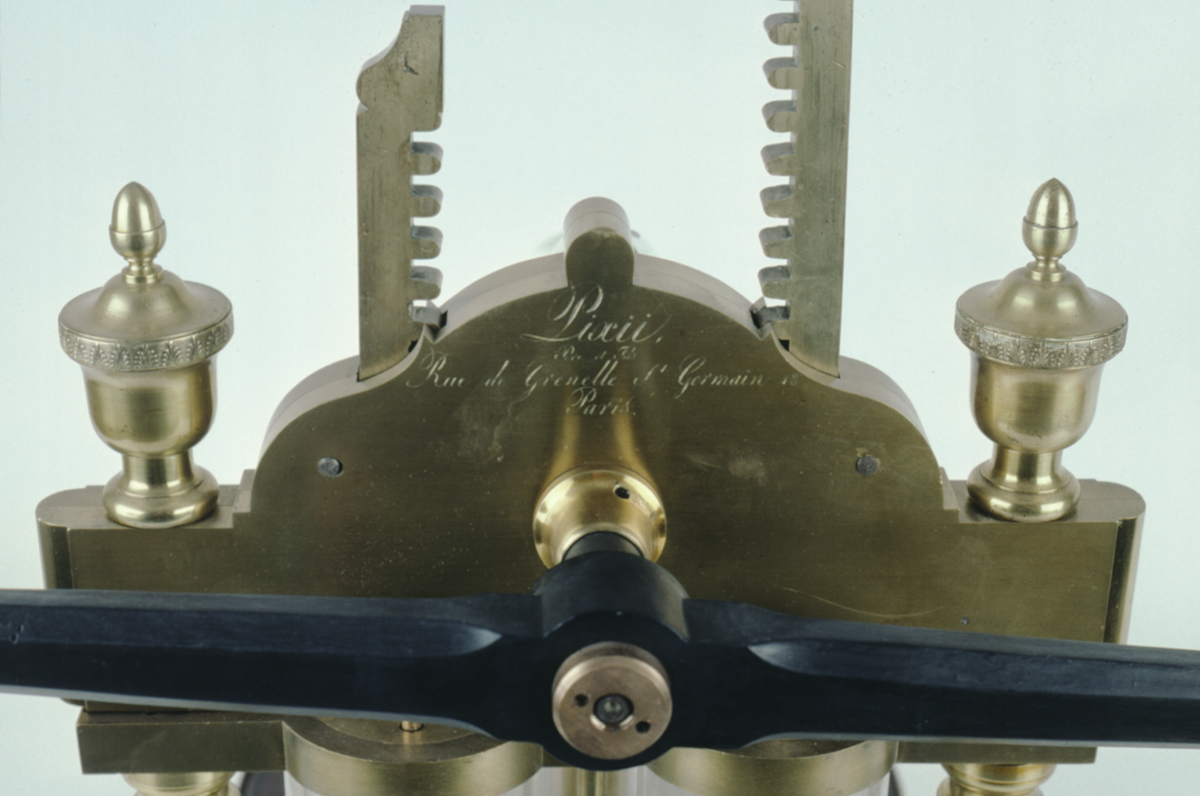
‘Pixii
Père et Fils
Rue de Grenelle St Germain
Paris.’ (front plate)
Description Notes
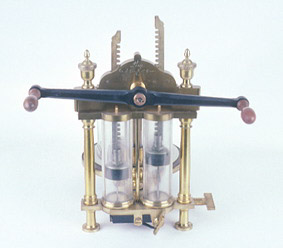
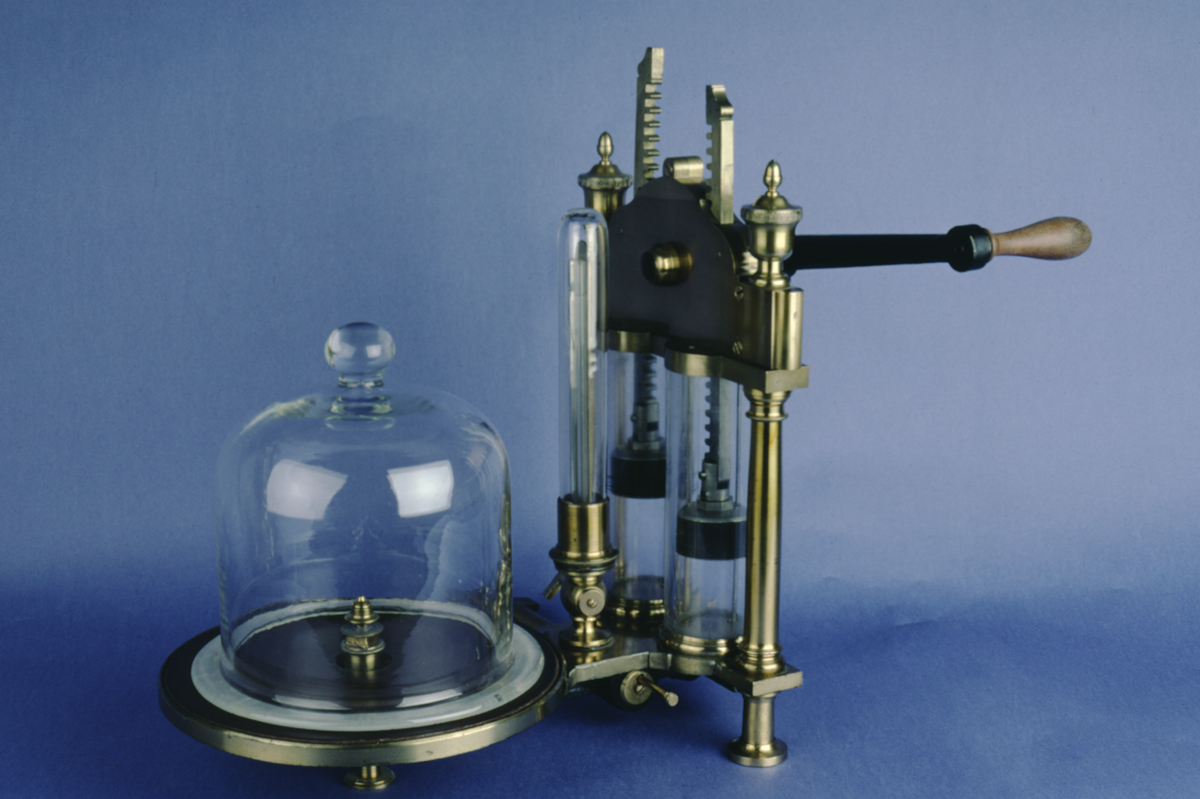
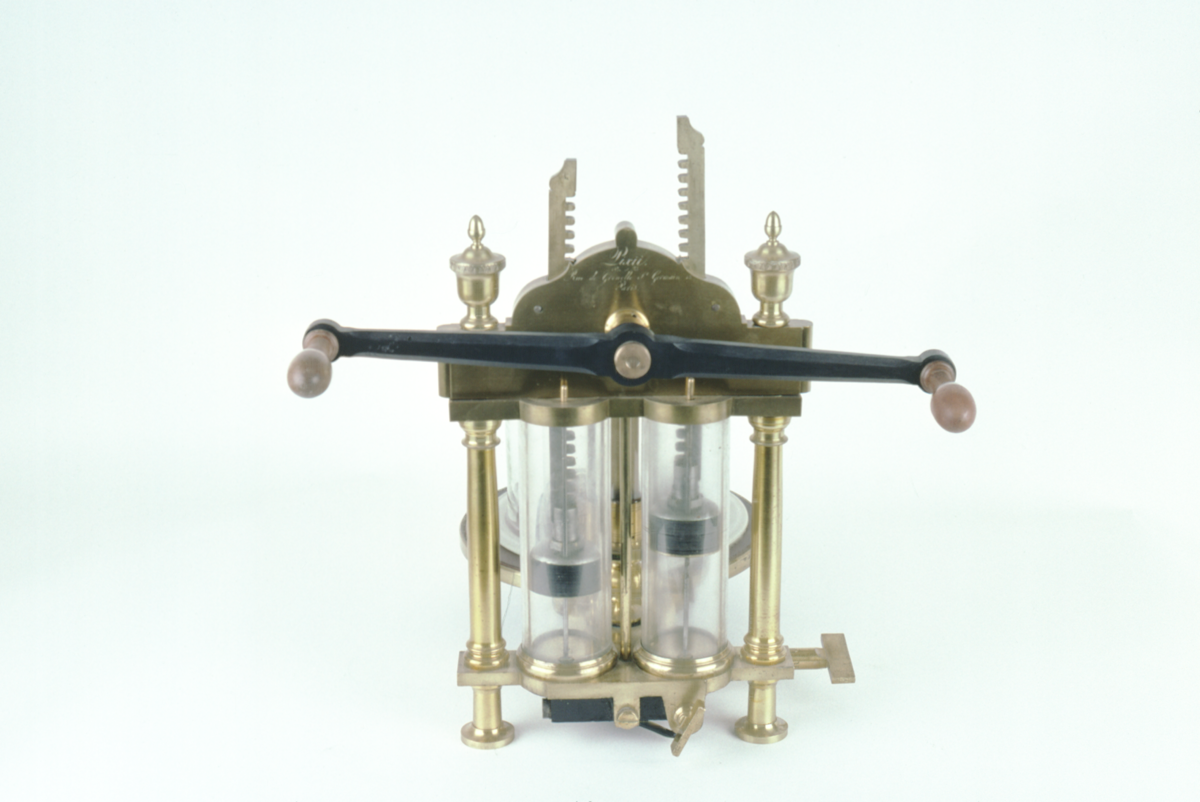
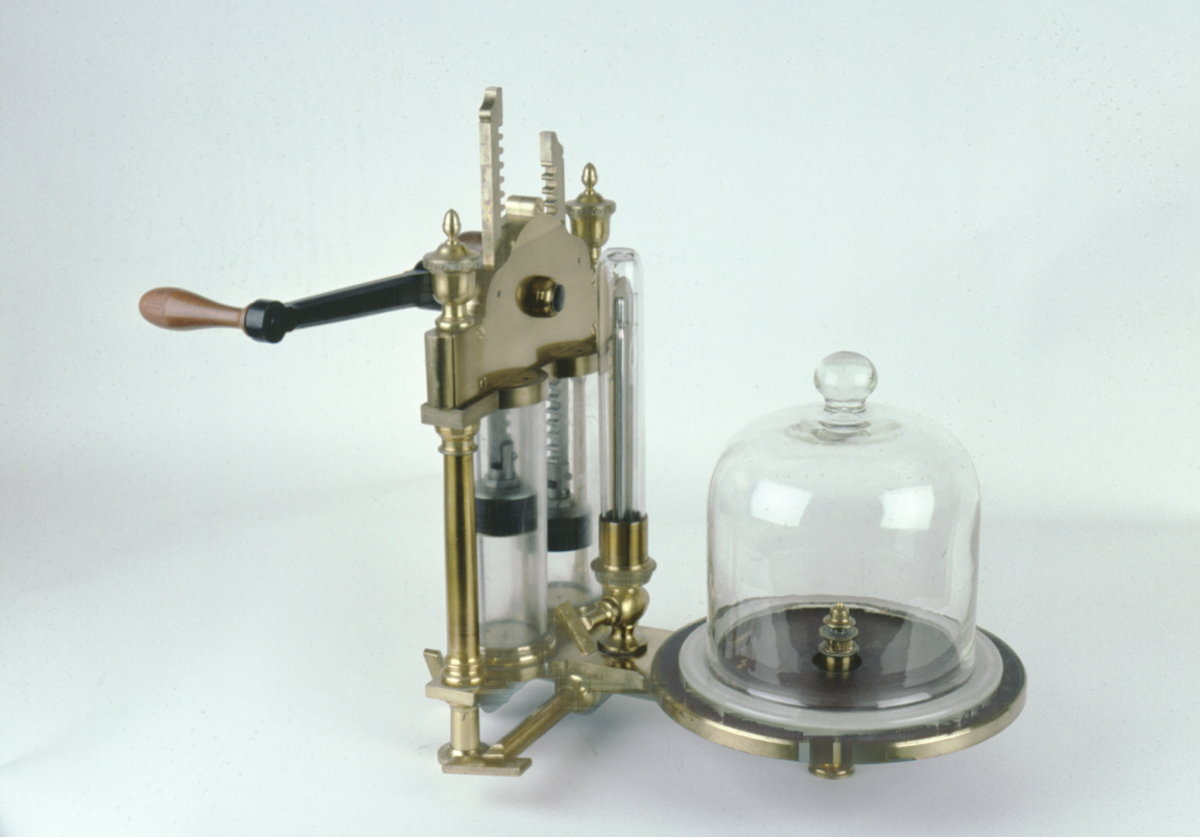
Vacuum / air pump by Pixii, Pere et fils, French, circa 1850.
Four turned brass columns support brass base plate. Flat-headed screw stopper at front. Double glass cylinders and white metal pistons with brass rack and pinion action operated by long centrally-pivoted iron crank with wooden grip at each end. Bell jar mounted on glass circle on base plate. Between the bell jar and the cylinders is a space for mounting the manometer which consists of a mercury in glass tube with a white metal scale divided 9 - 0 - 8, numbered by 1, subdivided to 0.5, 1 - 0 - 1 subdivided to 0.1.
Condition good; complete.
References
Events
Description
In 1647, Otto von Guerricke of Magdeburg invented the first vacuum pump. Guerricke was a physicist, engineer, and natural philosopher. His intention in creating the vacuum pump was to study vacuums and the role of air in combustion and respiration.
The vacuum pump is in principle a relatively simple instrument. As the handle is turned the pump moves up and down and the air in the bell jar is evacuated and a partial vacuum is created.
A perfect vacuum is a space with no matter in it. However, a perfect vacuum has never been obtained, the most complete man made vacuum had approximately 100,000 gas molecules cc, compared to 30 billion billion in air at sea level. It is estimated that in space there is roughly one molecule per cubic meter.
A famous early demonstration of a vacuum was that carried out by Otto von Guerricke in Magdeburg. A vacuum pump evacuated air from the inside of two hemispheres that had been placed open edge to open edge. Two teams of eight horses were then attached to the hemisphere handles but failed to pull apart the “Magdeburg” hemispheres.
Created by: Boris Jardine
FM:44720
Images (Click to view full size):