Accession No
4425
Brief Description
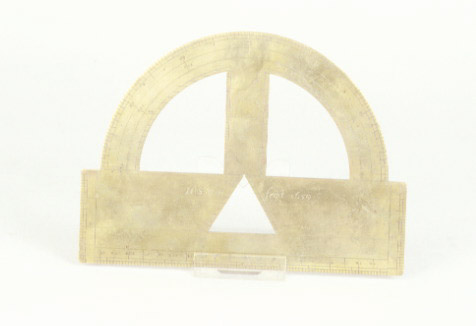
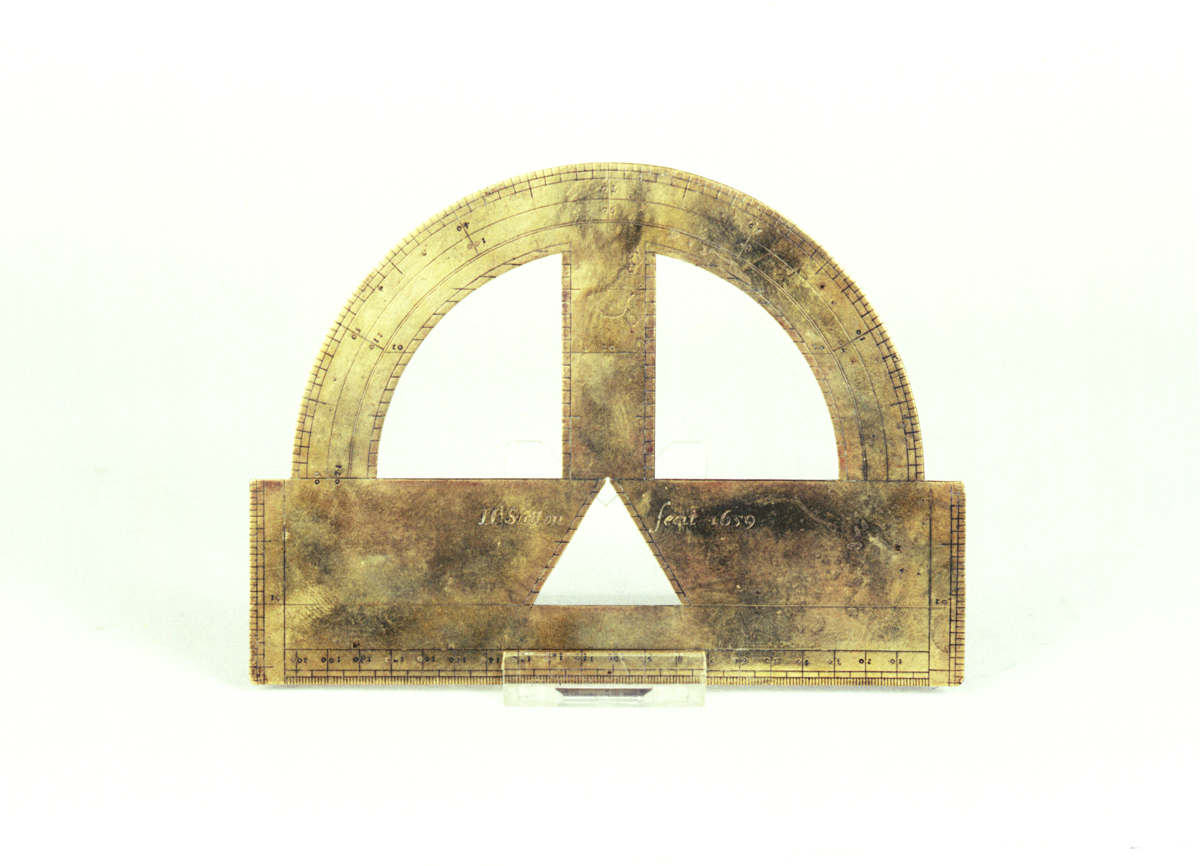
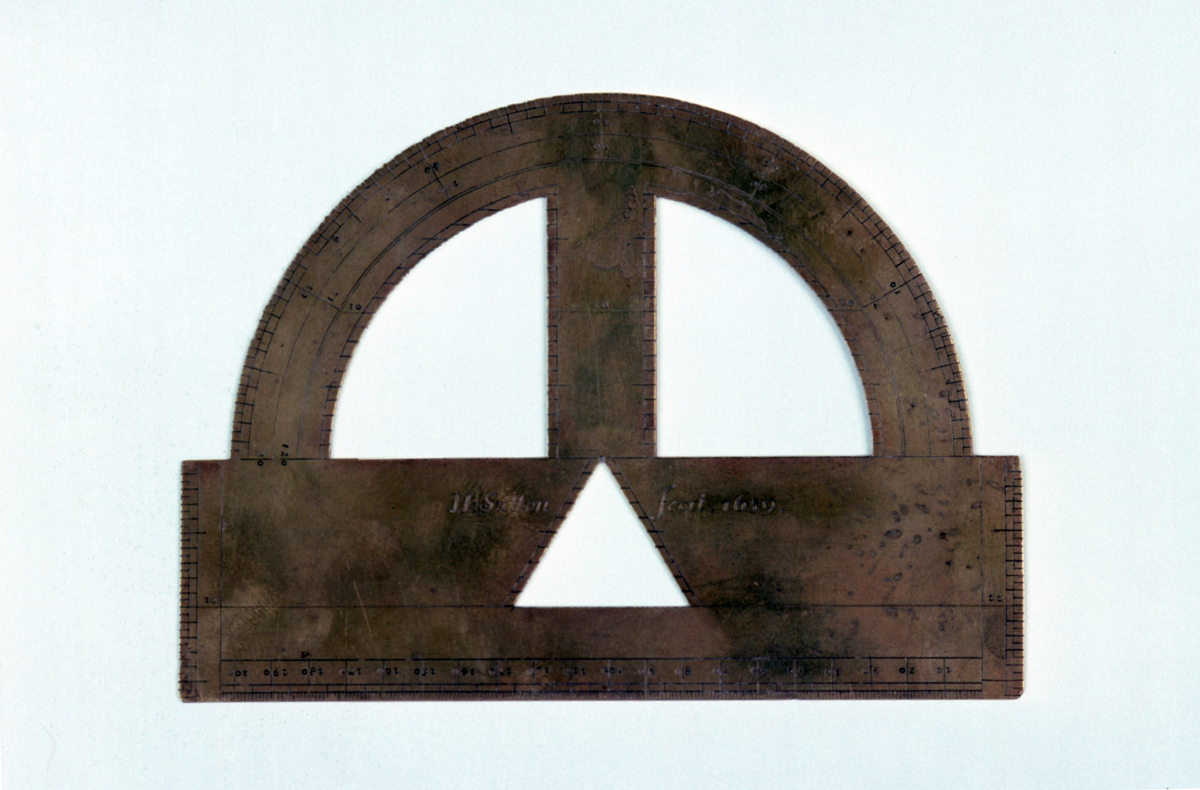
protractor, by Henry Sutton, English, 1659
Origin
England; London
Maker
Sutton, Henry
Class
drawing
Earliest Date
1659
Latest Date
1659
Inscription Date
1659
Material
metal (brass)
Dimensions
length 145mm; breadth 105mm
Special Collection
Provenance
Purchased at the Tesseract instrument fair in 1992.
Inscription
‘H. Sutton fecit. 1659’ (diameter)
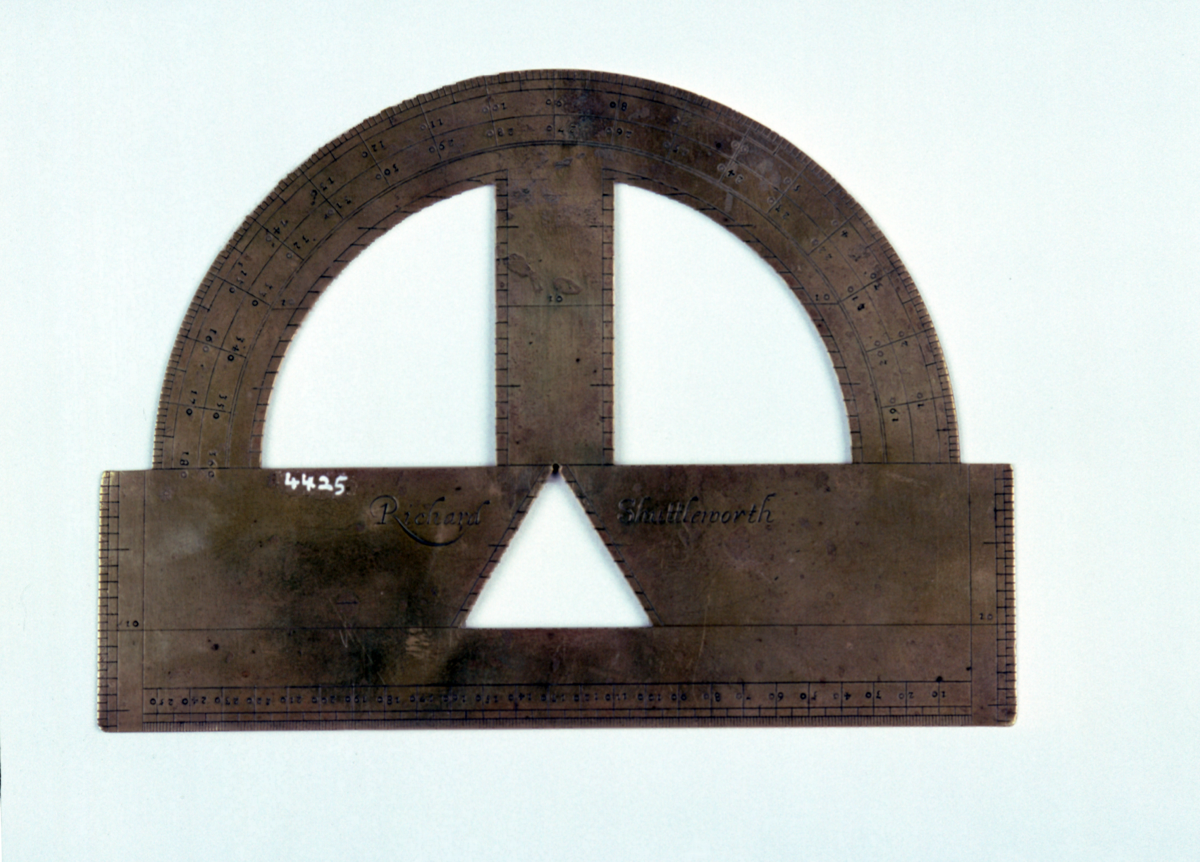
‘Richard Shuttleworth’
Description Notes
Fine brass protractor. Both faces of instrument have different scales. One side has 2 ruler scales on base, 0 - 1.5 inches and 0 - 200 in a scale where 1 unit = 6mm; and the curved edge is marked 0 - 60, 70 - 120. On other side curved edge is marked 0- 180, 190 - 360. Base edge has scale 0 - 250 where 1 unit = just over 5mm.
Condition good; complete.
References
Events
Description
The protractor is a drawing instrument, used for measuring and drawing angles. Protractors began to appear in the sixteenth century, often in sets of drawing instruments which also included rulers, scales, dividers, squares and sectors, and were originally used with sea charts. Simple semicircular protractors work by showing how many degrees in an angle when one line of a shape is placed along the base line of the protractor with the point of the angle in the centre.
FM:45049
Images (Click to view full size):