Accession No
6239
Brief Description
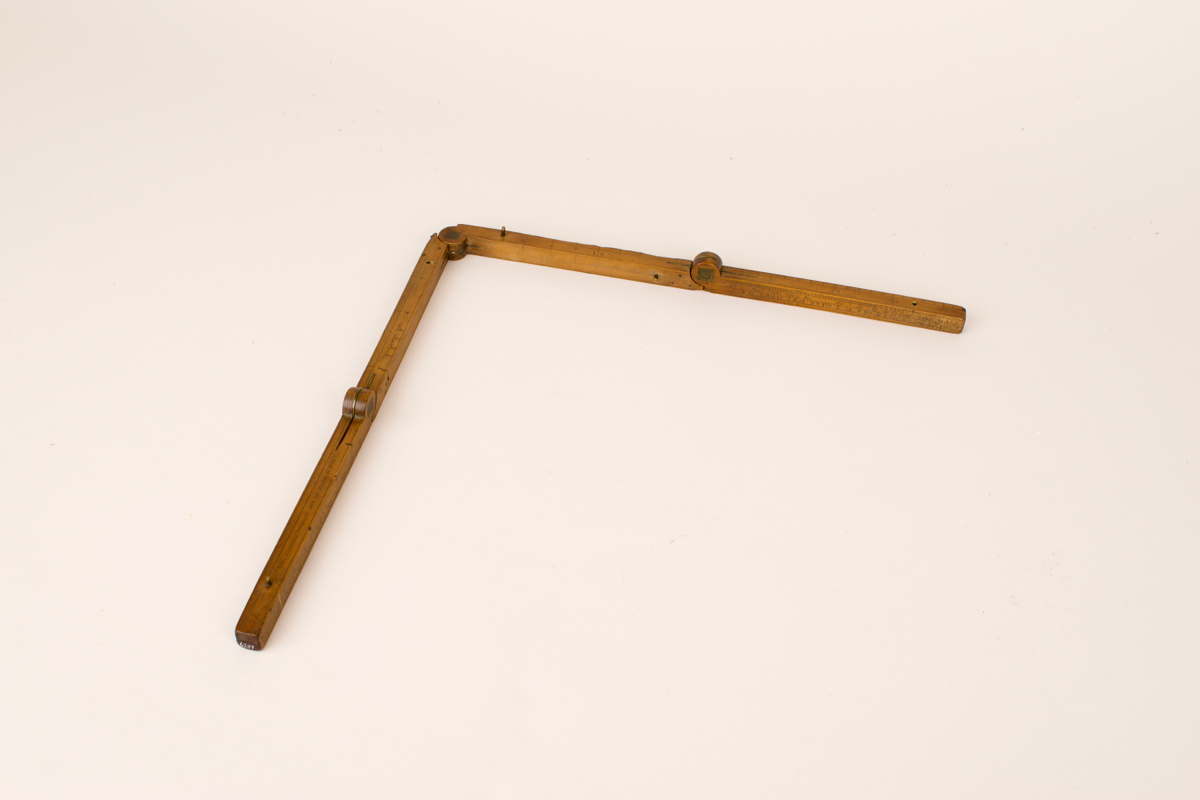
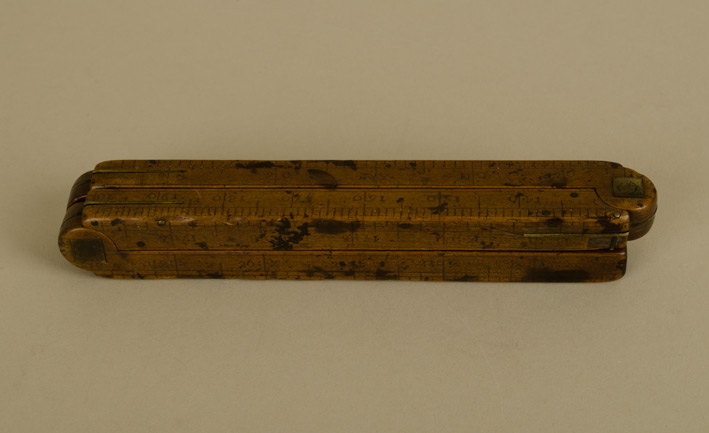
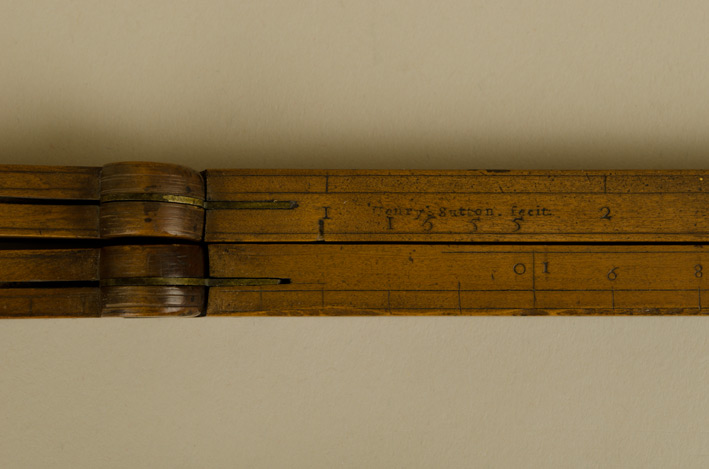
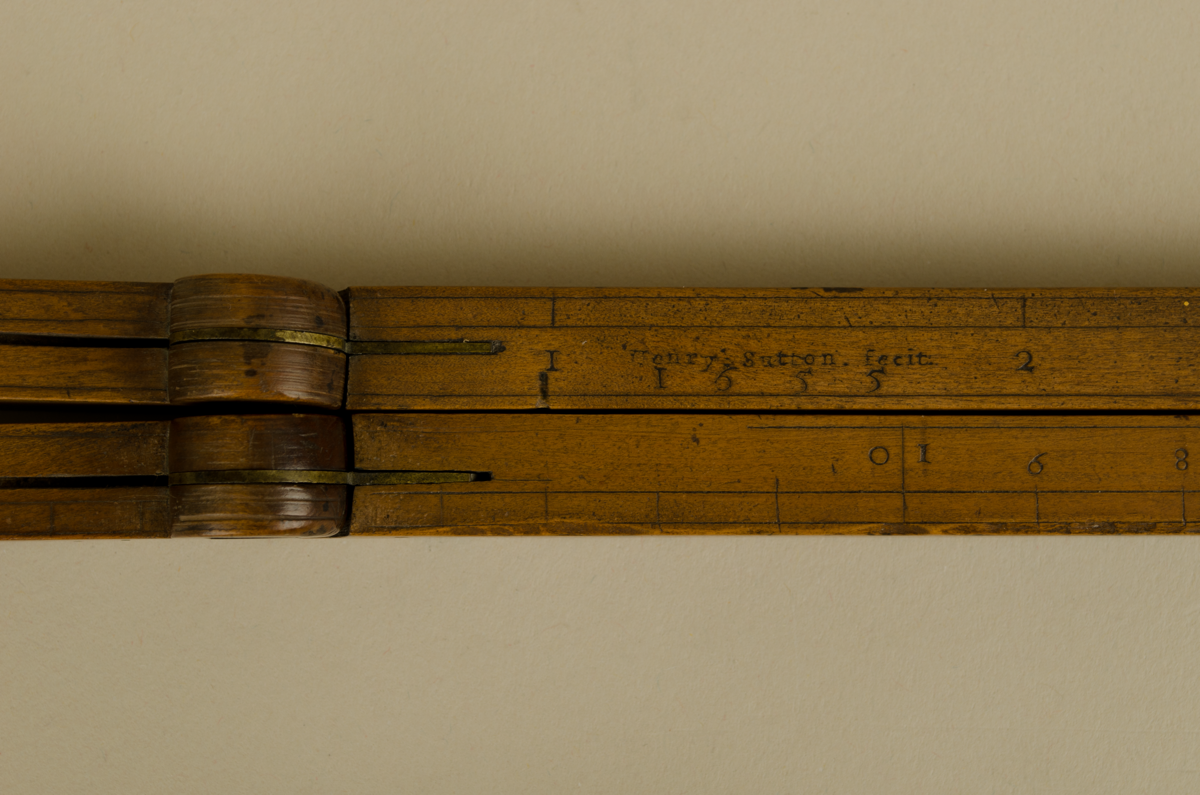
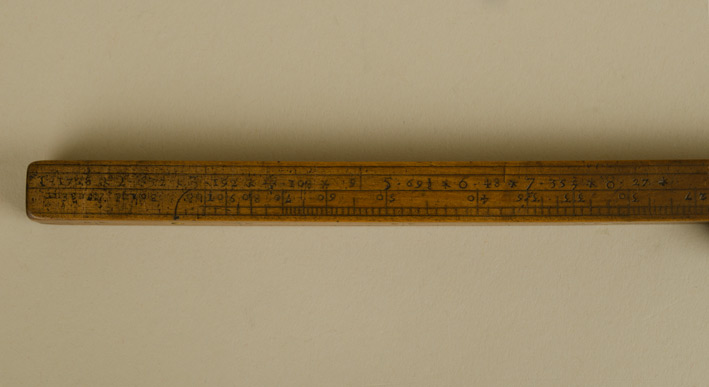
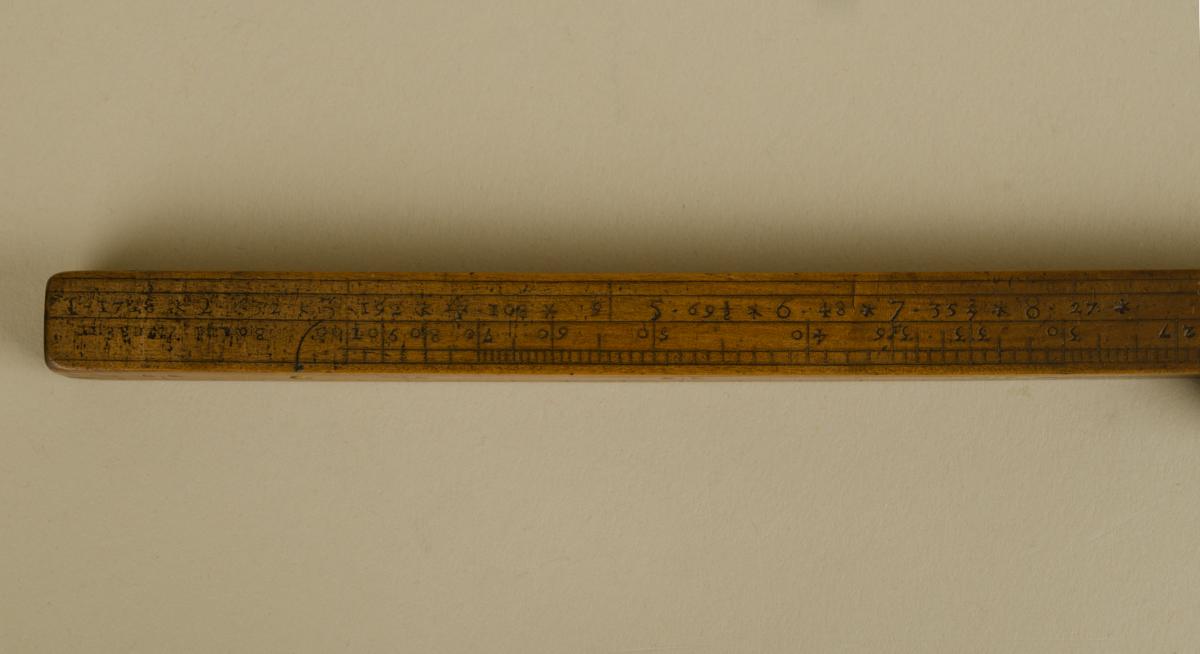
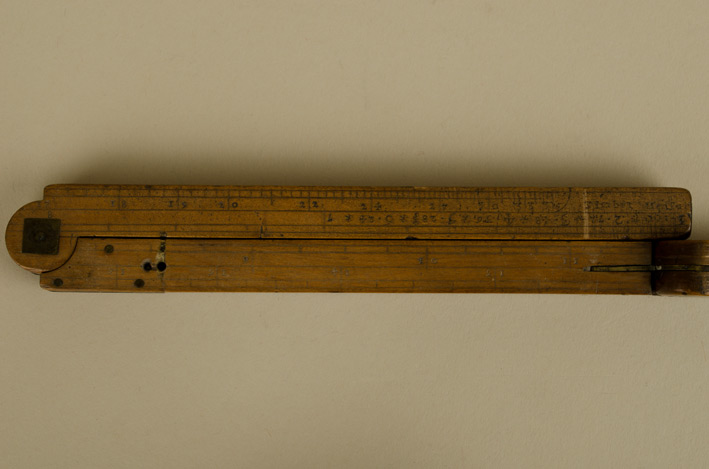
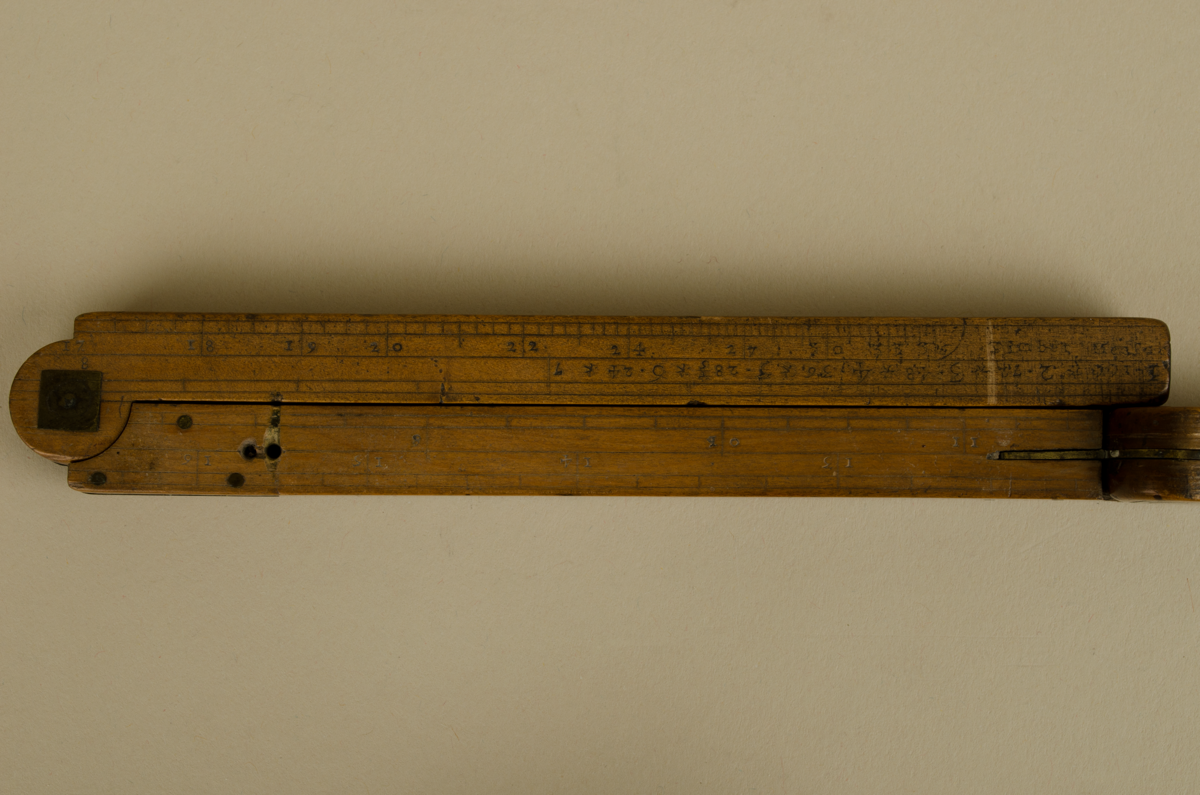
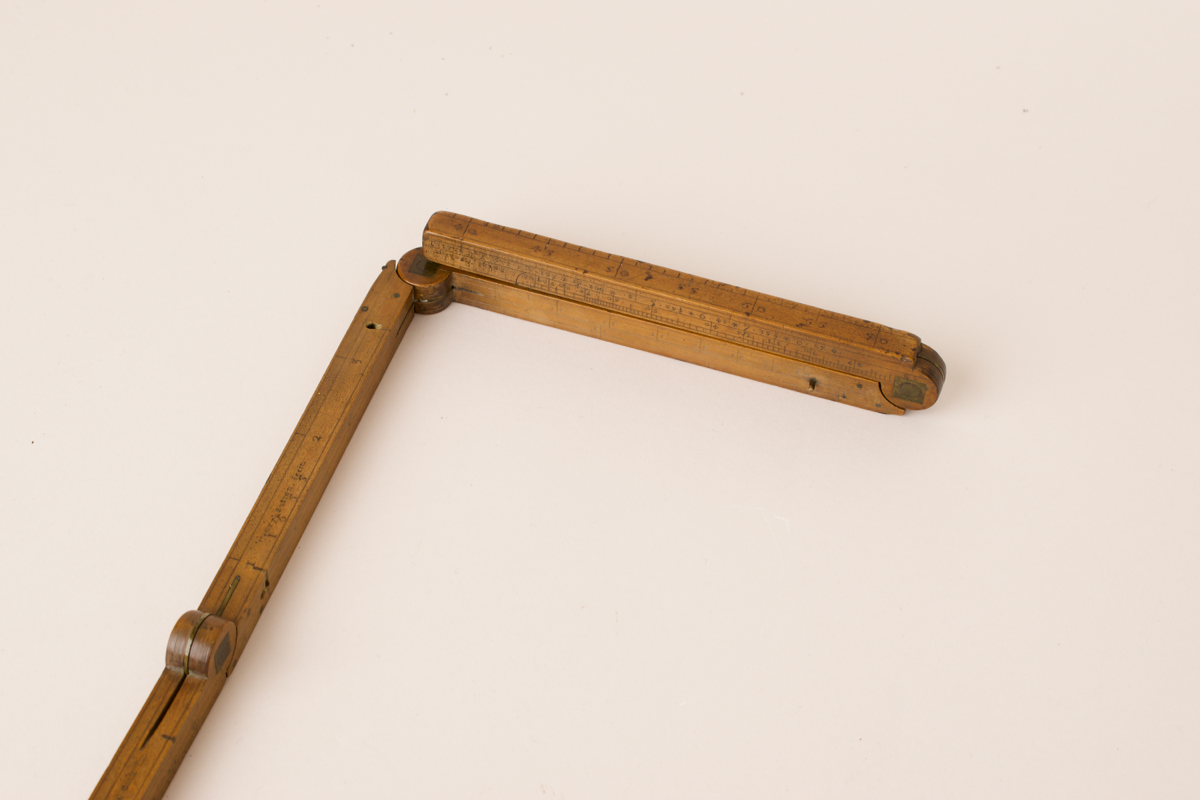
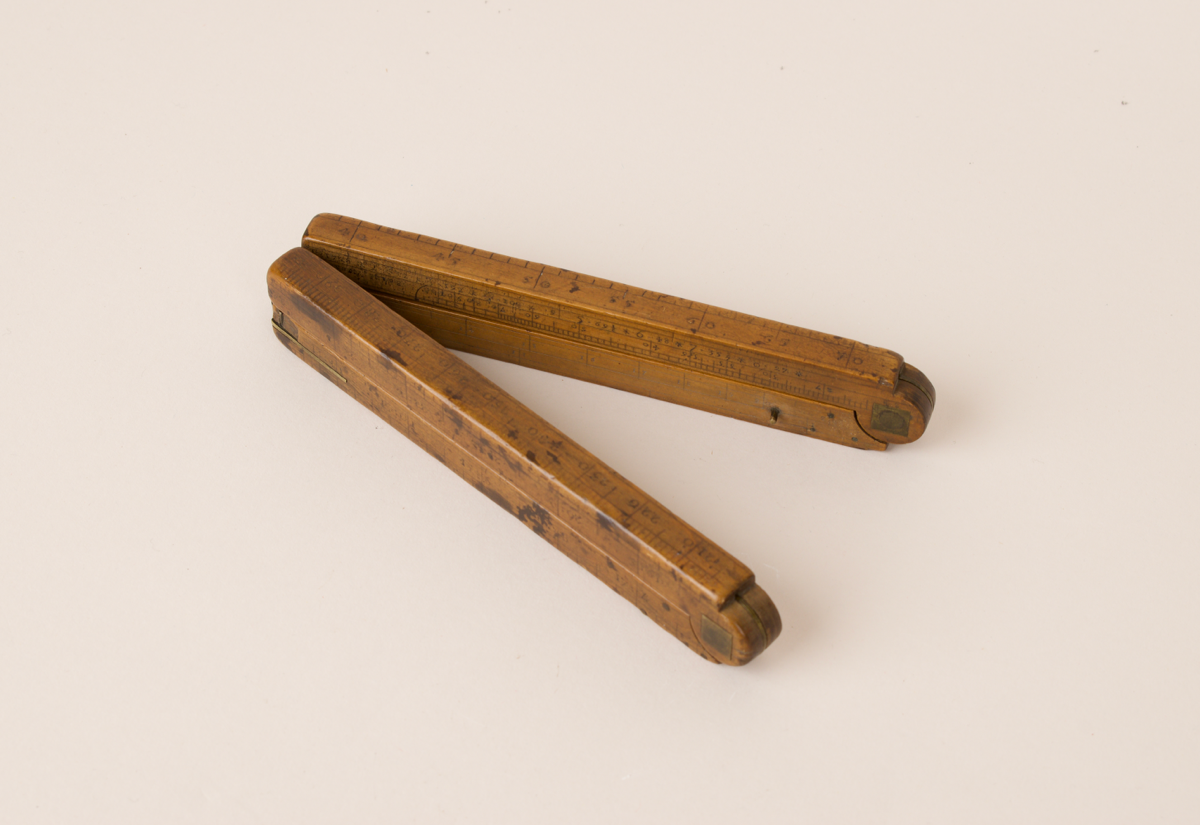
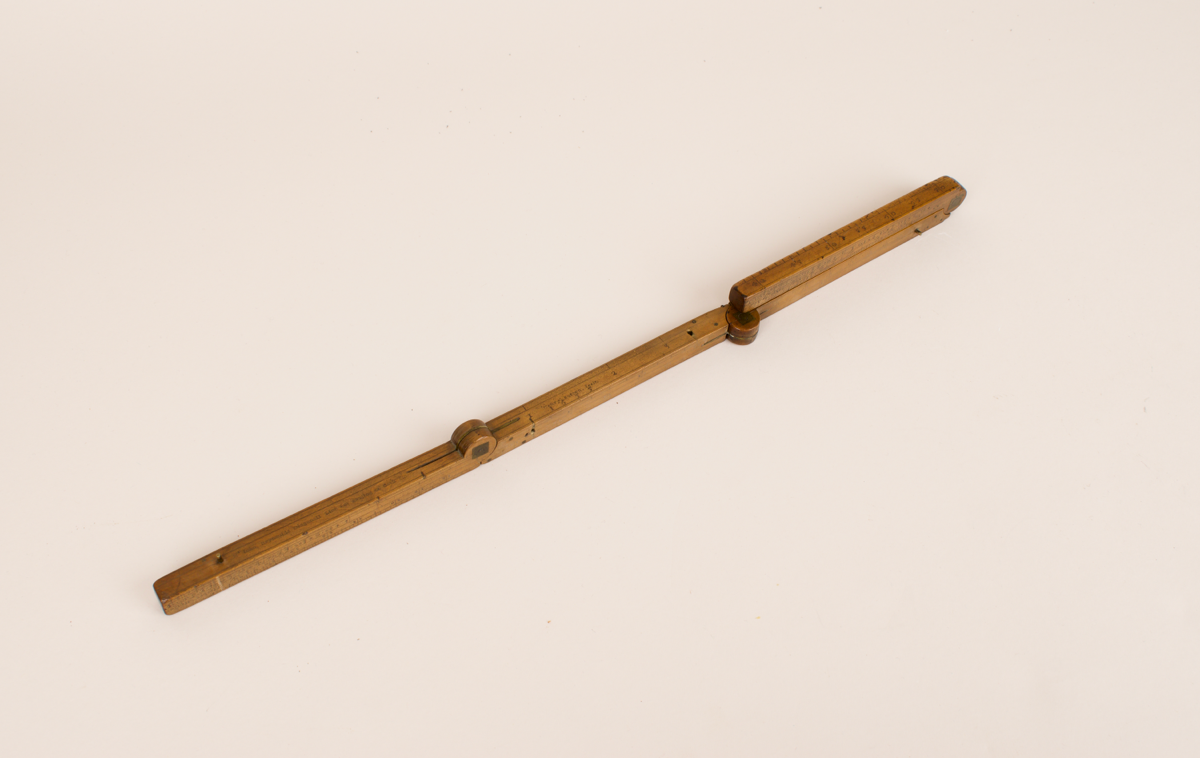
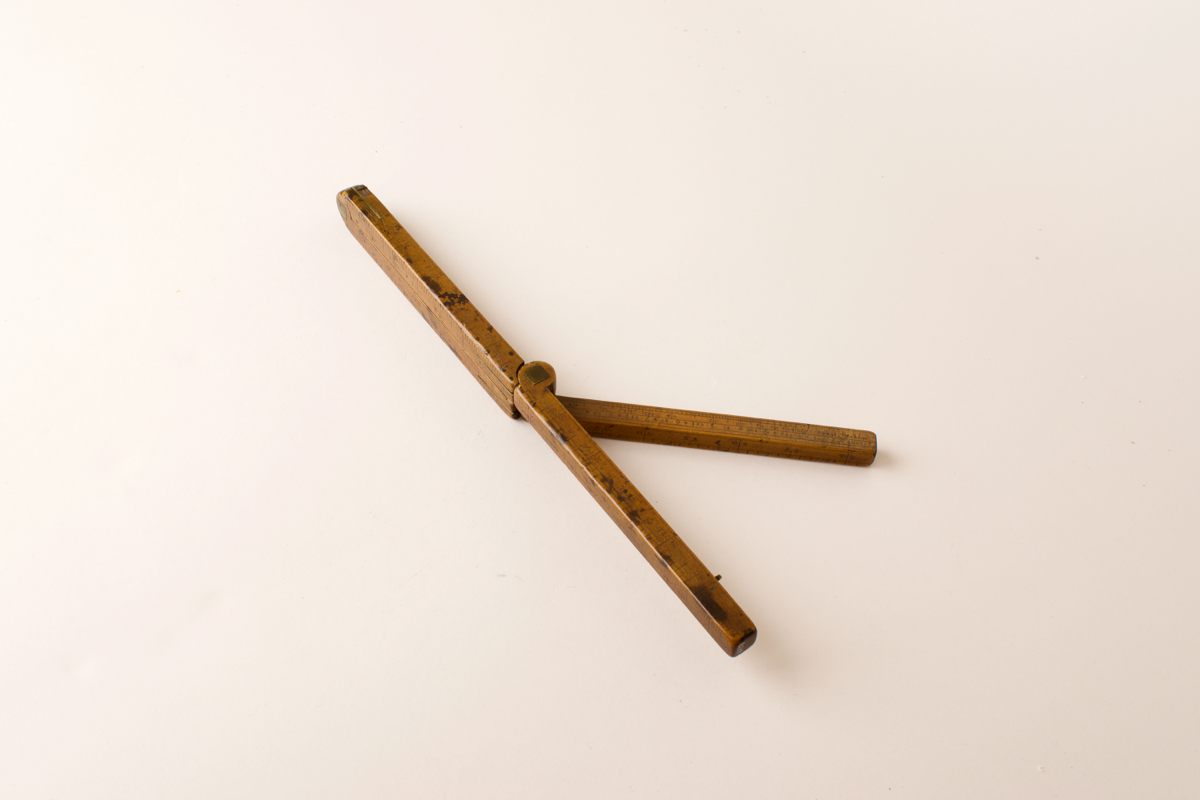
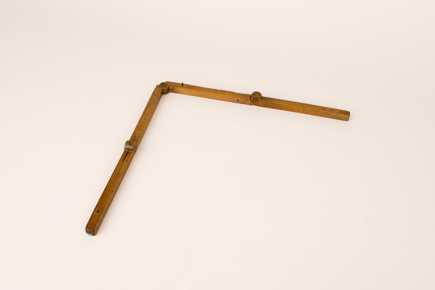
folding boxwood gauging rule, by Henry Sutton, after the design of John Reynolds, English, 1655
Origin
England; London
Maker
Sutton, Henry [maker] Reynolds, John [inventor]
Class
metrology; calculating
Earliest Date
1655
Latest Date
1655
Inscription Date
1655
Material
wood (boxwood); metal (brass)
Dimensions
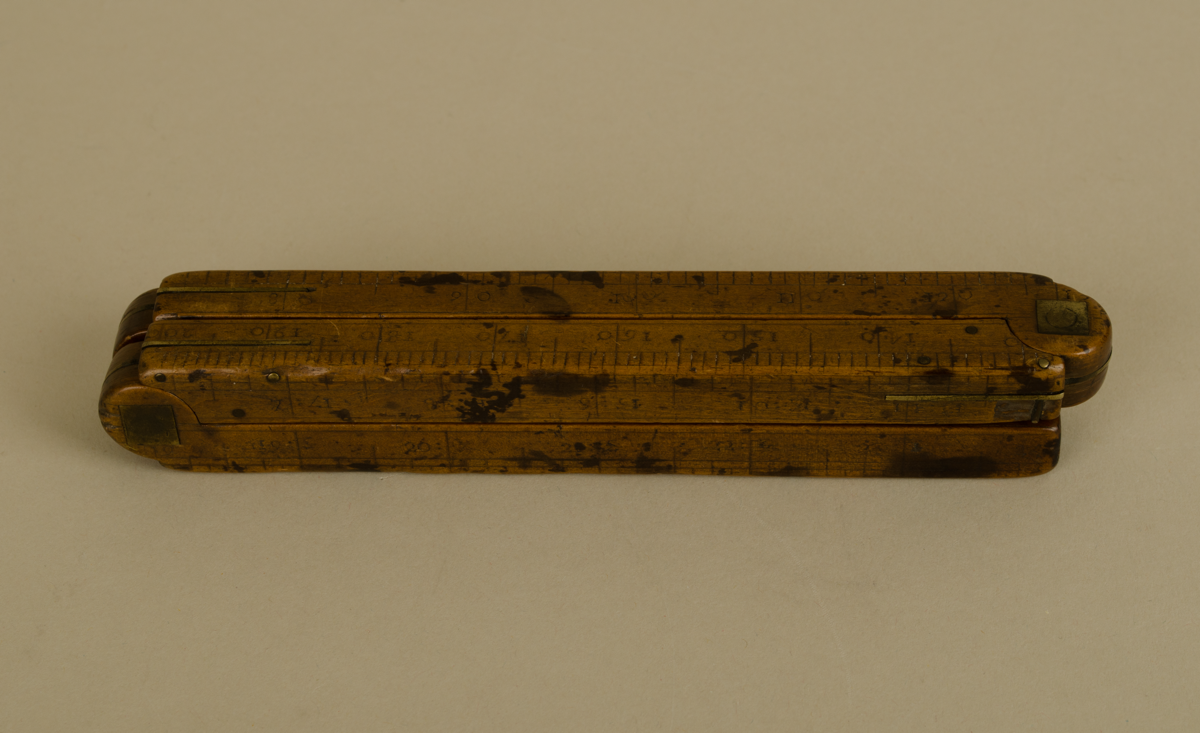
length folded 171mm; breadth folded 26mm; depth folded 26mm
Special Collection
Provenance
Donated from the estate of the individual 09/12/2008. On loan from an individual from 19/02/1998.
Inscription
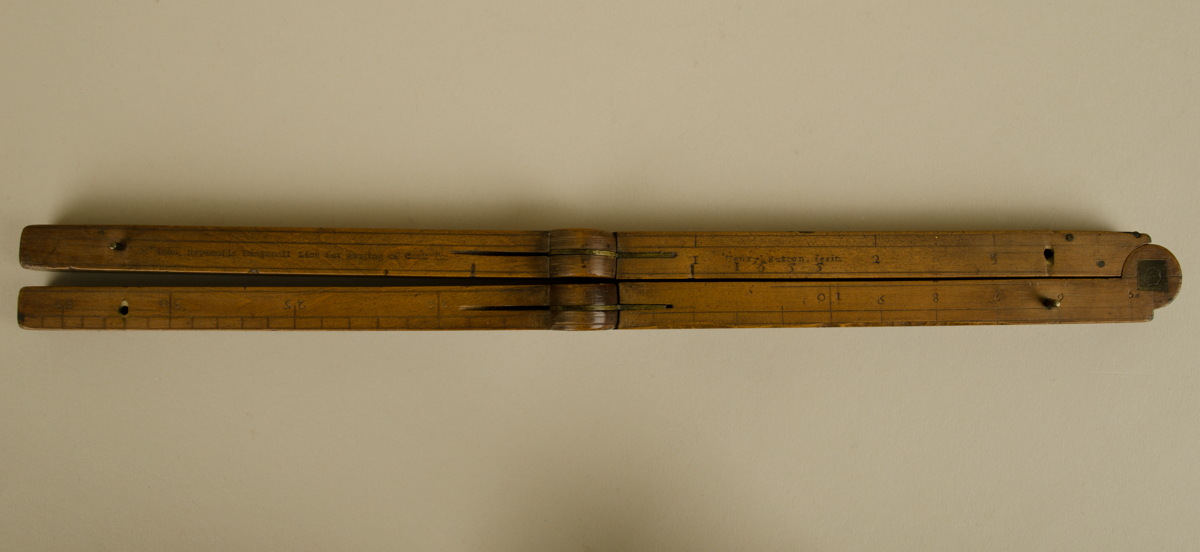
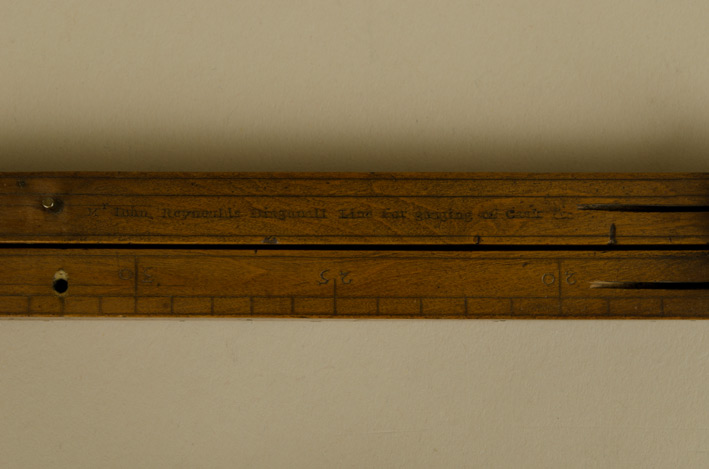
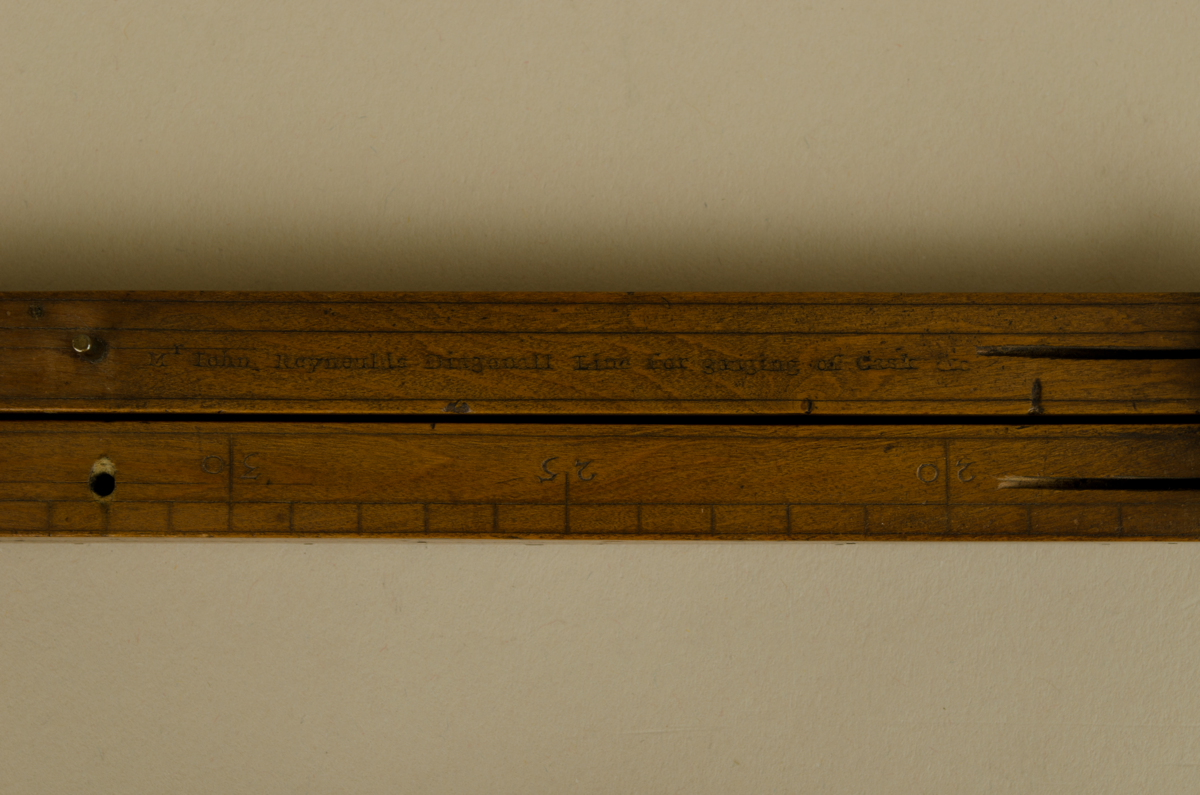
‘Mr Iohn Reynolds Diagonall Line for gauging of Cask &c’
‘Henry Sutton fecit
1655’
Description Notes
folding boxwood gauging rule, by Henry Sutton, after the design of John Reynolds, English, 1655.
Folding boxwood rule in four sections with brass hinges and pins for holding rule together when folded.
First face: unequal scale divided 1 - [37], numbered 1, 2...10, 20, 25, 30, 35, subdivided to 1.
Second face: two faint scales. One marked ‘Board Measure’ and divided 1 - 100, numbered 1,2...20, 22, 24, 27, 30, 33, 36, 40, 50...100. Other marked ‘Timber Measure’ and divided 1 - 35, numbered 1, 2...20, 22, 24, 27, 30, 33, 35.
Third face: unequal scales divided [38] - 300, numbered 40, 45...70, 80...300, subdivided to 1.
Fourth face: inch scale on one half, divided [0] - [12] and back to [24], numbered by 1, subdivided to 0.25. Other half contains two log scales. One divided [3.2] - [32], numbered 3, 4...10, 2[0], 3[0]; the other divided 1 - 10, numbered by 1.
Condition good (some ink marks, and much fading of the scales); complete.
References
Events
Description
This folding rule for gauging wine and ale casks is an exceptionally rare survival from a tempestuous time in British history. It was used to gauge the volume of casks of wine and ale. This practice became increasingly important after the introduction of government taxes during the English Civil Wars.
Predictably, these taxes were unpopular, and controversies raged over the correct measurements, who could make them and how they were to be made. Here a mathematician called John Reynolds and an artisan called Henry Sutton have collaborated to make an ingenious folding device that could be carried to ports, breweries and ale-houses.
FM:45051
Images (Click to view full size):