Accession No
2095
Brief Description
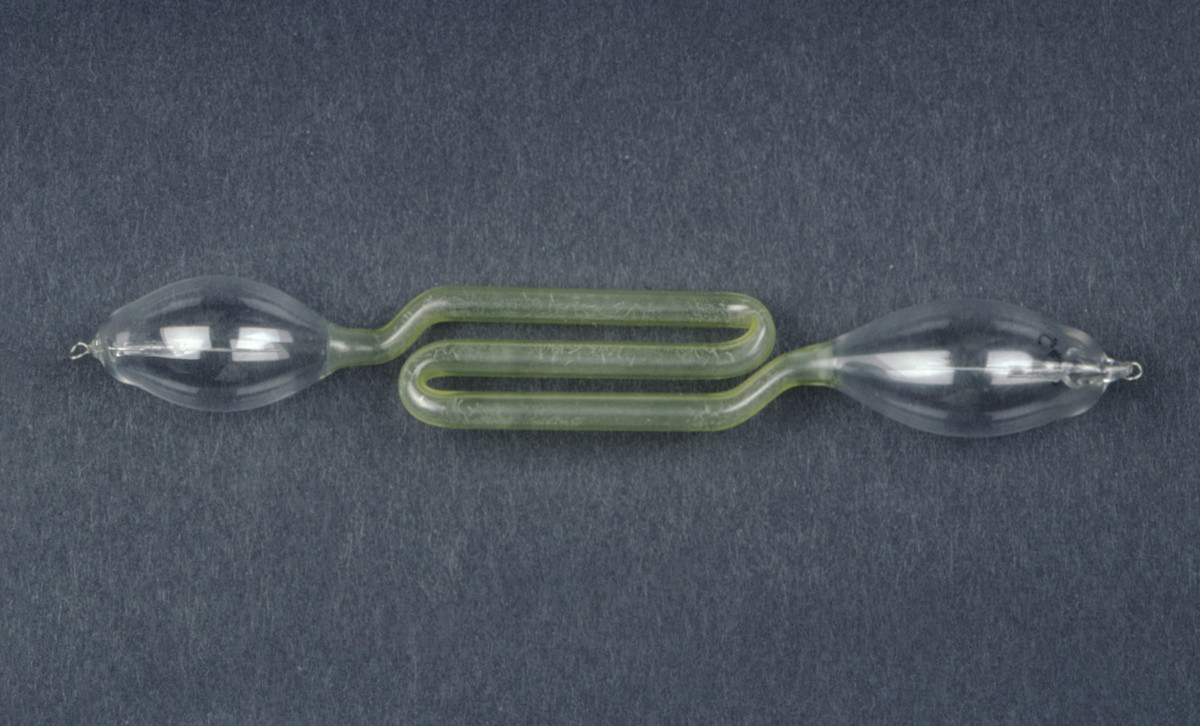
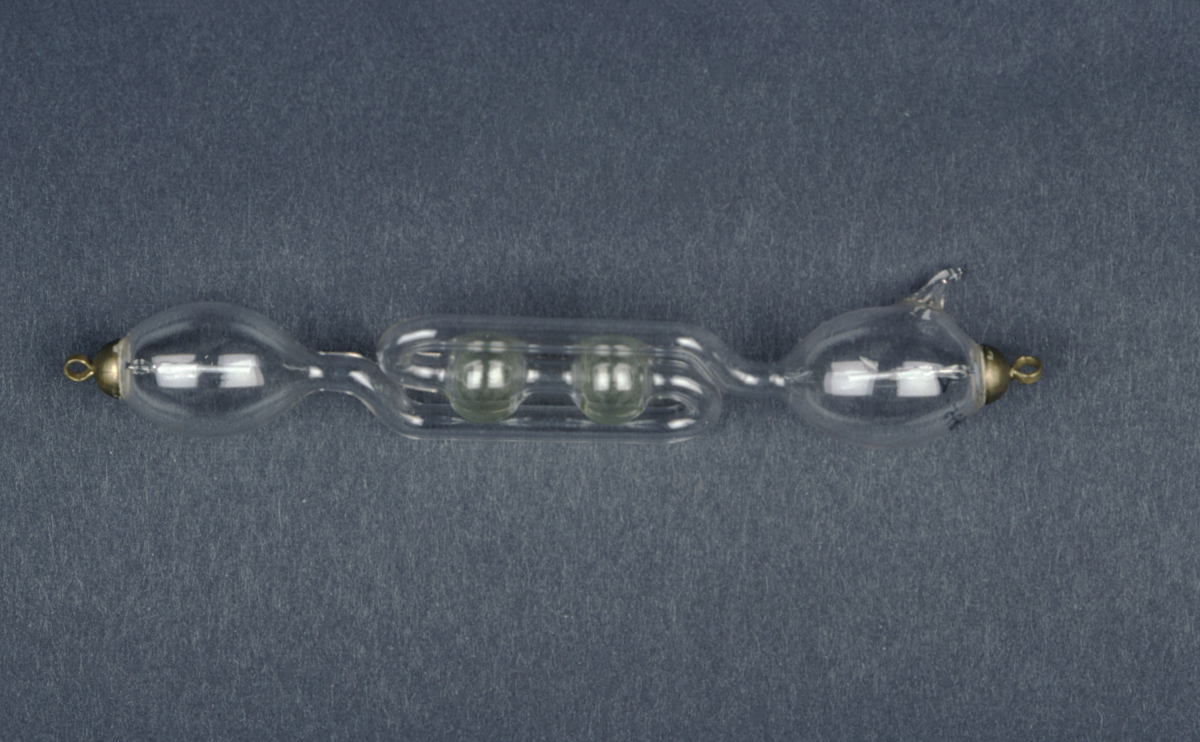
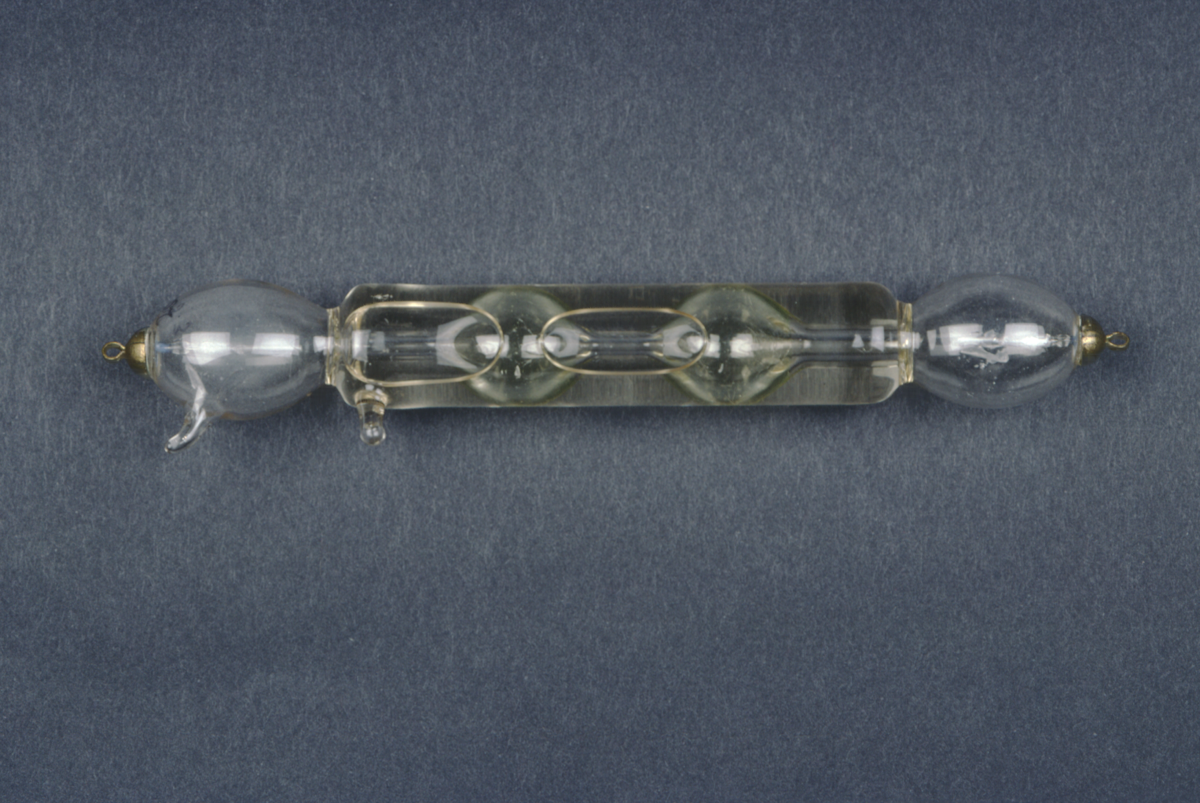
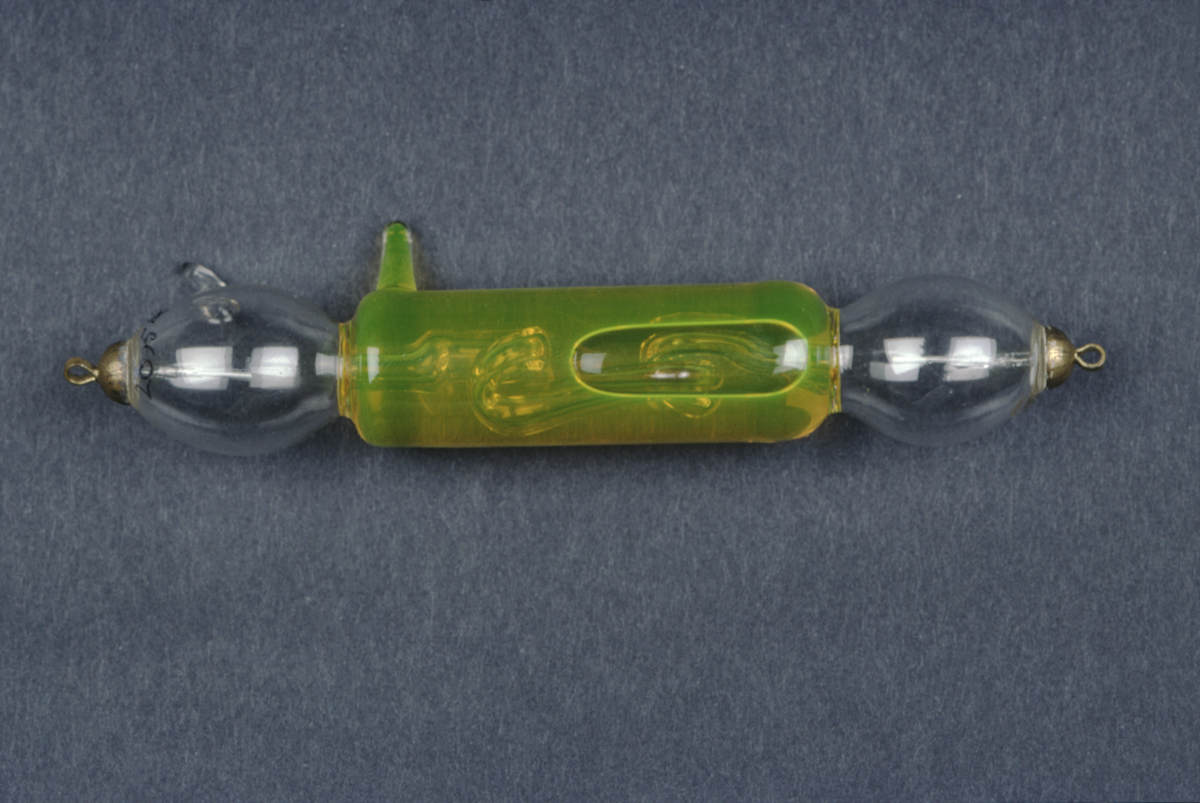
8 Geissler-type vacuum tubes, 1875-1925
Origin
Maker
Class
physics
Earliest Date
1875
Latest Date
1925
Inscription Date
Material
glass; metal (white metal, brass); liquid
Dimensions
maximum length 158mm; maximum breadth 34mm .4 length 130mm; breadth 32mm; depth 21mm .7 length 148mm; breadth 25mm; depth 22mm
Special Collection
Cavendish collection
Provenance
Donated by widow of C.M. Sleeman, 1975. Formerly property of C.M. Sleeman (1883 - 197(3)?). NST 1st class at Christ’s College. Taught physics to medical students at Cavendish lab. Fellow of Queens’ from 1912.
Inscription
Description Notes
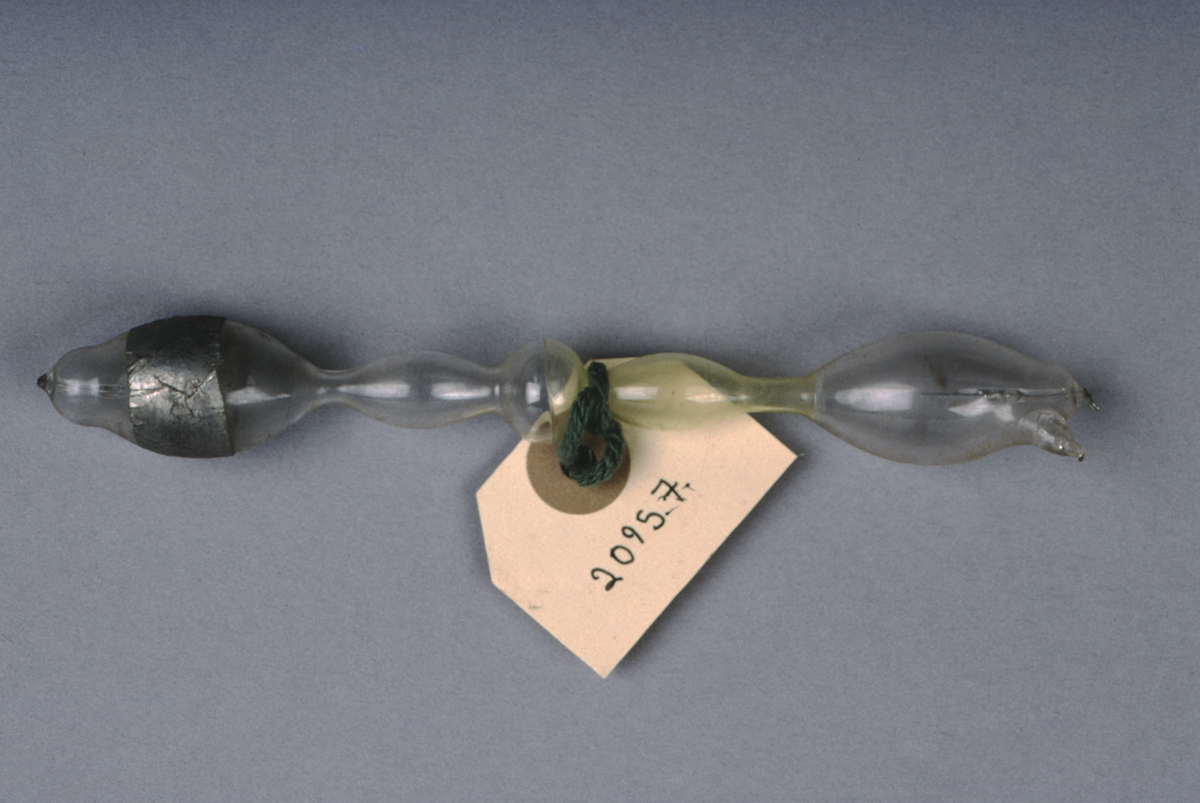
8 Geissler-type vacuum tubes (part of a set of 8). All glass with white metal terminals, three with brass caps for improved electrical connection.
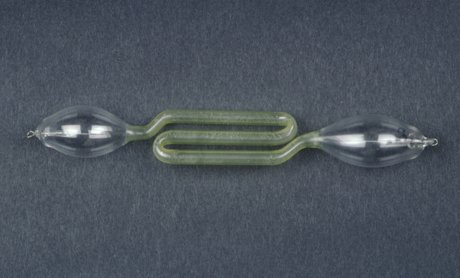
1. Tube has Two glass bulbs, joined by S-bend tube; partially filled with yellow/green gas.
2. Tube has Two glass bulbs, joined by S-bend tube with two spherical reservoirs in central part; partially filled with yellow/green gas.
3. Tube has Two glass bulbs joined by glass tube with two bulbs; glass jacket around central tube filled with pale yellow liquid. (1 part)
4. Tube has Two colourless glass bulbs, joined by glass tube with two loops; glass jacket around central tube filled with orange liquid. (1 part)
.4 Vacuum tube with central spiral section. White metal terminals with brass caps to aid electrical connection.
.7 Geissler-type vacuum tube with central section consisting of two ovoid chambers around spherical chamber. One end wrapped in aluminium foil. White metal terminals. Partially filled with green fluid.
.8Geissler-type vacuum tube with central coiled section. Both end chambers wrapped in aluminium foil. White metal terminals. Partially filled with green fluid.
Condition good; complete.
References
Events
Description
The Geissler tube was invented by the German glassblower Heinrich Geissler (1814 - 1879) in 1857. They were mass produced from the 1880's.
Geissler tubes contain a combination or one of the following: rarefied (thinned) gasses such as neon or argon, conductive liquids or minerals. Which when an electrical charge is passed through the tube different effects are created.
Some tubes were very elaborate and complex in shape and would contain chambers within an outer casing. The very decorative geissler tubes were often used as after dinner entertainment. As an educational tool they are also used to demonstrate the movement of electrons and the principles of a vacuum.
Geissler Tubes have had a large impact on the development of such instruments as the x-ray tube, neon signs, and the light bulb, all of which use the same vacuum principle.
Created by: Boris Jardine
FM:45498
Images (Click to view full size):