Accession No
5362
Brief Description
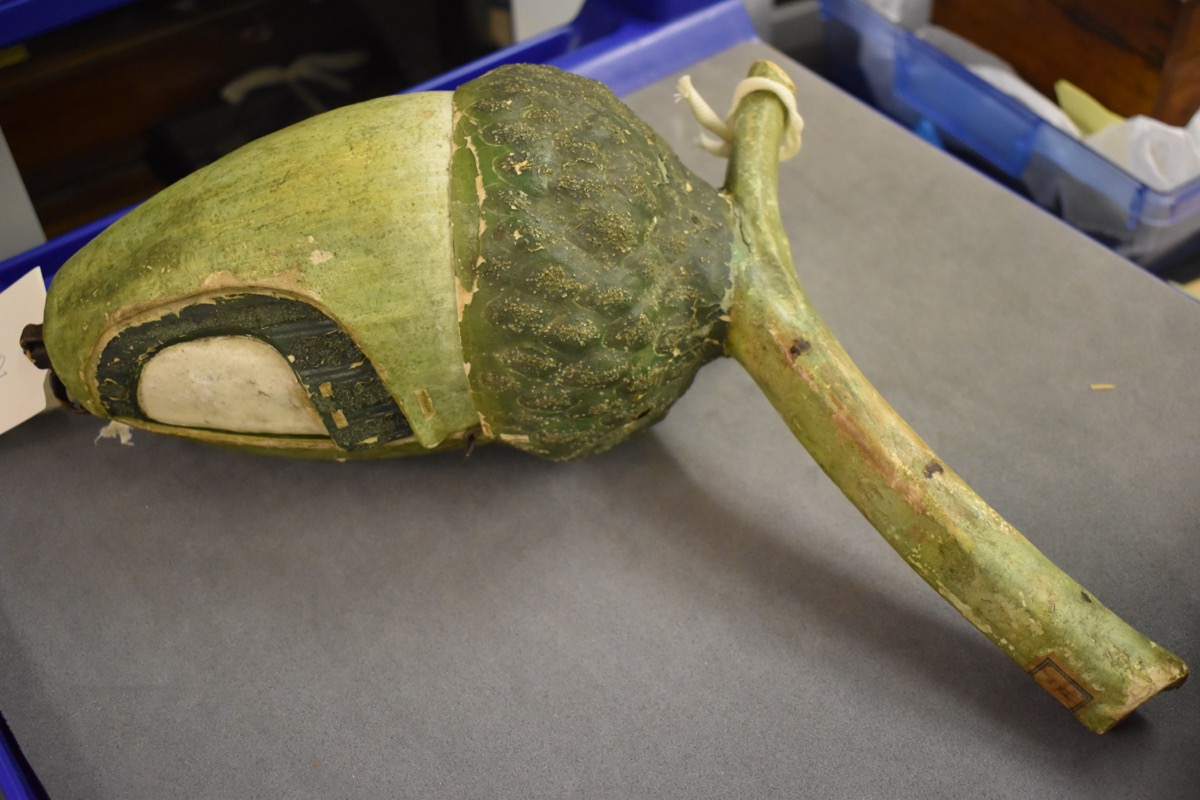
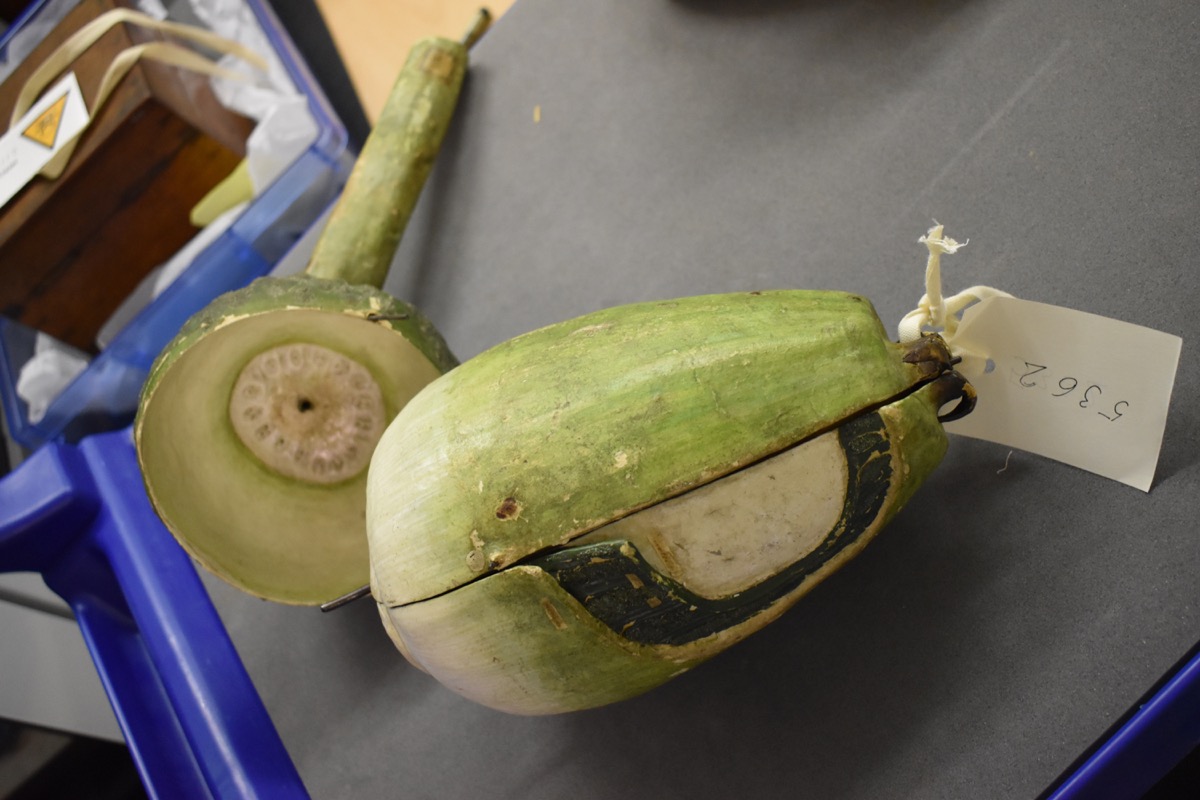
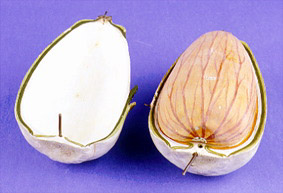
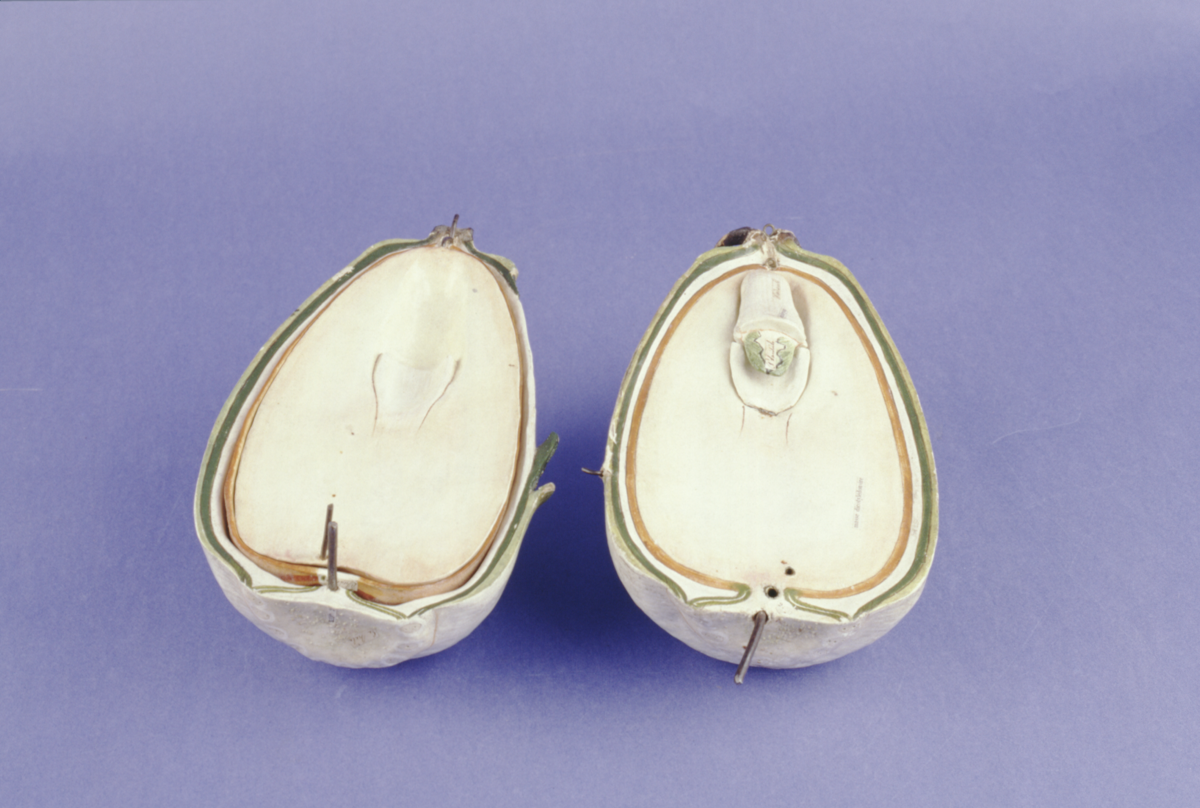
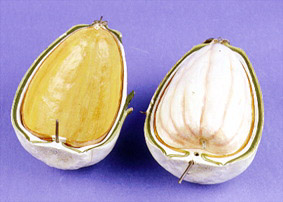
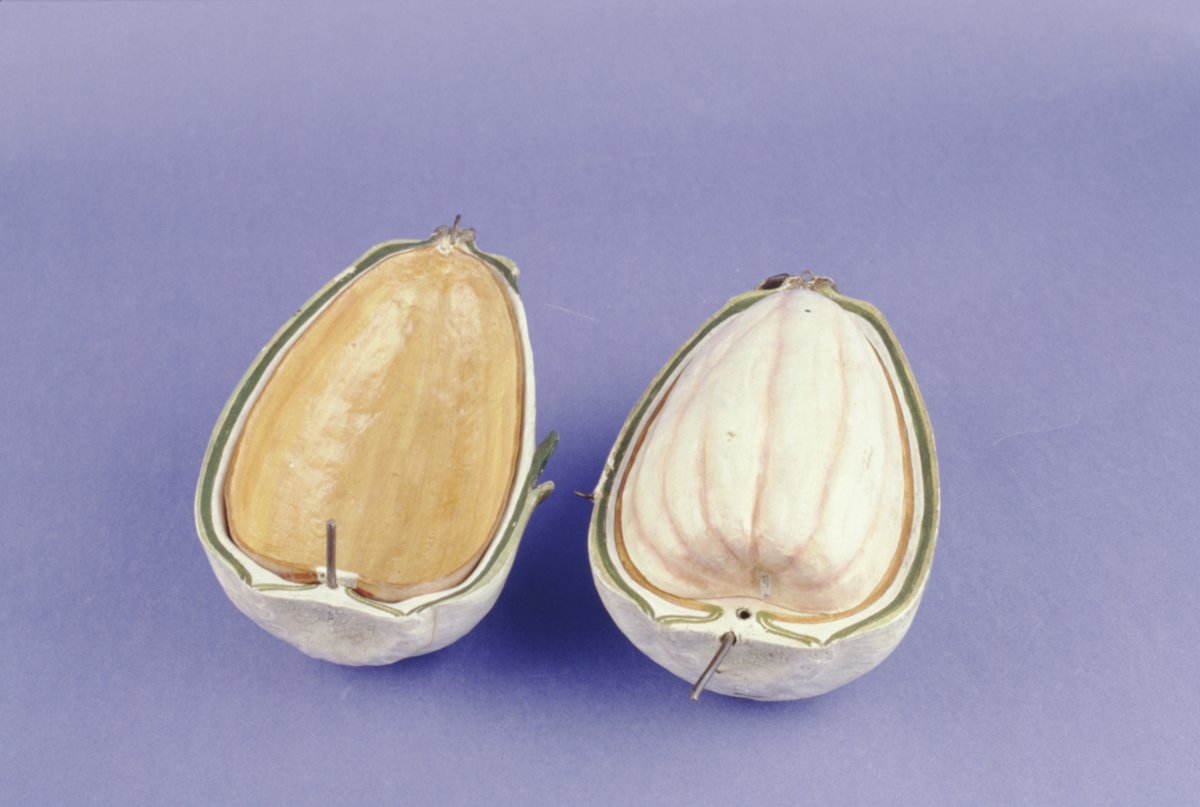
papier mâché botanical model of an acorn, by Louis Thomas Jérôme Auzoux, French, c. 1880
Origin
France
Maker
Auzoux, Louis Thomas Jérôme
Class
biology; demonstration
Earliest Date
1870
Latest Date
1900
Inscription Date
Material
paper (card; papier mâche); metal (brass); paint
Dimensions
length (approx) 260mm; heigth of stem (approx) 250mm
Special Collection
Provenance
Purchased from Trevor Philip & Sons, 75a Jermyn Street, St James, London, England on 02/02/1999. 22 Botanical models were purchased as one lot. Purchased with grant aid from PRISM fund administered by the Science Museum.
Inscription
Description Notes
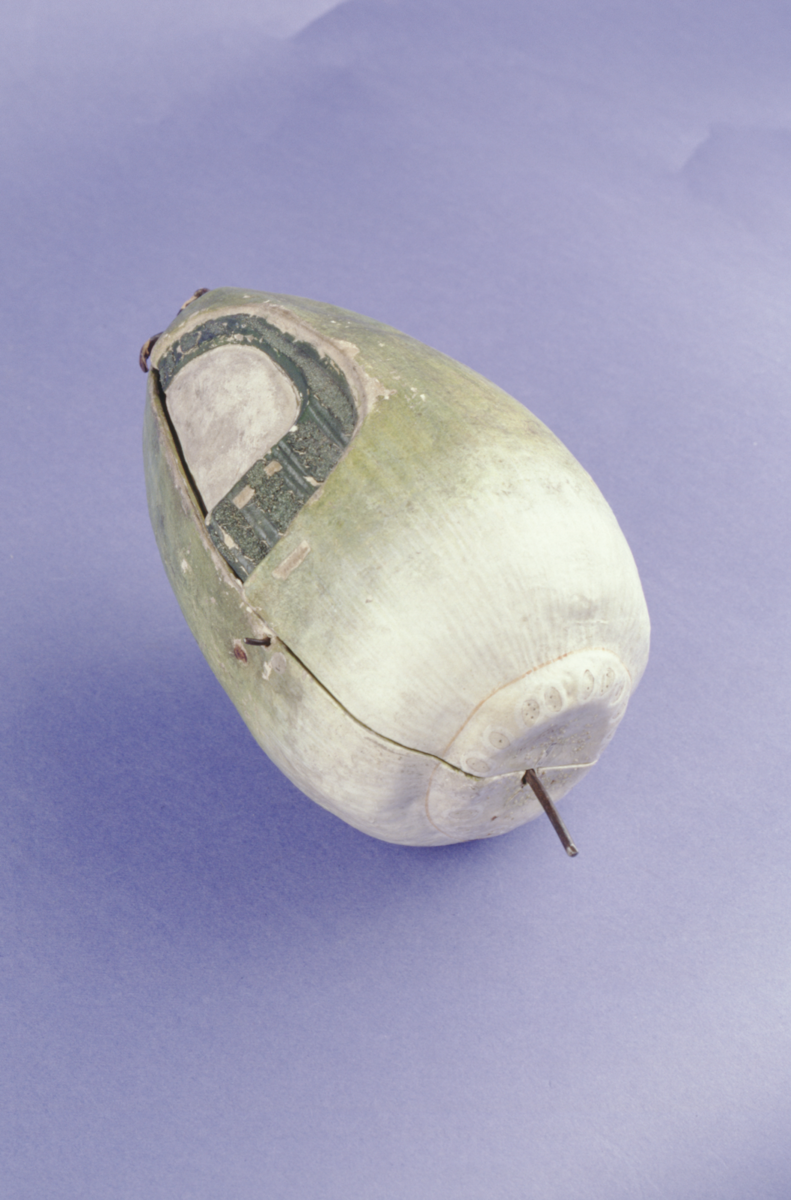
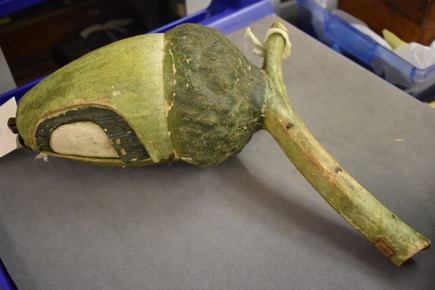
Papier mâché botanical model of an acorn, by Auzoux, French, c. 1880.
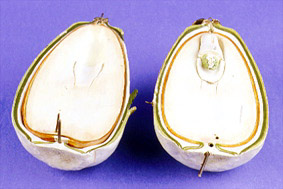
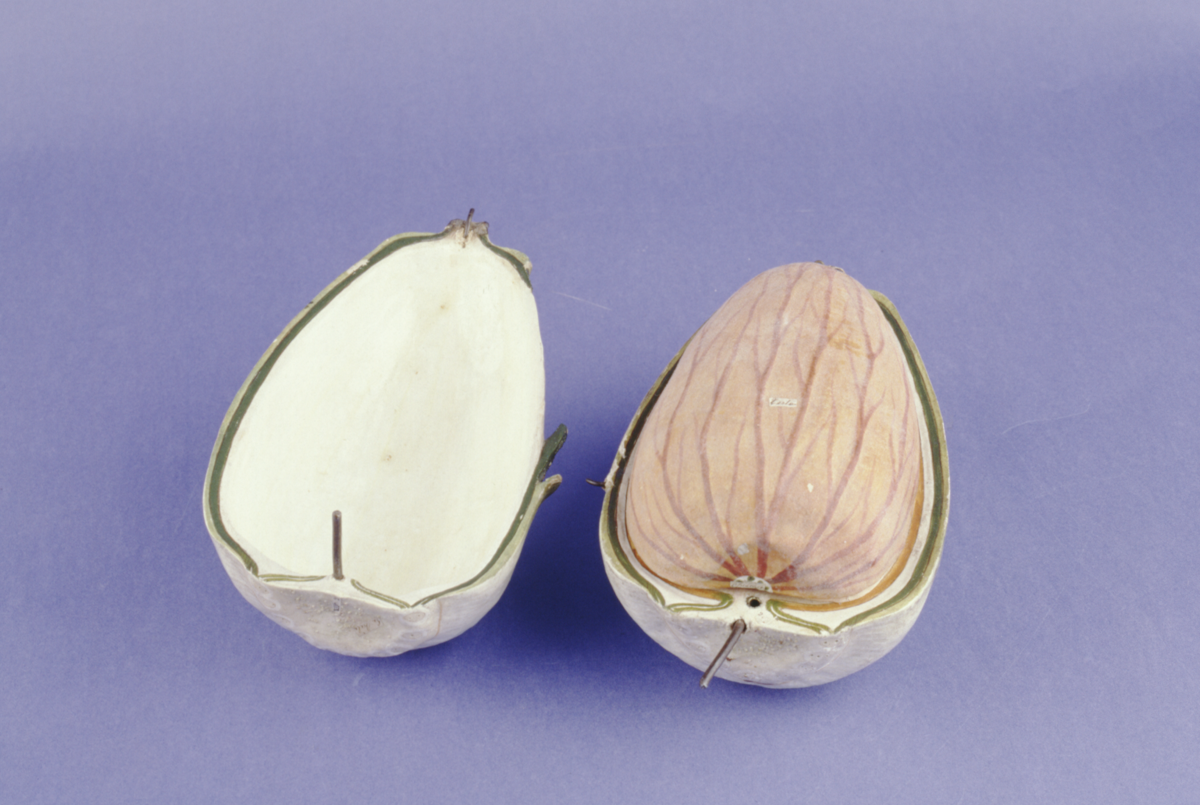
On the stem is a paper label with a blue border and handwritten in side of the border is the number 372. The stem and acorn cup have been formed as one piece into which the acorn seed fits in place by a metal rod. The acorn seed separates into two halves, one of which is hollow to accommodate further disassembly of parts, these being the episperm and the seed lobe which when removed expose the embryon attached to the other half.
Labelled parts are with both handwritten and typewritten text, the typewritten a later addition. Small labels depicting hands indicate where to disassemble and reassemble the model.
The construction and the presence of hands on the model suggest that it is by Auzoux, France.
Condition good to fair, some paint is missing from the outer surface of the acorn and there is the beginnings of cracking to the paint layers.
References
Events
Description
This acorn model was likely produced by Louis Thomas Jérôme Auzoux (1797–1880) as a teaching and reference model for botany students. Institutions, such as Cornell University and Mount Holyoke in the United States, purchased models such as these to demonstrate their ability to compete against established teaching programmes and to circumvent traditional modes of acquiring botanical knowledge. Like many of Auzoux’s models, this example is clastic. The acorn separates into two pieces: a stem and acorn, and the acorn seed. The seed further divides into two halves to expose the different membranes of its internal structure. As a medical student in Paris, Auzoux developed a special papier-mâché mixture (containing cork and clay as well as paper and glue) in order to produce anatomical models that could be taken apart piece by piece. After establishing a commercially successful factory in St. Aubin d’Ecrosville that produced clastic models of human anatomy, Auzoux’s company expanded to include examples of animals and plants.
08/07/2014
Created by: Allison Ksiazkiewicz on 08/07/2014
FM:45721
Images (Click to view full size):