Accession No
5766
Brief Description
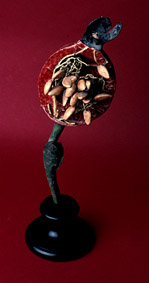
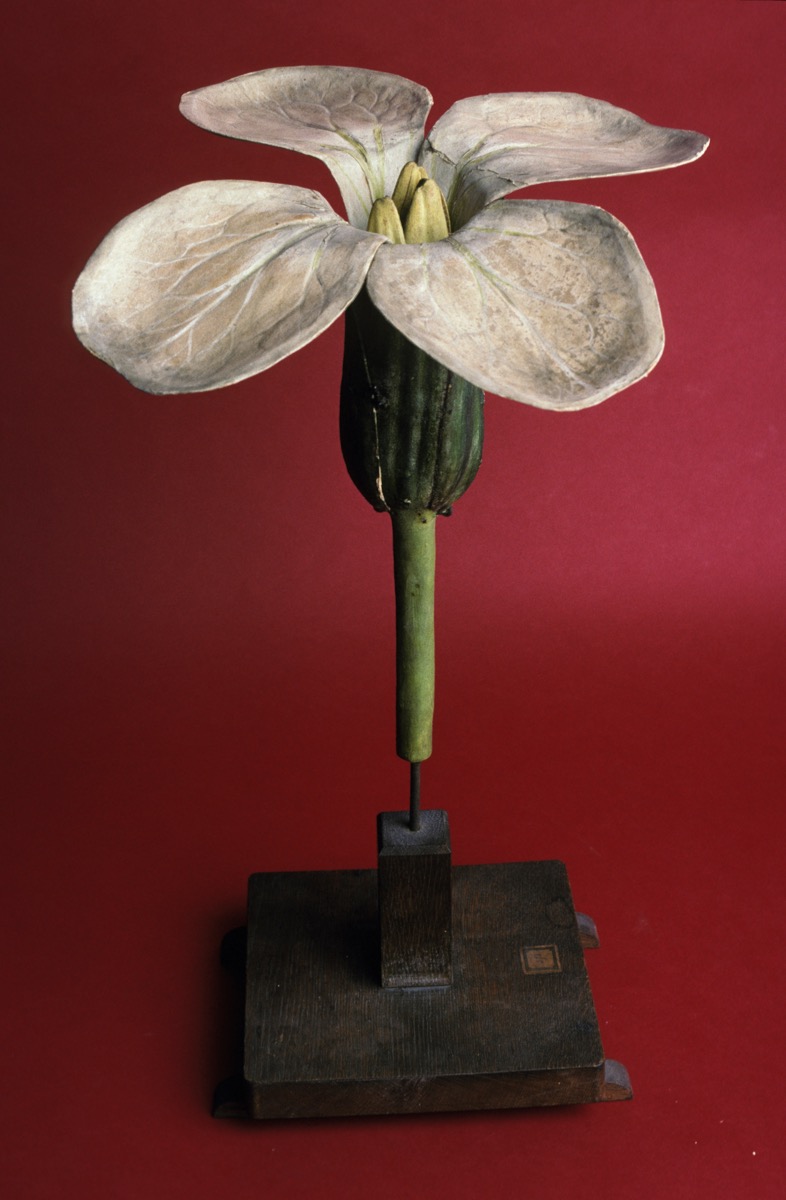
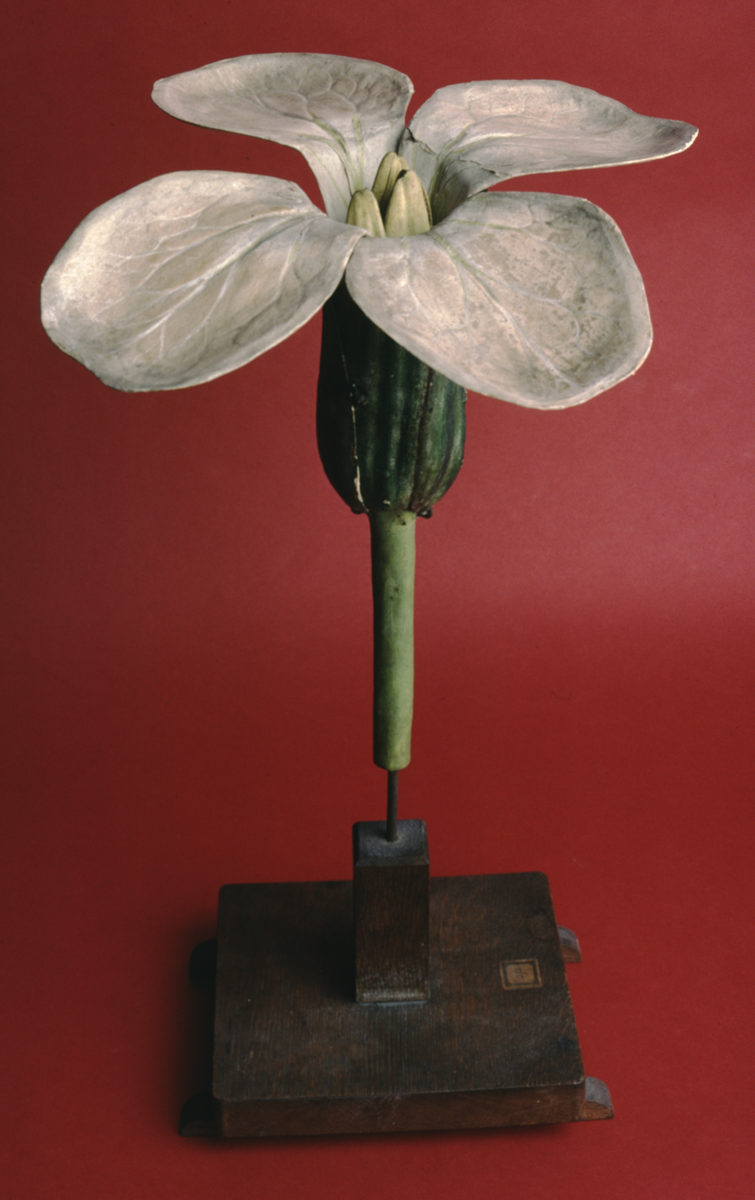
papier-mâché didactic botanical fruit model, Ribes uva crispa (gooseberry), by Louis Thomas Jérôme Auzoux, French, 2/2 19th century
Origin
France; Saint-Aubin-d'Écrosville [attributed]
Maker
Auzoux, Louis Thomas Jérôme
Class
natural history; demonstration
Earliest Date
1864
Latest Date
1900
Inscription Date
Material
wood; paper (papier mache); paint; metal
Dimensions
diameter of base 136mm; height 470mm
Special Collection
Provenance
Purchased from Trevor Philip & Sons Ltd., 75A Jermyn Street, St. James’s; London; SW 1Y 6NP; England on 18/11/1999.
Inscription
‘GROSEILLE (baie du Ribes uva crispa, L.)’ (paper label)
‘Enveloppe ou epicarpe.’ (paper label)
‘Parenchyme succulent’ (paper label)
‘Modele’ (written on the outside of the fruit)
Description Notes
Papier-mâché didactic botanical fruit model, Ribes uva crispa (gooseberry), by Auzoux, French, 2/2 19th century.
A 19th century botanical teaching model, of Ribes uva crispa (gooseberry)
The base is wooden, and probably of a later date than the model.
The model is a cross-section of the fruit, revealing the seeds inside.
The fruit is on a stem, with two leaves.
The model is made of plaster and is painted, and has been labelled by paper labels stuck on. The paint is cracking in places.
Condition: fair; complete.
References
Events
Description
The Gooseberry model was likely produced by Louis Thomas Jérôme Auzoux (1797–1880) as a teaching and reference model for botany students. Institutions, such as Cornell University and Mount Holyoke in the United States, purchased models such as these to demonstrate their ability to compete against established teaching programmes and to circumvent traditional modes of acquiring botanical knowledge. The Gooseberry model shows a cross section of the plant, revealing the interior seeds. As a medical student in Paris, Auzoux developed a special papier-mâché mixture (containing cork and clay as well as paper and glue) in order to produce anatomical models that could be taken apart piece by piece. After establishing a commercially successful factory in St. Aubin d’Ecrosville that produced clastic models of human anatomy, Auzoux’s company expanded to include examples of animals and plants.
05/11/2013
Created by: Allison Ksiazkiewicz on 05/11/2013
FM:46160
Images (Click to view full size):