Accession No
5795
Brief Description
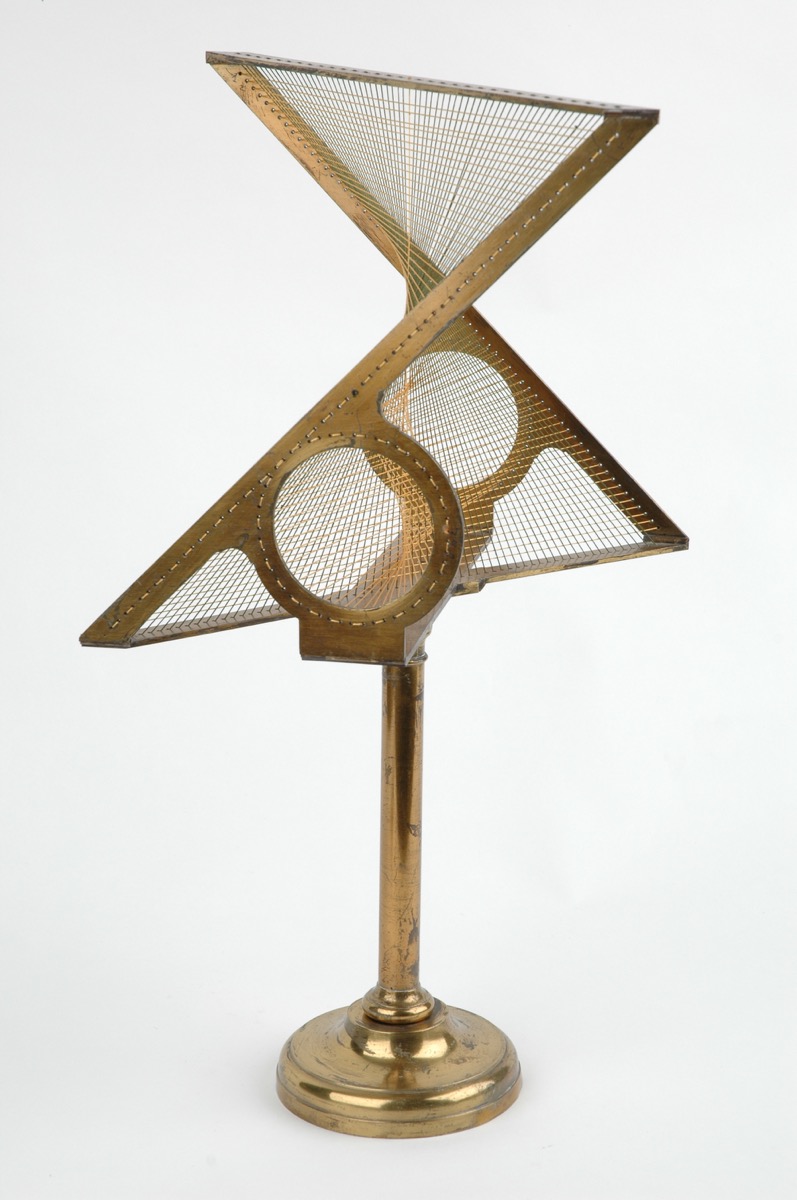
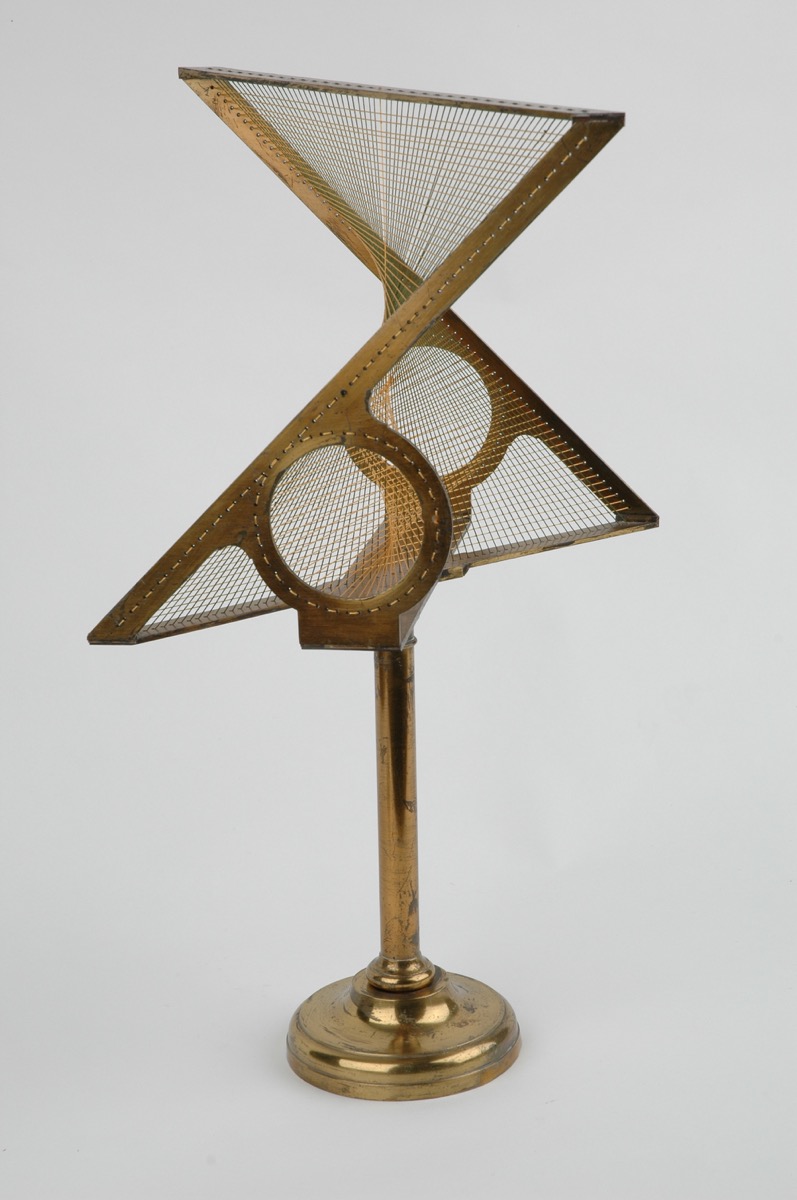
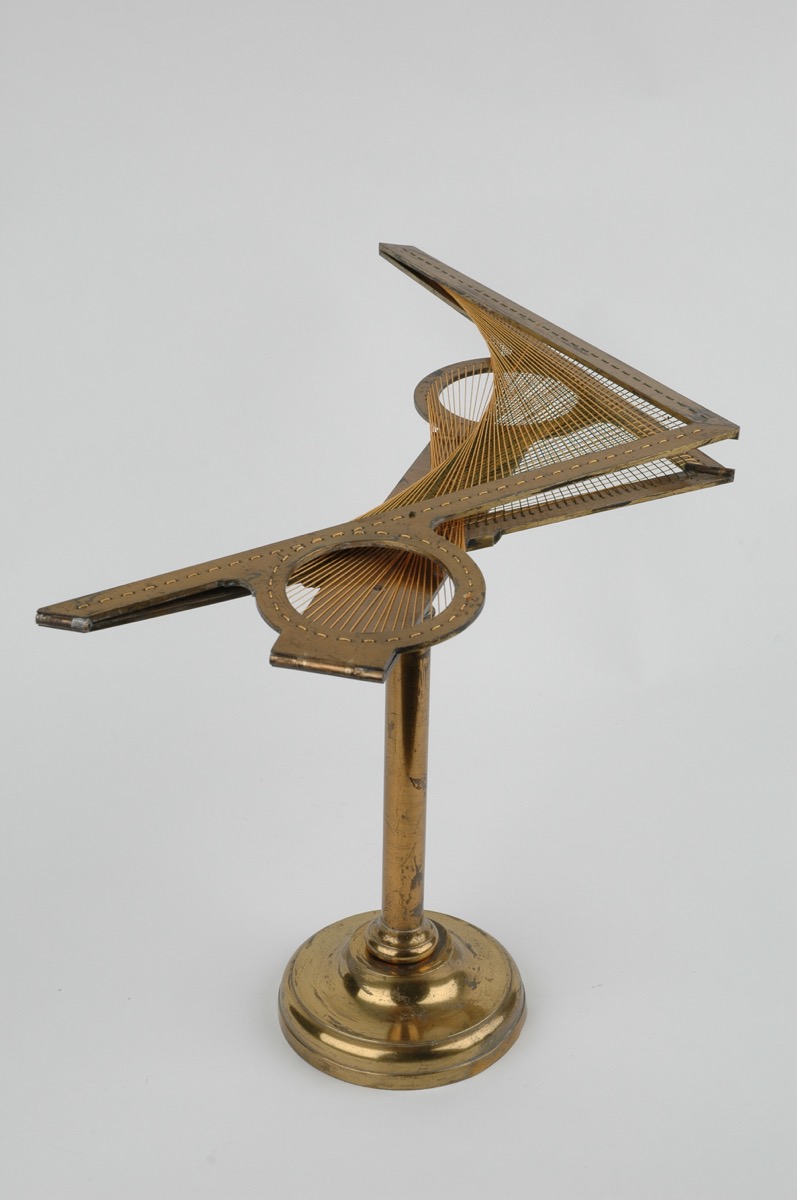
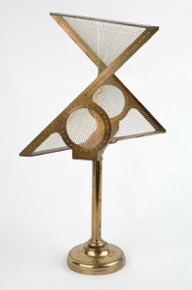
mathematical string model, probably French, mid 19th century.
Origin
[France ?]
Maker
Class
mathematics
Earliest Date
1840
Latest Date
1860
Inscription Date
Material
metal (brass); rope (string); cloth (silk)
Dimensions
height 510mm; width 250mm
Special Collection
Provenance
Purchased from Tesseract, Box 151, Hastings-on-Hudson, New York, 10706, on 23/3/2000.
Inscription
Description Notes
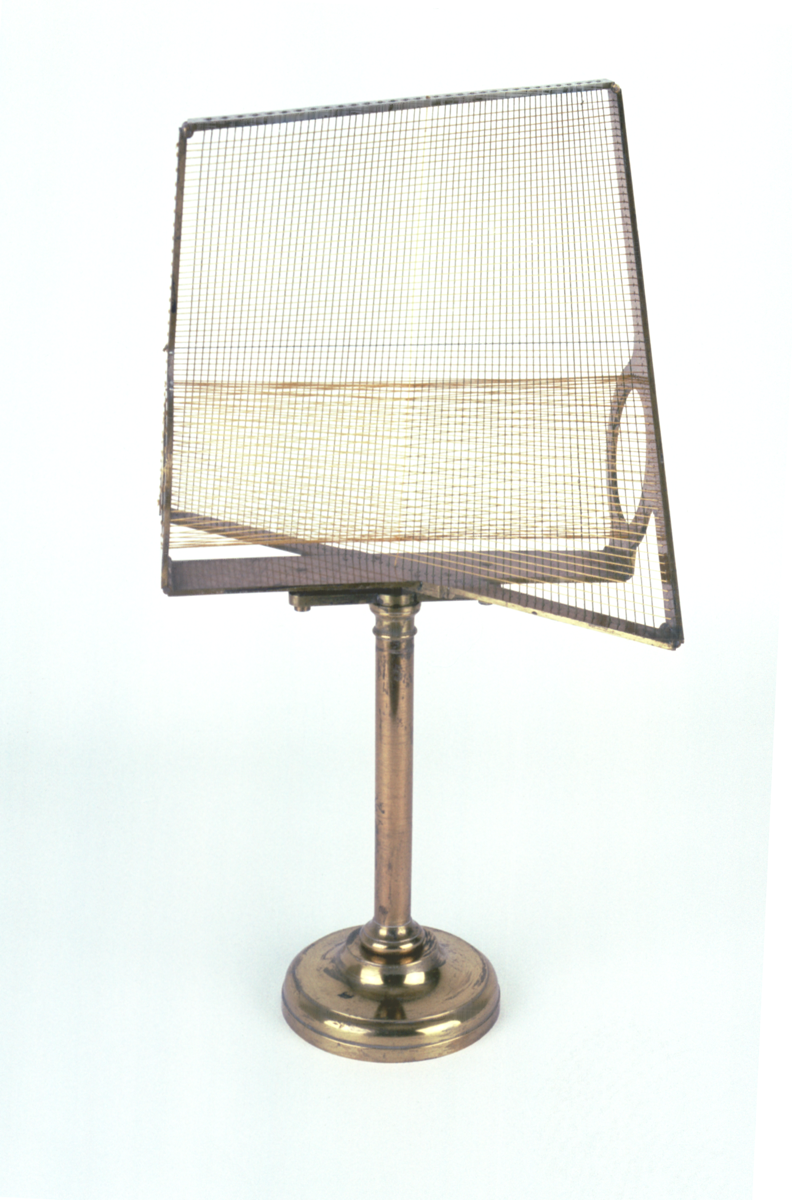
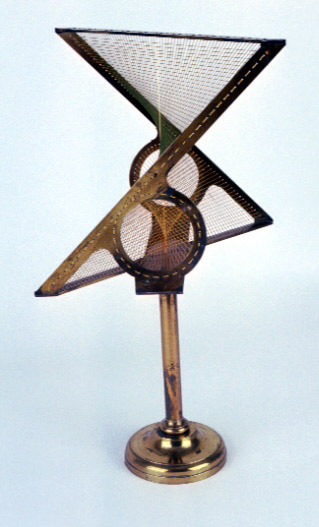
Complex mathematical string model, probably French, mid 19th century.
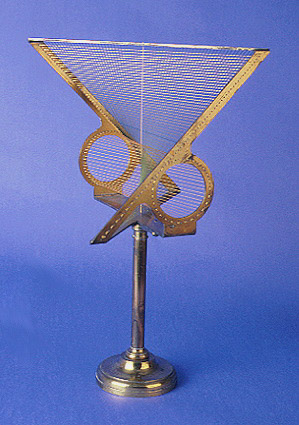
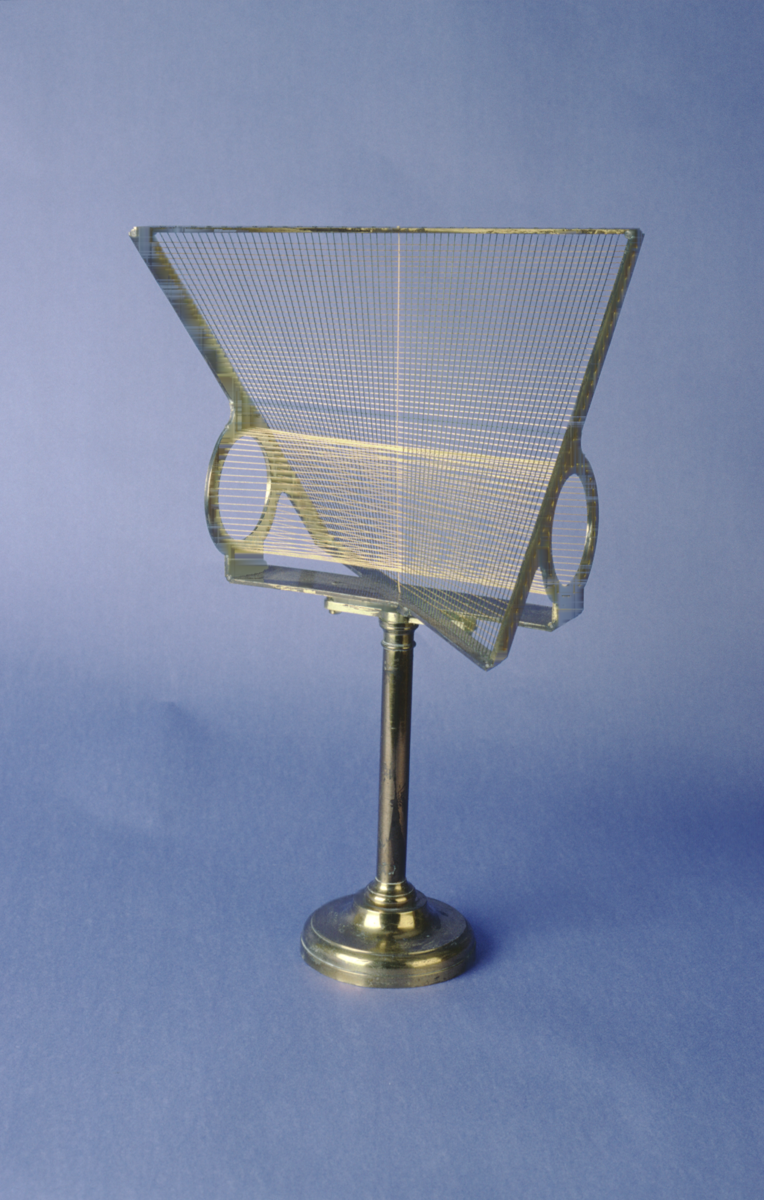
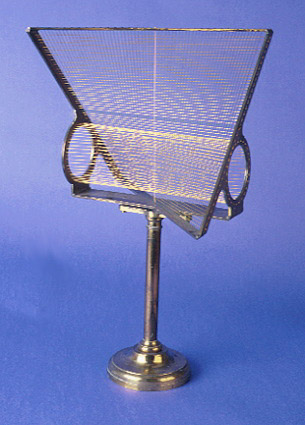
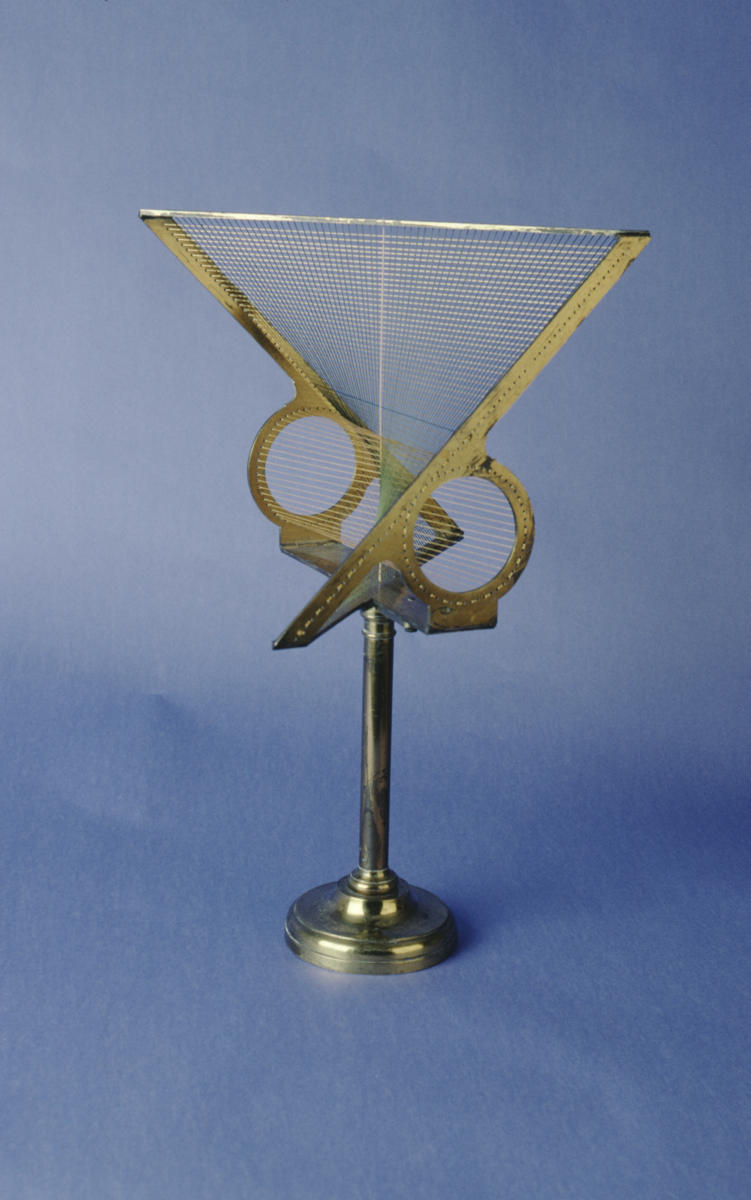
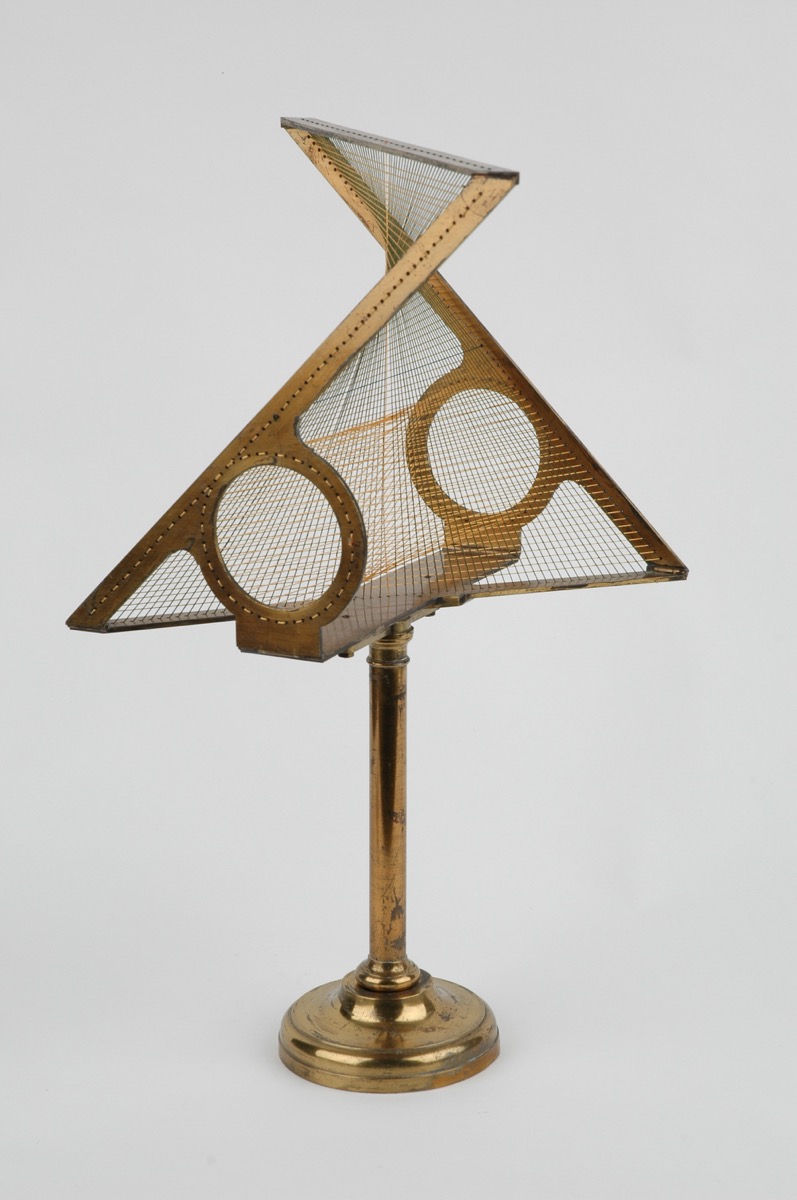
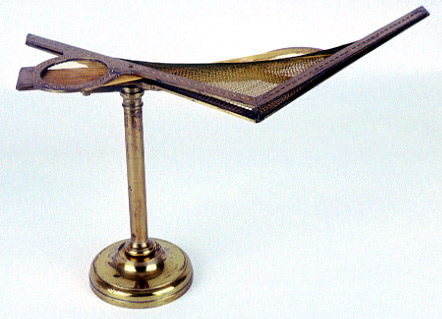
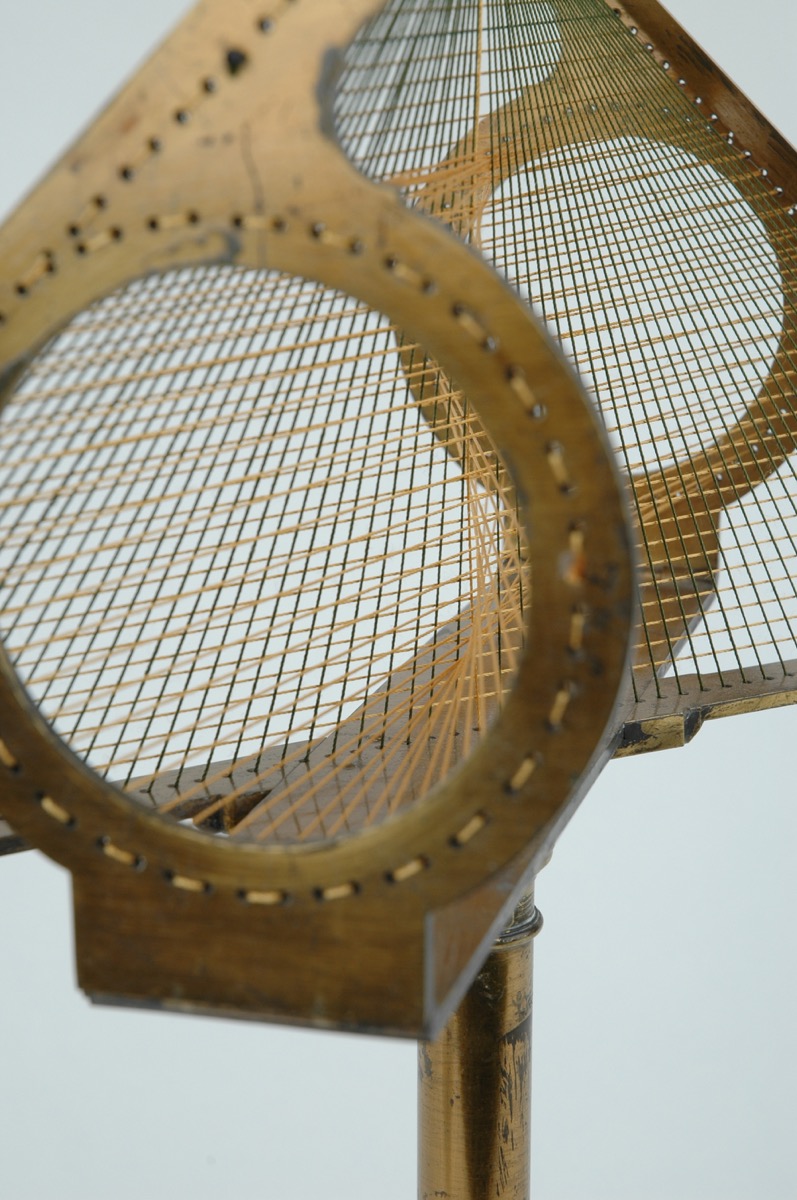
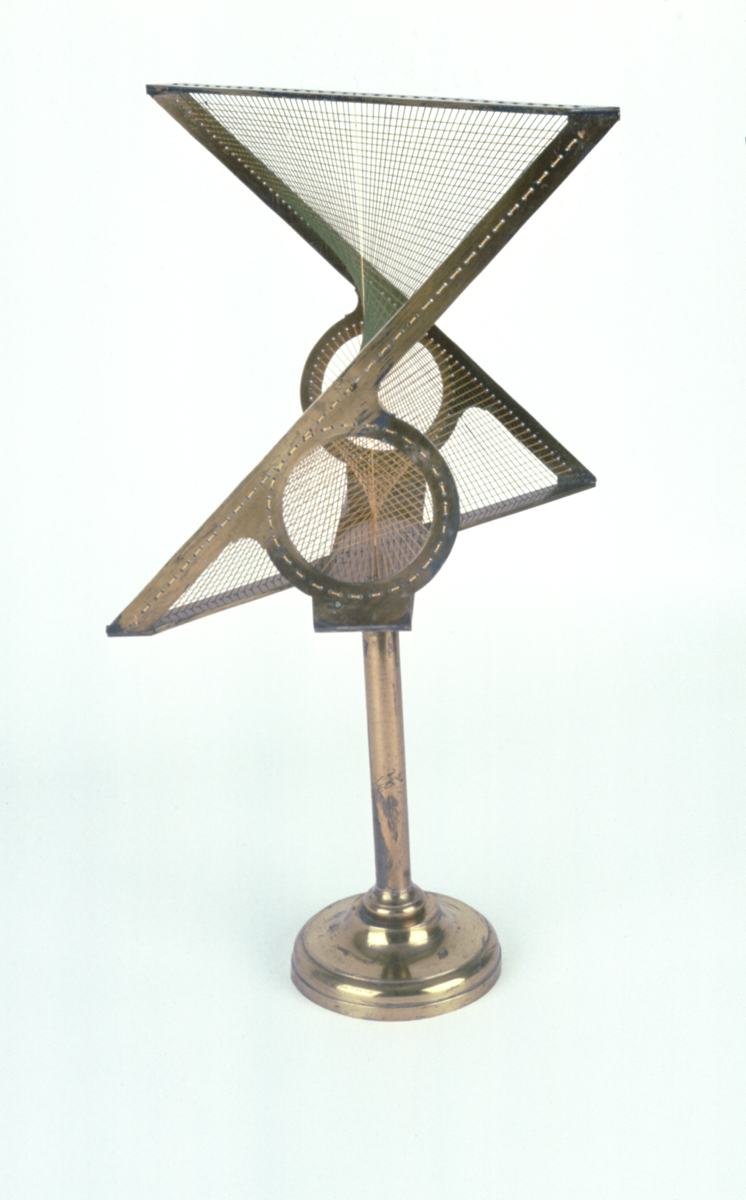
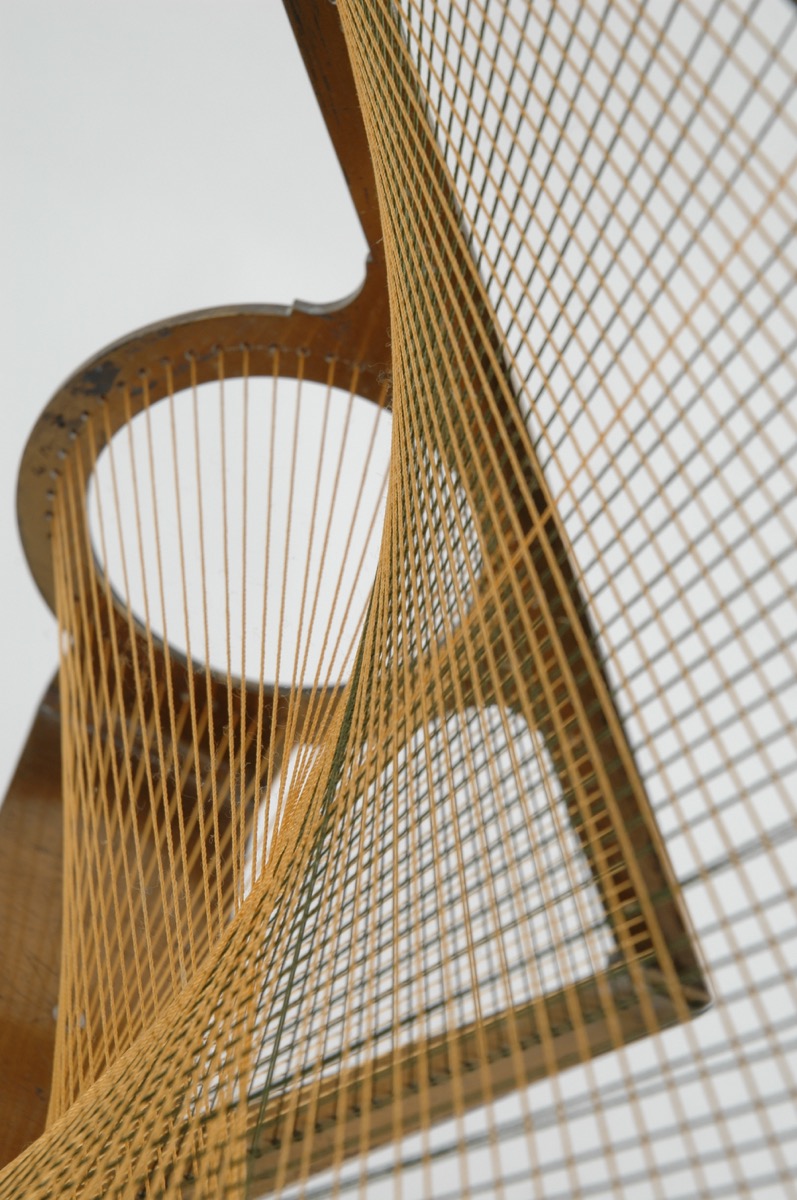
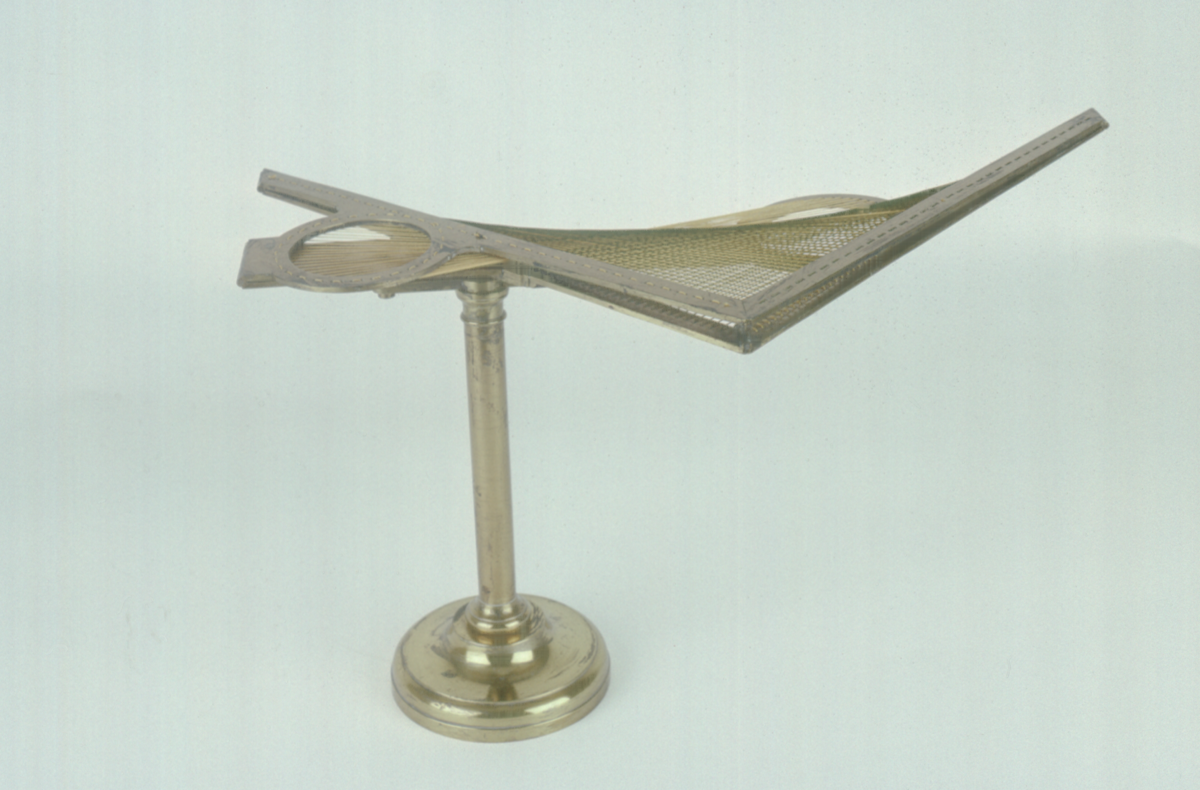
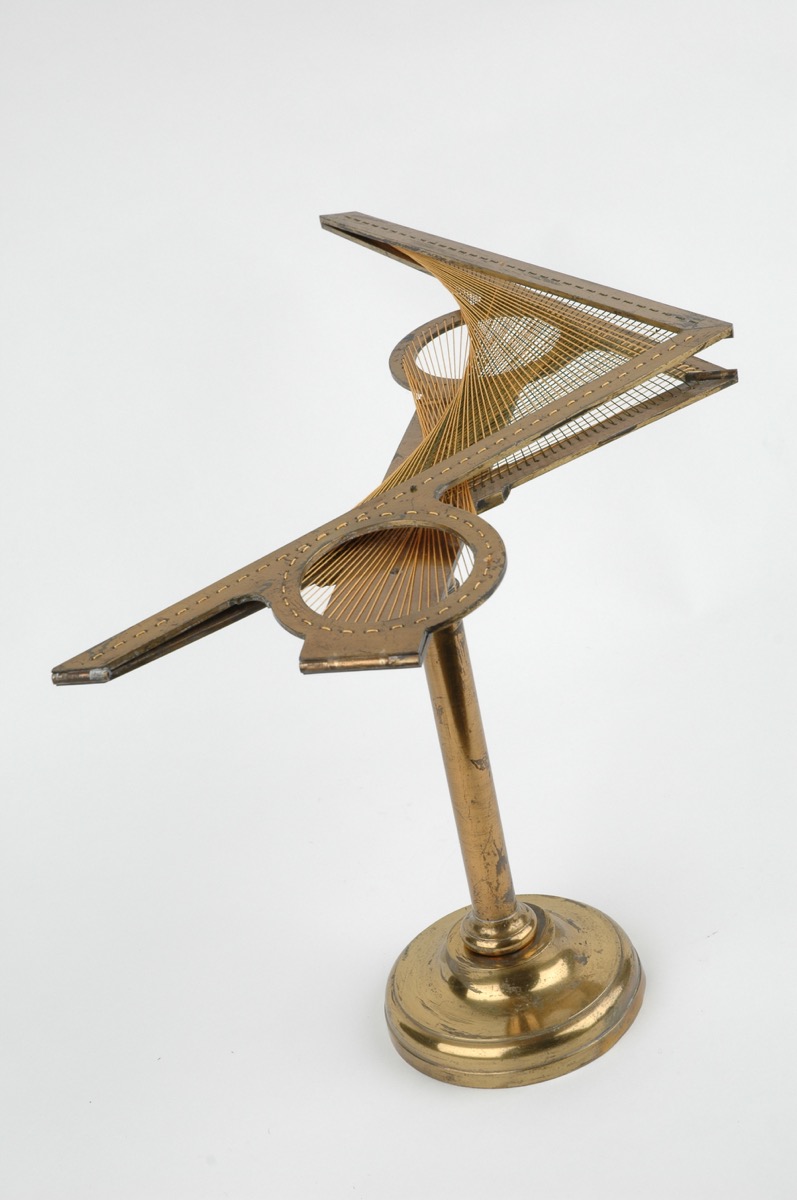
The model has a clear lacquered brass pillar stand and framework, with silk threads defining two intersecting three-dimensional surfaces. The framework is hinged in four places, to vary dramatically the parameters of the surface (it can be flattened). The string lengths are all constant, despite the frameworks ability to create extreme variations in shape.
References
Events
Description
Object history by Josh Nall, 09/09/2008.
Before the advent of computers, one of the most effective way of modelling complex three-dimensional mathematical functions was to use string models. In this model the silk threads define two intersecting three-dimensional surfaces. The brass framework is hinged in four places, so that the shape of the surfaces can be altered. The string lengths always remain constant, but the framework is able to model quite extreme variations in shape.
24/07/2026
Created by: Alejandro Malkinson-Gregori on 24/07/2026
Description
Making mathematical models was an integral part of a mathematician’s research in the late nineteenth century. The practice of constructing mathematical models (like this string model) originated with Gaspard Monge (1746–1818) who invented descriptive geometry, which represented three-dimensional surfaces in two dimensions. He also worked at classifying ruled surfaces. In modeling, tightly stretched strings following the path of a generated line best described a ruled surface according to Monge. He and his student Théodore Olivier (1793–1853) designed and built such models. This string model is likely from the mid nineteenth-century. Silk threads define two intersecting three-dimensional surfaces. The brass framework is hinged at four places, so that the shape of the surfaces can be altered. The string lengths always remain constant, but the framework is able to model quite extreme variations in shape.
11/03/2014
Created by: Allison Ksiazkiewicz on 11/03/2014
FM:46202
Images (Click to view full size):