Accession No
5984
Brief Description
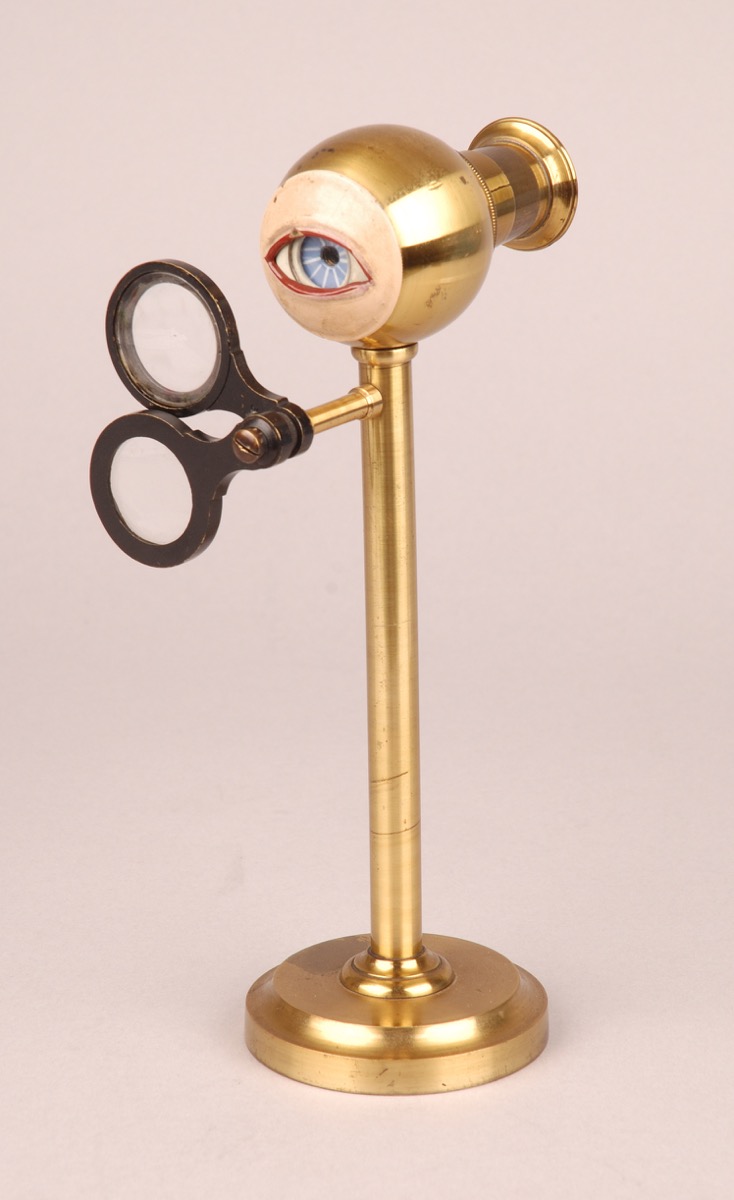
model of the human eye in the form of a camera obscura, 2/2 19th Century
Origin
Maker
Class
optical; demonstration
Earliest Date
1850
Latest Date
1900
Inscription Date
Material
metal (brass, lead alloy); glass; enamel
Dimensions
230mm (height), 77mm (base diameter), 114mm (maximum width with glass lenses splayed), 120mm (depth)
Special Collection
Provenance
Purchased from Trevor Philips & Sons, 75A Jermyn Street, St James’s, London, on or before 20/11/2003. Purchased with a grant from the PRISM fund.
Inscription
Description Notes
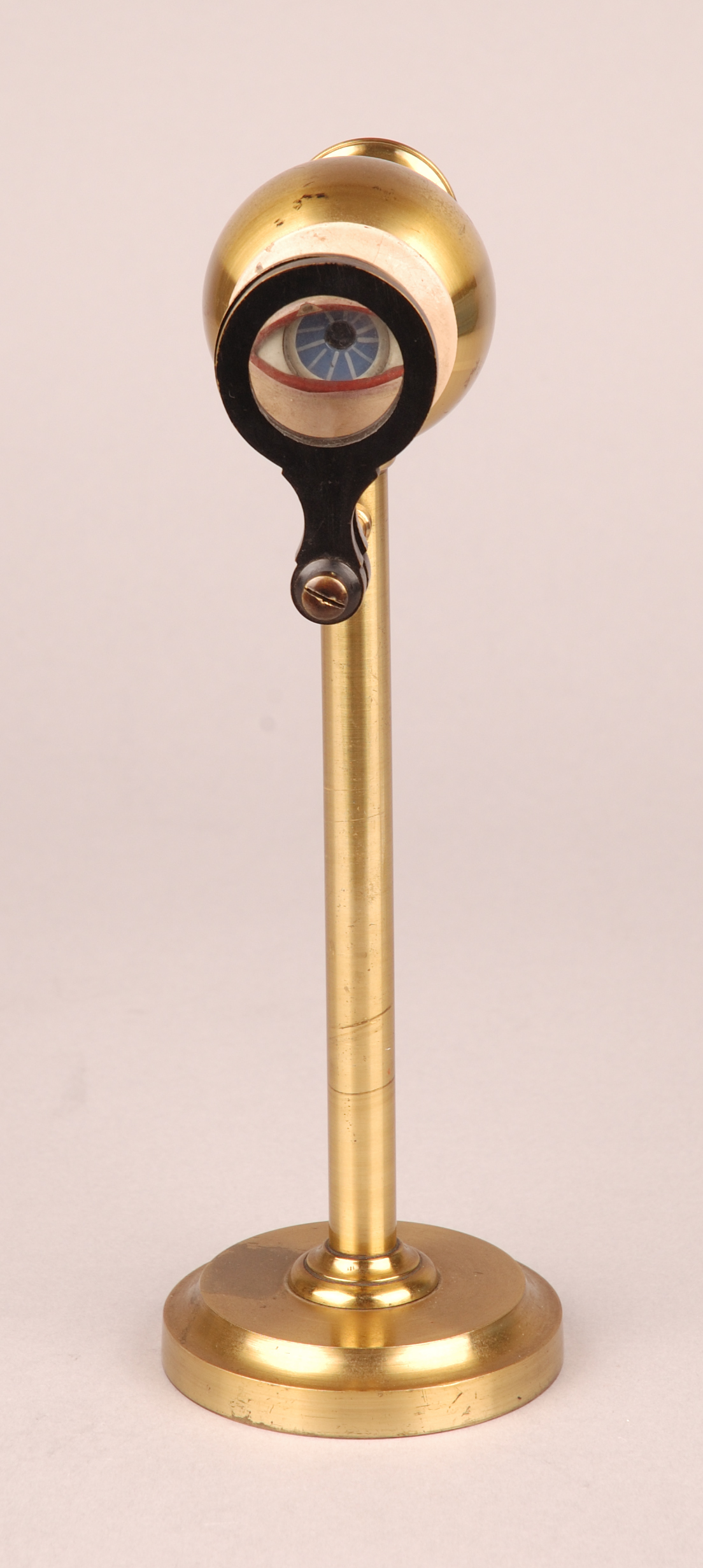
Model of the human eye in the form of a camera obscura; 2/2 19th century.
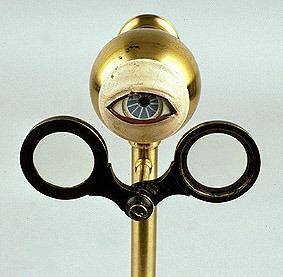
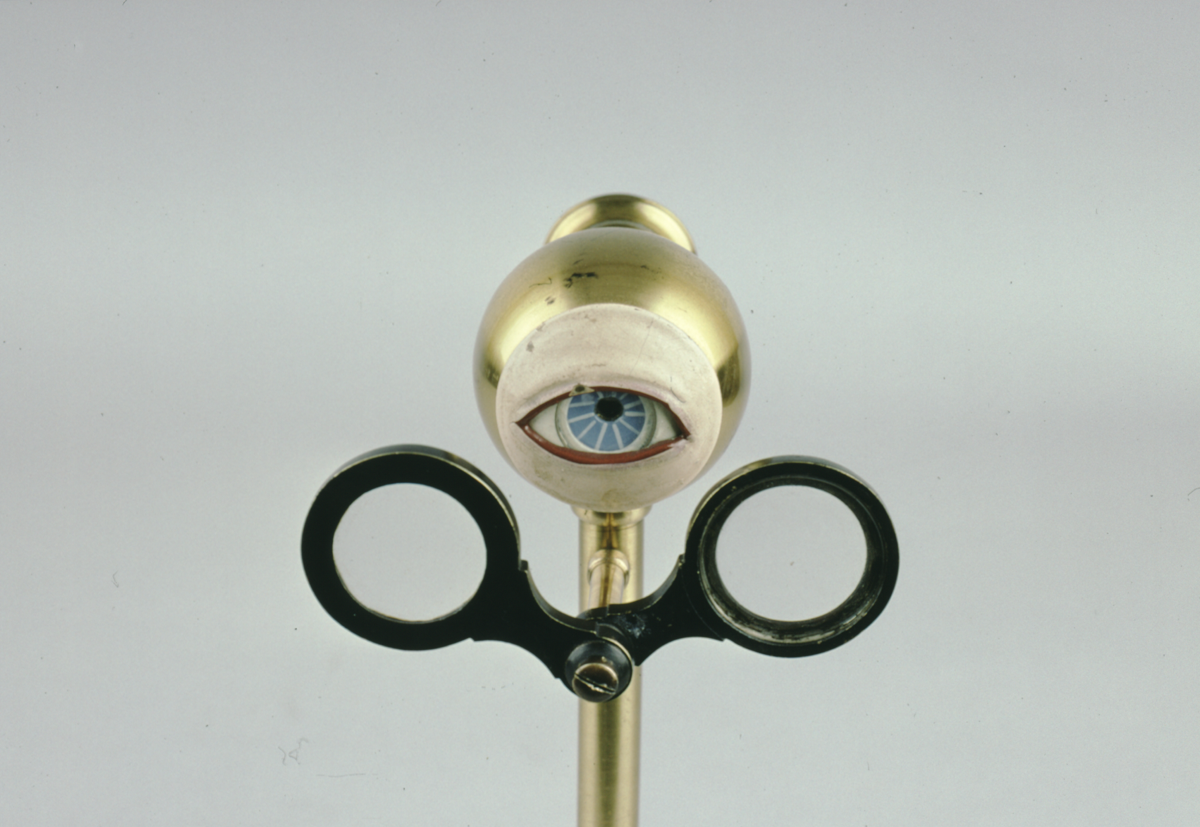
Brass model of the human eye mounted on a brass pillar and weighted base. The detatchable lens at the front is decorated with enamel to look like the eye with a flesh toned surround and blue iris. At the back of the eye is an extendable brass tube containing the glass projection screen for the camera obscura. A brass arm extends from the front of the eye and supports two rotatable glass lenses, one to correct long sighted vision and one to correct short (myopic) eyesight.
Condition good.
References
Events
Description
This eye model shows how your eyes form a picture of the world.
If you look through the back of this model eye, you can experience different visual effects. It comes with lenses to replicate the experience of long- and short-sightedness. But, most startlingly, you see an upside-down image.
This replicates what happens when light enters your eye. The image that forms on the back of your eye is actually upside-down. This is because light waves travel in a straight line. Light waves are reflected off the scene in front of you. As they pass through the tiny opening of your pupil, they bend in the opposite direction to create an upside-down image on the back of your eye. Your brain interprets the signals, and rotates the picture automatically.
The inverted image effect can be seen in a camera obscura (or pinhole camera) and is how modern cameras work too.
22/07/2024
Created by: Hannah Price on 22/07/2024
Description
This model of the human eye demonstrated the mechanical operations of the eye using the principles of the camera obscura for demonstration. At the back of the eye model, where the retina is located, sits a glass screen. A glass lens is placeed in front of the eye opening, which focuses light as it passes into the eye and projects an image onto the screen located at the retina. The result is an upside-down image. In human vision, the brain ‘corrects’ the upside-down image, producing a picture of the world right-side up. Two additional lenses accompanied this eye model, which simulated the conditions of far- and short-sightedness. These lenses change the focal length so that the focus point falls either in front or behind the retina/projection screen, thus producing a blurry image.
18/02/2014
Created by: Allison Ksiazkiewicz on 18/02/2014
FM:46448
Images (Click to view full size):