Accession No
5997
Brief Description
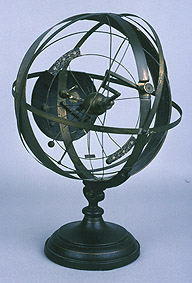
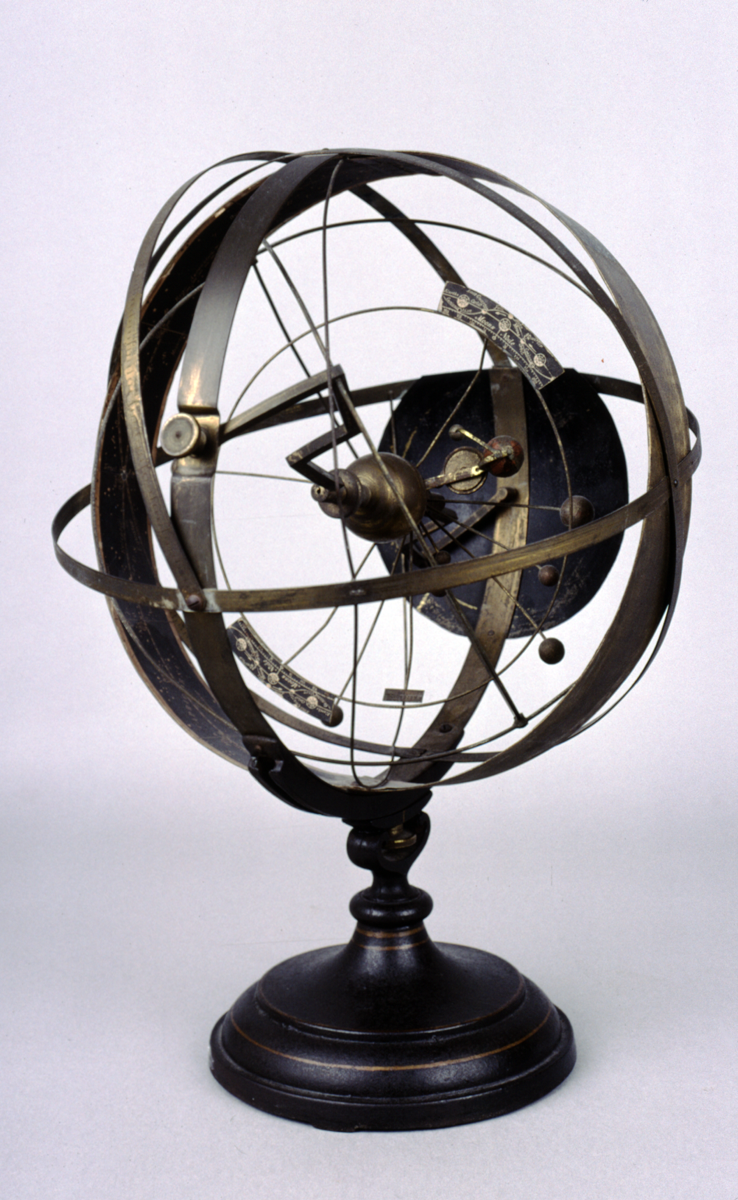
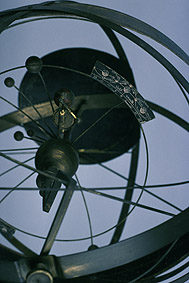
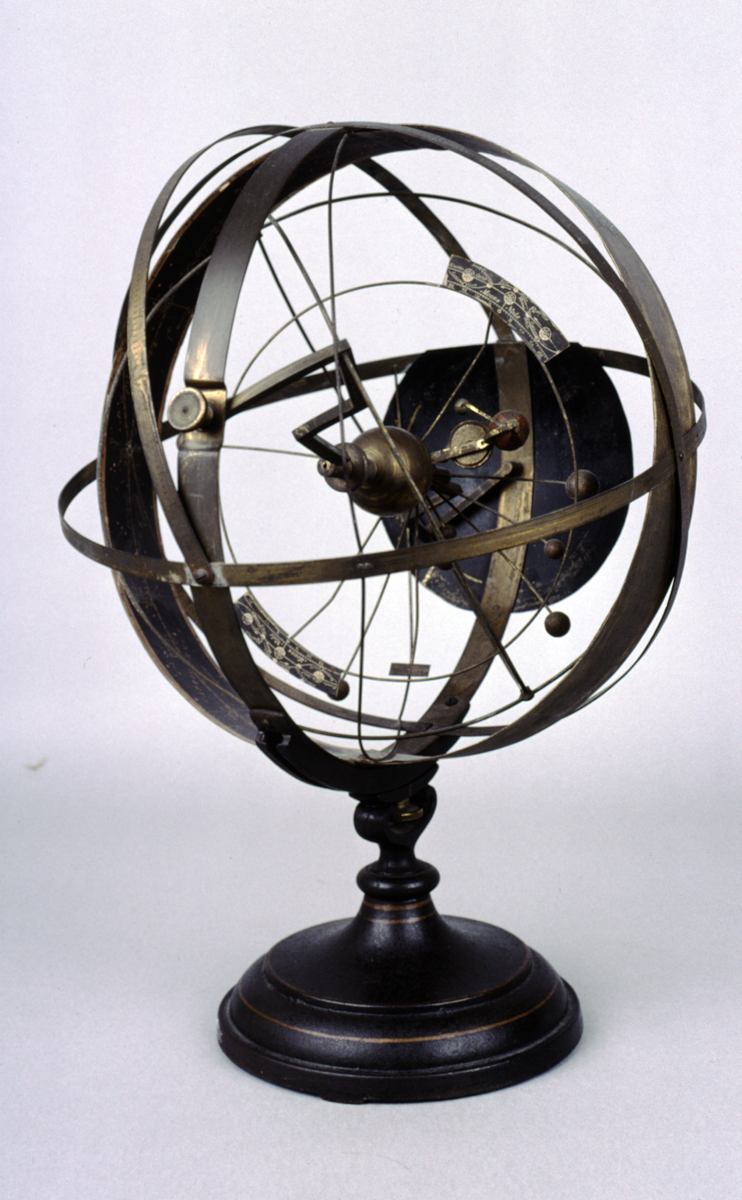
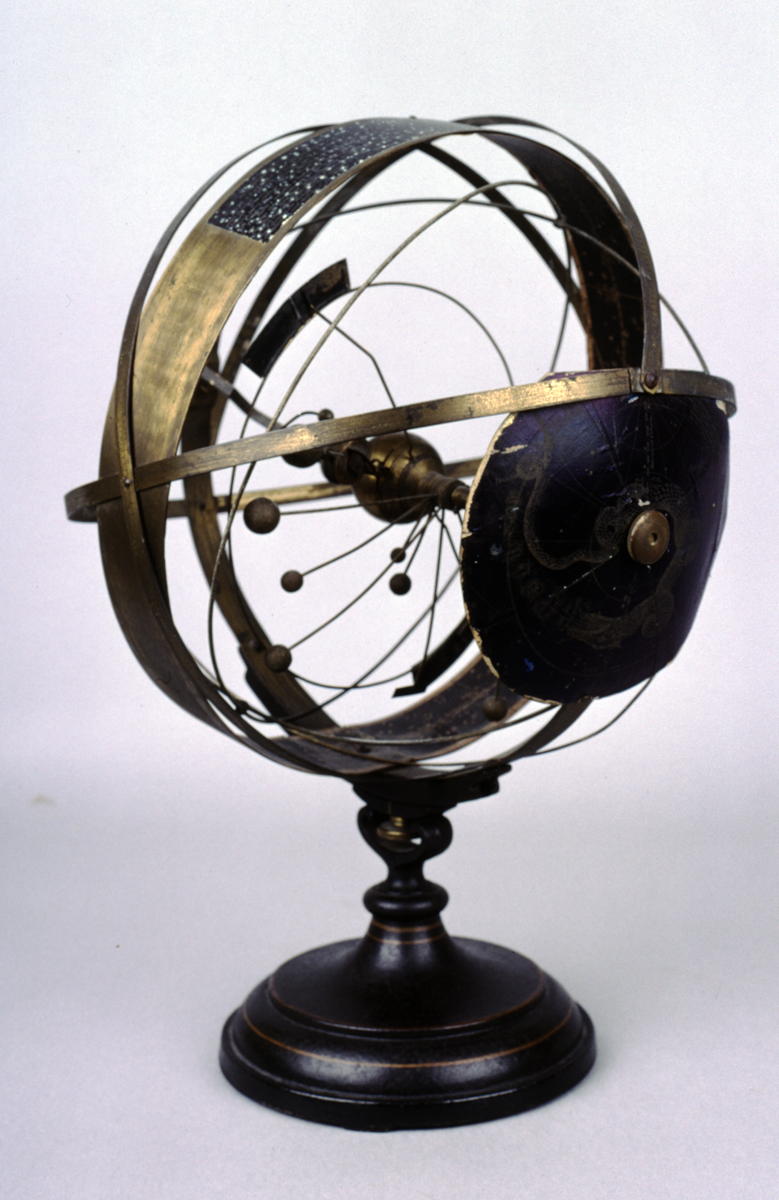
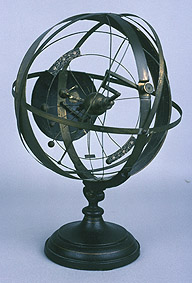
‘Celestial Indicator’, planetarium / orrery within a Copernican armillary sphere, by Henry L. Bryant, U.S.A., 1872
Origin
U.S.A.; Connecticut; Hartford
Maker
Bryant, Henry L.
Class
astronomy; demonstration
Earliest Date
1872
Latest Date
1872
Inscription Date
1872
Material
metal (brass, cast iron); wood; paper
Dimensions
height: 470mm; diameter: 292mm; base diameter: 191mm
Special Collection
Provenance
Purchased from Trevor Philip & Sons Ltd, 75a Jermyn Street, St James, London, on or before 13/04/2004.
Inscription
The Celestial Indicator
By Henry Bryant. [Hartford Conn.
Explanation and directions...
Patented Sept. 10, 1872
Description Notes
‘Celestial Indicator’, planetarium / orrery within a Copernican armillary sphere, by Henry L. Bryant, USA, 1872
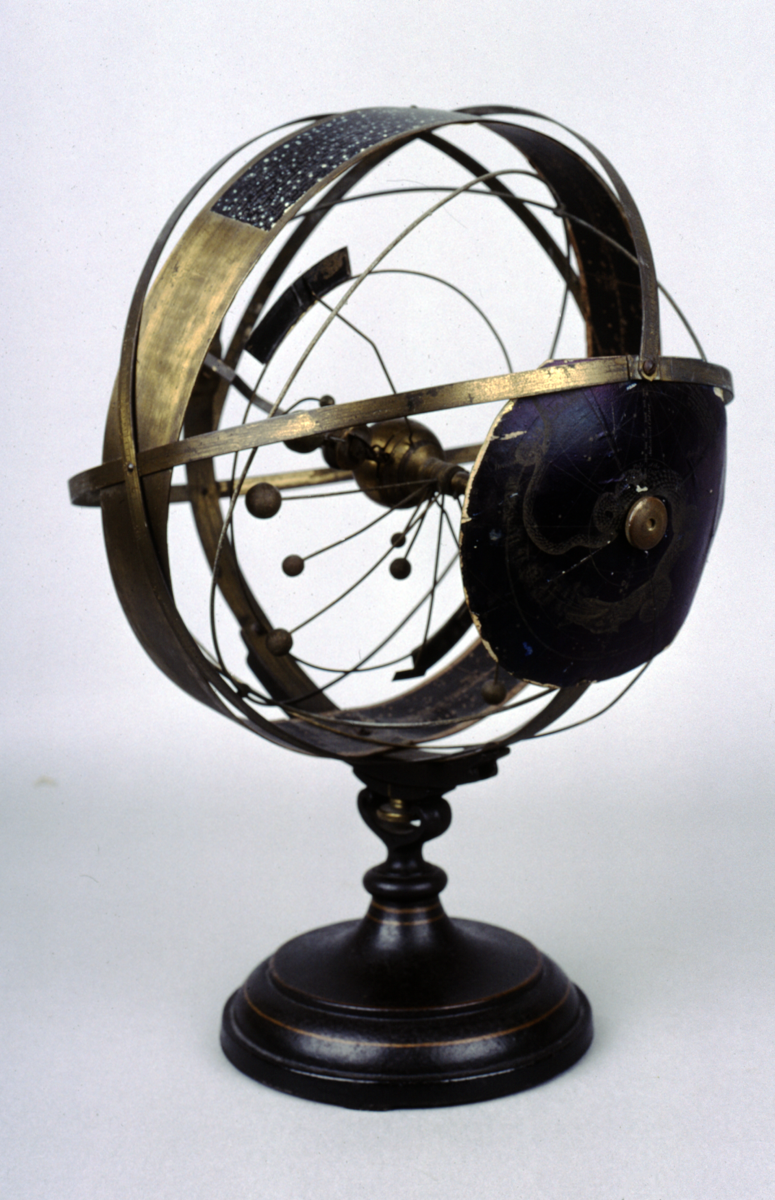
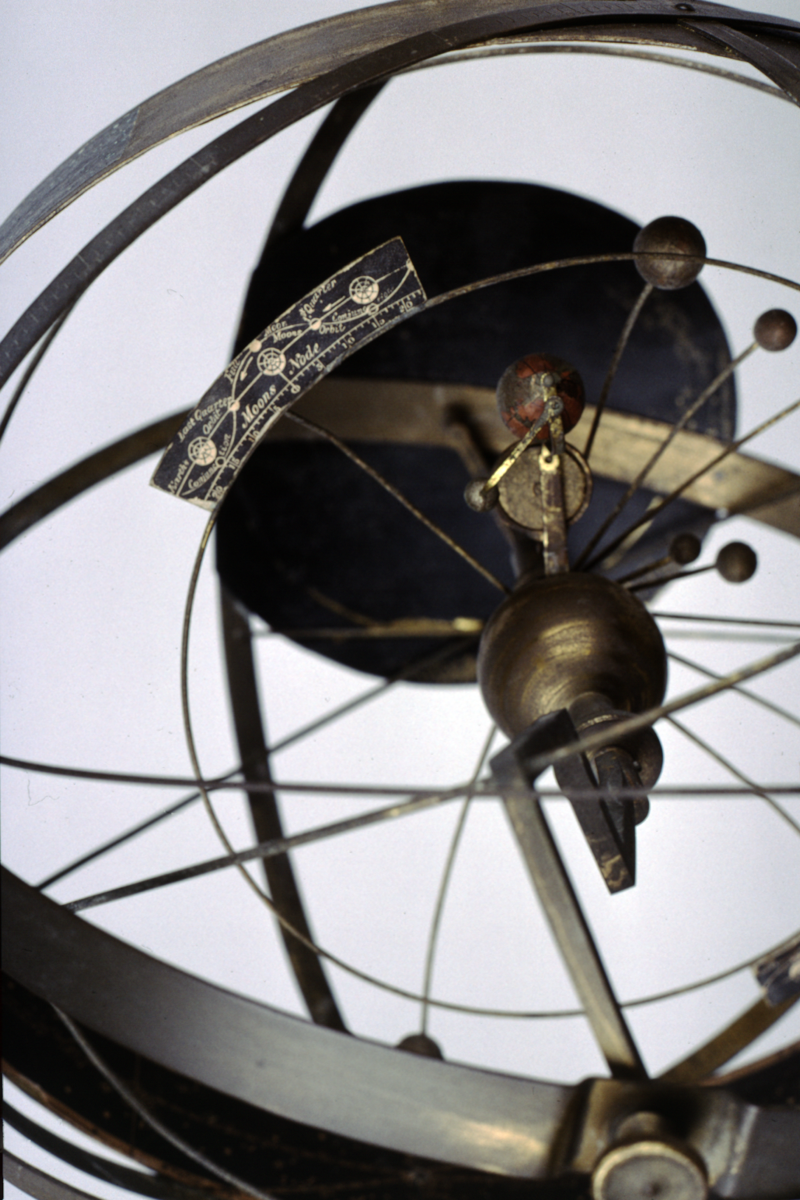
Turned cast iron base with gilt-line decoration carrying pivoting armillary sphere; pivot adjustable by brass knob, divided 0-47, numbered to 10˚, subdivided to 1˚; meridian circle (outermost armillary band) is marked for ‘north declination’ and ‘south declination’, divided 0-180 and on the same scale 0-90-0, numbered to 10˚, and divided to 1˚; second (fixed) meridian circle is ungraduated, and marked ‘First meridian of the heavens’; celestial equator (equinoctial) is marked ‘right ascension’, divided inside and outside 0-360, numbered to 10˚, subdivided to 1˚; plate at one side of the armillary shows the ‘Heavens around the Pole of the Ecliptic’ (this explains the phenomenon of procession), the serpent constellation is shown breathing the words ‘Pathway of the Axis’; the ecliptic is represented by a larger armillary ring, and is paper covered on the inside (the label carrying the instructions is on the outside), the ecliptic is divided 0-30 twelve times, numbered to 10, and subdivided to 1, this band carries extensive markings for such things as constellations, solstices, months etc.; an axis carries the central brass sphere representing the Sun, the eight then-known planets, all on rods, represented by wooden spheres, and the asteroid belt, represented by a small plate marked ‘asteroids/110’; the Earth is painted, and has its own pivoted moon, and another ring rotates around the axis carrying an illustration on two plates, both marked ‘Moon’s Node’ of the moons phases.
Complete.
References
Events
Description
Henry Bryant patented the design for this ‘Celestial Indicator’ in 1872. He intended it as an “Improvement in Armillary Spheres” - models of the Solar System that have been made since the time of the Ancient Greeks. His design places a planetarium within a Copernican armillary sphere.
Bryant claimed in his Patent application that “my invention is an instrument for use in schools, colleges, and the like, for illustrating and explaining various celestial phenomena, such as are commonly the subject of study and investigation in pursuing the study of astronomy.”
At the centre of the model is the Sun, and around this users can see where the Earth is positioned compared to the other planets. There are only eight planets here since Pluto was not discovered until 1930. The scale of the model is not accurate, however; Jupiter’s diameter is in reality about eleven times that of the Earth, for example.
The inside of the wide brass ring that encircles the planet models shows a reduced version of the night sky, indicating the positions of major stars. The other brass rings show features of the celestial sphere, such as the celestial equator, meridian, and ecliptic.
22/05/2009
Created by: Joshua Nall on 22/05/2009
FM:46463
Images (Click to view full size):