Accession No
6030
Brief Description
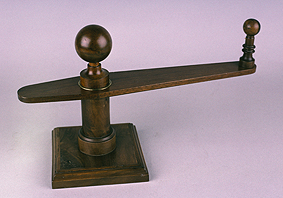
phases-of-the-moon astronomical demonstrator, lunarium, attributed to M. Henri Robert, French, mid-19th Century
Origin
France
Maker
Robert, Henri [attributed]
Class
astronomy
Earliest Date
1852
Latest Date
1852
Inscription Date
Material
wood (walnut); metal (brass); paper
Dimensions
base 143mm square; length 375mm; height 225mm
Special Collection
Provenance
Purchased from Tesseract, Box 151, Hastings-on-Hudson, New York 10706, U.S.A., on 01/12/2004.
Inscription
‘M(?) 2’ on paper label on underside of plank
Description Notes
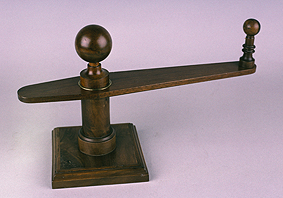
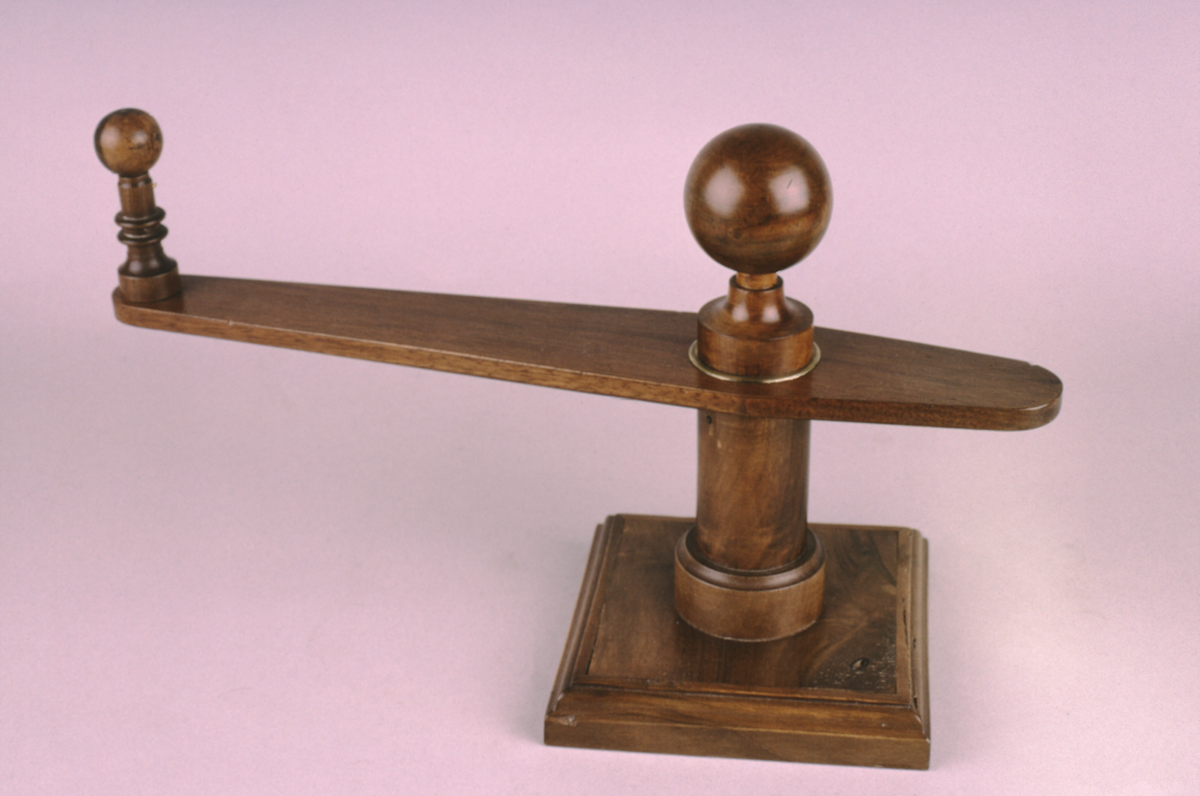
Phases-of-the-moon astronomical demonstrator, French, mid-19th C, made of walnut wood.
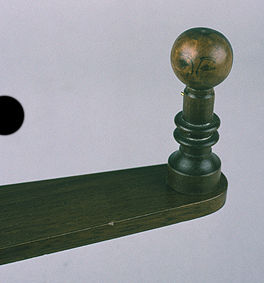
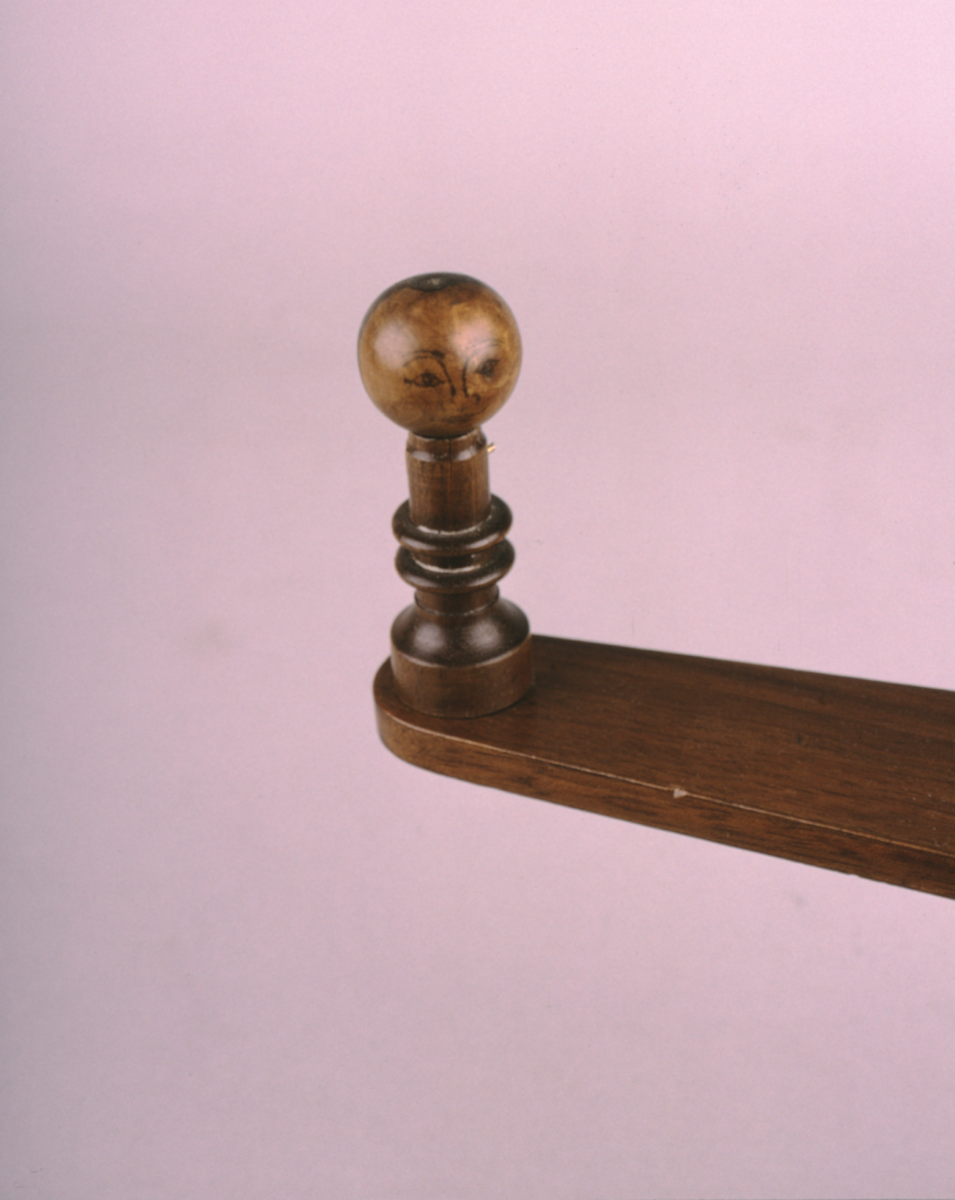
Square base with column rising from the centre, on the top of which is a sphere of 50mm diameter representing the Earth. A plank rotates about the central column by means of a brass washer. A metal pin extrudes on two sides of the column, the pin will not be pushed in nor pulled out. At the other end of the plank is a smaller column, again with a pin extruding from it. On the top of the smaller column is a sphere of 25mm diameter, representing the Moon. The hemisphere facing away from the Earth is painted (? possibly inked) black, and the hemisphere facing the Earth has a face painted(?) on it.
The appartus’ profile matches that of an illustration of it, that is described by M. Henri Robert(1794?-1874) in his 1852 second edition of “Les Mouvements des Corps Célestes...”
Condition: Good; complete
References
Events
Description
This simple walnut wood astronomical demonstrator from the 19th century would have been used as a teaching aid. Two things it can demonstrate are the phases of the moon and a proof that the moon rotates. For the first use a distant lamp can be used to represent the sun and it will shine on the moon. When the moon is rotated about the Earth, the light shining on it will represent the phases of the moon. The second use shows that the moon rotates on its axis in the same time it takes to orbit the Earth.
FM:46496
Images (Click to view full size):