Accession No
6377
Brief Description
experimental apparatus to measure non-nutritive sucking in infants, used in studies of parent-child interaction, made and used in the Medical Psychology Unit, University of Cambridge, English, 1970s
Origin
England; Cambridge; University of Cambridge; Medical Psychology Unit
Maker
Class
biology; medical; laboratory equipment
Earliest Date
1970
Latest Date
1979
Inscription Date
Material
metal (brass, steel, other); wood (unknown); plastic (vinyl film, other); paper; organic (rubber)
Dimensions
[box] length: 272mm; width: 220mm ; height: 115mm [recording unit]: length 185mm; width 105mm; height: 80mm
Special Collection
Provenance
Donated by an individual at the Centre for Family Research, University of Cambridge; Free School Lane; Cambridge; CB2 3RF. Used at the Centre for Family Research for experiments involving parent-child interactions.
Inscription
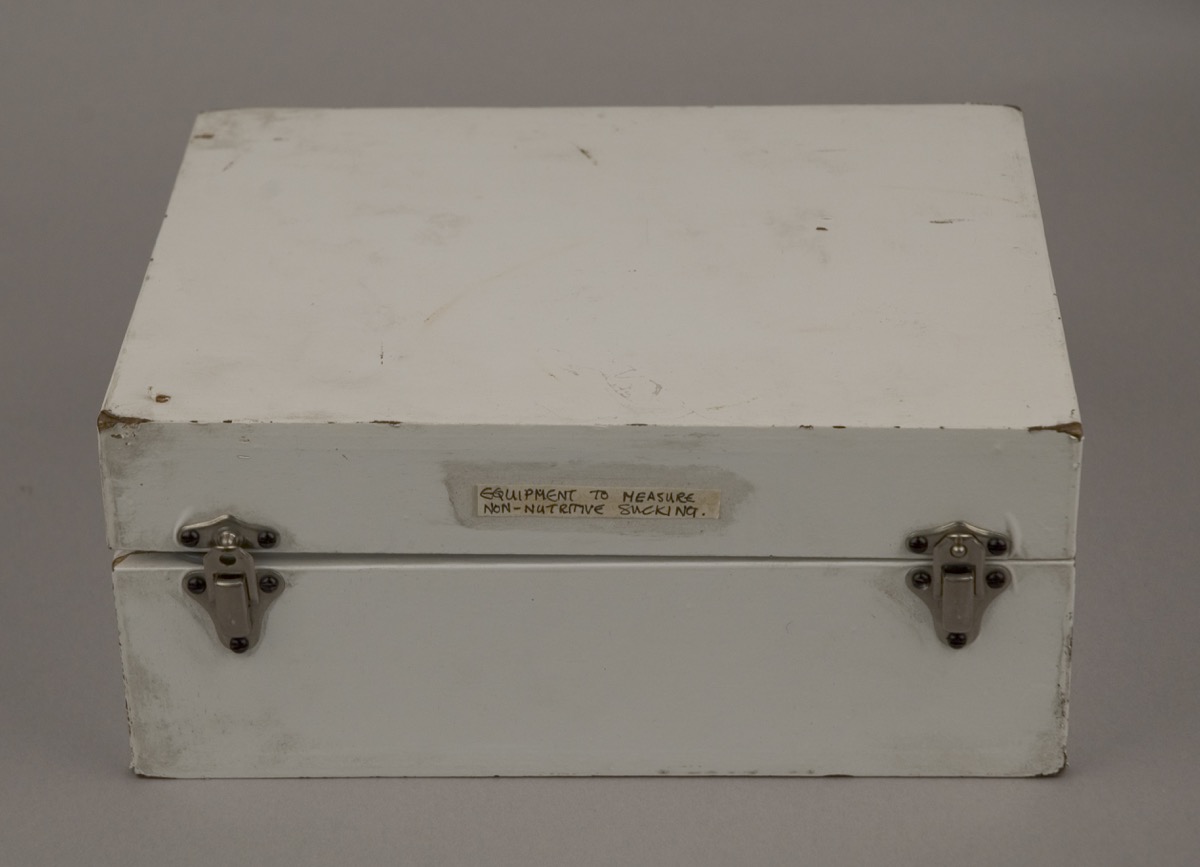
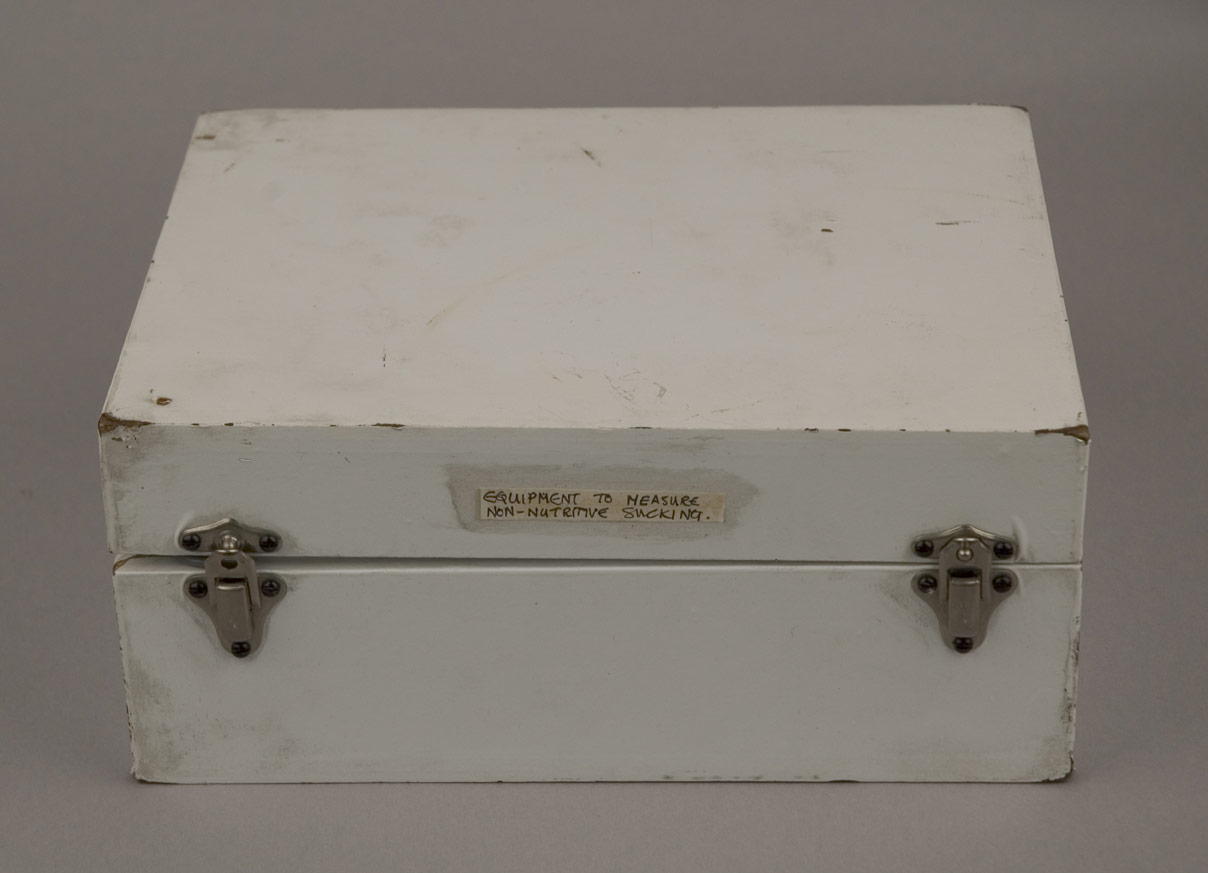
‘EQUIPMENT TO MEASURE NON-NUTRITIVE SUCKING’ [handwritten label in black pen, on front of box lid]
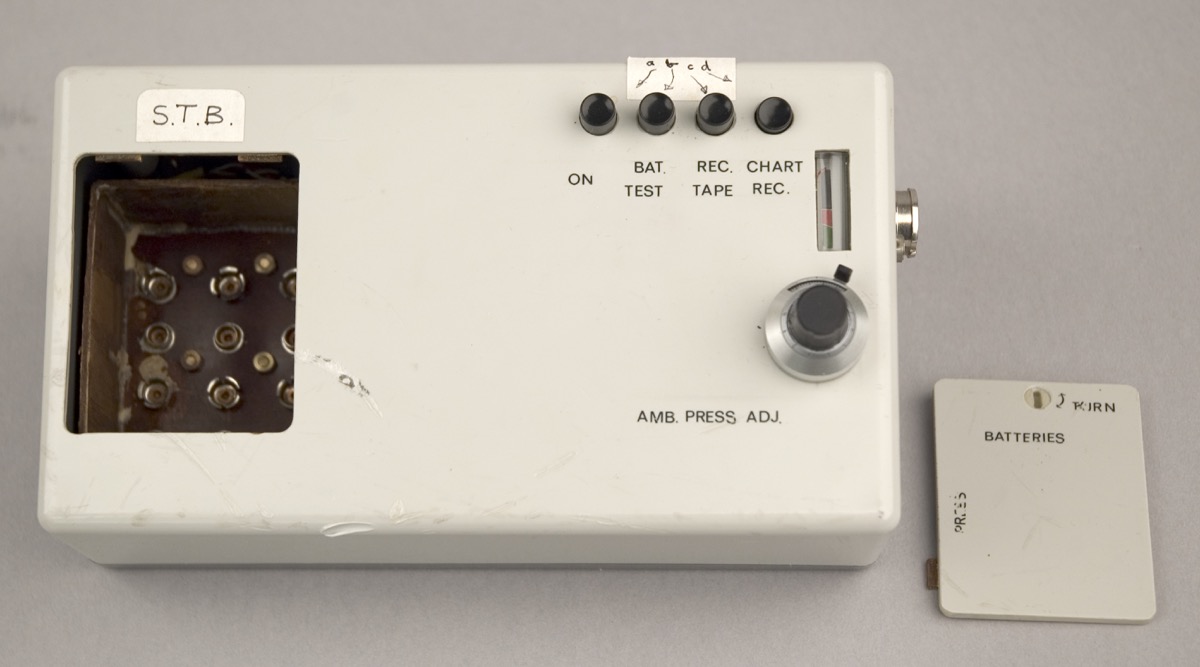
‘S.T.B’ [handwritten label in black pen, on top of recording unit]
‘ON BAT. TEST REC. TAPE CHART REC.’ [underneath recording unit control buttons]
Description Notes
Experimental apparatus to measure non-nutritive sucking in infants, used in studies of parent-child interaction. Made and used in the Medical Psychology Unit, University of Cambridge; 1970s (6377.1). Plus accompanying manuscript material (6377.2 - 6377.5).
6377.1:
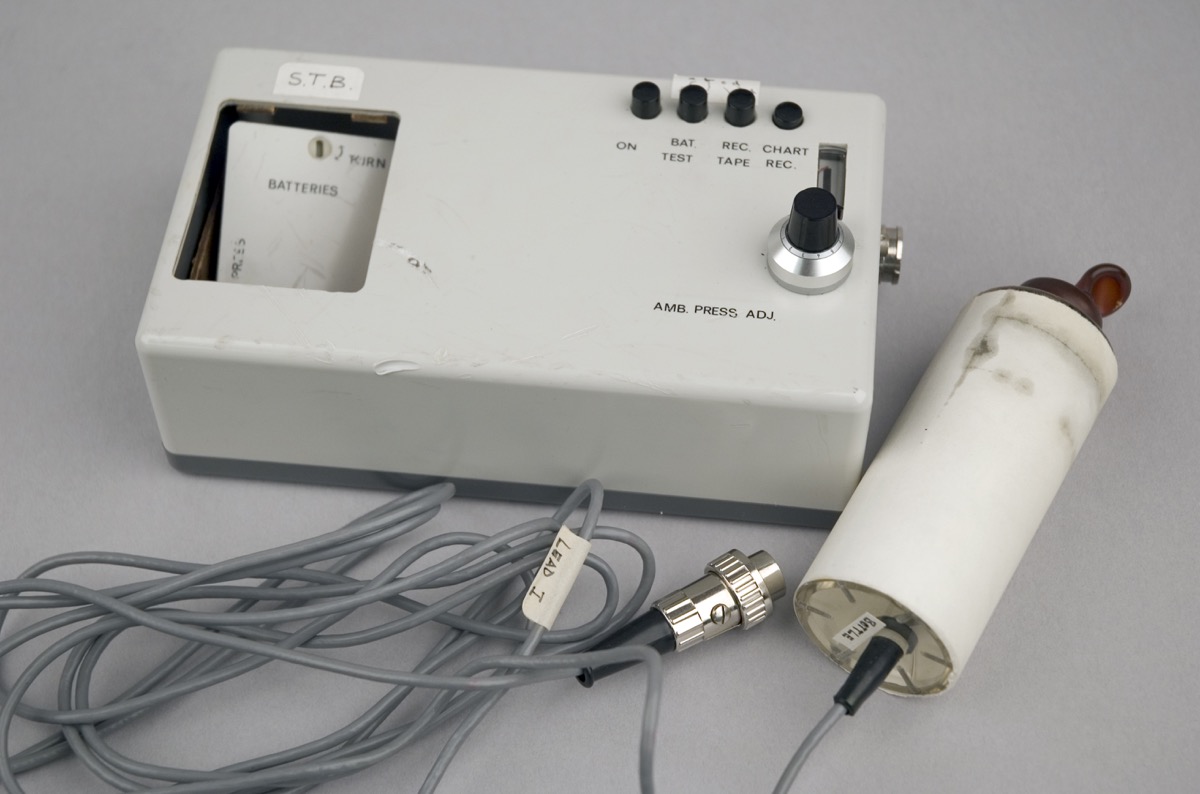
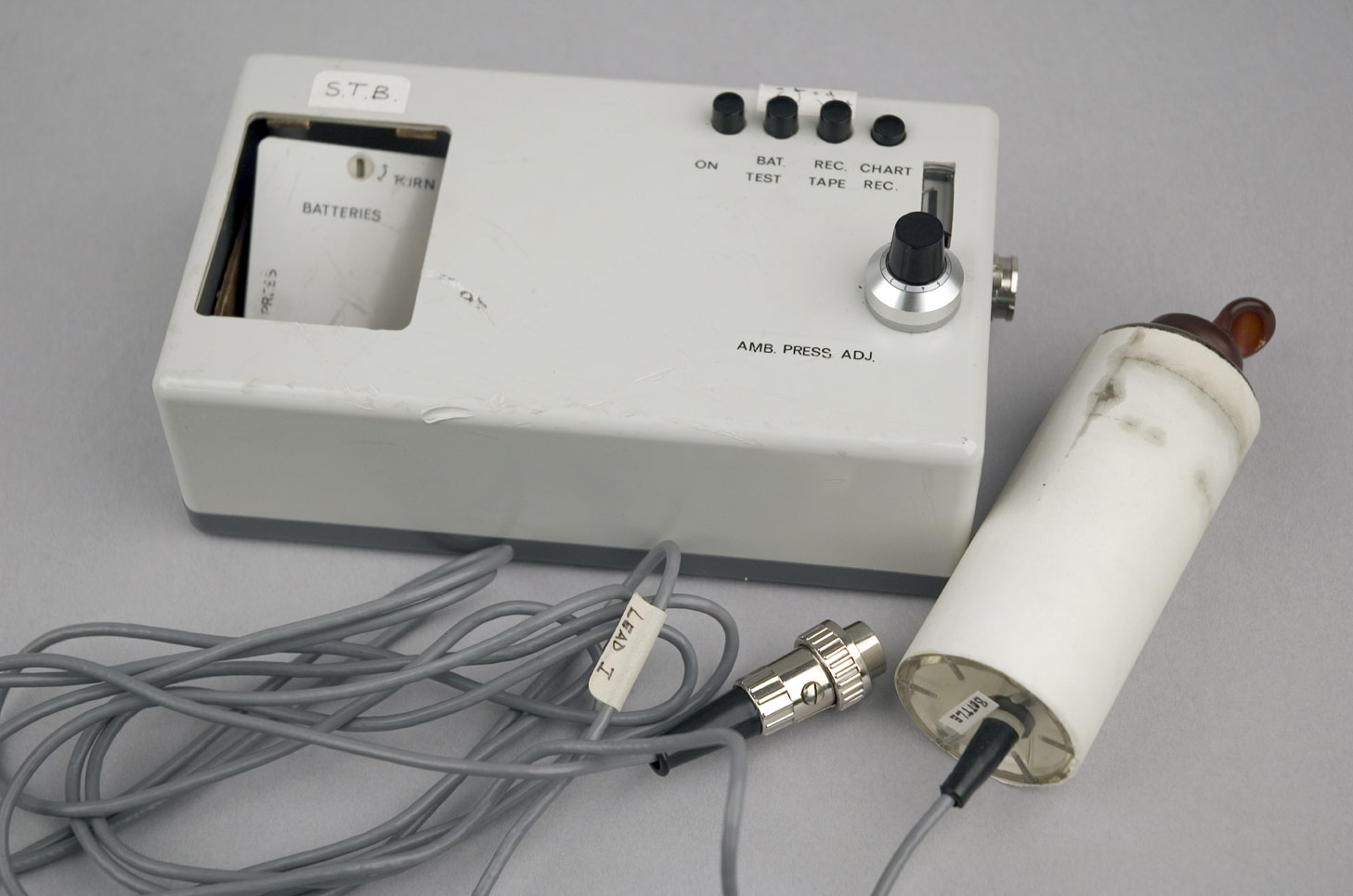
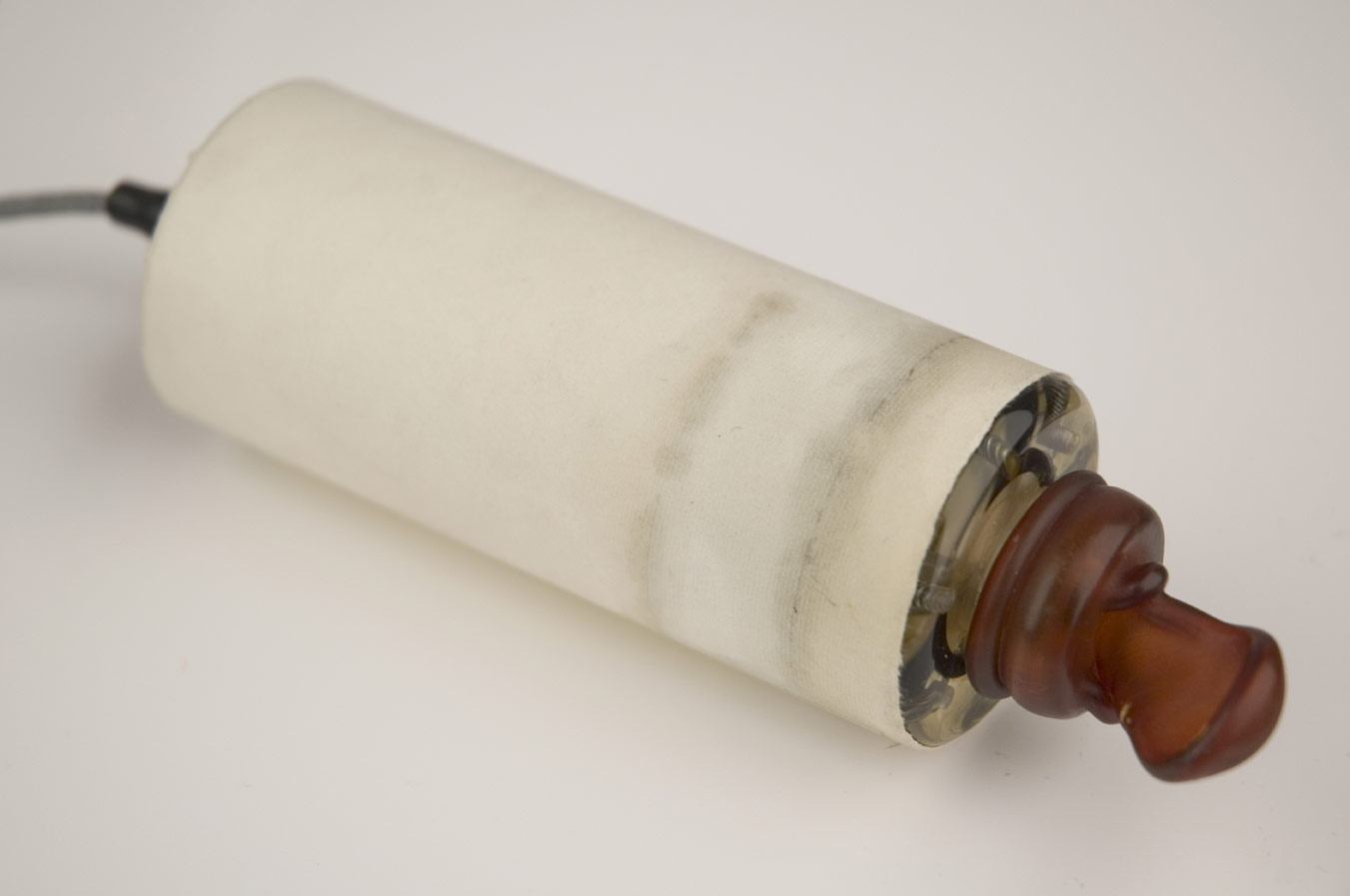
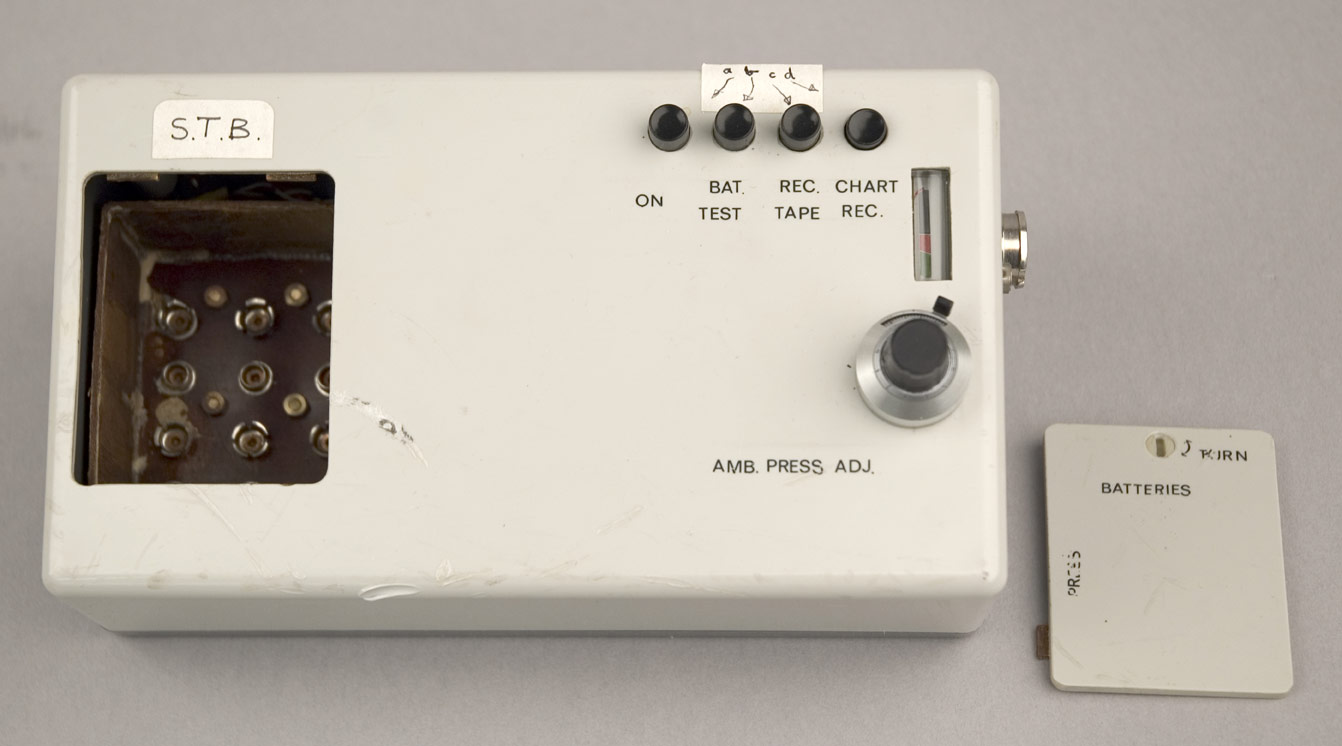
Equipment consists of a dummy baby bottle containing a pressure transducer, which is attached by wires to a battery powered Sucking rTest Box (S.T.B.) that records the sucking patterns. The dummy bottle picks up sucking patterns, which are converted into a changing frequency signal and then recorded as visual output on a tape using a chart recorder. The equipment is battery-powered and portable, allowing it to be taken into subjects’ homes.
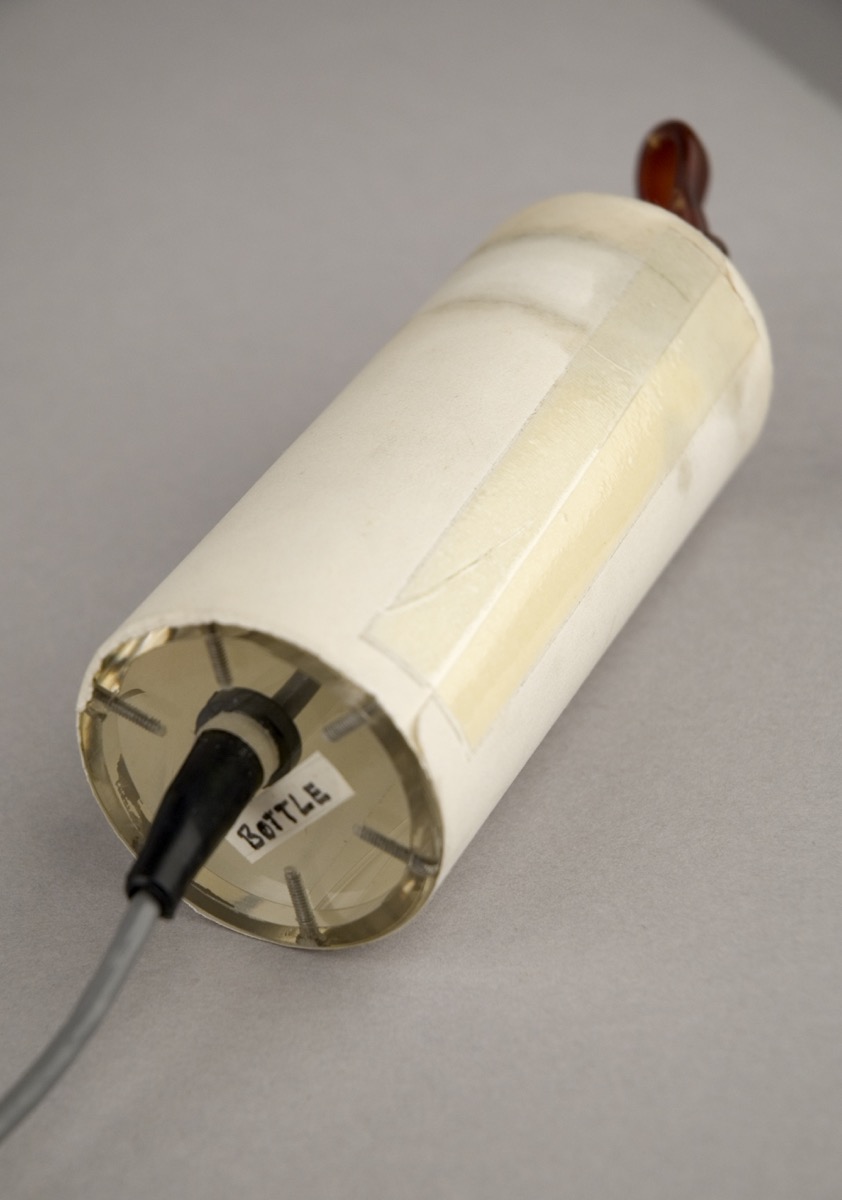
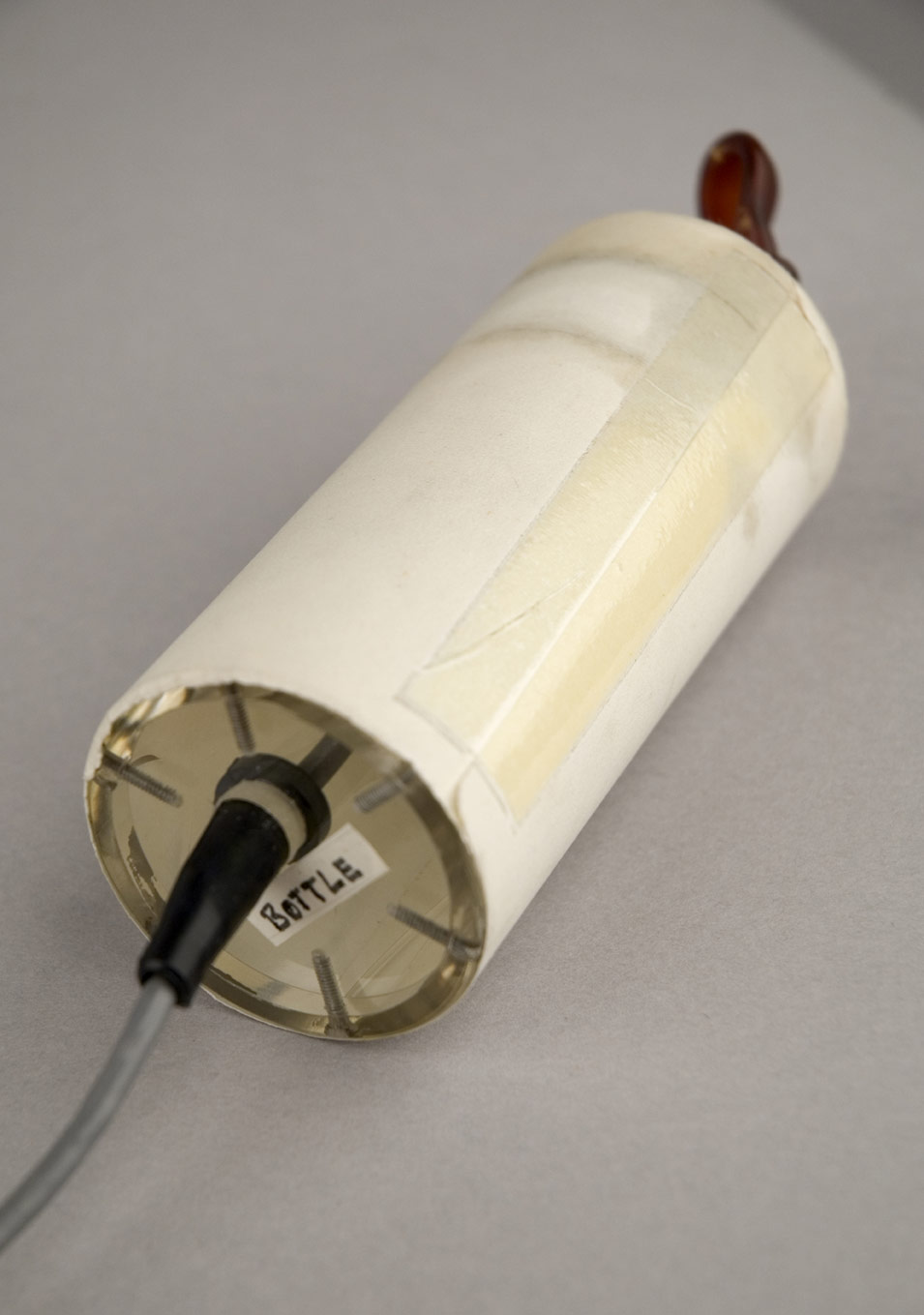
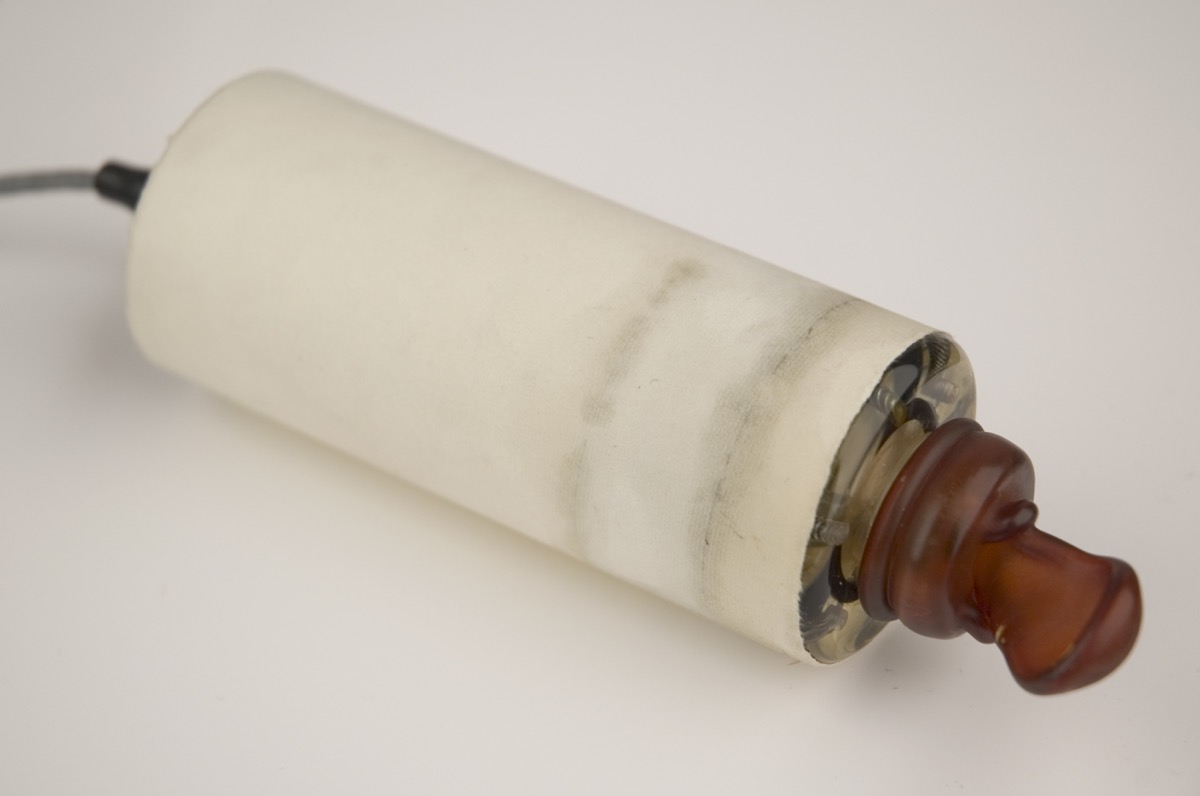
Bottle consists of a clear plastic body containing electrical components, wrapped around with white paper (stuck in place with tape) to simulate a more natural appearance. Attached to one end is a rubber teat (somewhat brittle) and to the other is a grey cable connecting it to the recording unit.
The recording unit consists of a grey plastic box with a battery compartment on the left hand side. A handwritten label above this is marked ‘S.T.B.’. On the top right of the box are four control buttons, marked ‘on’, ‘bat. test’, ‘rec. tape’, and ‘chart rec.’ Above this is another handwritten label marking these buttons a, b, c and d from left to right.
There is an analogue needle indicator window next to the controls that indicates the pressure changes, and an adjusting knob. Four outputs on the right hand side are labelled A, B, C and D using sticky labels.
Both pieces of equipment are contained within a wooden box covered with white vinyl film (sticky-backed plastic). The box was originally lined with foam, with the equipment set into it. The foam was degrading and was replaced by plastozote upon accessioning for reasons of conservation.
This object was hand-made in the Medical Psychology Unit, presumably by technicians, and is not a commercial piece of equipment.
6377.2: Four pages of manuscript notes on its setup and use [fully transcribed: an electronic copy is on the museum server, titled ‘6377 transcription of instruction notes’]
6377.3: Typewritten copy of a talk titled ‘Effects of obstetric medication on mother-infant interaction and infant development’, given by Martin Richards and Judith Bernal at the Third International Congress of Psychosomatic Medicine in Obstetrics and Gynaecology, London 1971. The talk presents results obtained from experiments using this equipment.
6377.4: Typewritten copy of a talk titled ‘Feeding and the early growth of the mother-child relationship’, by Martin Richards, presented at the 2nd Congress of the International Organisation for the Study of Human Development on Milk and Lactation, Campione, Italy, 1973.
6377.5 Offprint of paper titled ‘Social interaction in the first weeks of human life’ by Martin P. M. Richards. Psychiatria, Neurologia, Neurochirurgia, vol 74 (1971), 35-42.
References
Events
Description
This equipment was used by psychologists at the University of Cambridge in the 1970s to investigate the interactions between mothers and young babies. Psychologists visited mothers in their homes, to replicate the normal environment of interaction -- hence portable equipment was required. The equipment here consists of a substitute feeding bottle with a rubber teat, containing a pressure sensor that measures when the baby sucks on it. It was used to detect patterns of sucking that are not involved with feeding, known as ‘non-nutritive sucking’, which forms a type of mother-child social interaction seen in the first few weeks of life. Experimental studies carried out with this apparatus included one examining whether particular drugs given during labour had an effect on the baby’s ability to suck effectively.
As we can tell from its hand-written labels and hand-made look, this equipment was designed and made within the Medical Psychology Unit at the University; it is not a commercially made instrument.
Included with this equipment is a set of hand-written instructions on its setup and use.
29/01/2010
Created by: Ruth Horry on 29/01/2010
FM:46886
Images (Click to view full size):