Accession No
6518
Brief Description
Brass alembic distillation apparatus, by J. Salleron, French, c. 1875
Origin
24, Rue Pavee, Paris, France
Maker
J. Salleron
Class
chemistry; weights & measures
Earliest Date
1860
Latest Date
1889
Inscription Date
Material
Metal (brass)
Dimensions
6518.2: 29cm x 9cm x 9cm [6518.1 sits inside 6518.2] 6518.3: 32cm x 16cm x 16cm
Special Collection
Provenance
Purchased from Christie’s South Kensington, 85 Old Brompton Road, London, SW7 3LD. Lot number 91 in Travel, Science and Natural History sale, 6/04/2011.
Inscription
ALAMBIC DE J. SALLERON
No. 46125
24, Rue Pavee. PARIS
Description Notes
Brass alembic distillation apparatus, by J. Salleron, French, c. 1875.
This alembic was probably designed to distil pure alcohol from a set volume of wine, so as to accurately determine a batch of wine’s alcohol content (its specific gravity).
It consists of three parts:
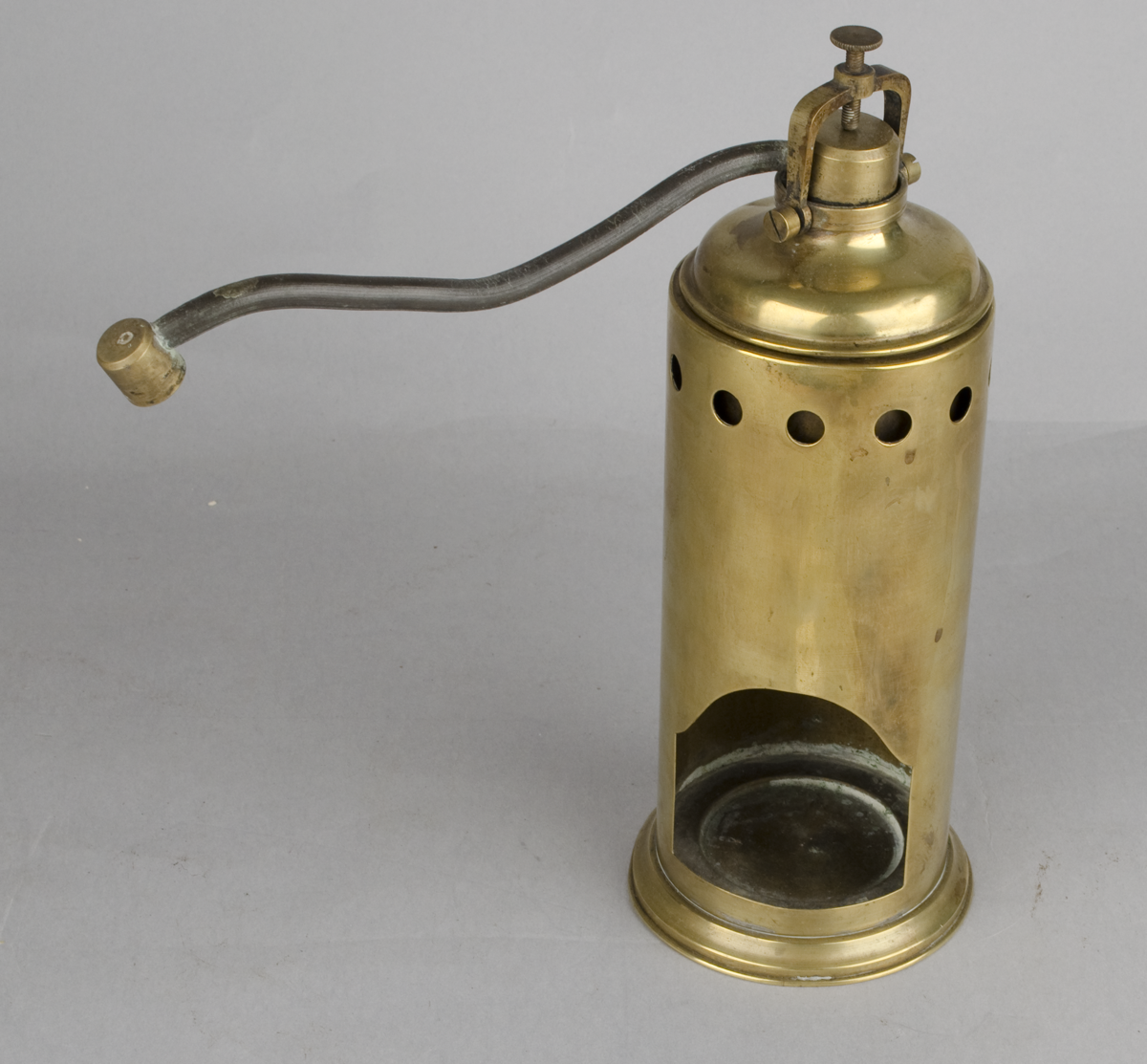
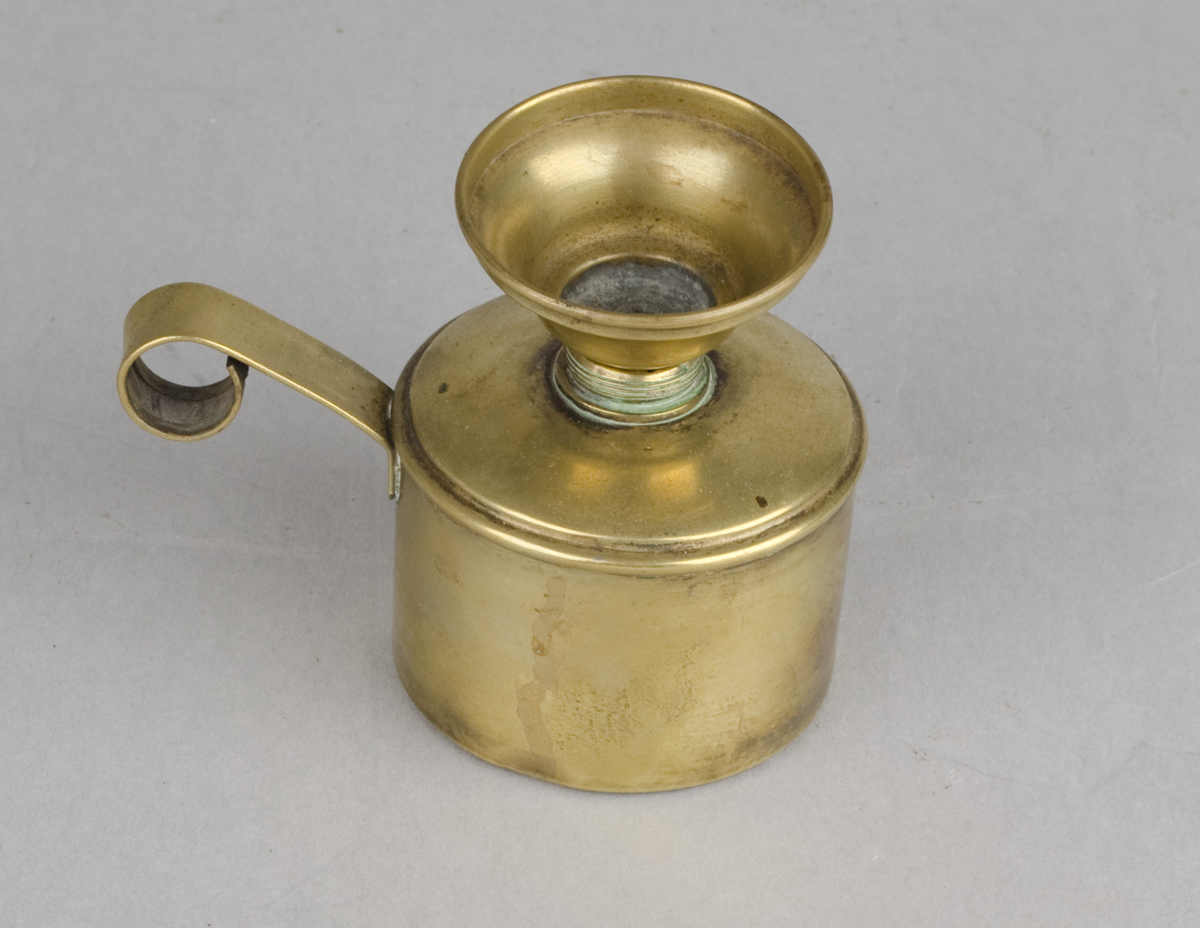
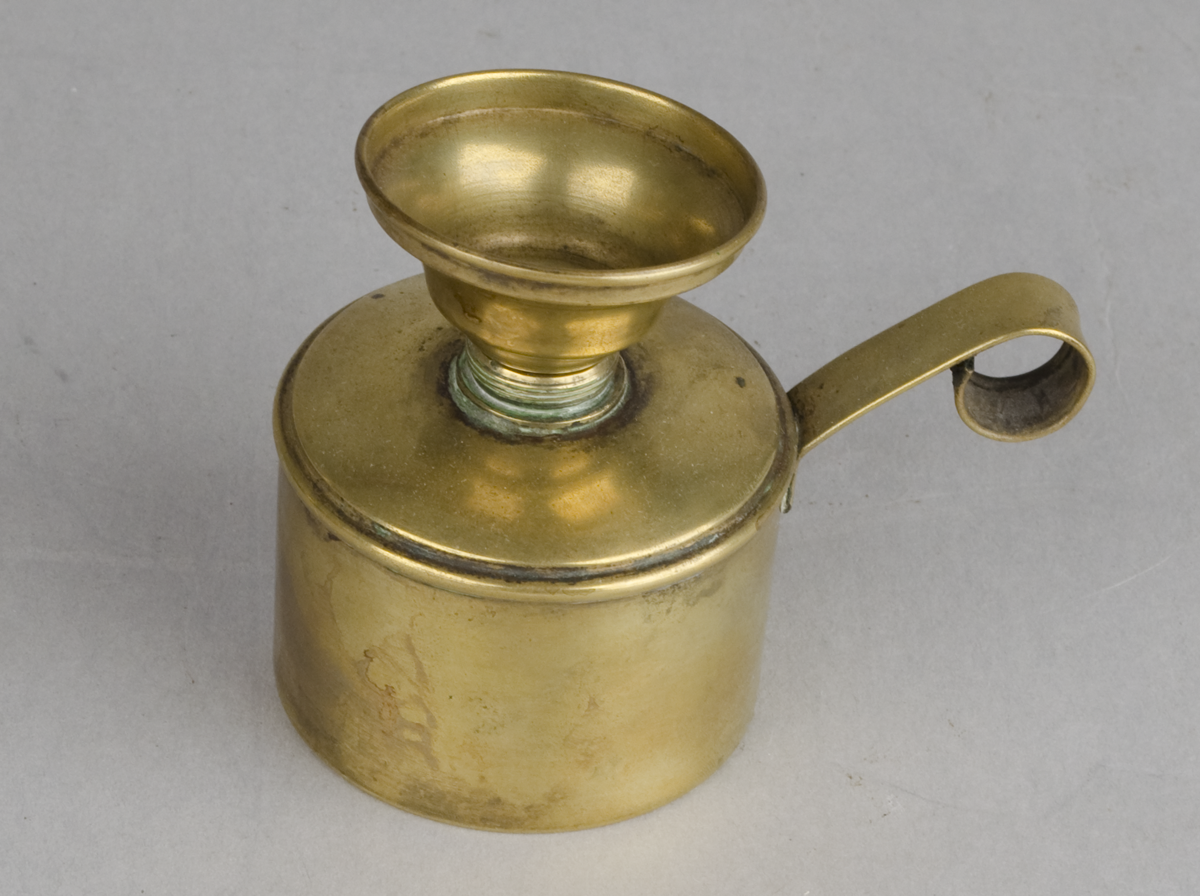
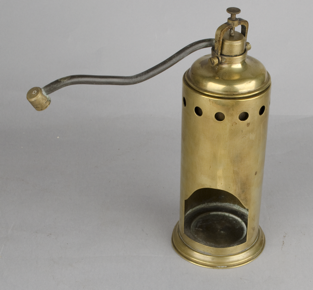
6518.1: A brass oil lamp, which sits inside 6518.2, to heat the retort. Sealed cylindrical lamp with threaded opening, and folded sheet-brass handle.
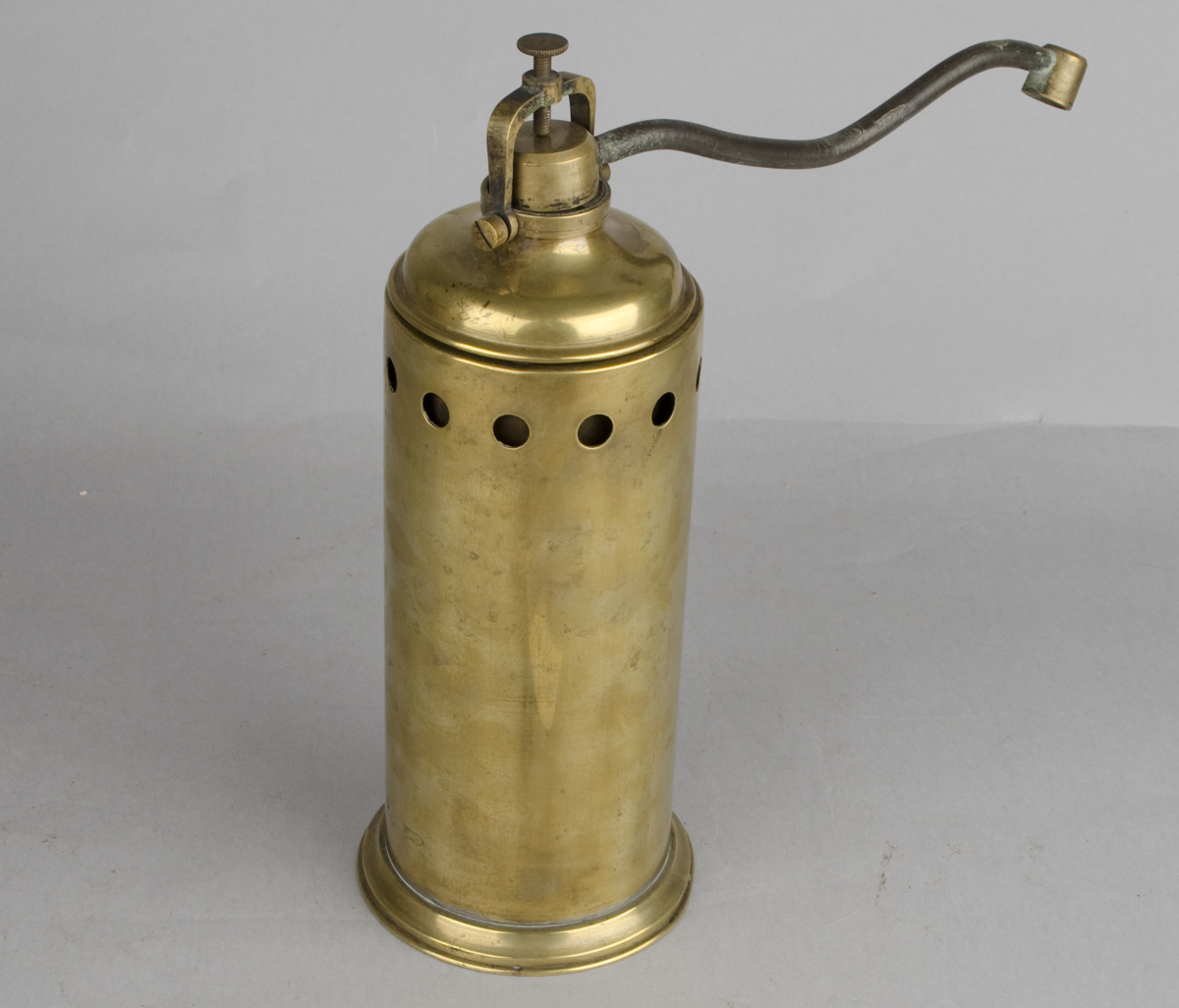
6518.2: A brass retort, which sits in a cylindrical brass holder. The holder has a space for the lamp, and the retort sits loose at the top of the holder. The retort is a sealed brass container with a curved bottom, and a pivoting screw holder on its top, which holds down a curved brass tube over the retort’s opening.
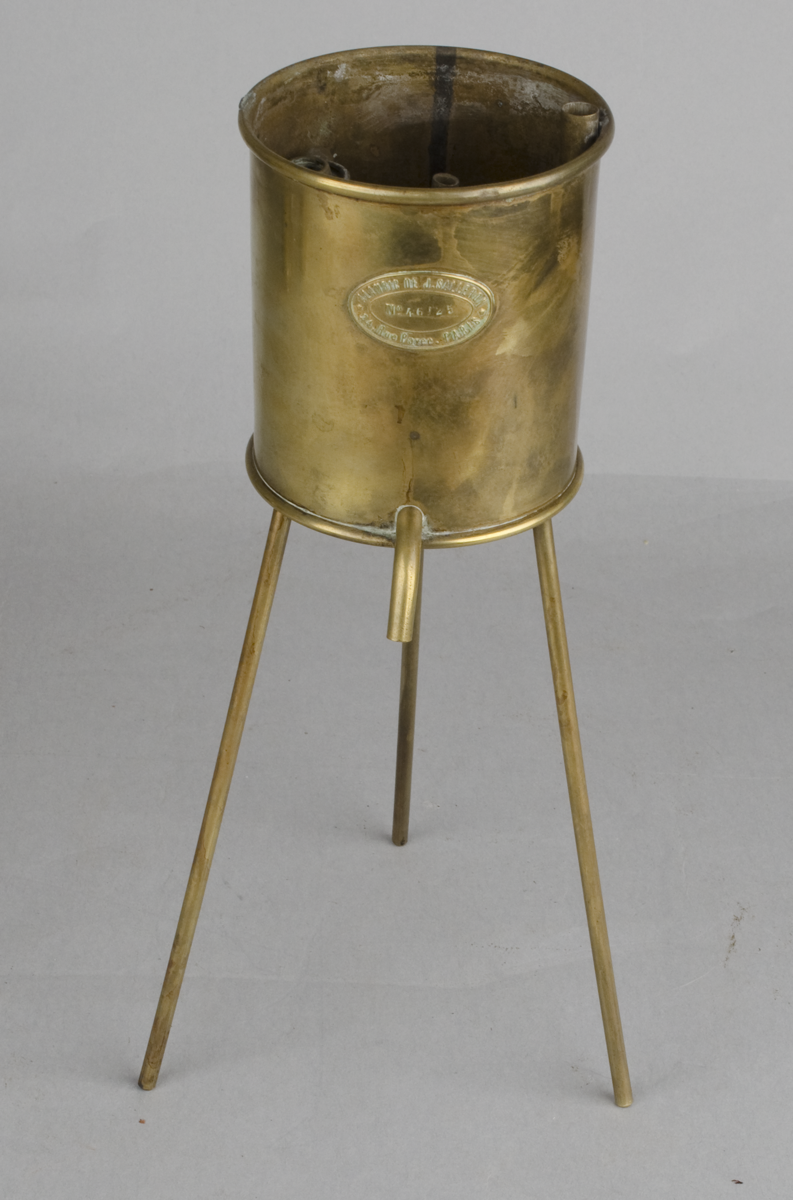
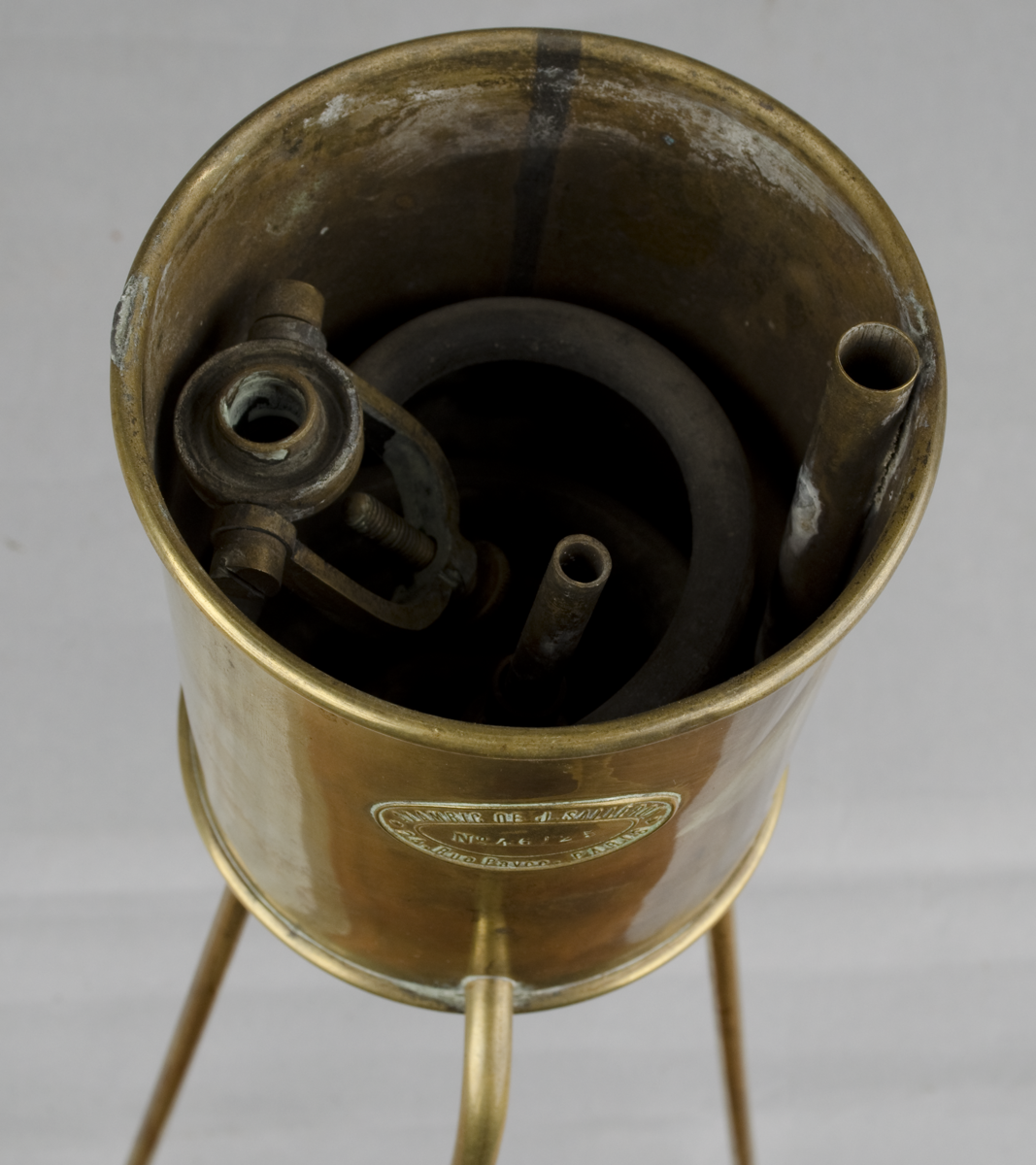
6518.3: A brass condenser. This is an open brass cylinder on narrow brass tripod legs. Inside the condenser is a coil of brass with a pivoting screw holder at its top end, for attaching to the other end of the retort’s curved brass tube. The condenser’s tube opens at the bottom of the condenser (where a flask would be placed underneath to catch the alcohol). The condenser also includes a water inlet tube with loose brass funnel, and a curved water outlet tube on the side.
Condition: good/fair. Some bumps and scrapes.
References
Events
Description
This alembic was probably designed to distil pure alcohol from a set volume of wine, so as to accurately determine a batch of wine’s alcohol content (its specific gravity).
The wine would be placed inside the brass retort and heated from below by the oil lamp. Alcohol, which is more volatile than water, boils off from the wine first, passing through the bent brass tube to the condenser as a gas. Here it is cooled by passing through a coiled tube inside the brass container, whilst running water is passed around the coil. The pure alcohol would condense back to a liquid inside the coil, and drip out of the spout on the underside of the condenser, to be collected in a flask. Careful analysis of the collected alcohol’s density and temperature would enable the calculation of the wine’s alcohol content.
02/12/2013
Created by: Joshua Nall on 02/12/2013
FM:47027
Images (Click to view full size):