Accession No
6662.5
Brief Description
Folder of 45 paintings/drawings labelled "Clover," no. 5 of 35, by Dr W. A. R. Dillon Weston, English, 1930s
Origin
England; Cambridgeshire
Maker
Dillon Weston, W. A. R.
Class
natural history
Earliest Date
1932
Latest Date
1938
Inscription Date
Material
paper
Dimensions
365mm x 250mm
Special Collection
Dr W. A. R. Dillon Weston Collection
Provenance
Inscription
Many pages have typed notes; see Description Notes.
Description Notes
Folder of 45 paintings/drawings labelled "Clover," no. 5 of 35, by Dr W. A. R. Dillon Weston, English, 1930s
NOTE: all objects have been transferred into archive folders for conservation purposes; original folders were photographed (see Images) and are stored separately.
6662.5.a -- "The Eelworm Disease."
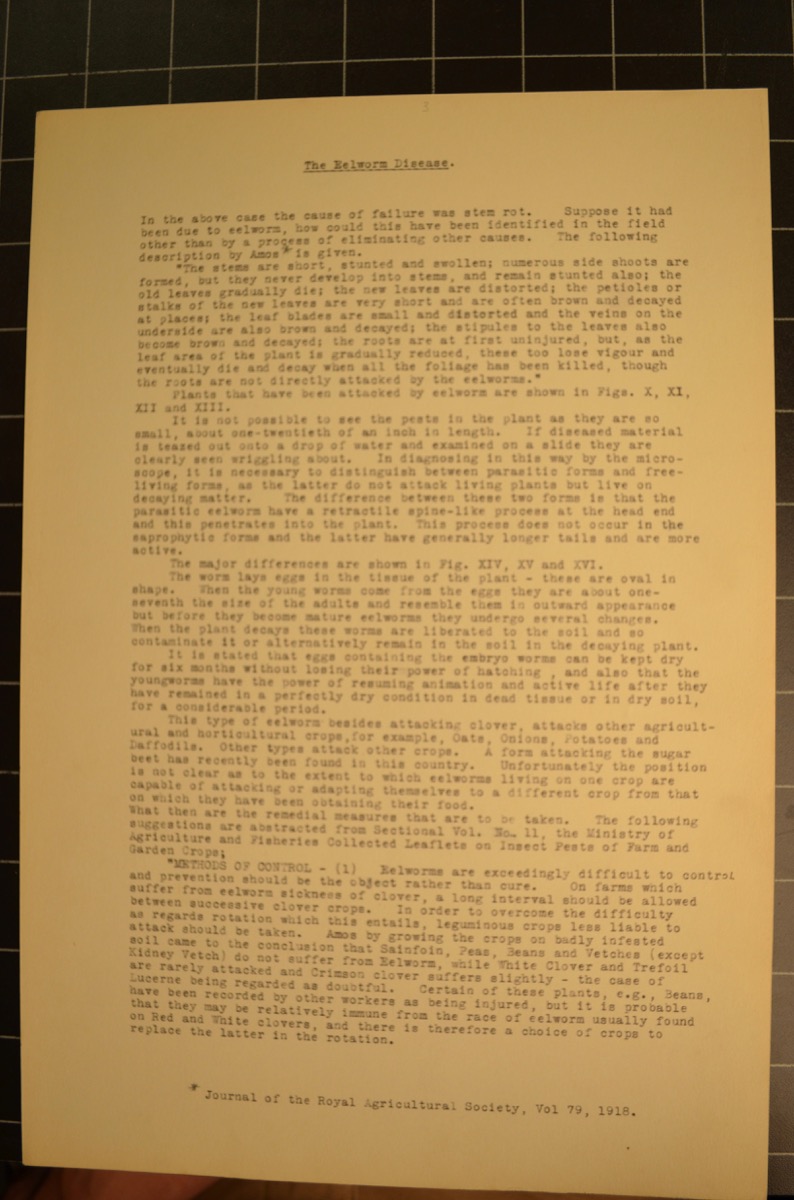
This page and the following consist only of typed text describing the pests: their progression, hosts, and methods of control. An article by Amos in the Journal of the Royal Agricultural Society 1918 is cited.
6662.5.b -- See above. The other pests and diseases (besides eelworm) that affect clover are discussed, and their methods of control. Articles by W. M. Ware in the Journal of the Ministry of Agriculture (1923) are cited.
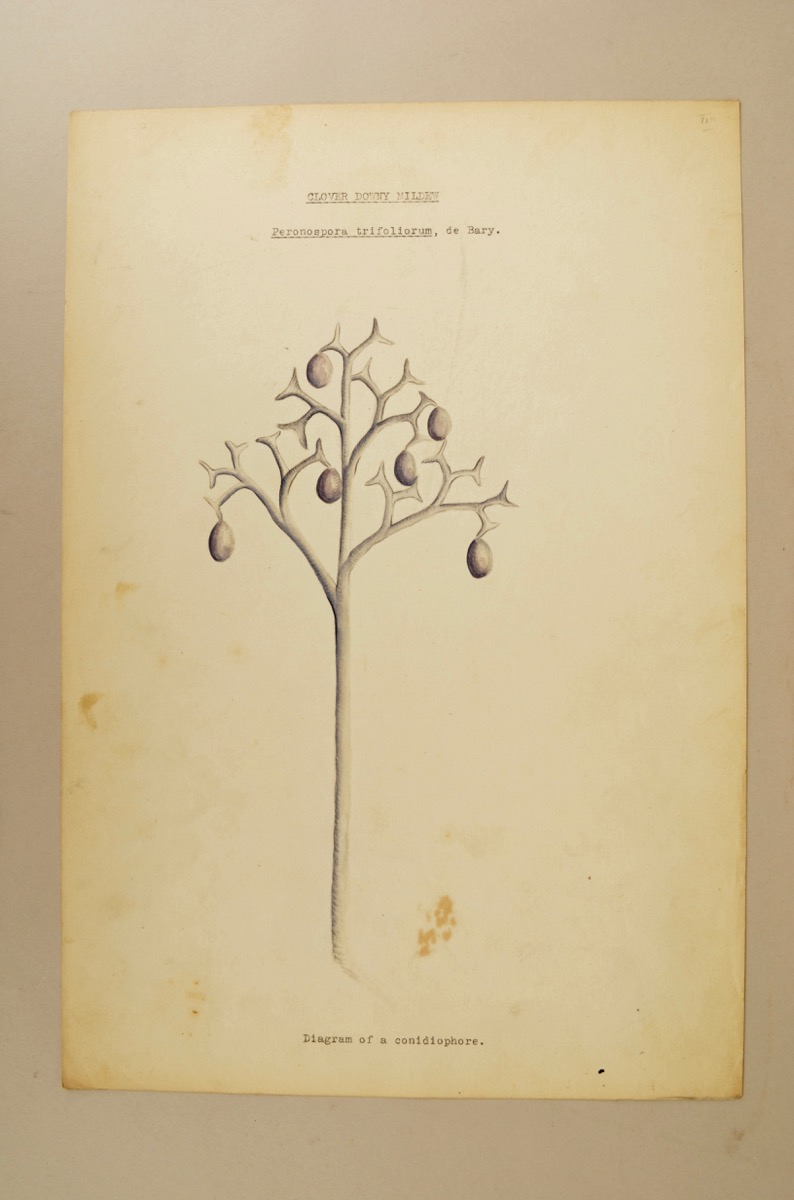
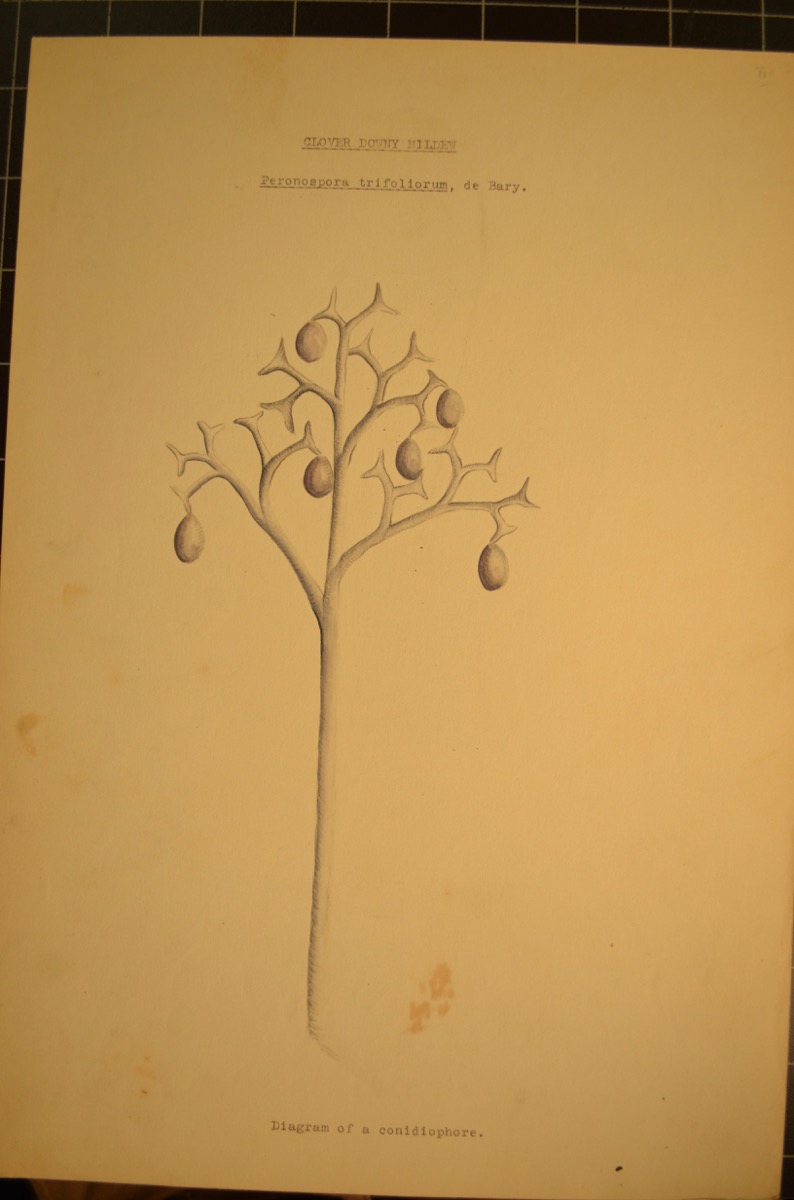
6662.5.c -- "CLOVER DOWNY MILDEW. PERONOSPORA TRIFOLIORUM, de Bary."
A watercolour painting of a clover plant labelled, "Diagram of a conidiophore."
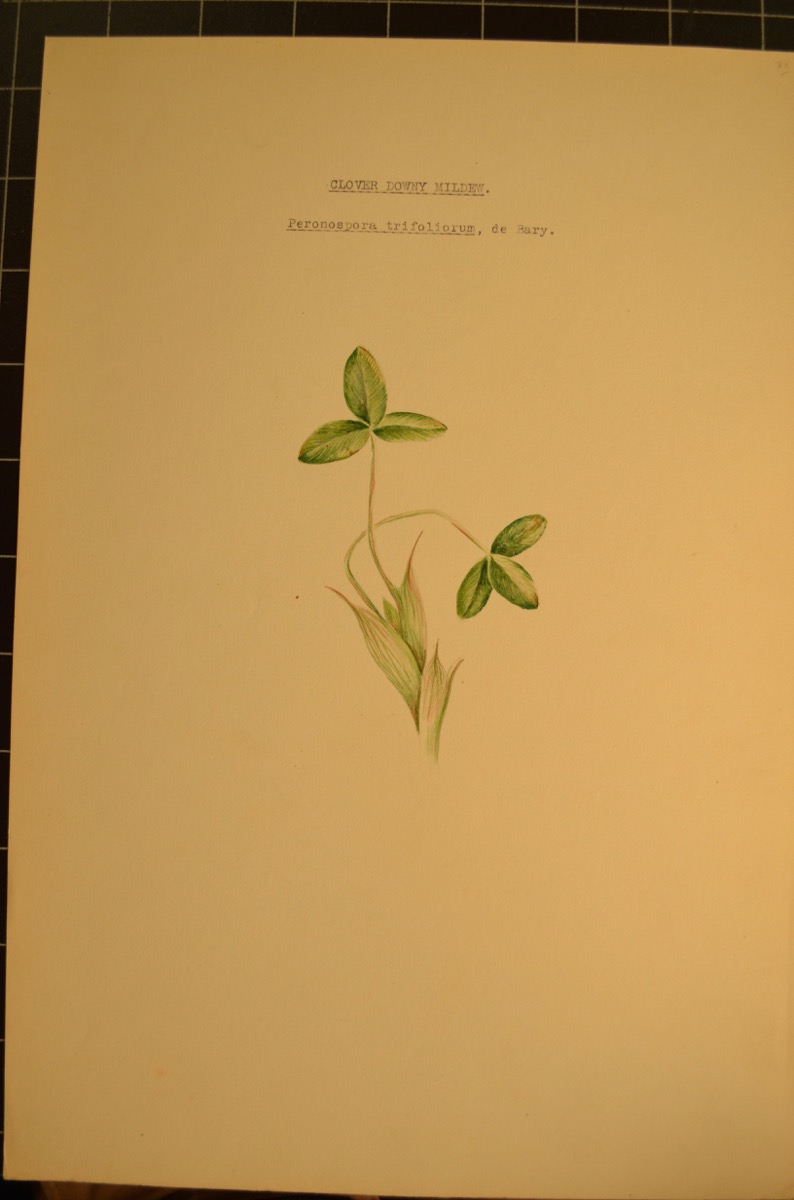
6662.5.d -- "CLOVER DOWNY MILDEW. PERONOSPORA TRIFOLIORUM, de Bary."
A watercolour painting of a clover plant.
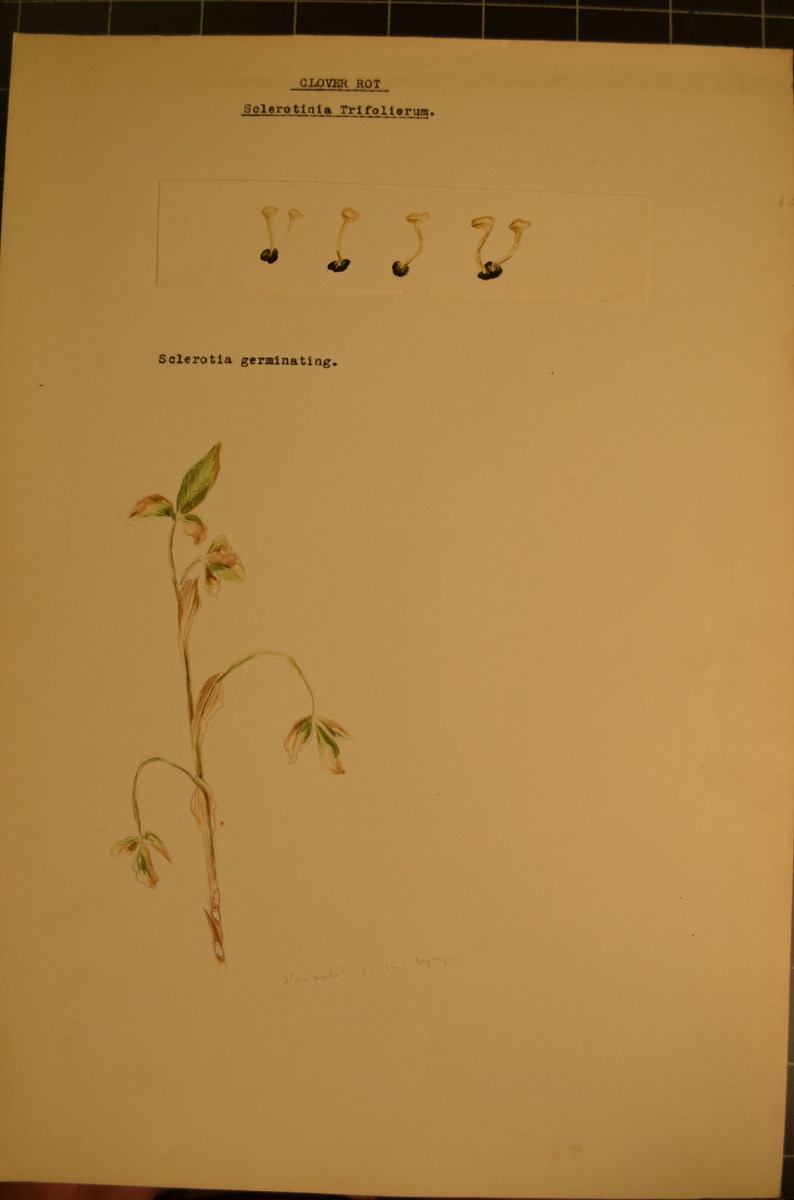
6662.5.e -- "CLOVER ROT. Sclerotinia Trifoliorum."
Two watercolour paintings, one of the fungus (labelled "Sclerotia germinating) and the other of an infected clover plant.
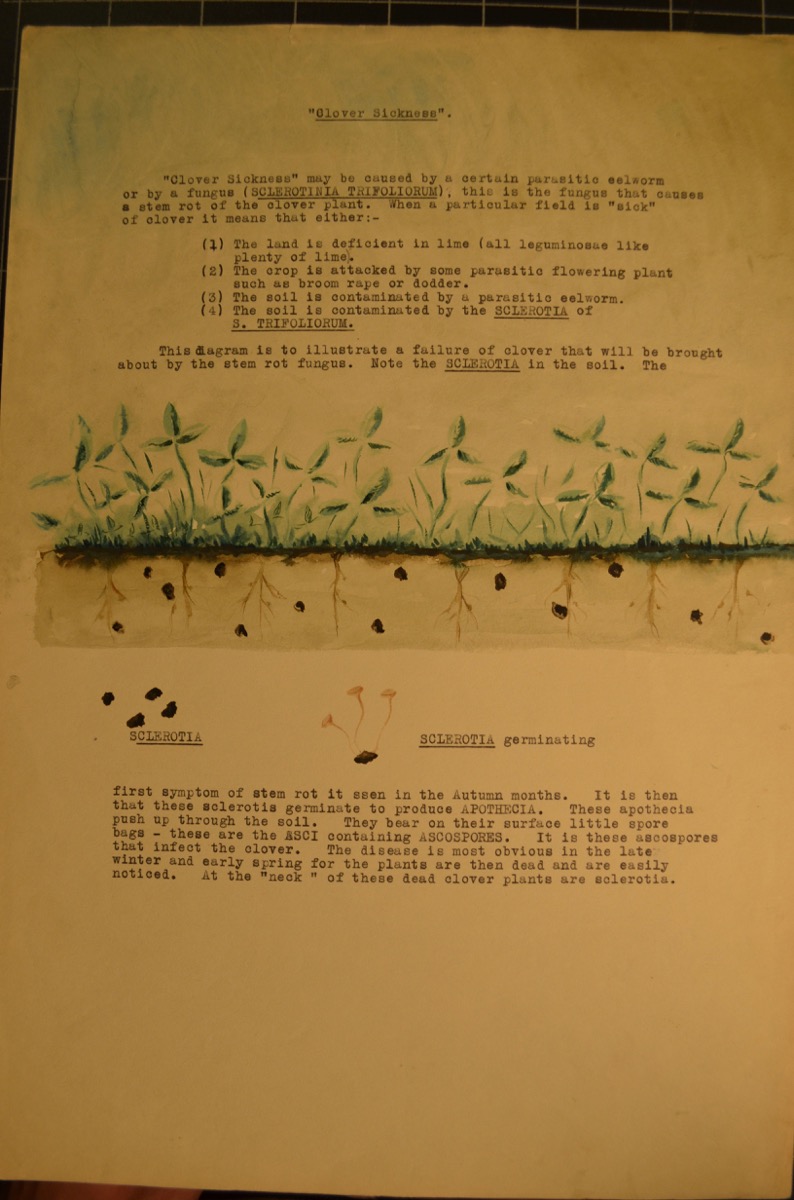
6662.5.f -- "Clover Sickness."
The causes and symptoms of so-called clover sickness are described (fungal and parasitic). This is accompanied by a half-page painting of a cross-section of a clover field showing the plants and the soil that has been infected by the sclerotia, along with a small sketch of the Sclerotia fungus germinating.
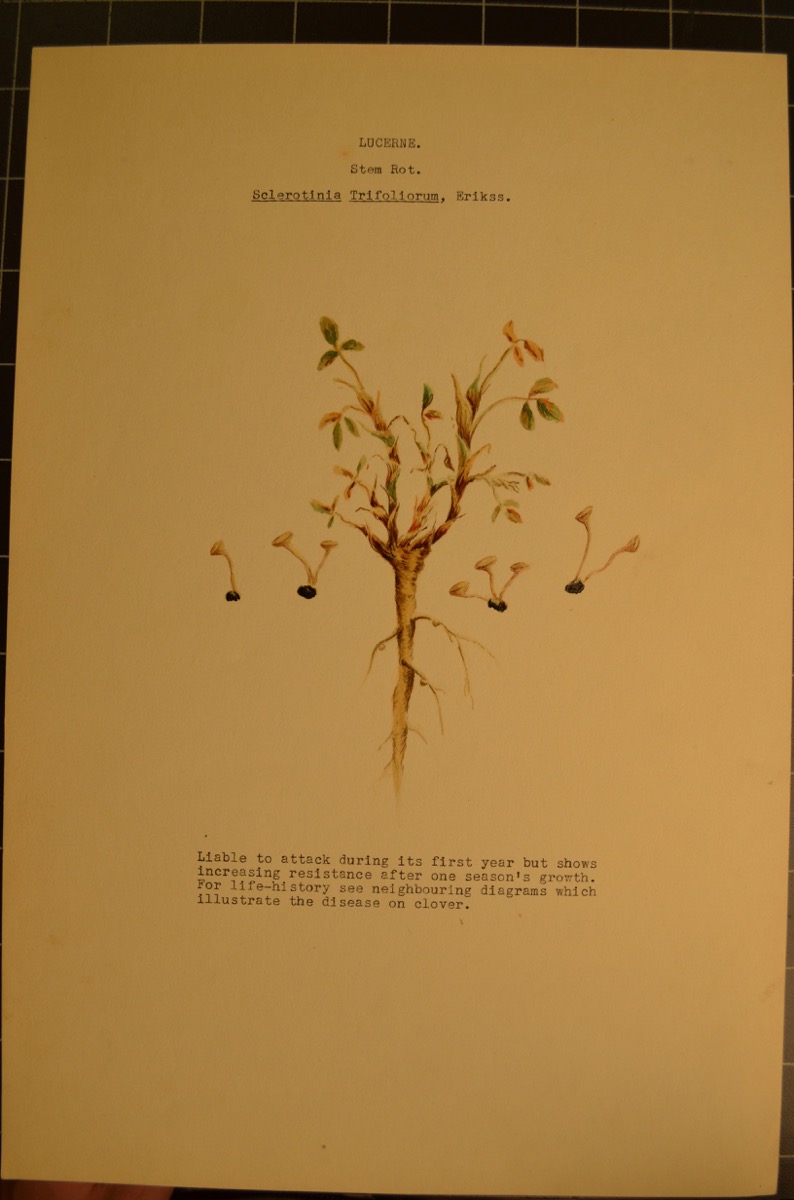
6662.5.g -- "LUCERNE. Stem Rot. Sclerotinia Trifoliorum, Erkiss."
A watercolour painting of an infected lucerne plant (similar to clover), with reference to clover paintings on neighbouring pages. There are also several small paintings of the fungus germinating.
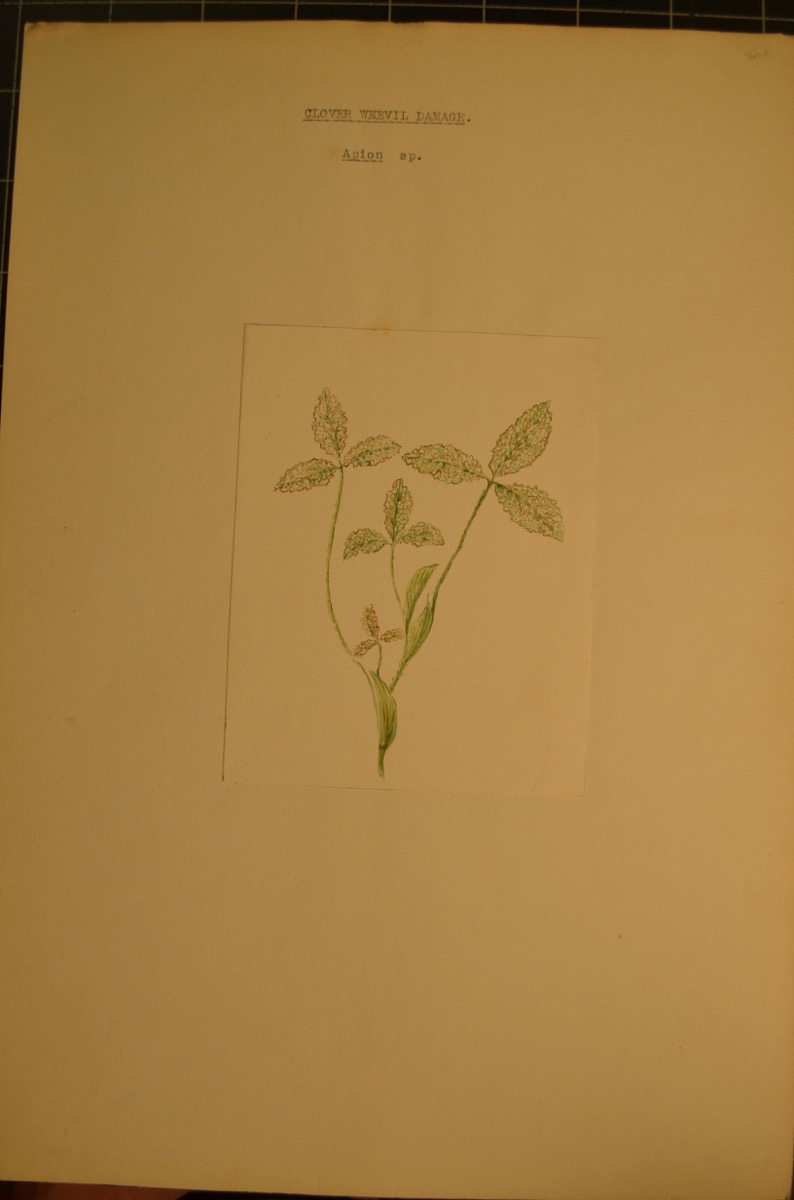
6662.5.h -- "CLOVER WEEVIL DAMAGE. Apion sp."
A drawing of a damaged clover plant has been cut and pasted on the page.
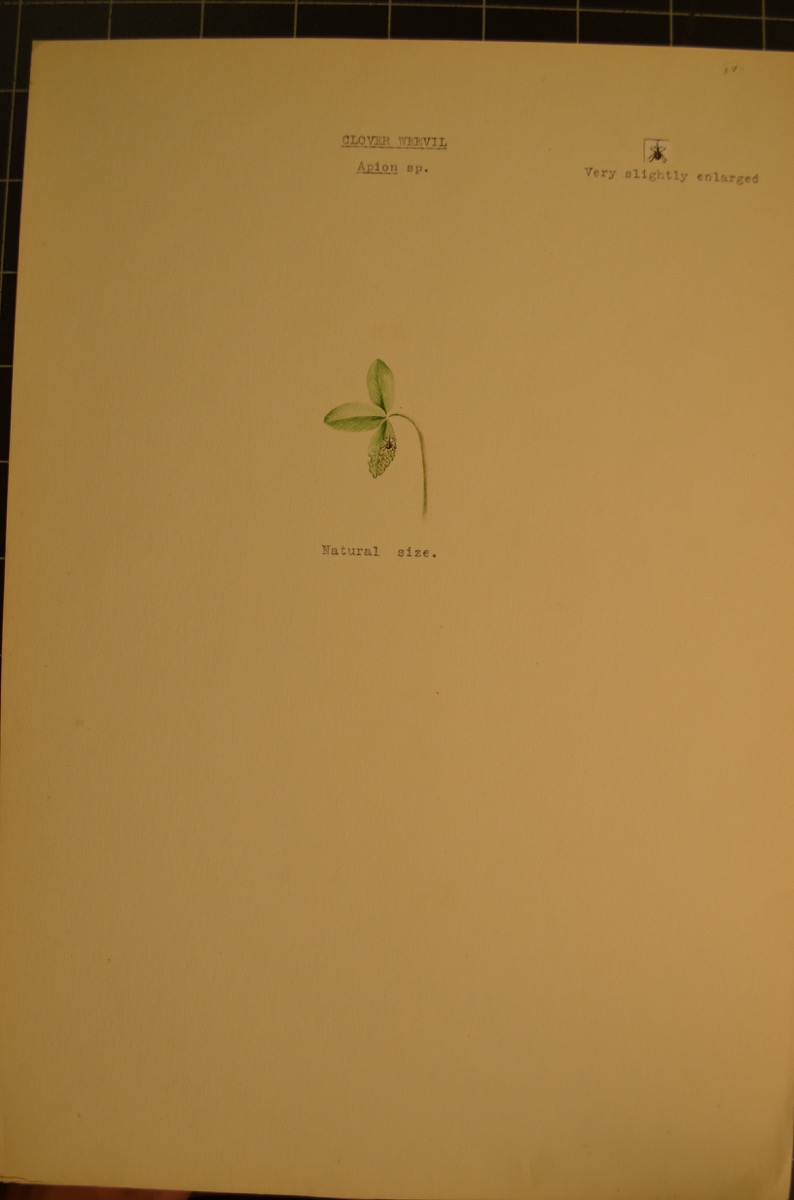
6662.5.i -- "CLOVER WEEVIL. Apion sp"
A small drawing of a damaged clover plant, with a label noting it is "Natural size." There is also a tiny square of paper with the weevil drawn on it pasted on the page, labelled "Very slightly enlarged."
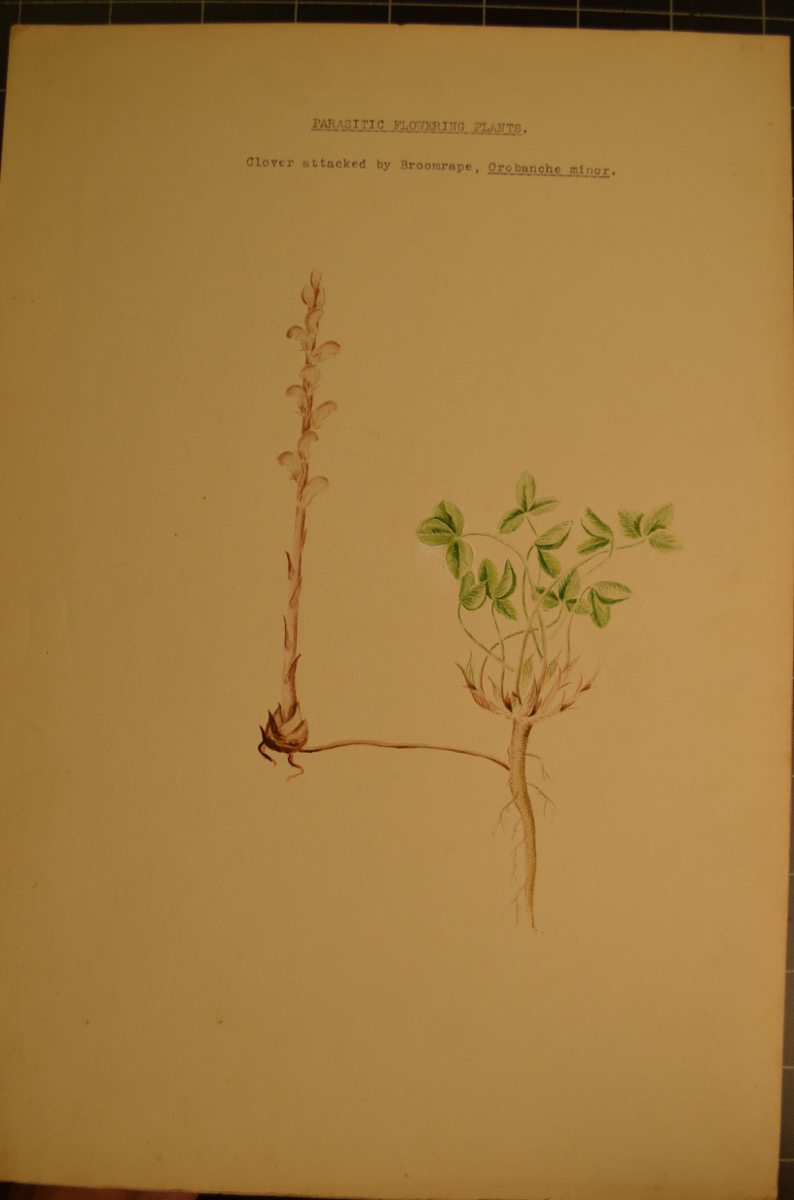
6662.5.j -- "PARASITIC FLOWERING PLANTS. Clover attacked by Broomrape, Orobanche minor."
A watercolour painting of a clover plant attacked by a parasitic plant.
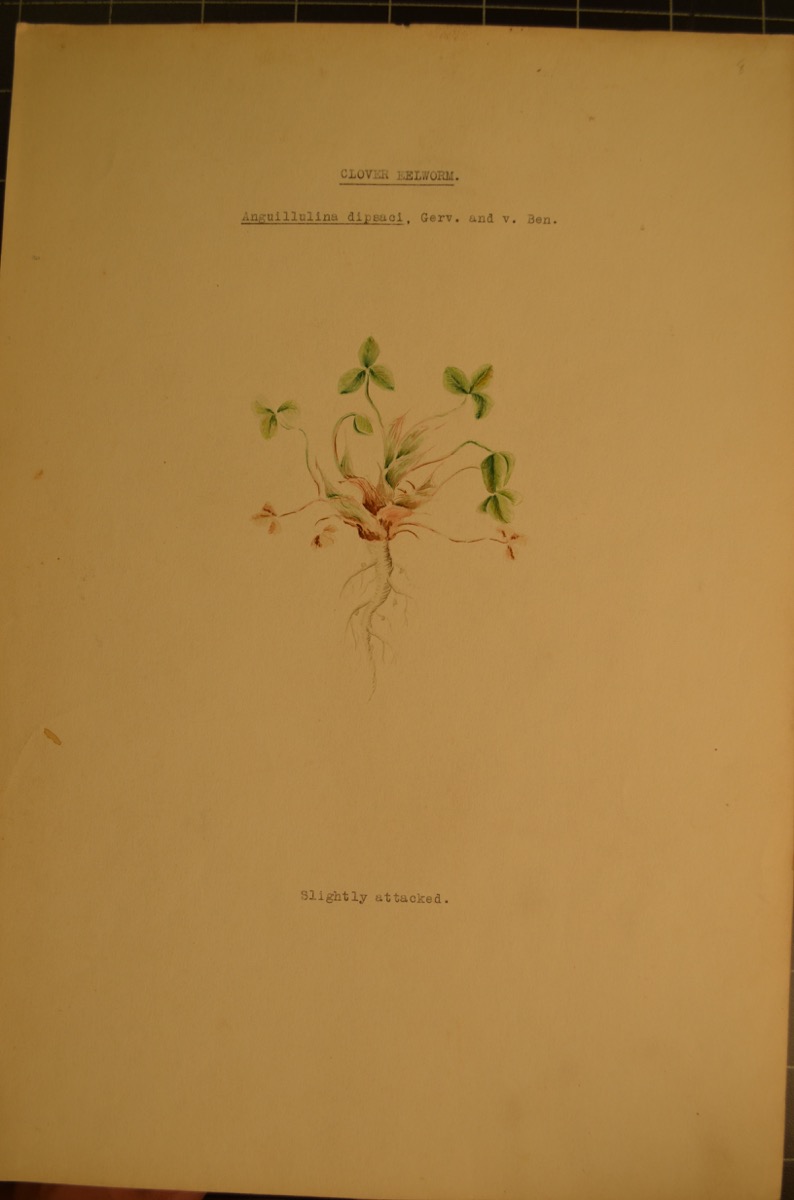
6662.5.k -- "CLOVER EELWORM. Anguillulina dipsaci, Gerv. and v. Ben."
A watercolour painting of a clover plant, labelled "Slightly attacked."
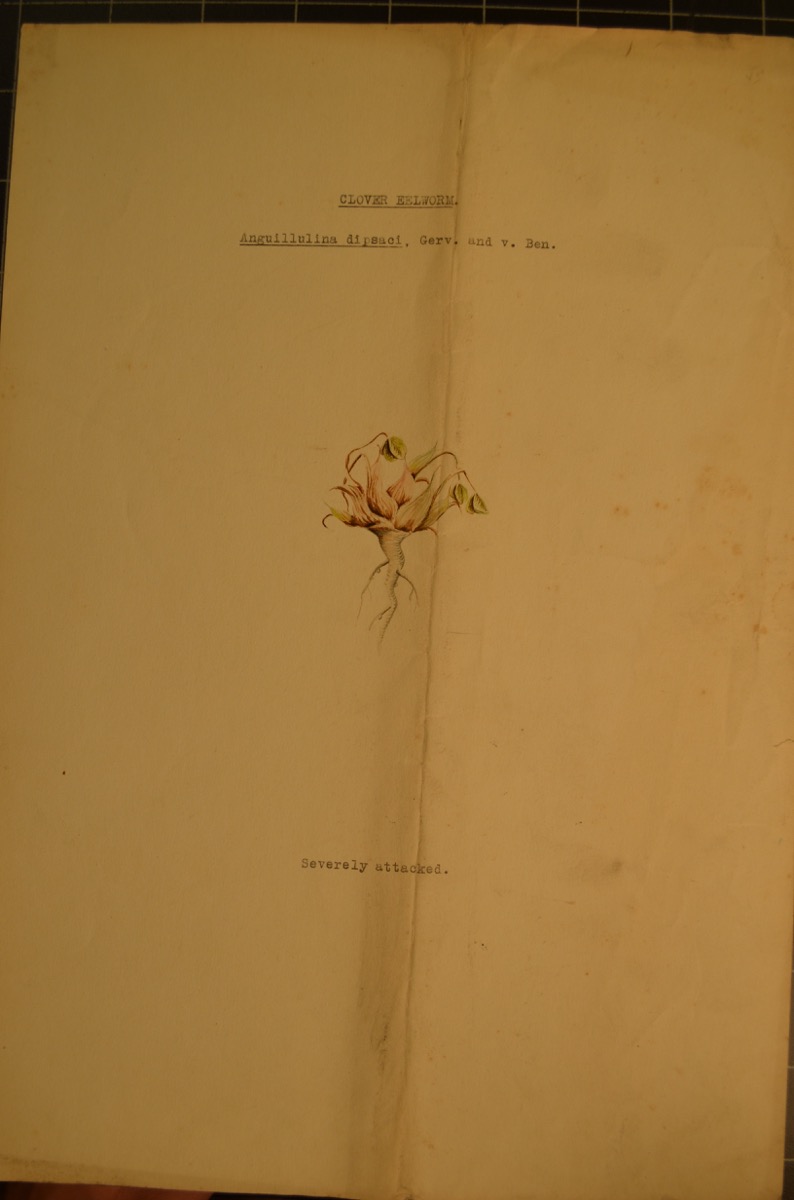
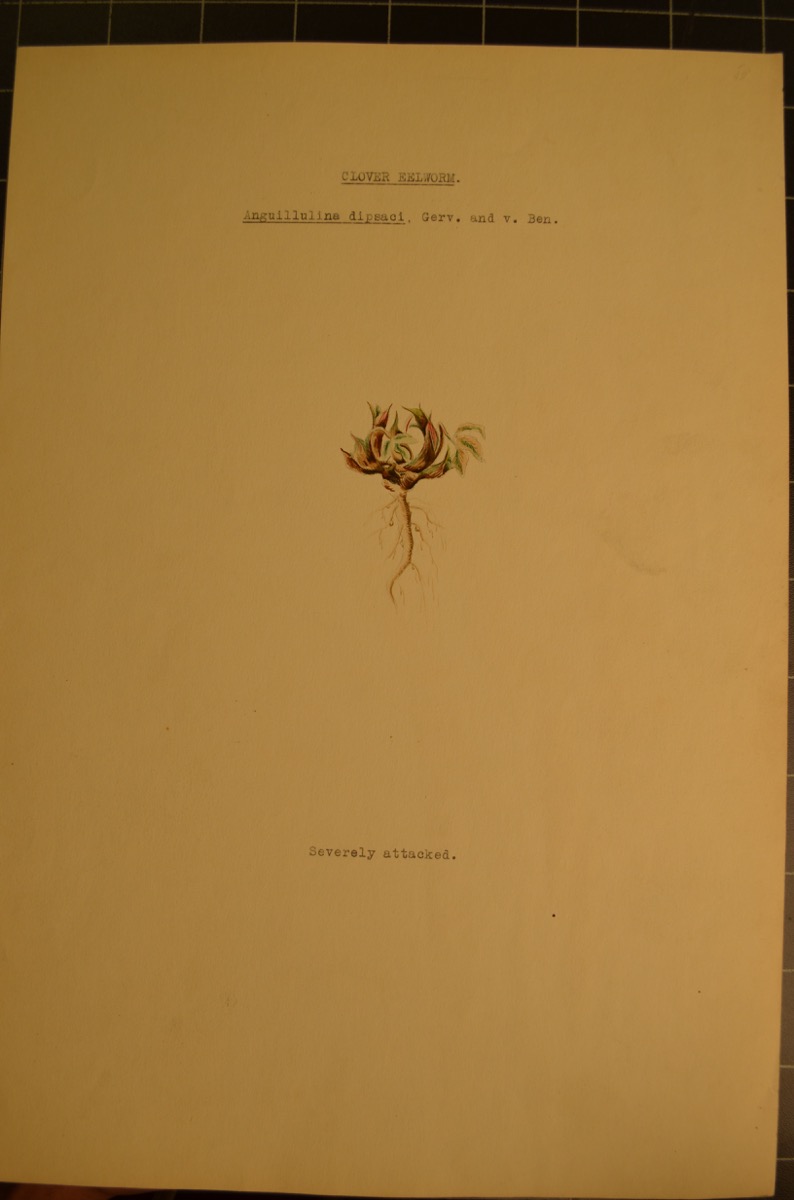
6662.5.l -- "CLOVER EELWORM. Anguillulina dipsaci, Gerv. and v. Ben."
A watercolour painting of a clover plant, labelled "Severely attacked."
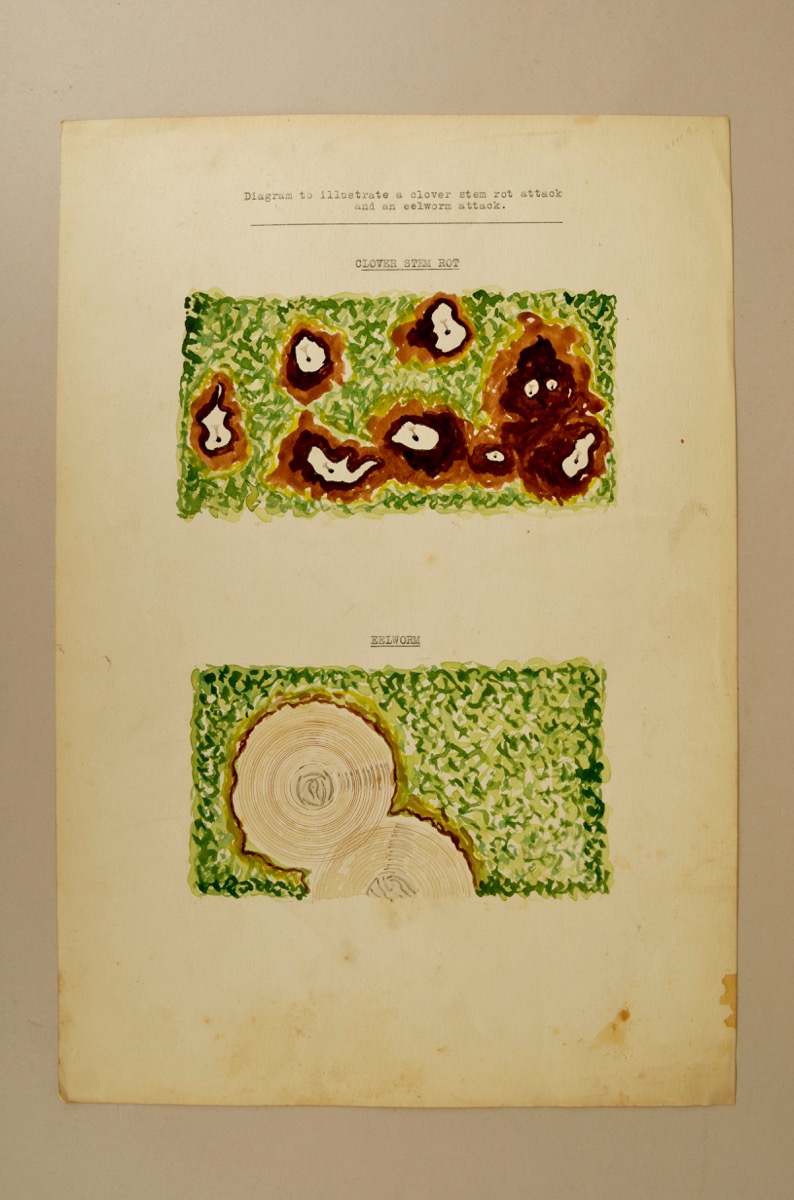
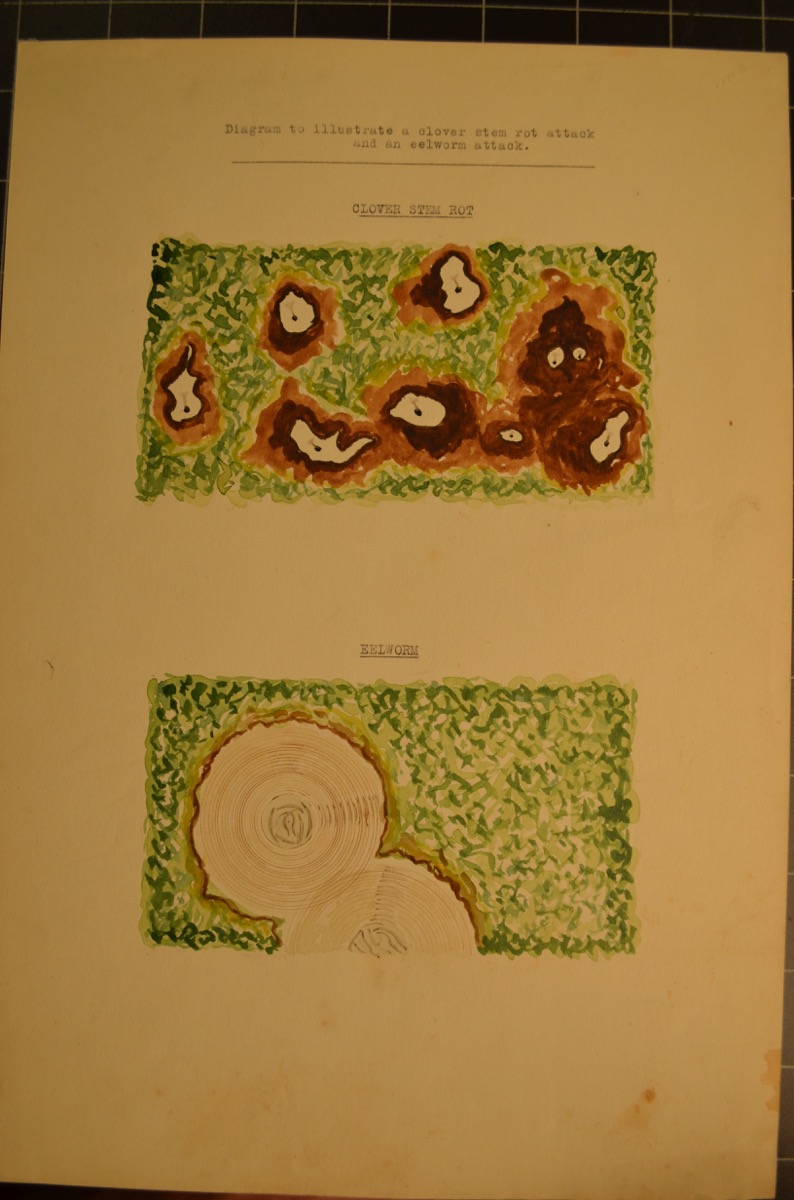
6662.5.m -- "Diagram to illustrate a clover stem rot attack and an eelworm attack."
Two schematic watercolour paintings, showing cross-sections (?) or magnified representations of infected clover material.
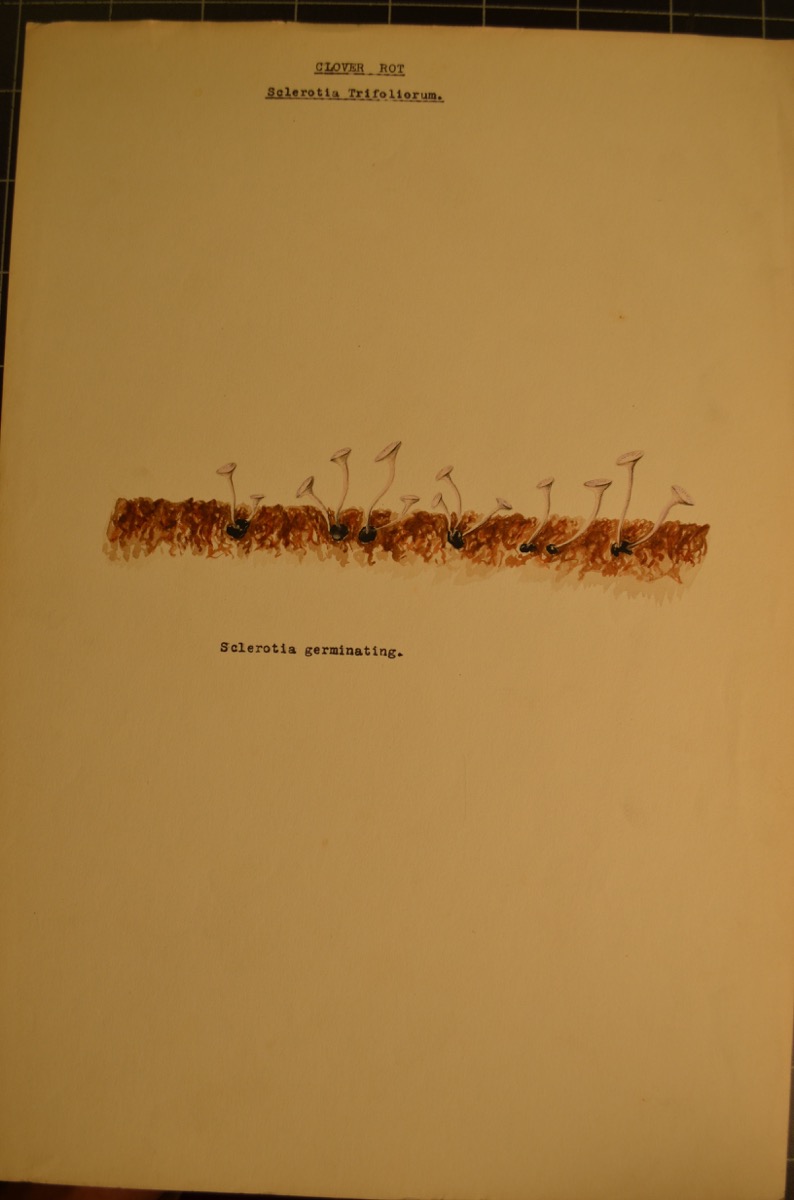
6662.5.n -- "CLOVER ROT Sclerotia Trifoliorum."
A watercolour painting of the fungus germinating on organic material.
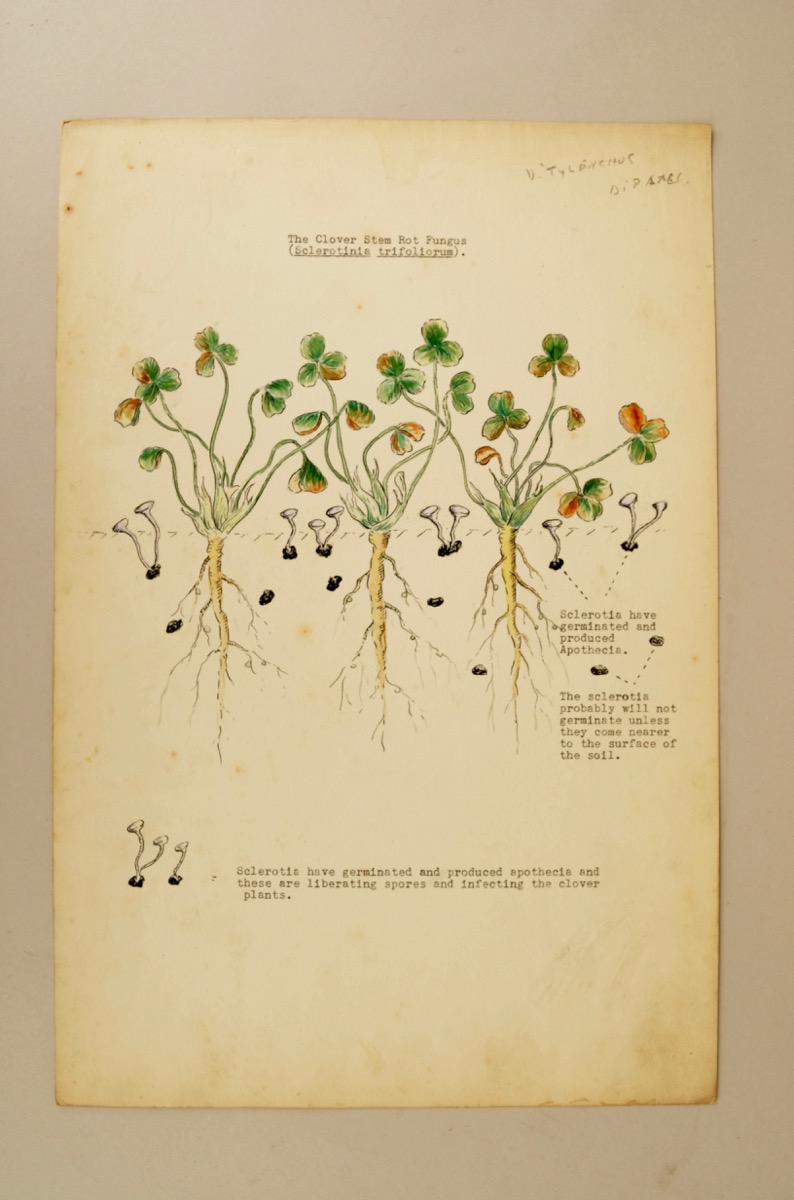
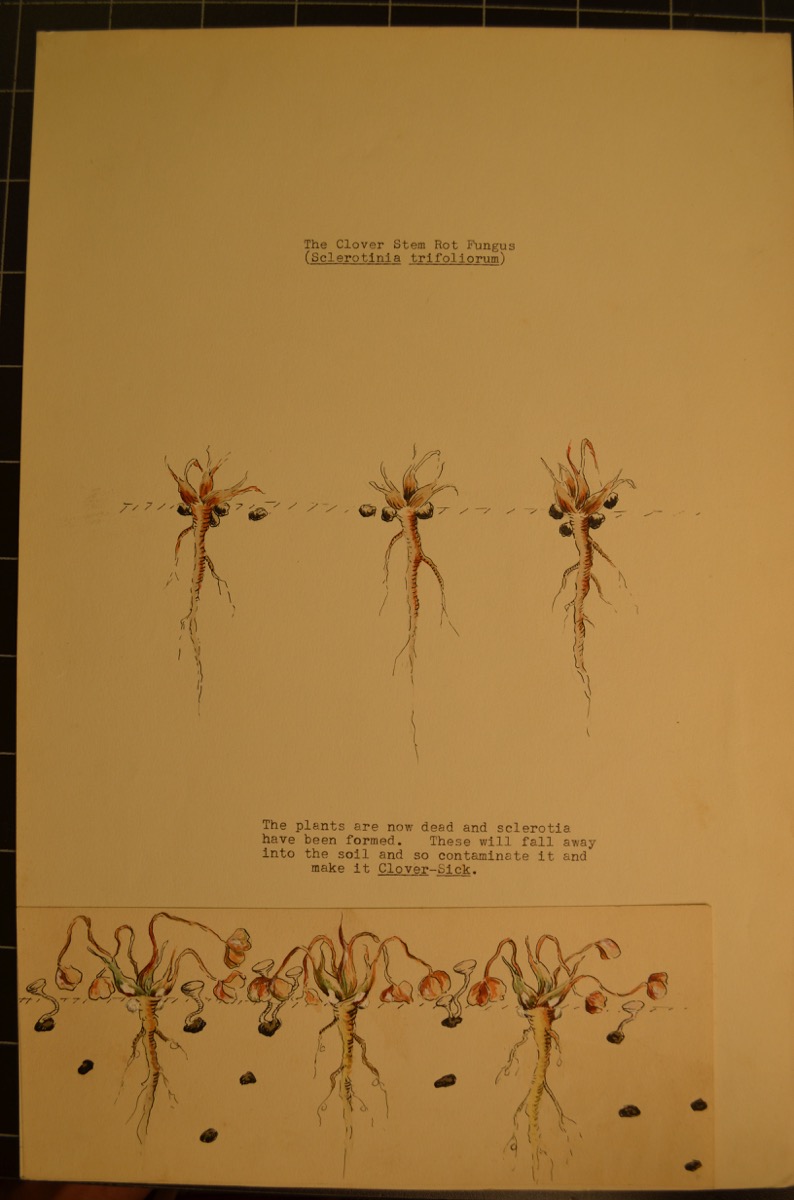
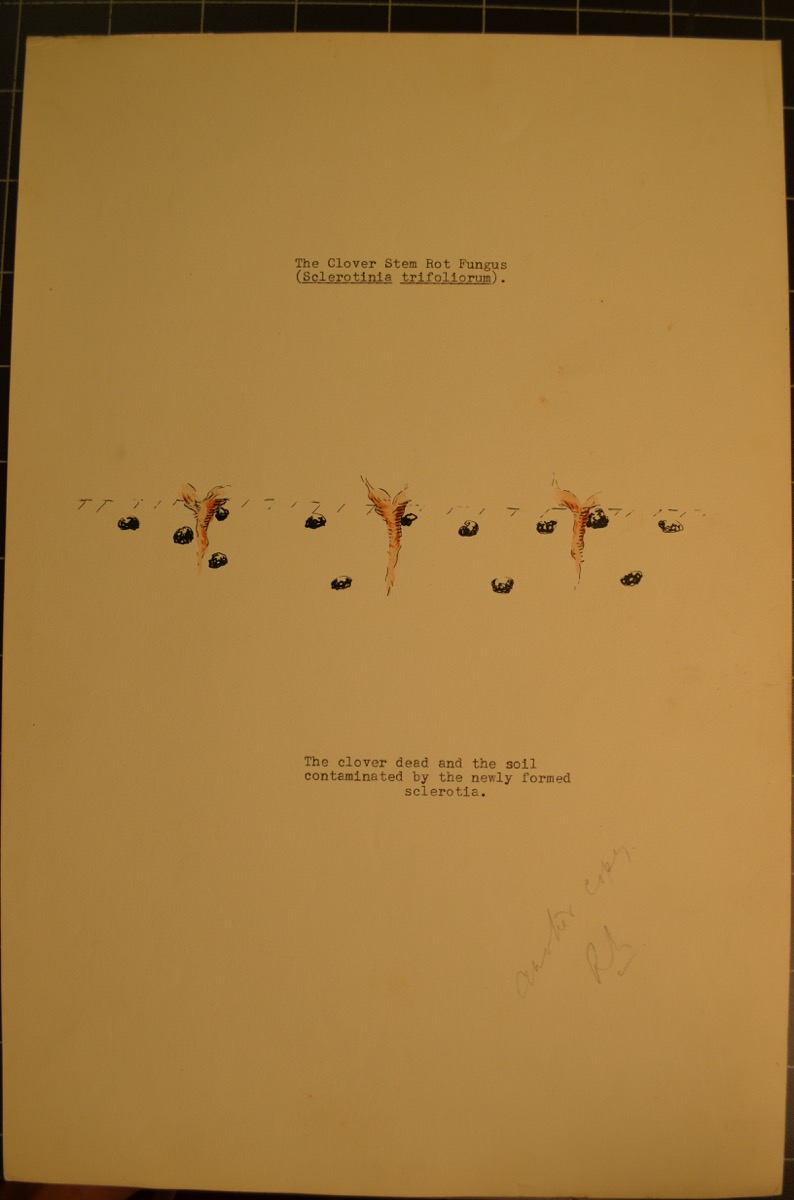
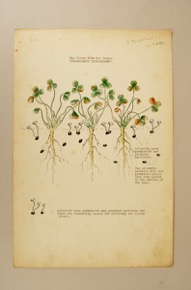
6662.5.o -- "The Clover Stem Rot Fungus (Sclerotinia trifoliorum)"
Two watercolour & pen drawings of the fungus, showing how they contaminate the surrounding soil. The second drawing has been cut and pasted at the bottom of the page.
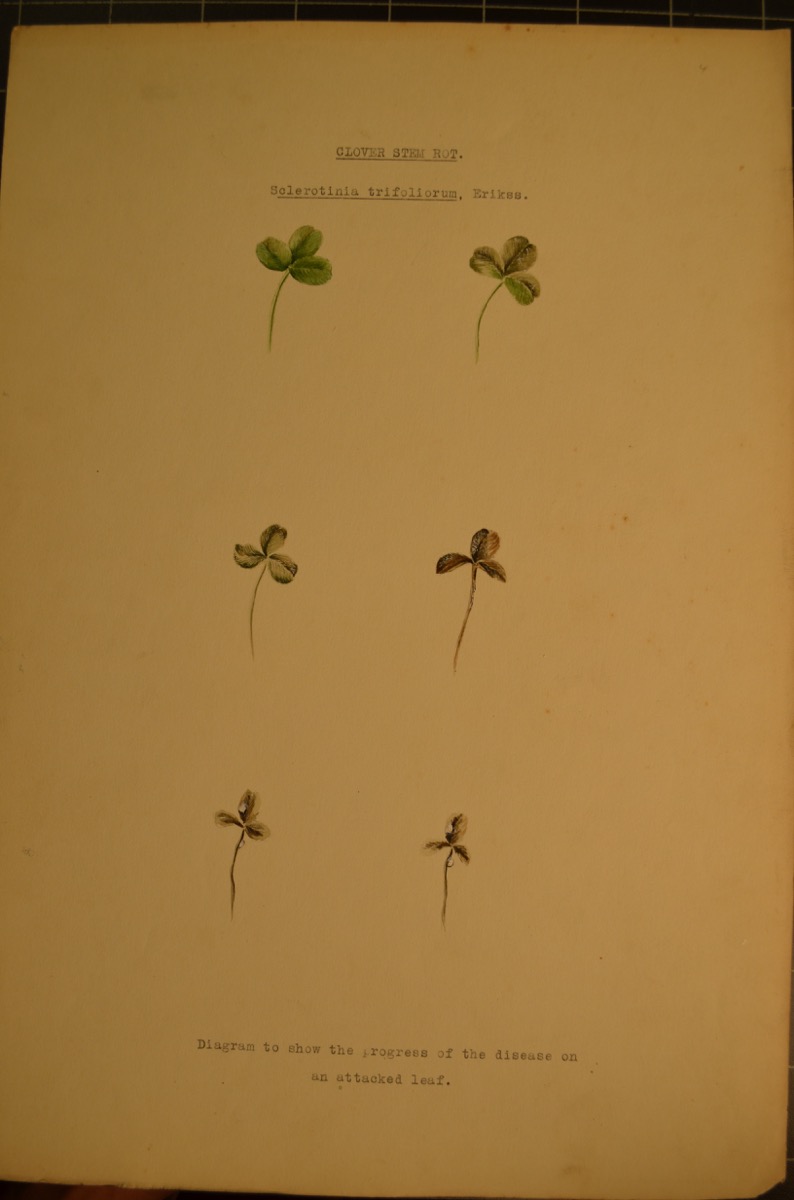
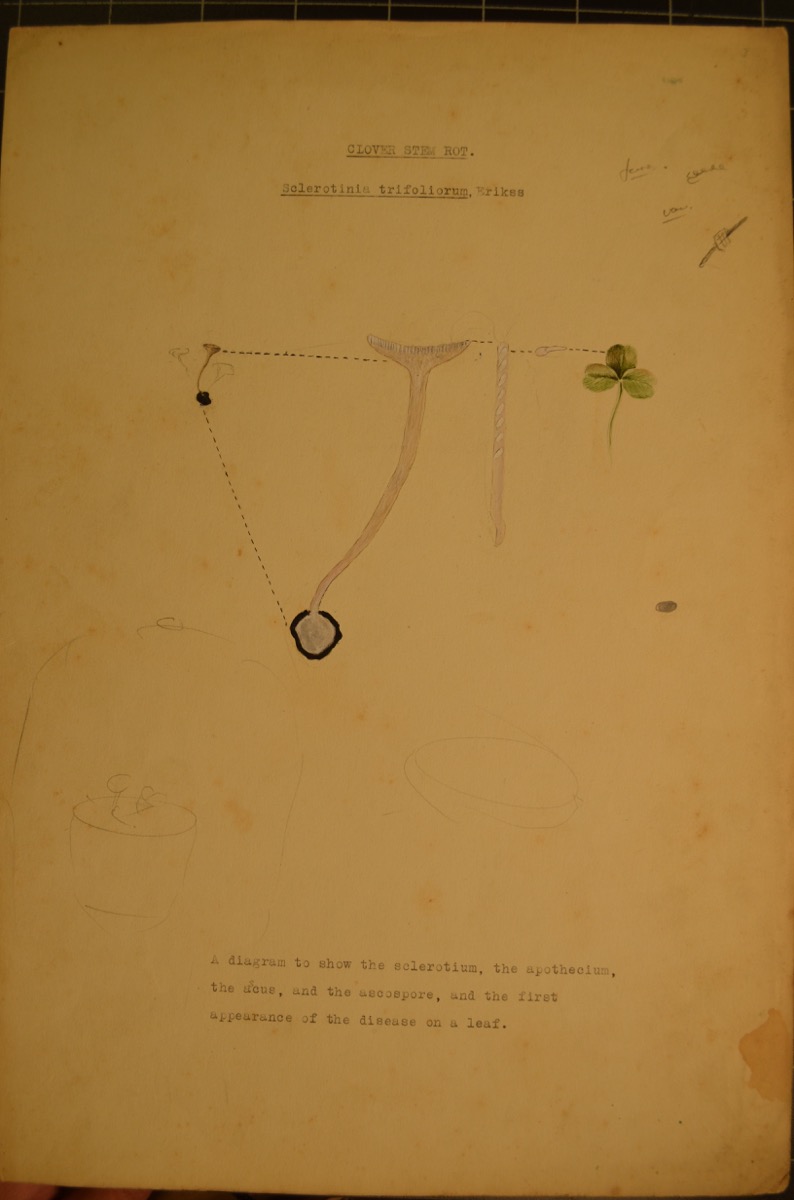
6662.5.p -- "CLOVER STEM ROT. Sclerotinia trifoliorum, Erikss."
Six watercolours showing the progress of the disease on an attacked clover leaf.
6662.5.q -- "The clover stem rot fungus (Sclerotinia trifoliorum).
One watercolour & pen drawing of the fungus, showing how they contaminate the surrounding soil.
6662.5.r -- "CLOVER EELWORM. Anguillulina dispaci Gerv. and v. Ben."
A watercolour painting showing a severely attacked clover plant.
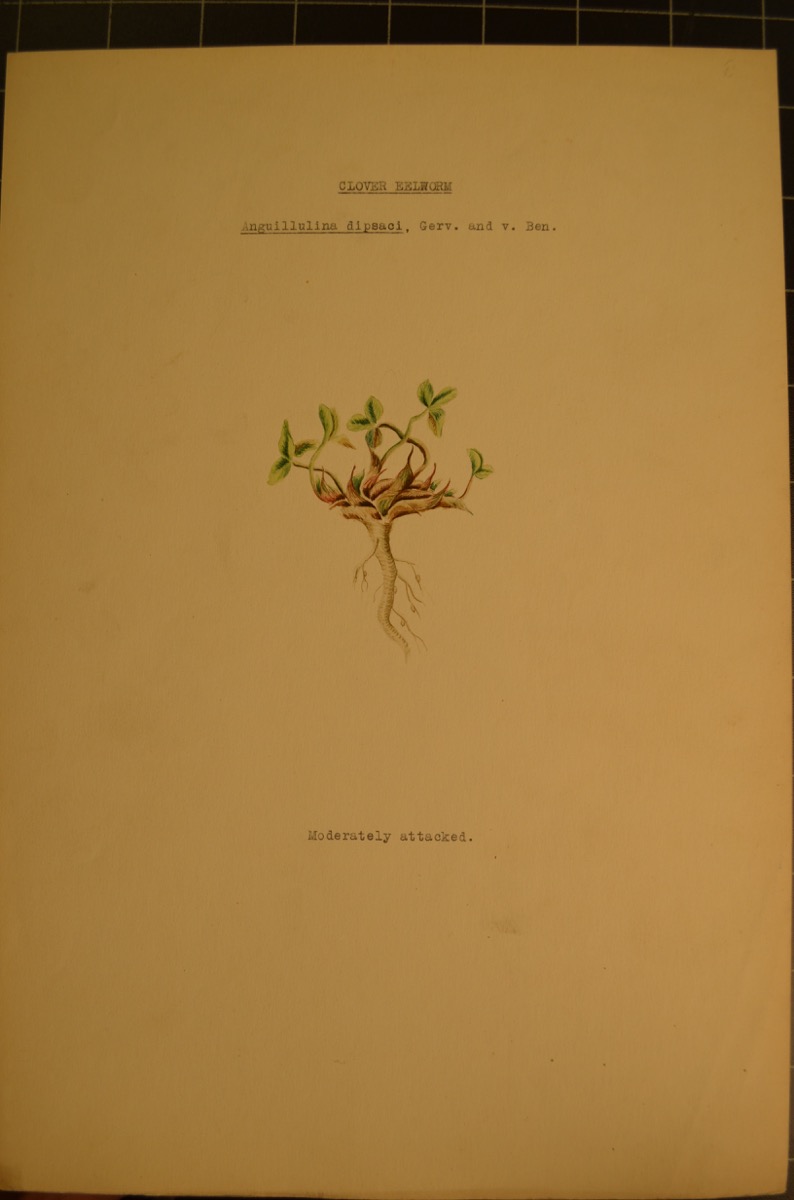
6662.5.s -- "CLOVER EELWORM. Anguillulina dispaci Gerv. and v. Ben."
A watercolour painting showing a moderately attacked clover plant.
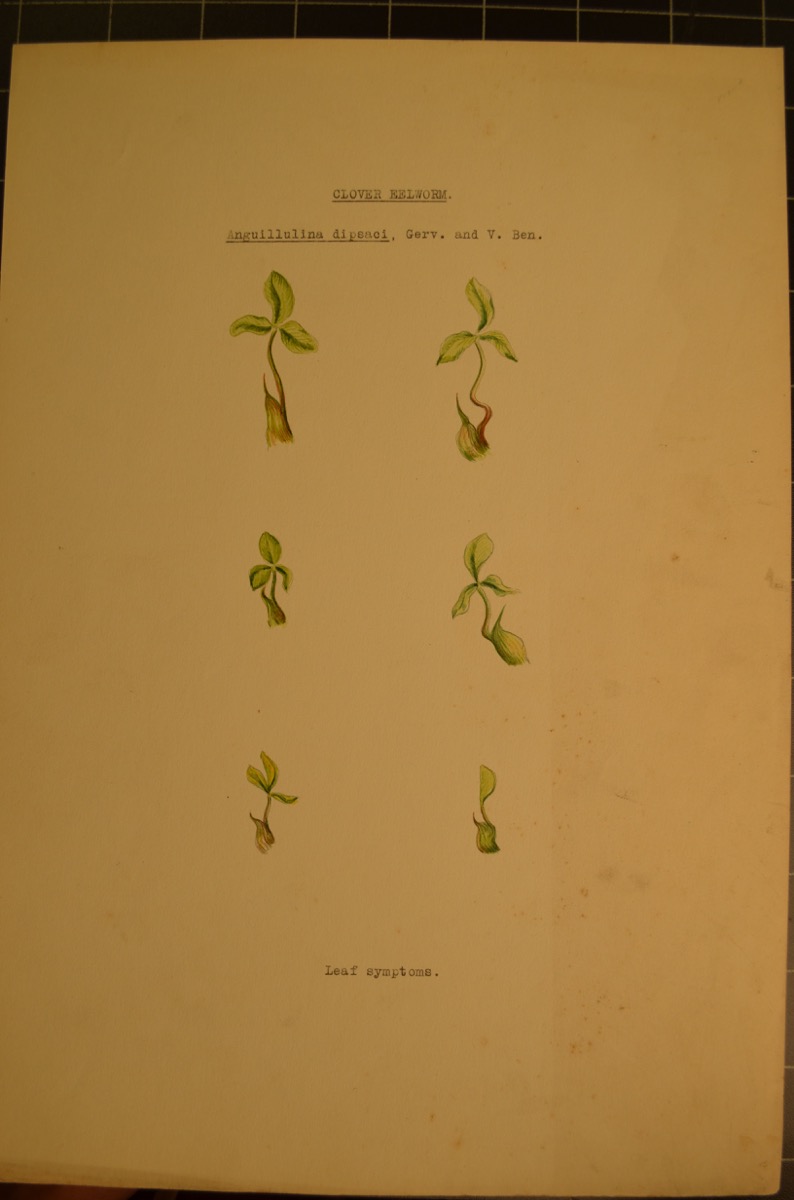
6662.5.t -- "CLOVER EELWORM. Anguillulina dispaci Gerv. and v. Ben."
A watercolour painting showing the leaf symptoms of the parasite.
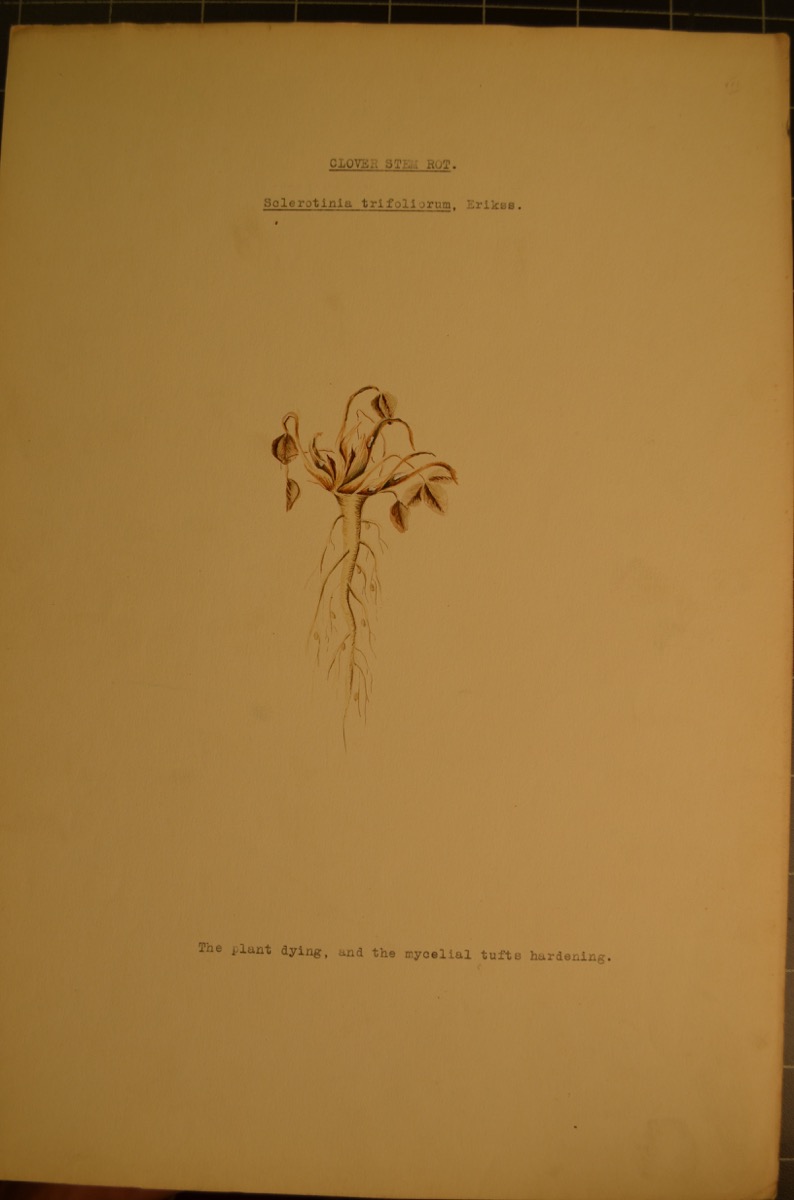
6662.5.u -- "CLOVER STEM ROT. Sclerotinia trifoliorum, Erikss."
A watercolour painting of one stage of the rot affecting a clover plant.
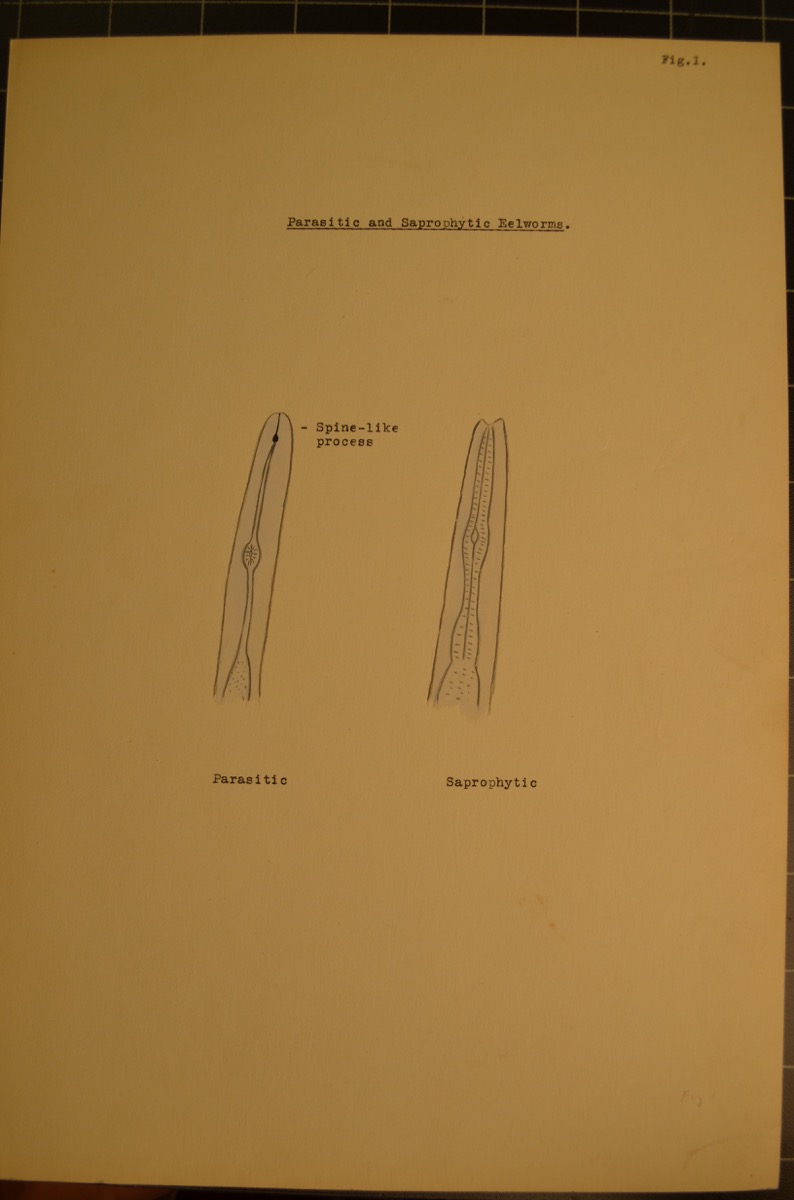
6662.5.v -- "Parasitic and Saprophytic Eelworms."
Two painted diagrams showing two types of eelworms with the distinguishing factor, a spine-like process, highlighted. The page is labelled "Fig. I" at the top-right.
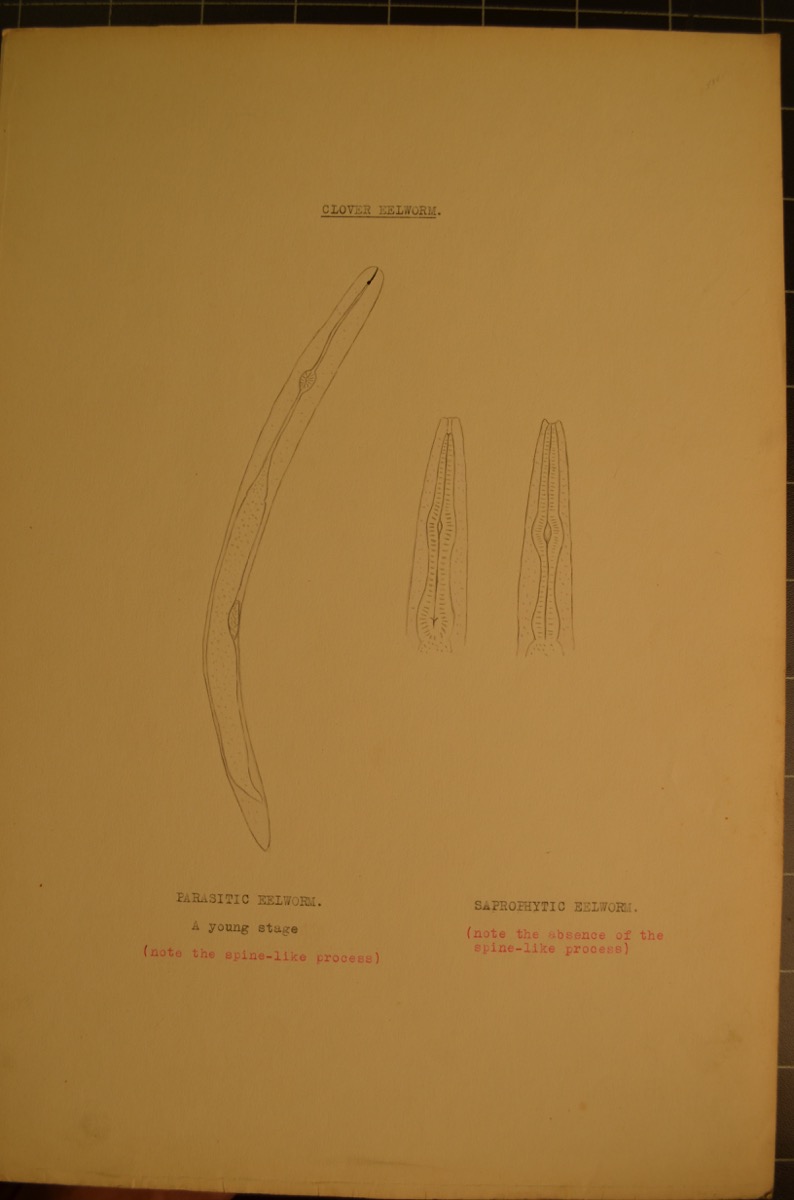
6662.5.w -- "CLOVER EELWORM."
Three painted diagrams showing the two different types of eelworm with directions on how to differentiate them.
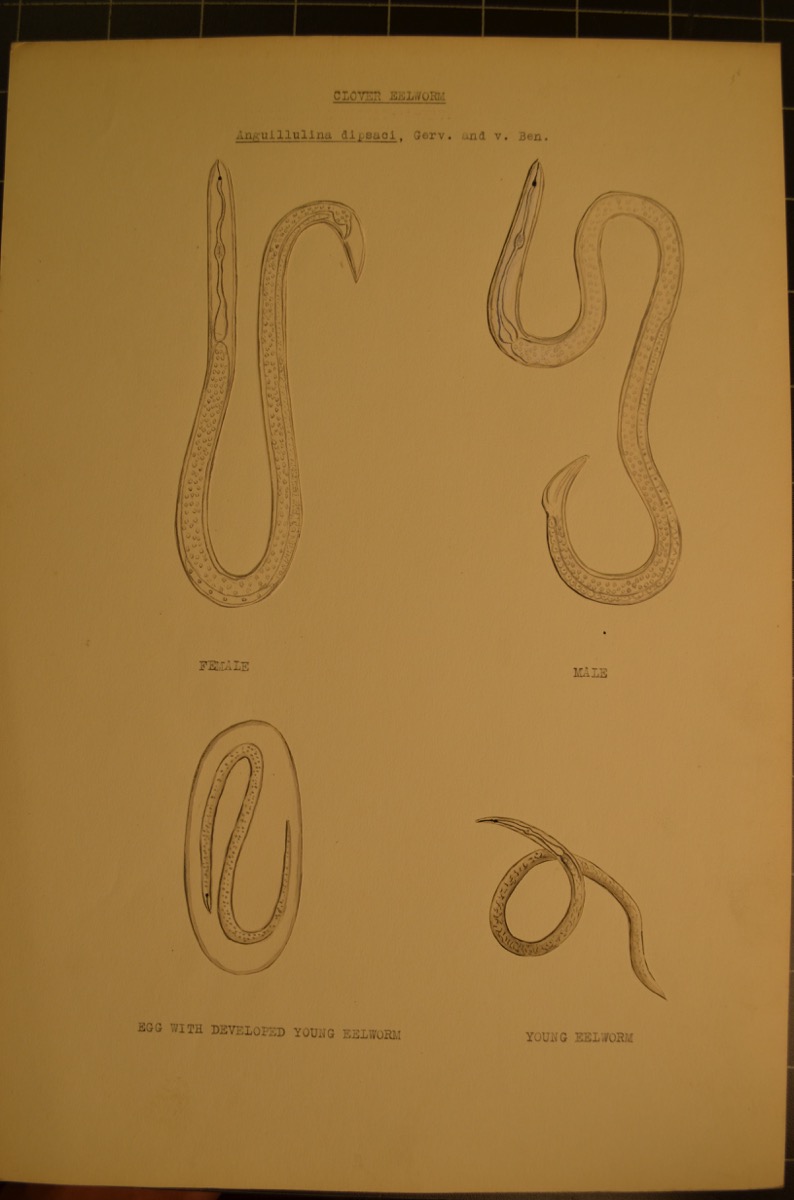
6662.5.x -- "CLOVER EELWORM. Anguillulina dispaci Gerv. and v. Ben."
Four watercolour paintings showing various types of eelworm. They are labelled, "FEMALE," "MALE," "EGG WITH DEVELOPED YOUNG EELWORM" and "YOUNG EELWORM."
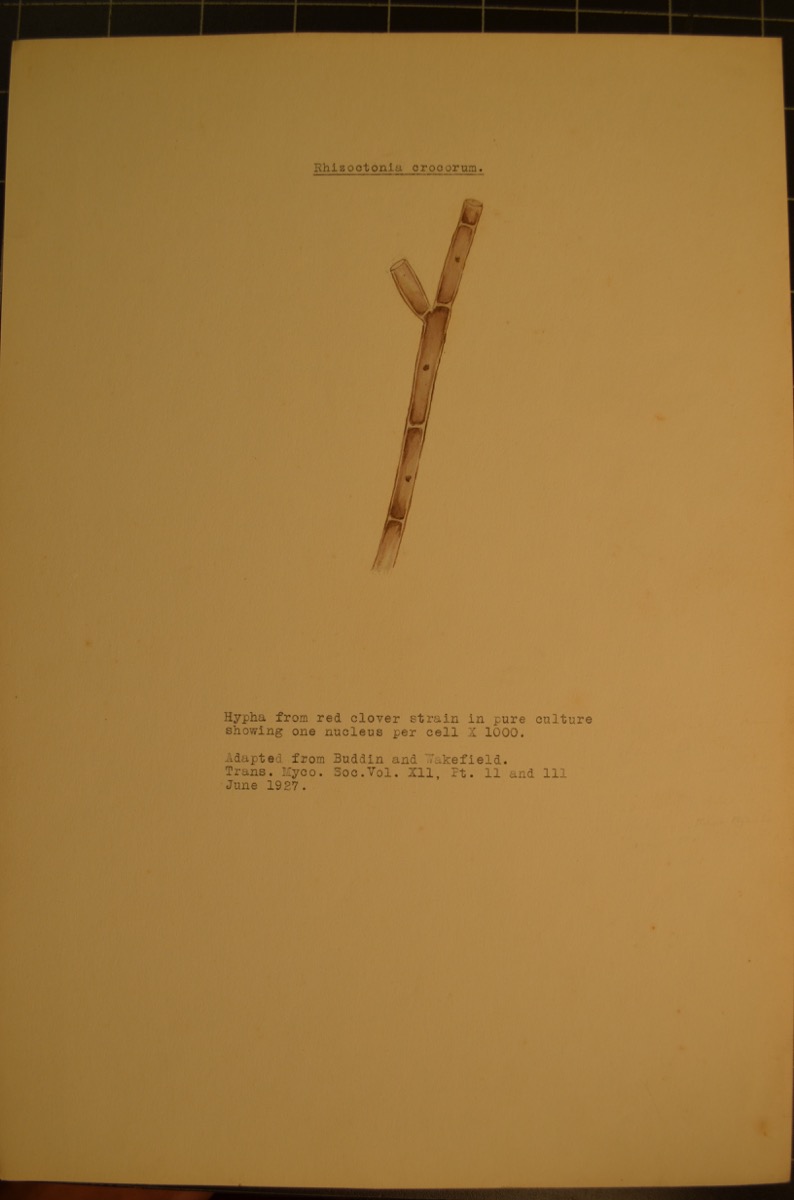
6662.5.y -- "Rhizoctonia crocorum"
A watercolour painting of a red clover strain in pure culture, magnified x1000, adapted from Buddin and Wakefield, Transactions of the Mycological Society (1927).
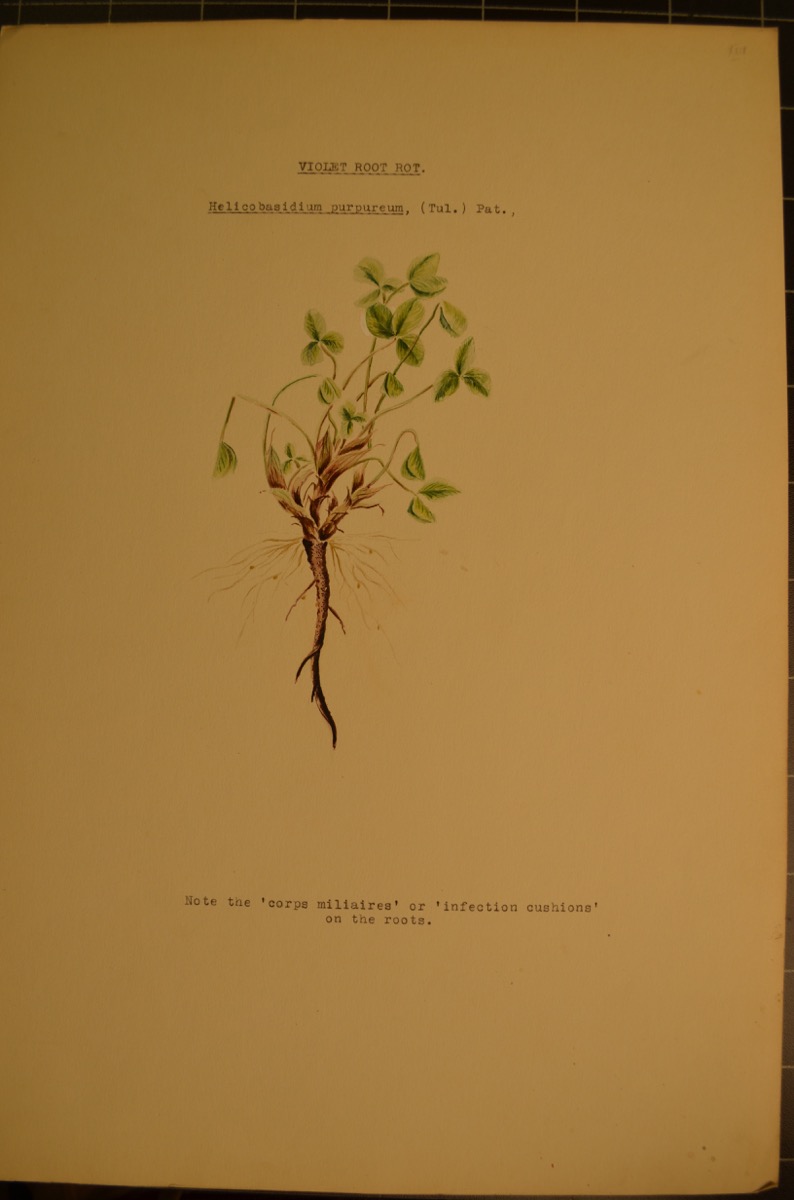
6662.5.z -- "VIOLET ROOT ROT. Helicobasidium purpureum, (Tul.) Pat.,"
A watercolour painting of an infected clover plant, with directions to note the "corps millaires" on the roots of the plant.
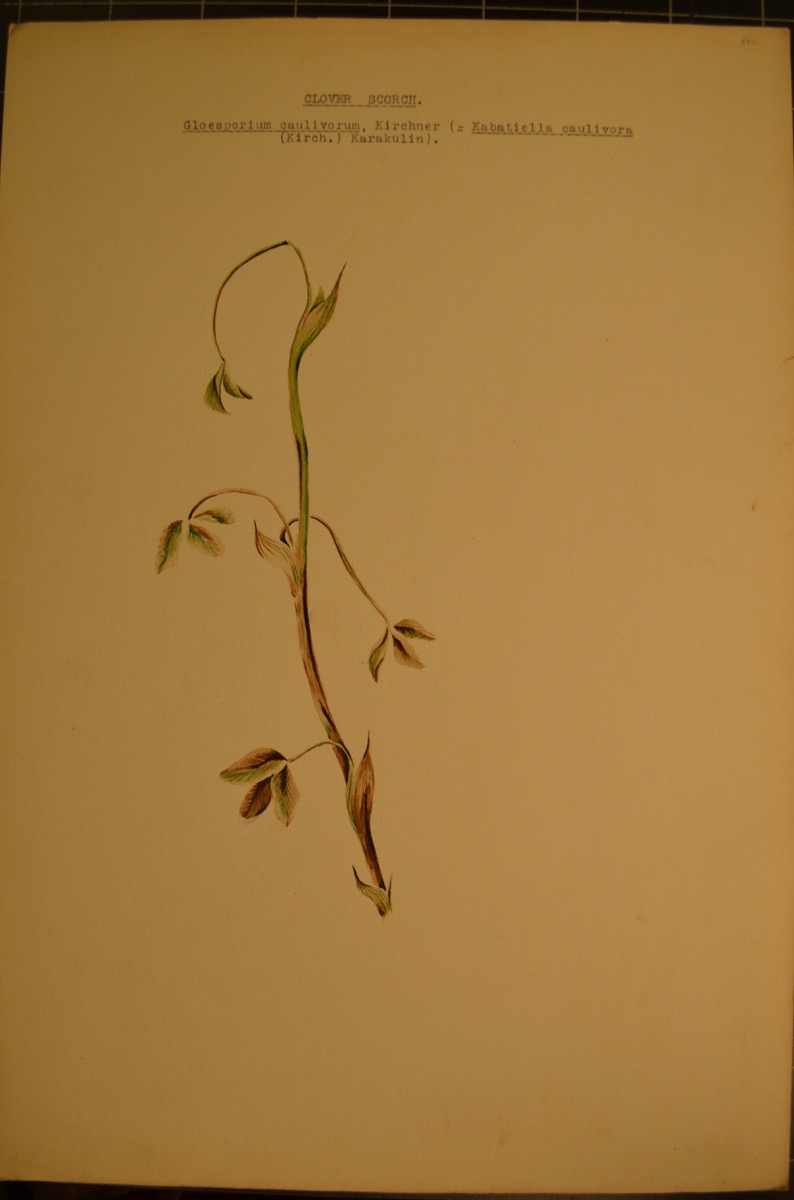
6662.5.aa -- "CLOVER SCORCH. Gloesporium caulivorum, Kirchner (=Kabatiella caulivora (Kirch.) Karakulin).
A watercolour painting of a scorched clover plant.
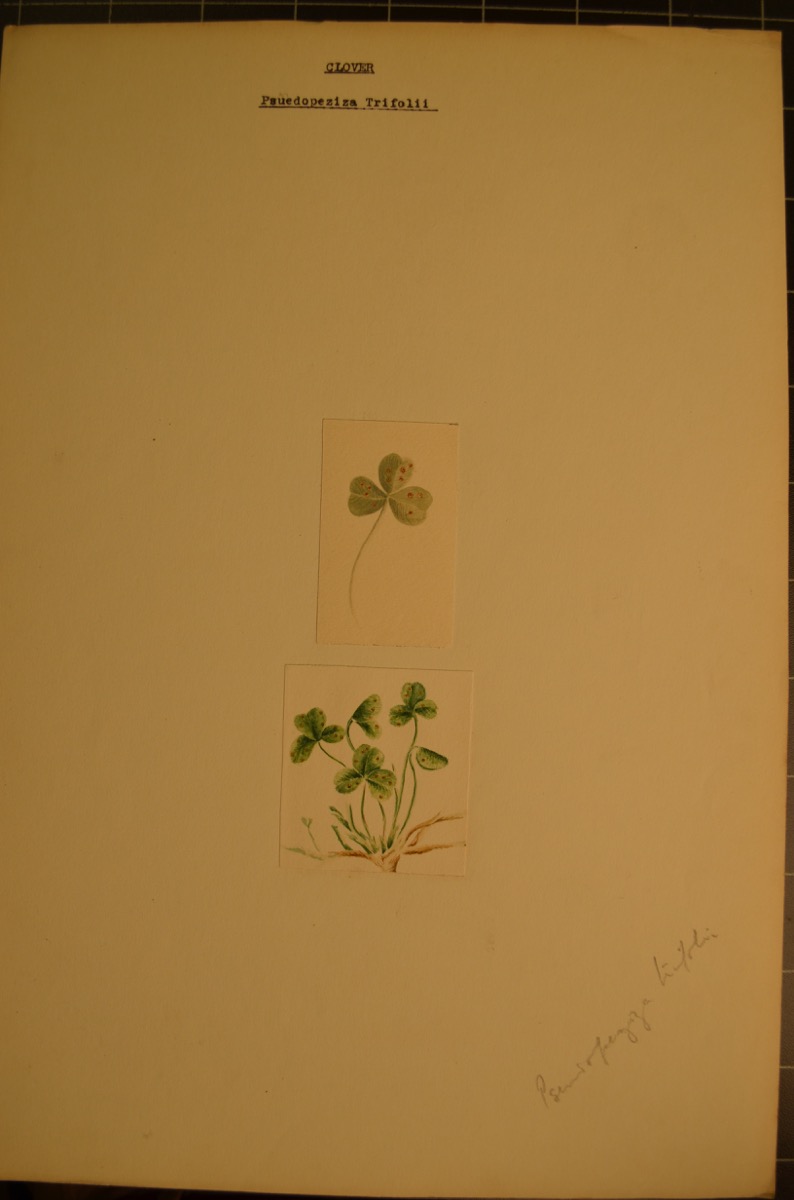
6662.5.bb -- "CLOVER PSEUDOPEZIZA TRIFOLII"
Two watercolour paintings of infected clover have been cut and pasted onto the page.
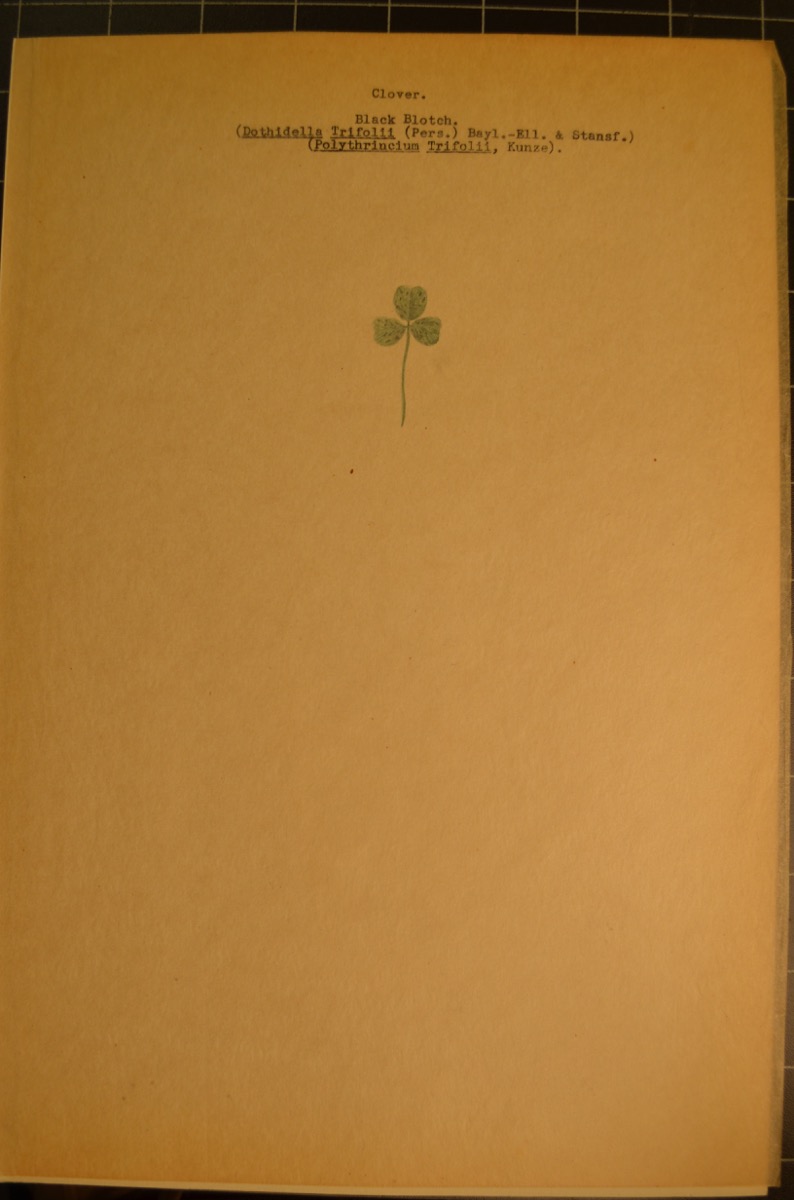
6662.5.cc -- "Clover. Black Blotch. (Dothidella Trifolii (pers.) Bayl.-Ell. & Stransf.) (Polythrinicium Trifolii, Kunze).
A small painting of an infected clover leaf, covered with a sheet of wax paper.
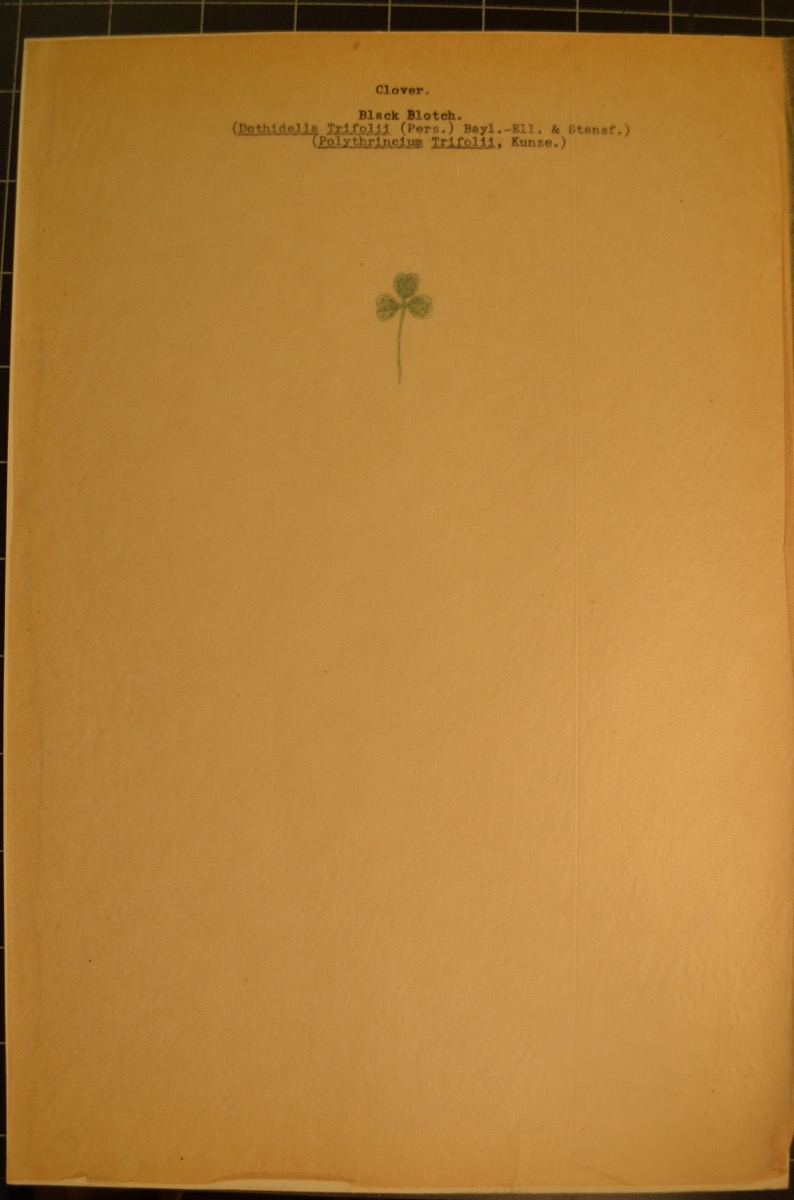
6662.5.dd -- "Clover. Black Blotch. (Dothidella Trifolii (pers.) Bayl.-Ell. & Stransf.) (Polythrinicium Trifolii, Kunze).
A small painting of an infected clover leaf, covered with a sheet of wax paper.
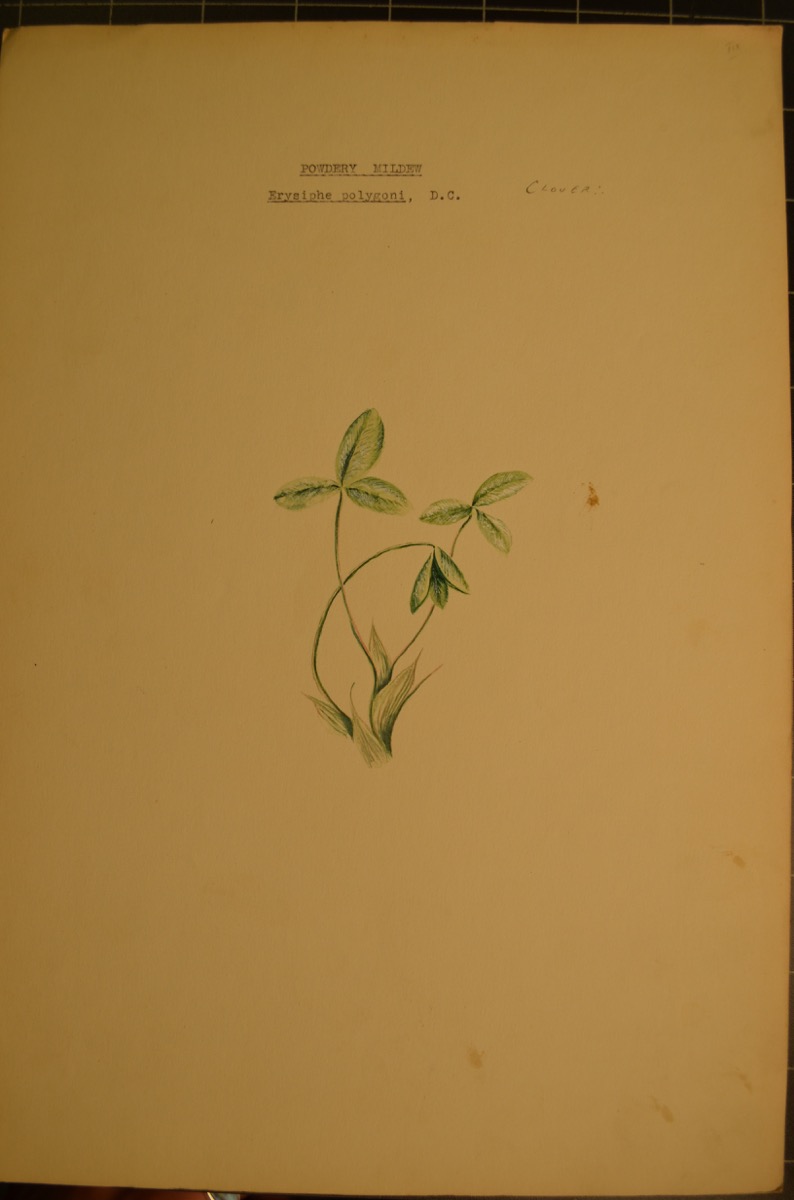
6662.5.ee -- "POWDERY MILDEW Erysiphe polygoni, D. C."
A drawing of an infected clover plant, with "CLOVER" written in pencil above the drawing.
6662.5.ff -- "CLOVER STEM ROT. Sclerotinia trifoliorum, Erkiss"
A watercolour & pen drawing showing the life cycle of the fungus on the clover leaf.
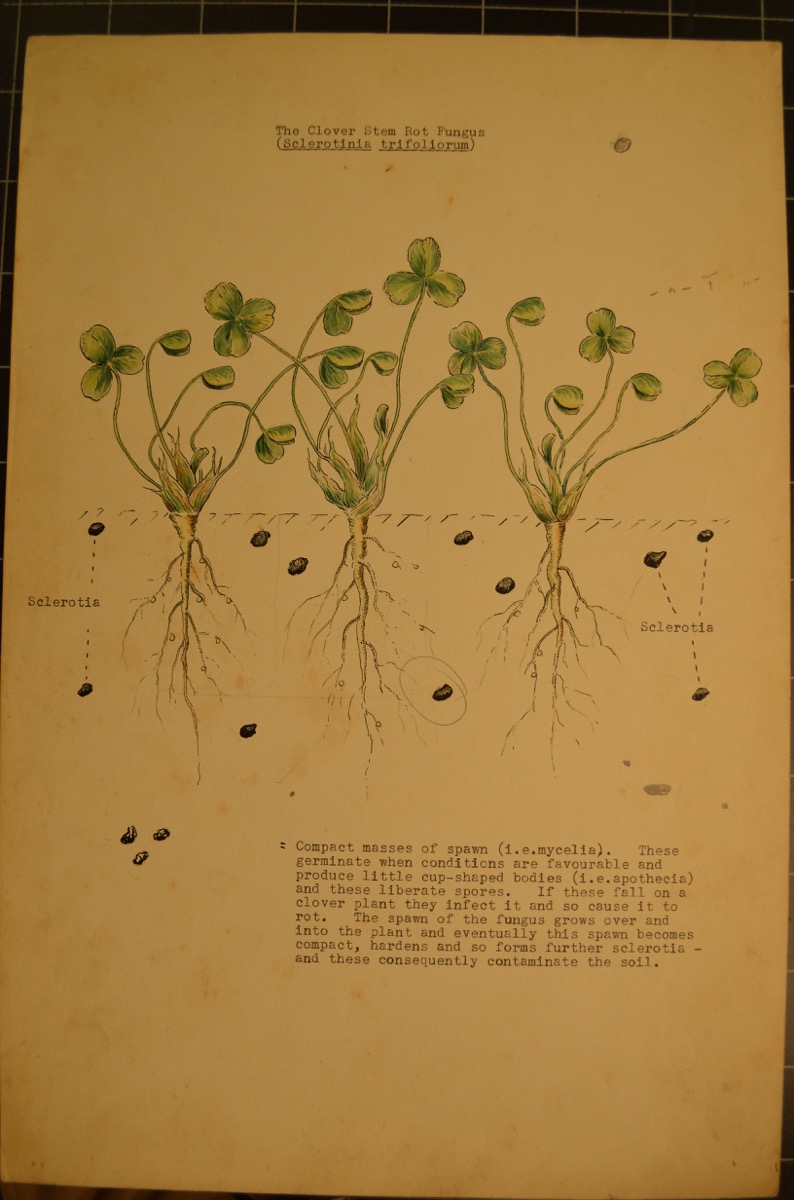
6662.5.gg -- "The Clover Stem Rot Fungus (Sclerotinia trifoliorum)"
A half-page diagram in pen and watecolour illustrating clover plants, and how soil is infected with the sclerotinia. The typed notes describe how the fungus is spread from soil to plant, and back again.
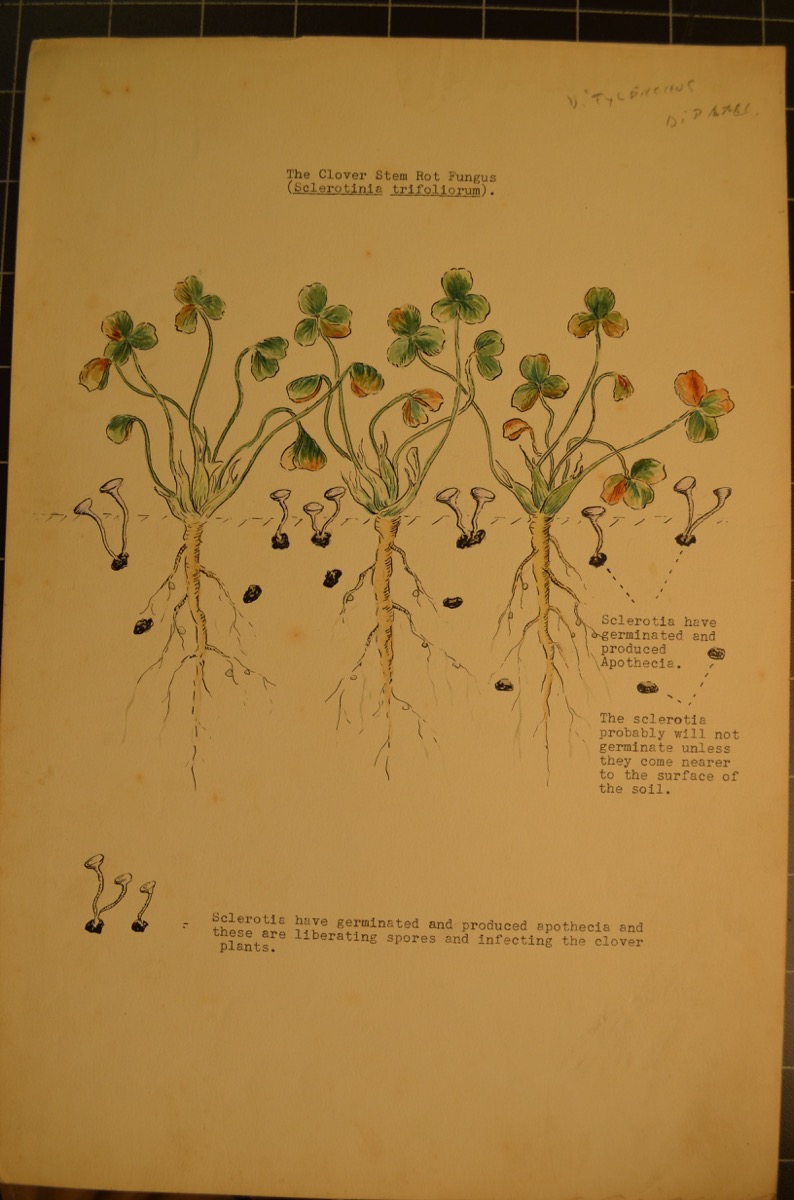
6662.5.hh -- "The Clover Stem Rot Fungus (Sclerotinia trifoliorum)"
A half-page diagram in pen and watecolour illustrating clover plants, and how soil is infected with the sclerotinia. The typed notes describe how the fungus is spread from soil to plant, and back again.
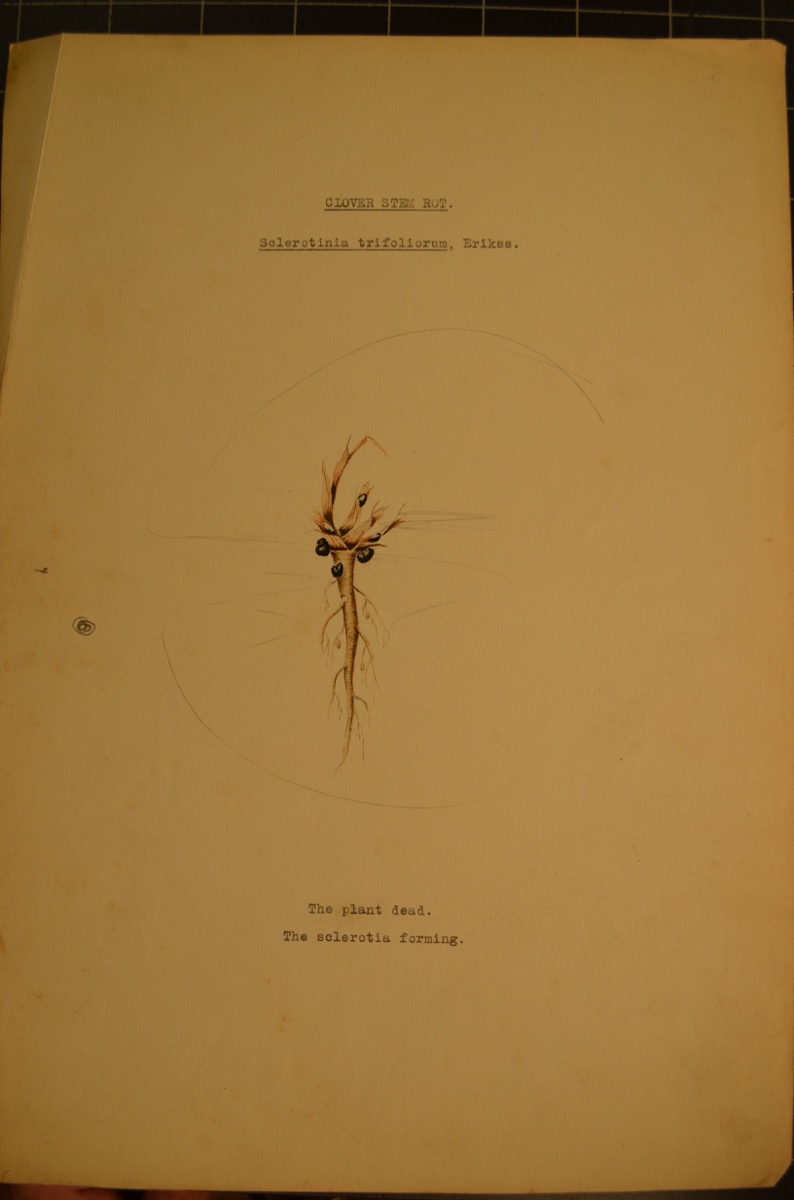
6662.5.ii -- "CLOVER STEM ROT. Sclerotinia trifoliorum, Erkiss"
A watercolour painting of a dead clover plant with the scleirotia forming on it.
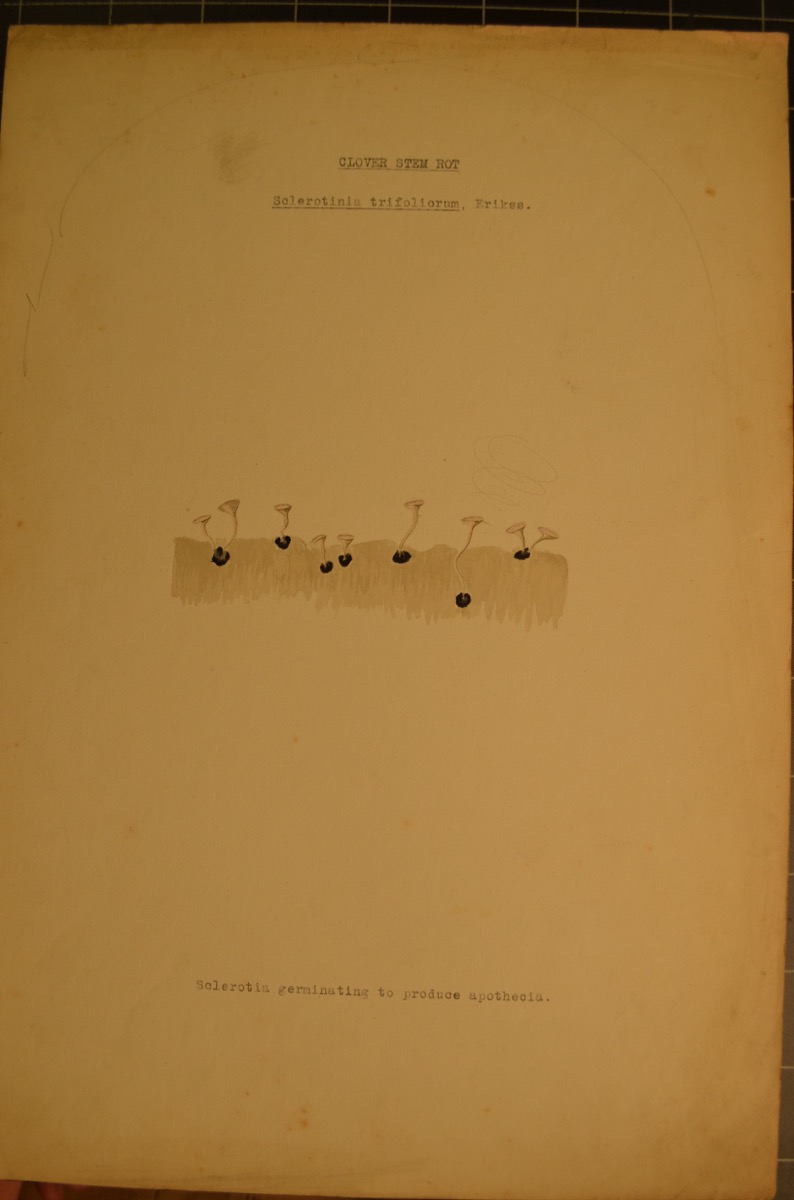
6662.5.jj -- "CLOVER STEM ROT. Sclerotinia trifoliorum, Erkiss"
A watercolour painting showing several sclerotia germinating.
6662.5.kk -- "CLOVER STEM ROT. Sclerotinia trifoliorum, Erkiss"
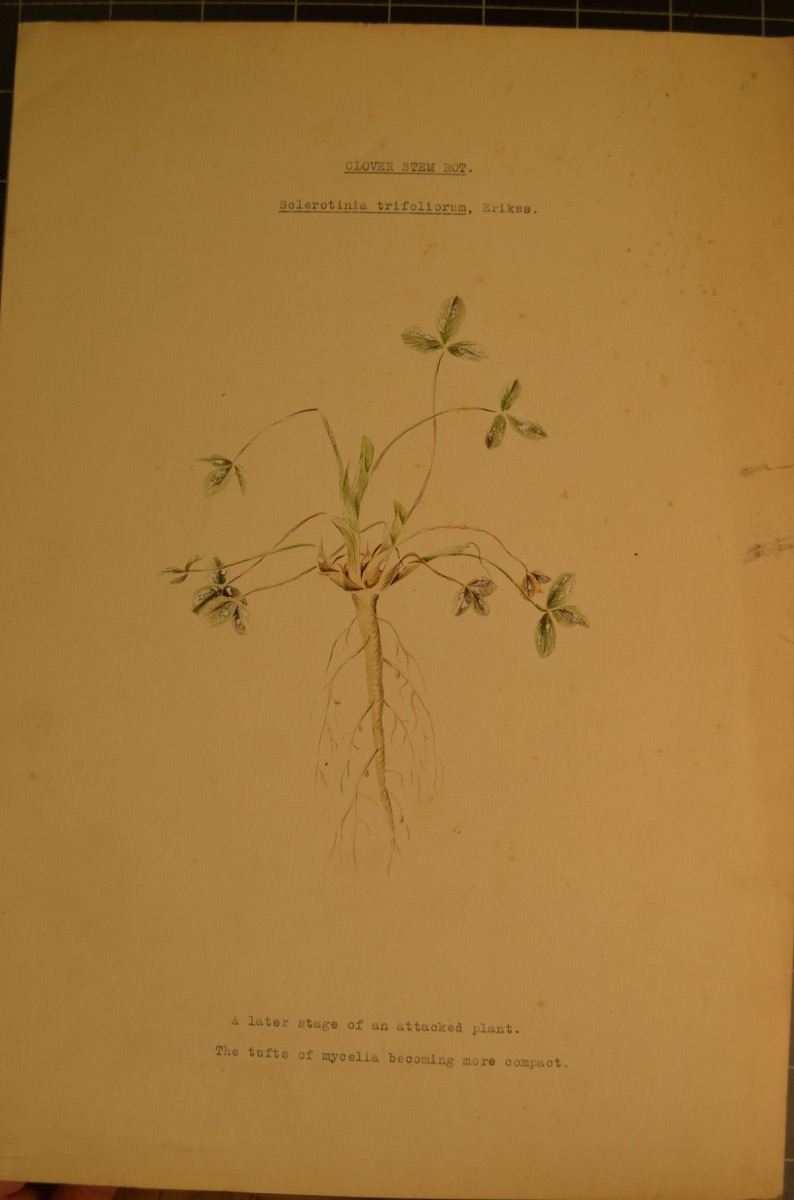
A watercolour painting of a severely affected plant. The label points to the progression of the disease.
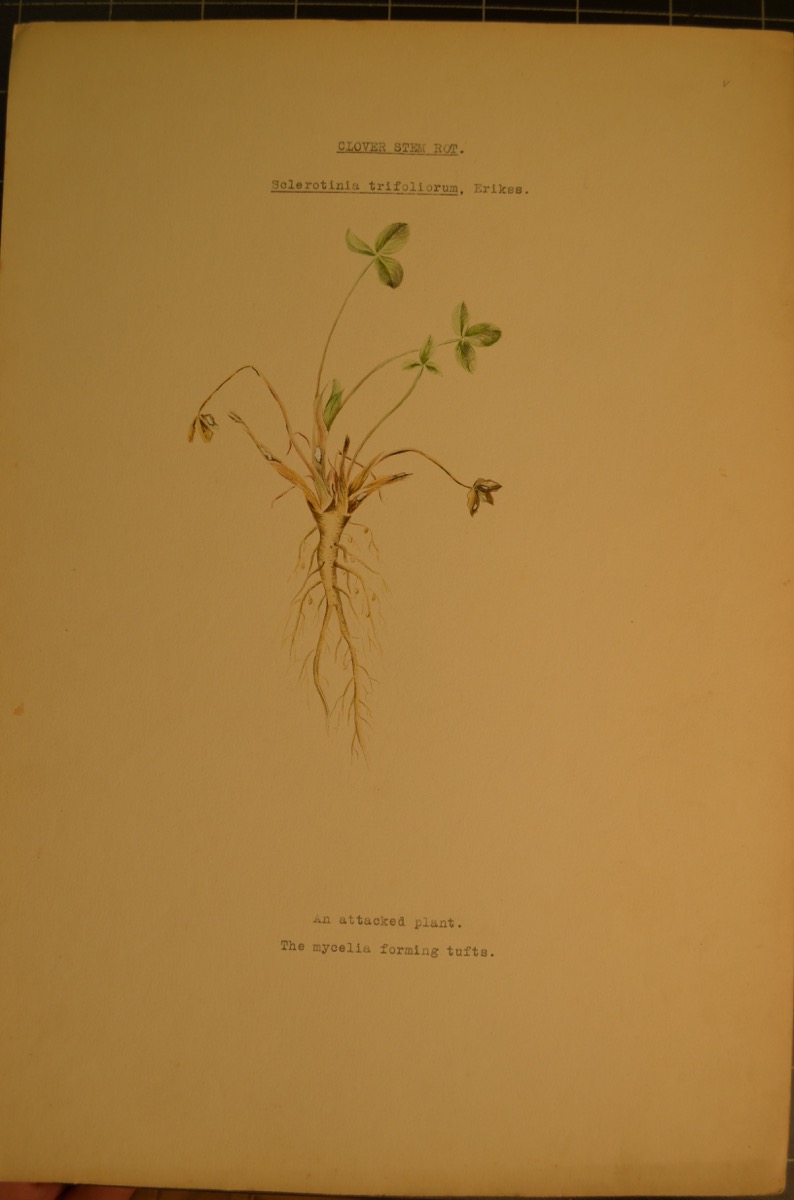
6662.5.ll -- "CLOVER STEM ROT. Sclerotinia trifoliorum, Erkiss"
A watercolour painting of an attacked plant. The label points to the progression of the disease.
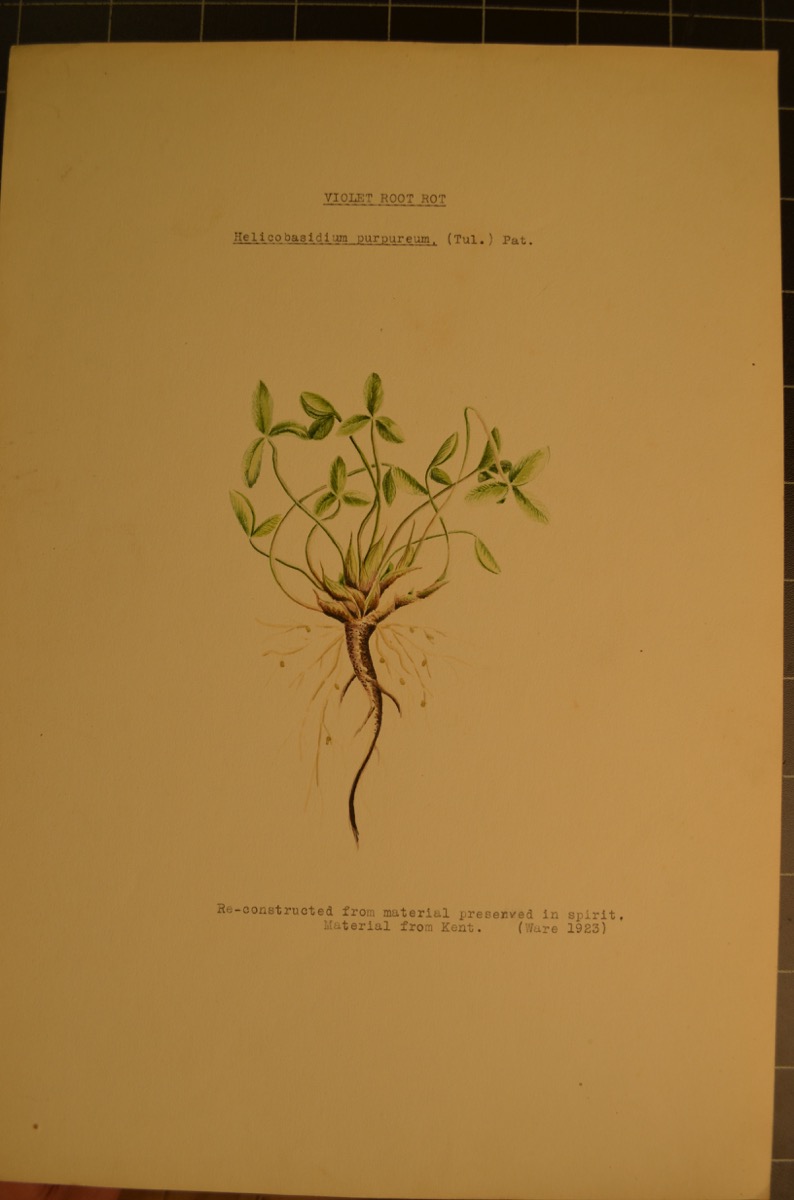
6662.5.mm -- "VIOLET ROOT ROT. Helicobasidium purpureum, (Tul.) Pat.,"
A watercolour painting of an infected clover plant. The label indicates that the drawing is done from re-constructed material preserved in spirit from Kent. Cites Ware 1923.
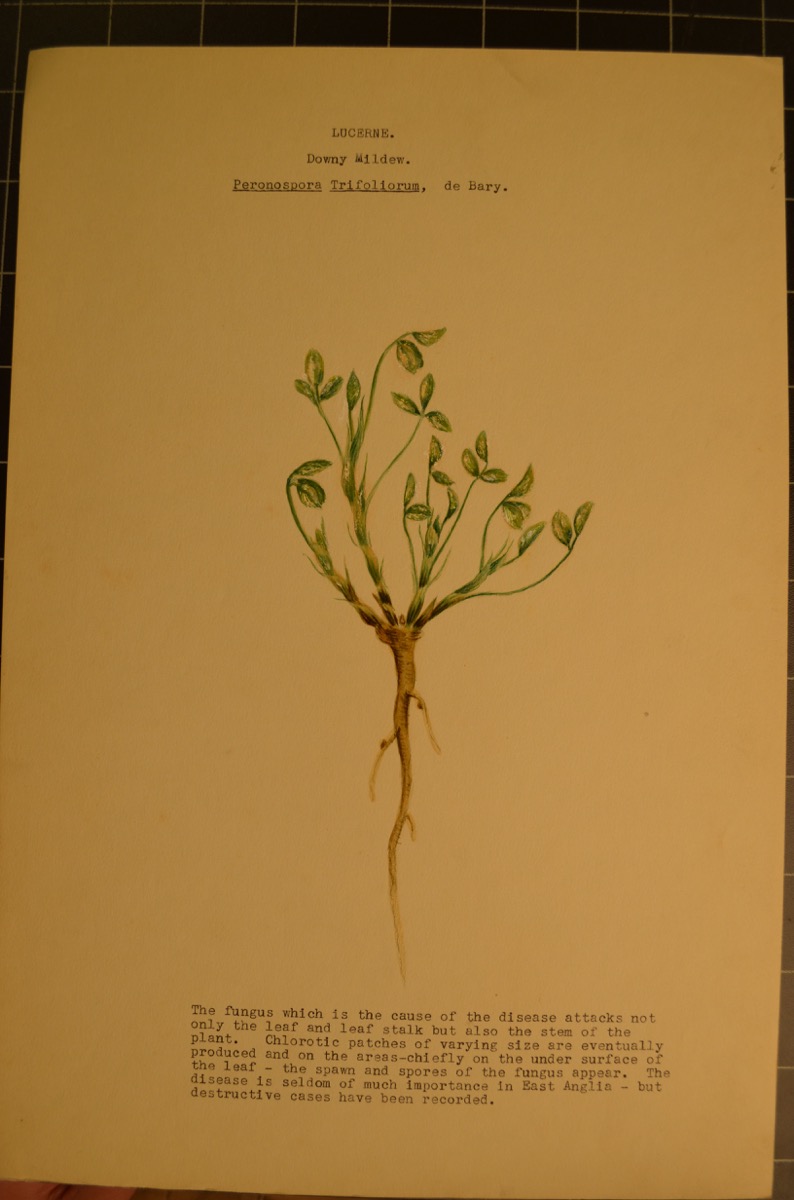
6662.5.nn -- "LUCERNE. Downy Mildew. Peronospora trifoliorum, de Bary."
A watercolour painting of a lucerne plant. The typed notes describe the disease and its prevalence in East Anglia.
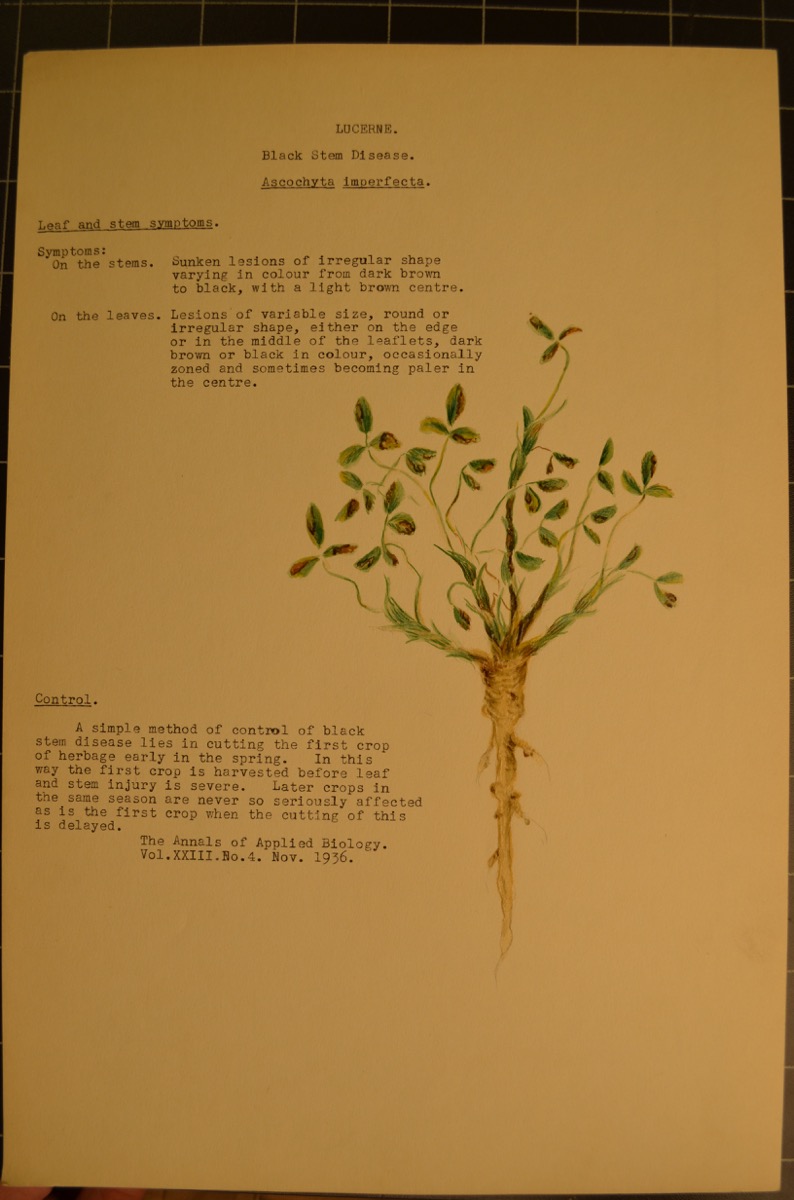
6662.5.oo -- "LUCERNE. Black Stem Disease. Ascocytha Imperfecta."
A watercolour painting of an infected lucerne plant. The typed notes describe stem & leaf symptoms and methods of control.
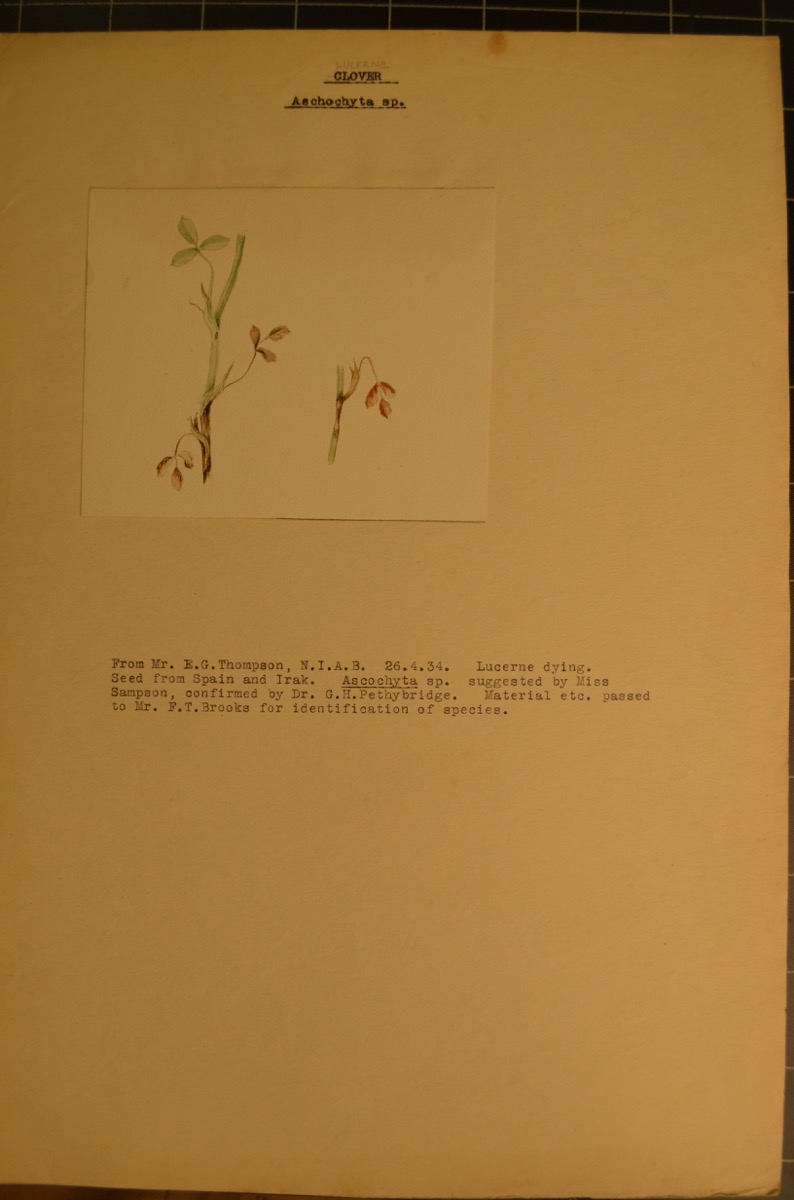
6662.5.pp -- "CLOVER. aschochytha sp."
Two watercolour paintings of infected plants have been cut and pasted on the page. The farm of origin and some information about the specimen is listed. Notes that the specimen wasp passed to Mr. Brooks for identification of species.
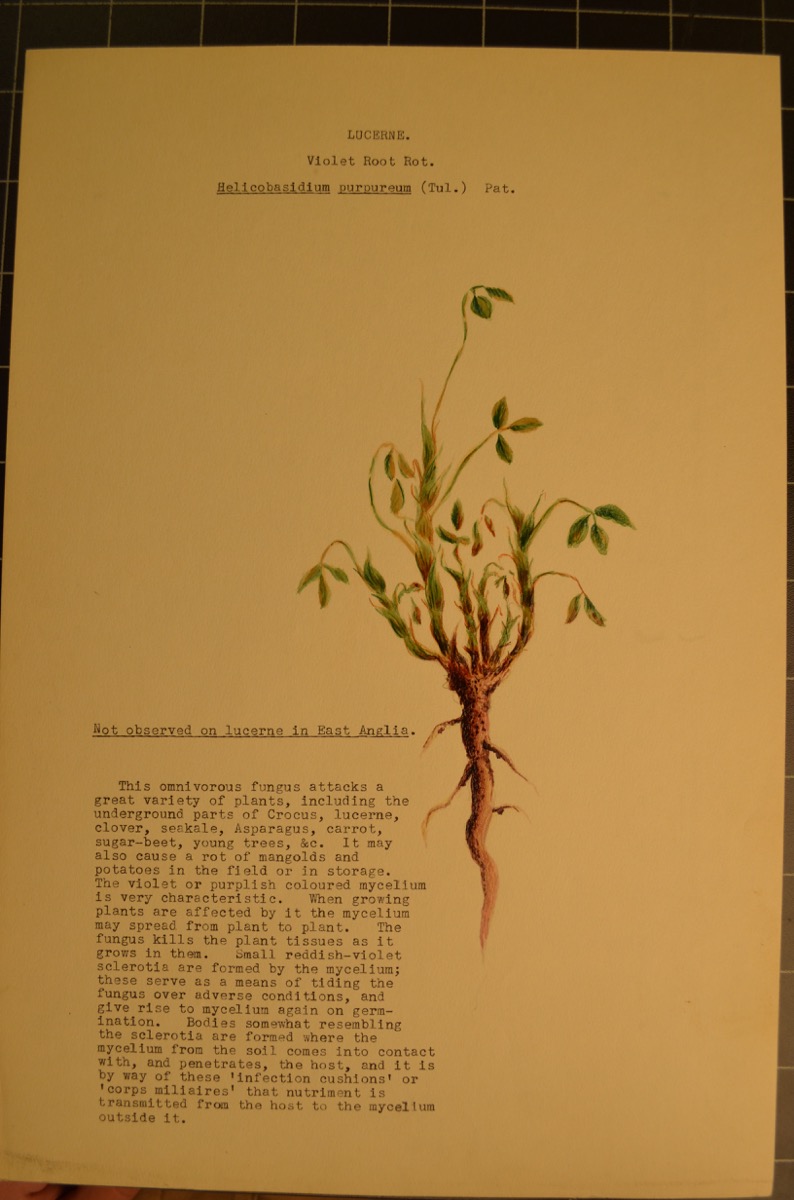
6662.5.qq -- "LUCERNE. VIOLET ROOT ROT. Helicobasidium purpureum, (Tul.) Pat.,"
A watercolour painting of an infected lucerne plant. There is typed information about the progression of the fungus and its other hosts.
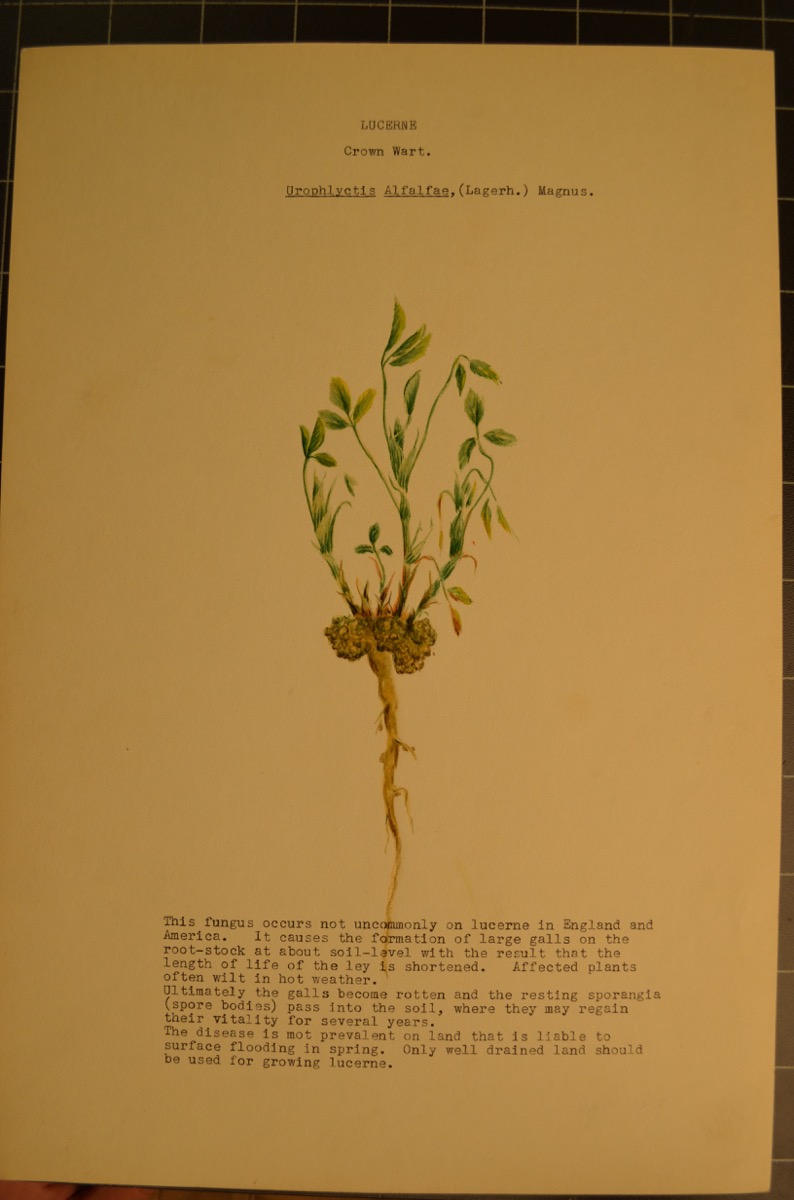
6662.5.rr -- "LUCERNE Crown Wart. Urophlyctis Alfalfae, (Lagerh.) magnus."
A watercolur painting of an infected lucerne plant with a description of the fungus and directions for controlling it.
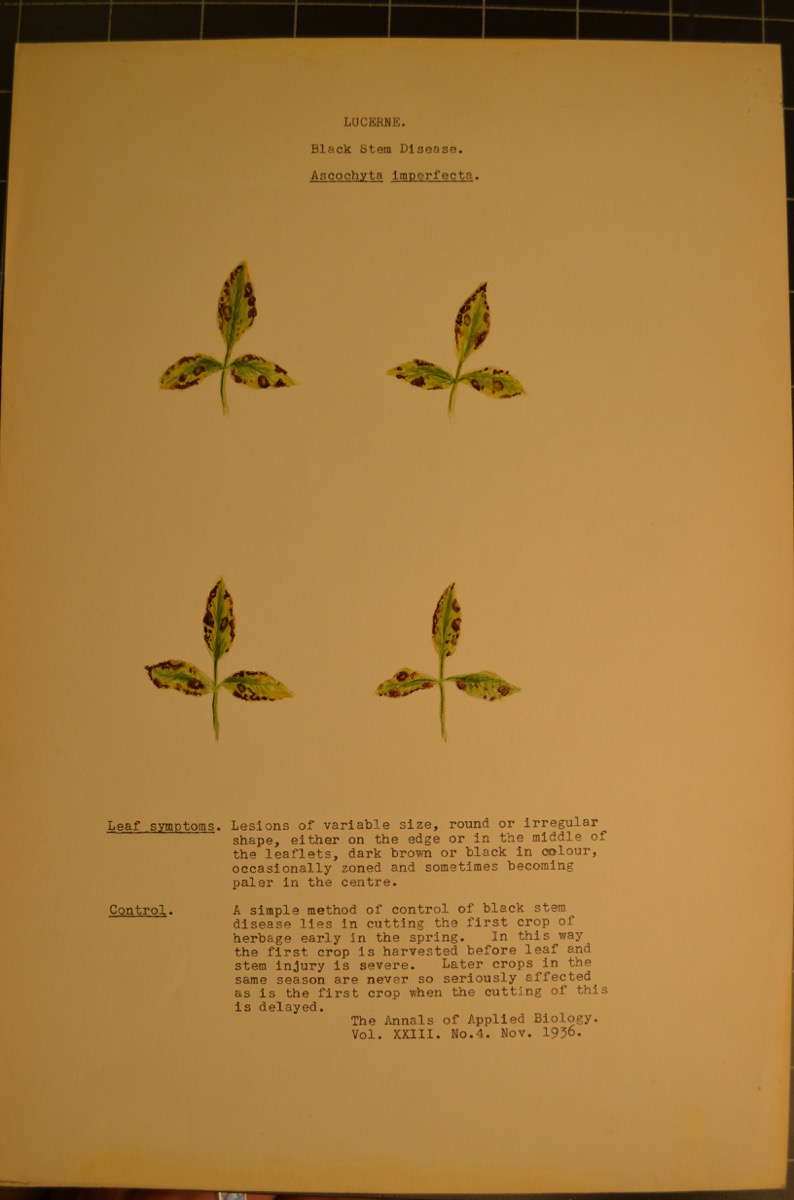
6662.5.ss -- "LUCERNE. Black Stem Disease. Ascocytha Imperfecta."
Four watercolour paintings of infected lucerne leaves. The typed notes describe stem & leaf symptoms and methods of control.
References
Events
Description
Dr. W.A.R. Dillon Weston spent all of his professional life in Cambridge. After obtaining his degree in Natural Sciences at St. Catharine’s College, Dr. Dillon Weston gained employment as a mycologist (an expert in the study of fungi) at the Ministry of Agriculture and Fisheries. Ministry Pathologists at that time were stationed at universities, where teaching and supervision of students were included as part of their duties.
During the 1930’s, Dillon Weston produced nearly 1,000 watercolour paintings of plants suffering from a wide variety of afflictions: mostly various fungal infections, but also pest attacks, nutrient deficiencies, and bad farming practices. These drawings were produced in connection with his position at the Ministry, which he described as forming a “link between the farm and the research station.” Farmers would send samples of afflicted crops to the Ministry, and Dillon Weston would diagnose the problem and offer solutions. This work was an example of the emerging school of “New” or “Economic” Botany, in which economically important plant diseases were studied with an eye to increasing crop yields.
Typed notes accompanying the paintings suggest that many of them were depictions of samples received by Dillon Weston at the Ministry, though it is unclear why he made them. Like his glass fungi models, also held by the Whipple (Wh.5826), the paintings may have been a hobby undertaken during bouts of insomnia. Some of the paintings are demonstrative or didactic in nature, and Dillon Weston may have used them in his lectures at the university, which he endeavoured to make “as interesting as possible,” according to a 1952 profile in Varsity, the Cambridge student newspaper.
The paintings demonstrate a careful attention to detail and a desire for accurate representation, which sometimes led Dillon Weston to push up against the limits of flat, two-dimensional representation. For example, he used painted cotton stuffing underneath layers of paper to imitate spores bulging up underneath a scab on an apple tree (Wh.6662.28, Wh.6662.29), and splashes of blue watercolour paint to demonstrate how far fungal spores can be spread by raindrops (6662.10).
12/09/2018
Created by: Matthew Green on 12/09/2018
FM:47327
Images (Click to view full size):