Accession No
6662.11
Brief Description
Folder of 18 paintings/drawings labelled "Onion," no. 11 of 35, by Dr W. A. R. Dillon Weston, English, 1930s
Origin
England; Cambridgeshire
Maker
Dillon Weston, W. A. R.
Class
natural history
Earliest Date
1932
Latest Date
1938
Inscription Date
Material
paper
Dimensions
365mm x 250mm
Special Collection
Dr W. A. R. Dillon Weston Collection
Provenance
Inscription
Many pages have typed notes; see Description Notes.
Description Notes
Folder of 18 paintings/drawings labelled "Onion," no. 11 of 35, by Dr W. A. R. Dillon Weston, English, 1930s
NOTE: all objects have been transferred into archive folders for conservation purposes; original folders were photographed (see Images) and are stored separately.
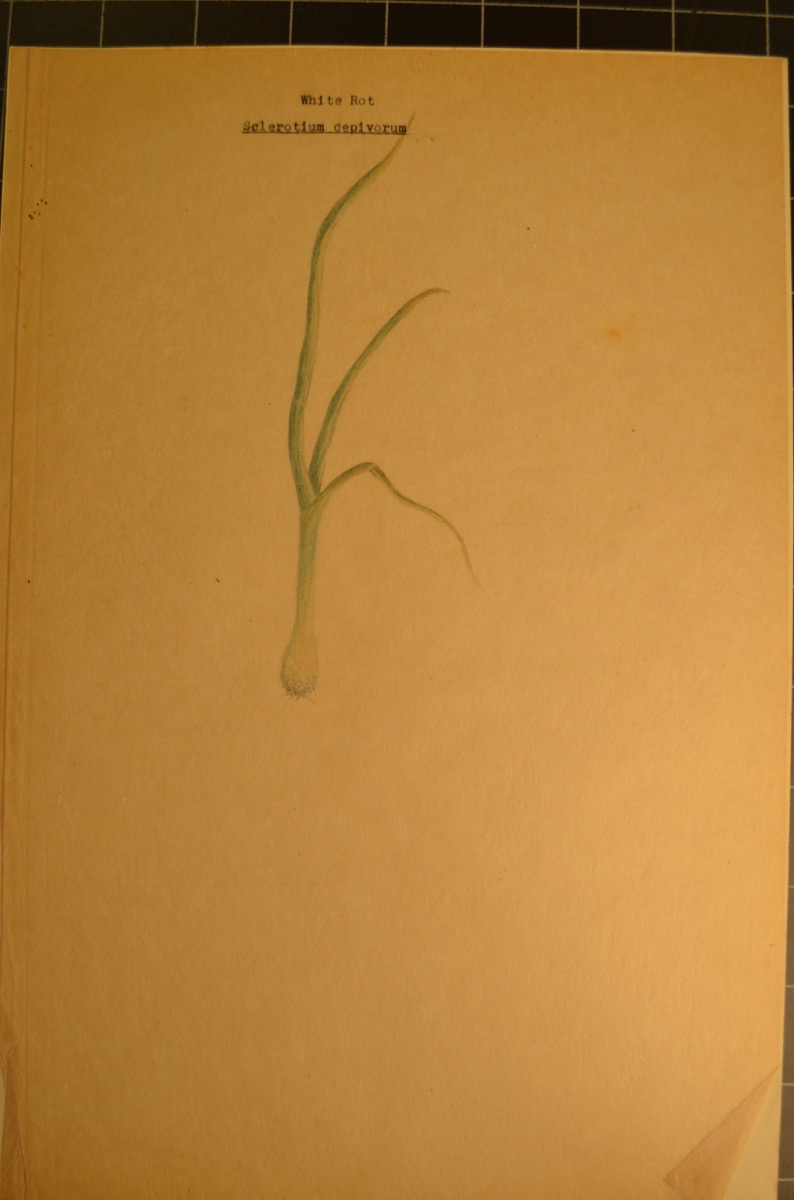
6662.11.a -- "White Rot Sclerotium cepivorum"
A watercolour painting of an infected onion.
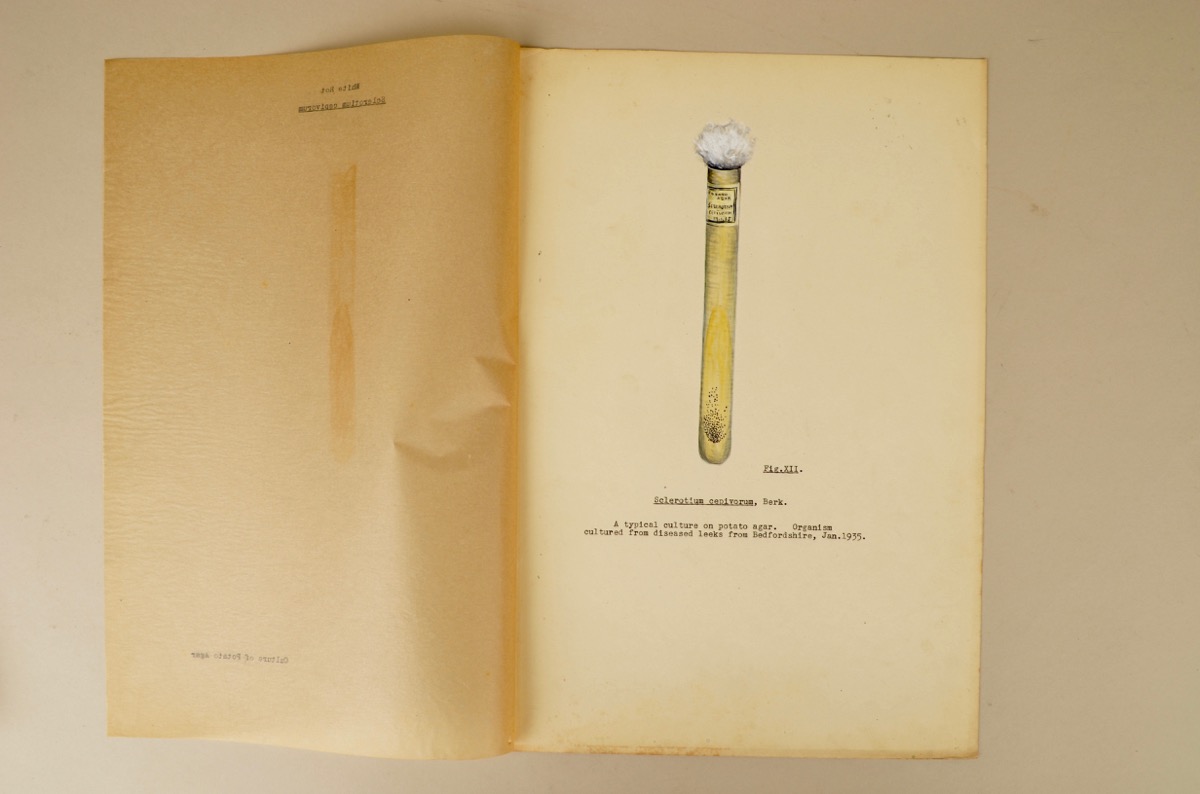
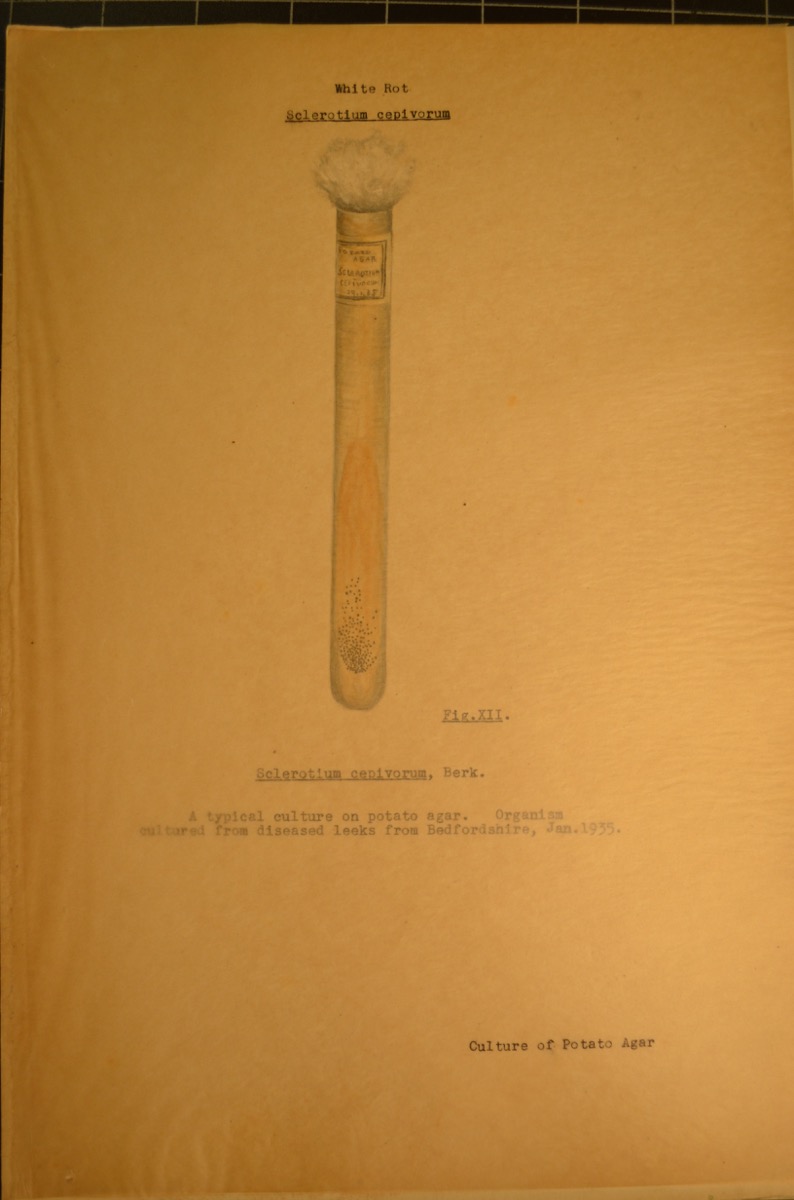
6662.11.b -- "White Rot Sclerotium cepivorum"
A watercolour painting of a test tube with a culture of the fungus. The typed notes indicate the date , January 1935.
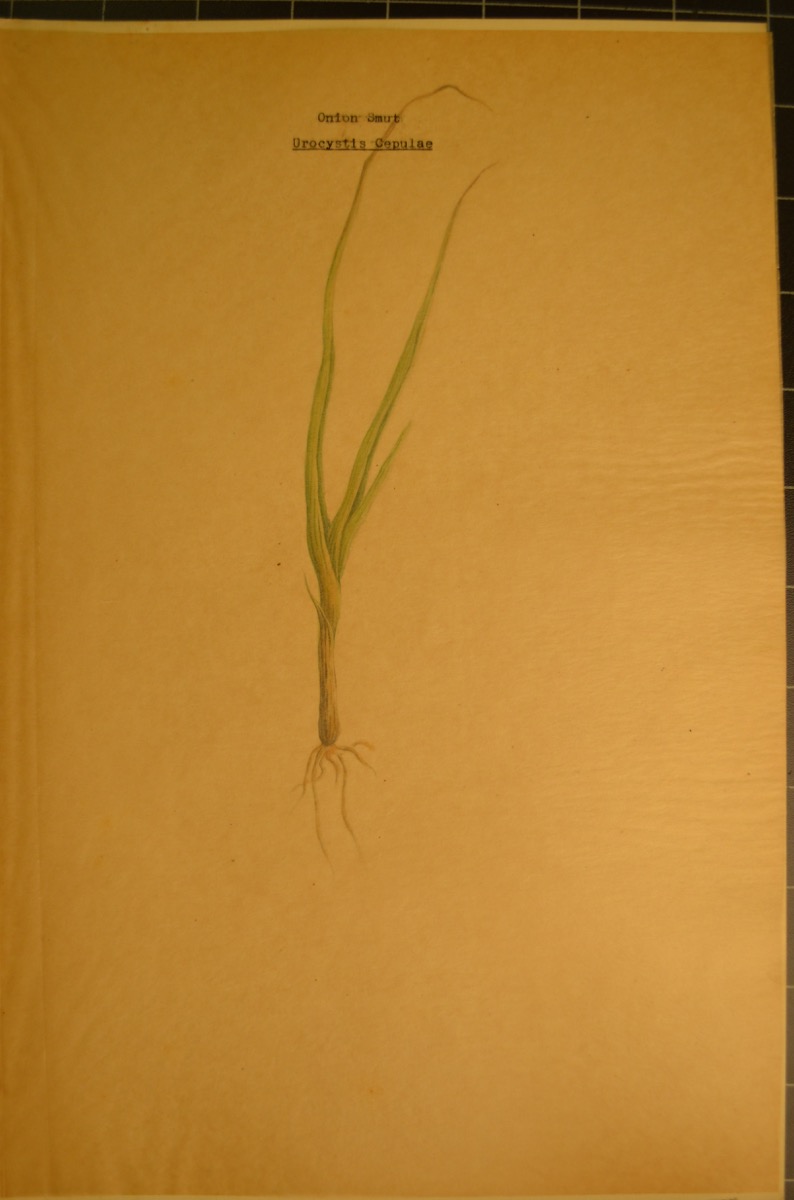
6662.11.c -- "Onion Smut Urocystis capulae"
A watercolour painting of an infected onion.
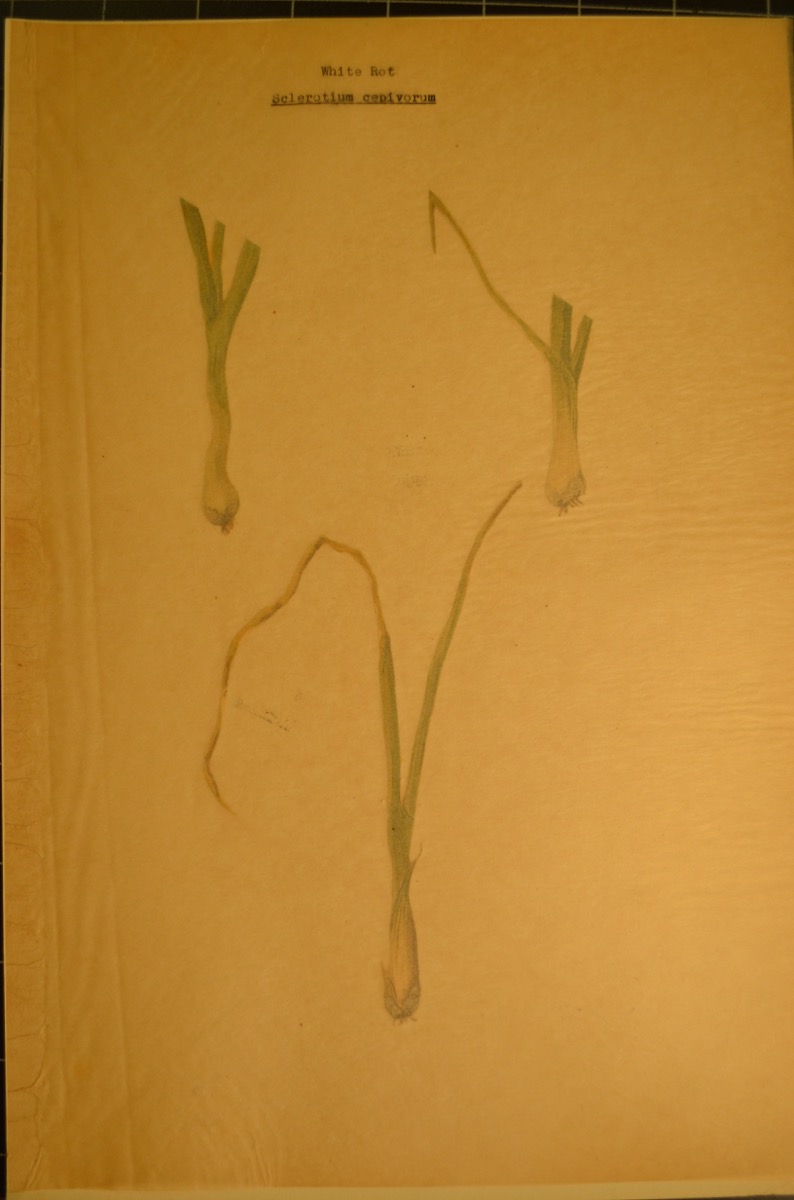
6662.11.d -- "White Rot Sclerotium cepivorum"
Three watercolour paintings of an infected onion.
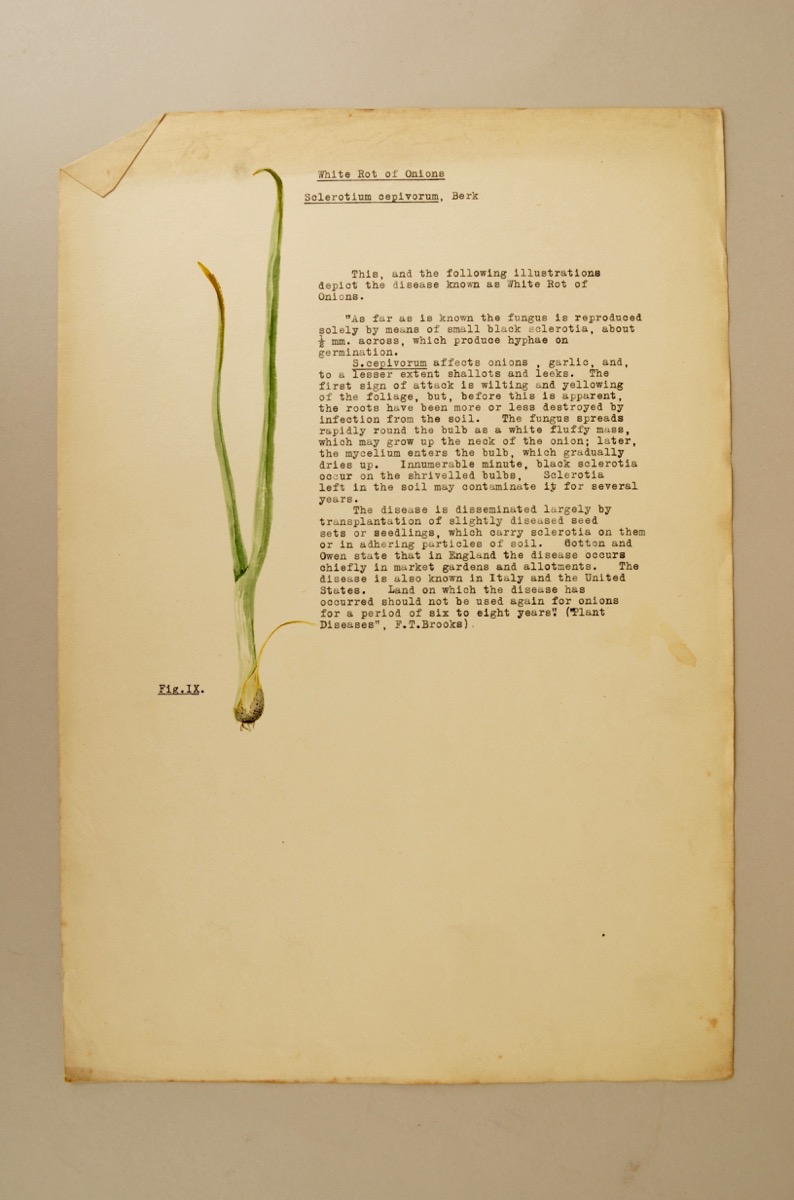
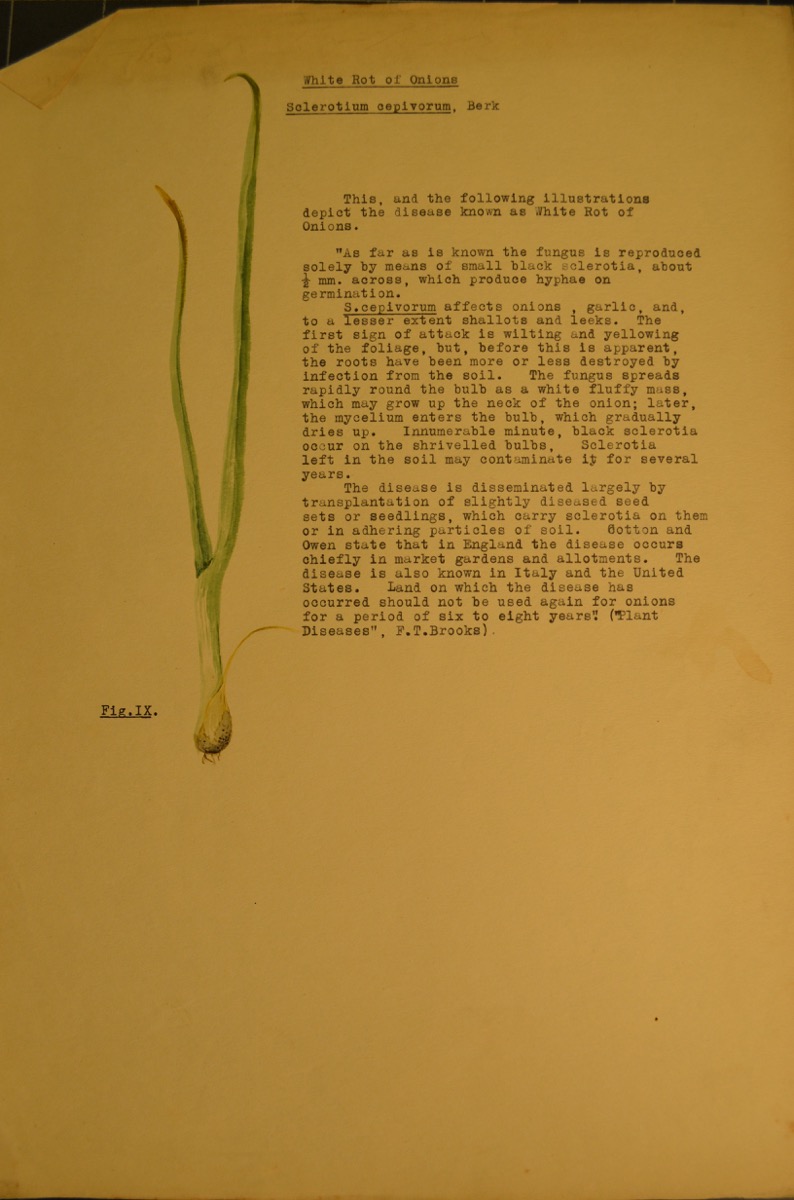
6662.11.e -- "White Rot Sclerotium cepivorum"
A watercolour painting of an infected onion, with typed notes describing the disease, its hosts, progression and distribution.
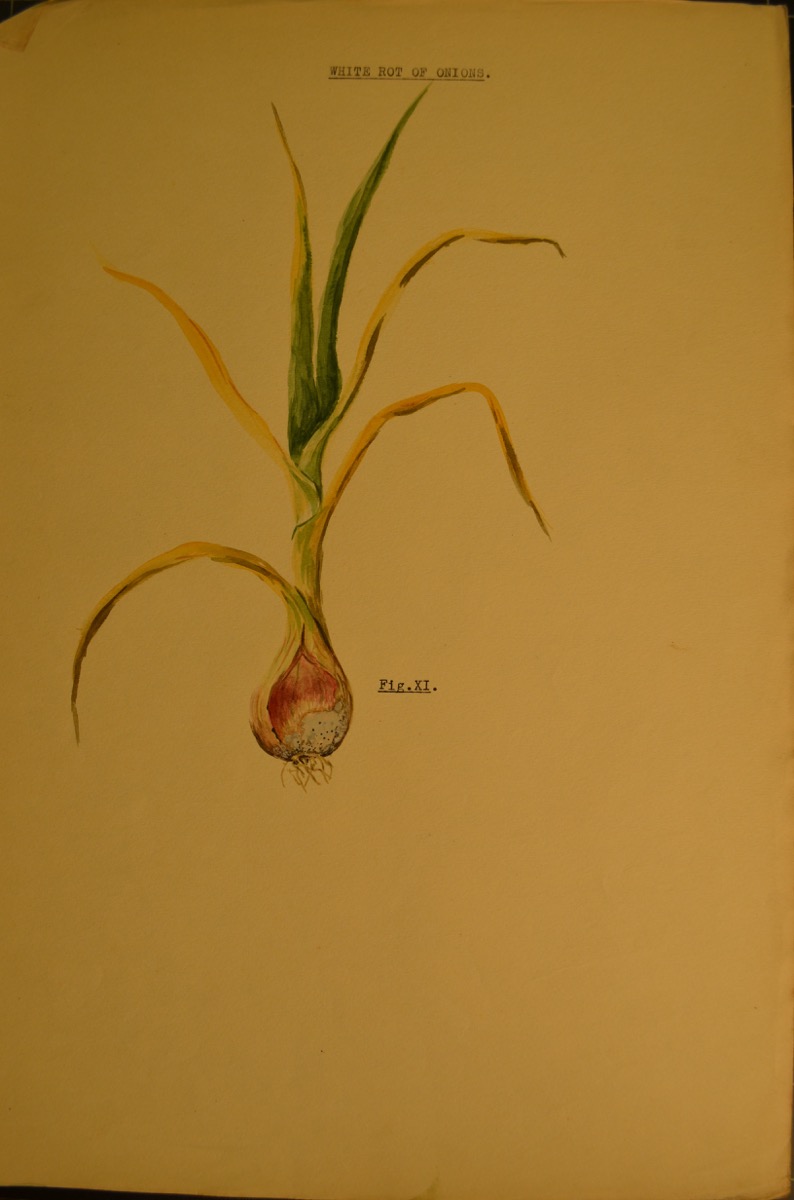
6662.11.f -- "WHITE ROT OF ONIONS."
A watercolour painting of an infected onion, labelled Fig. XI.
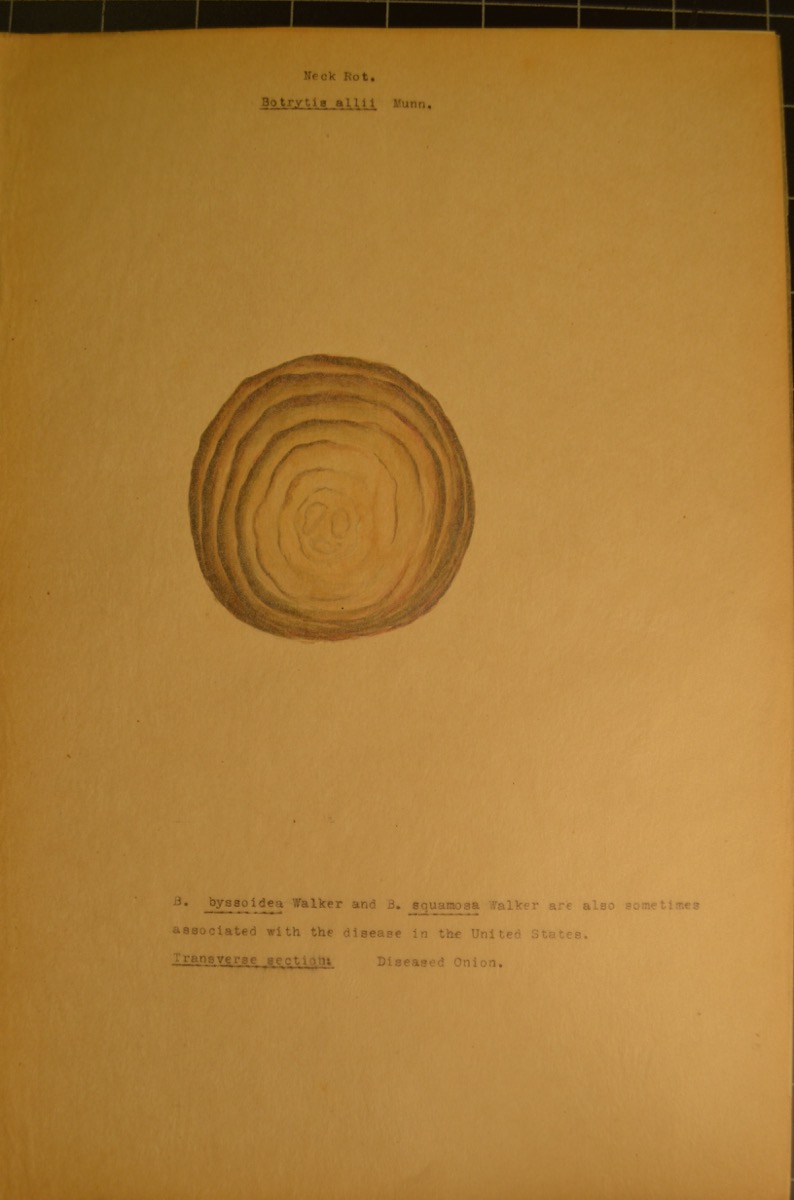
6662.11.g -- "Neck Rot. Botryis allii Munn."
A watercolour painting of a section of a diseased onion.
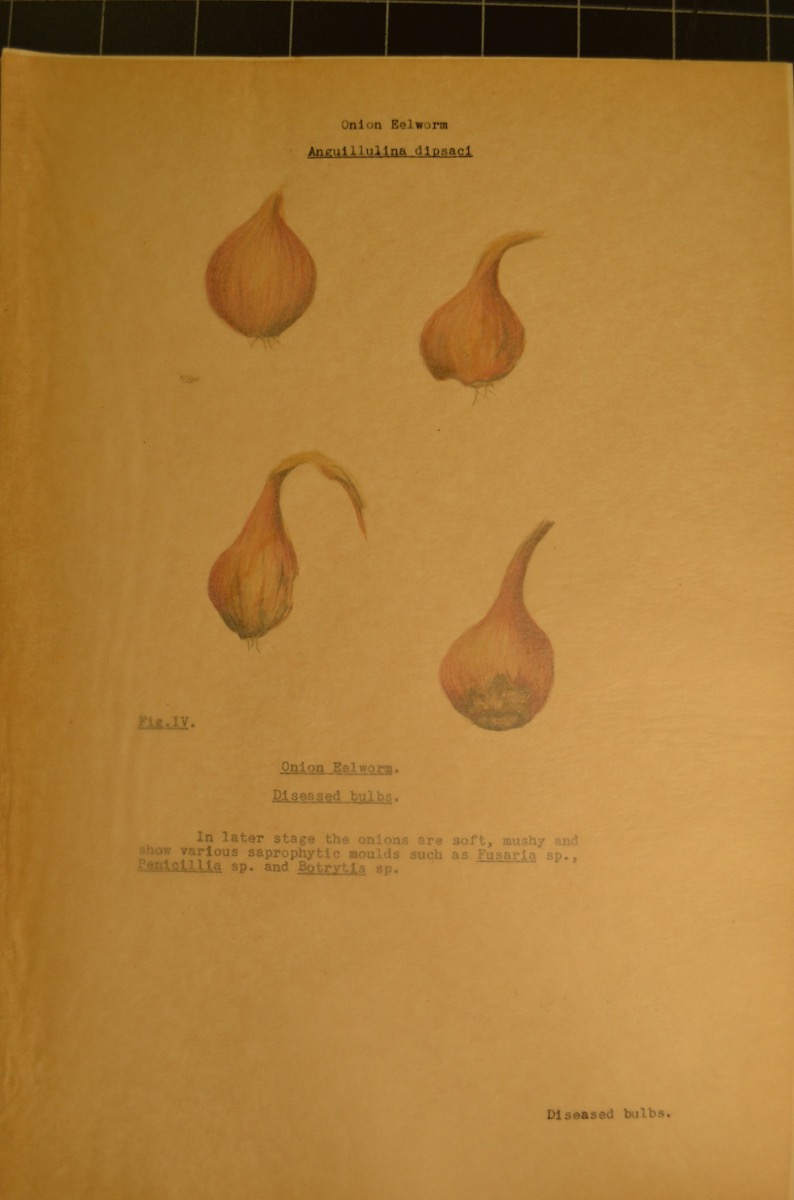
6662.11.h -- "Onion Eelworm Anguillulina dispaci"
Four watercolour paintings of diseased onion bulbs. A short typed description of the bulbs.
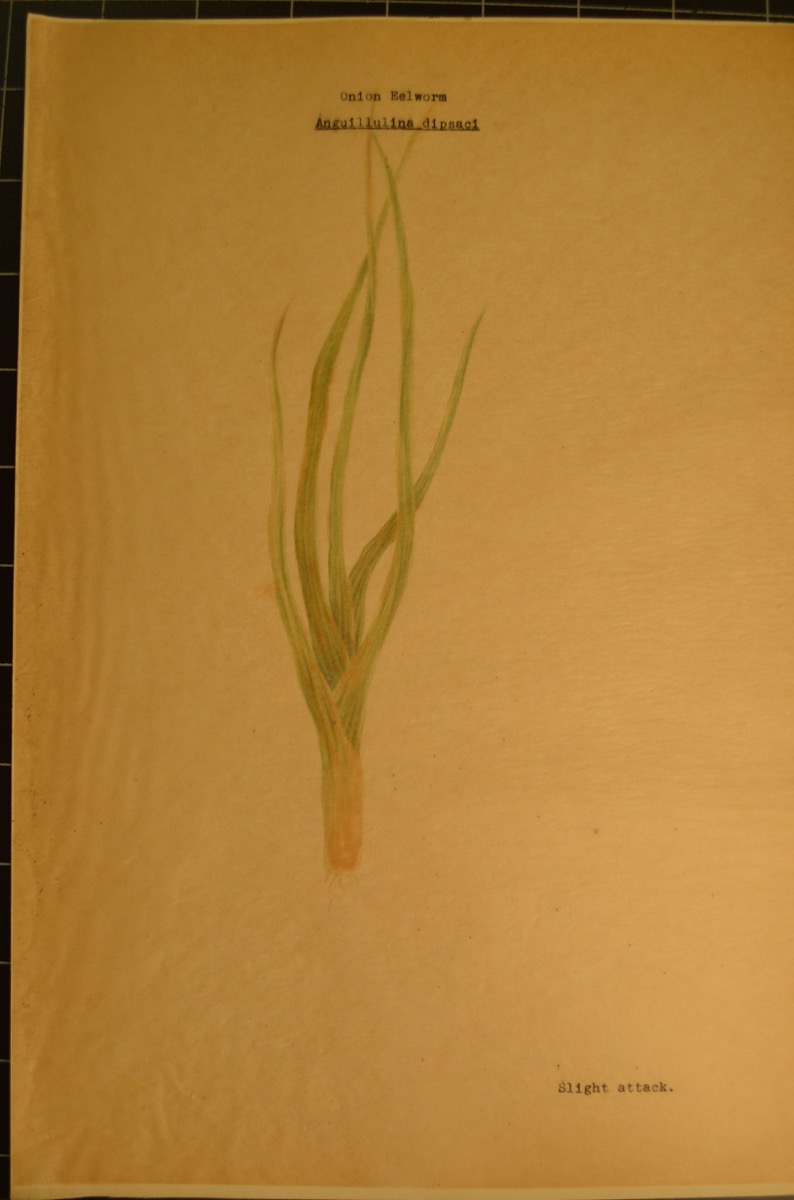
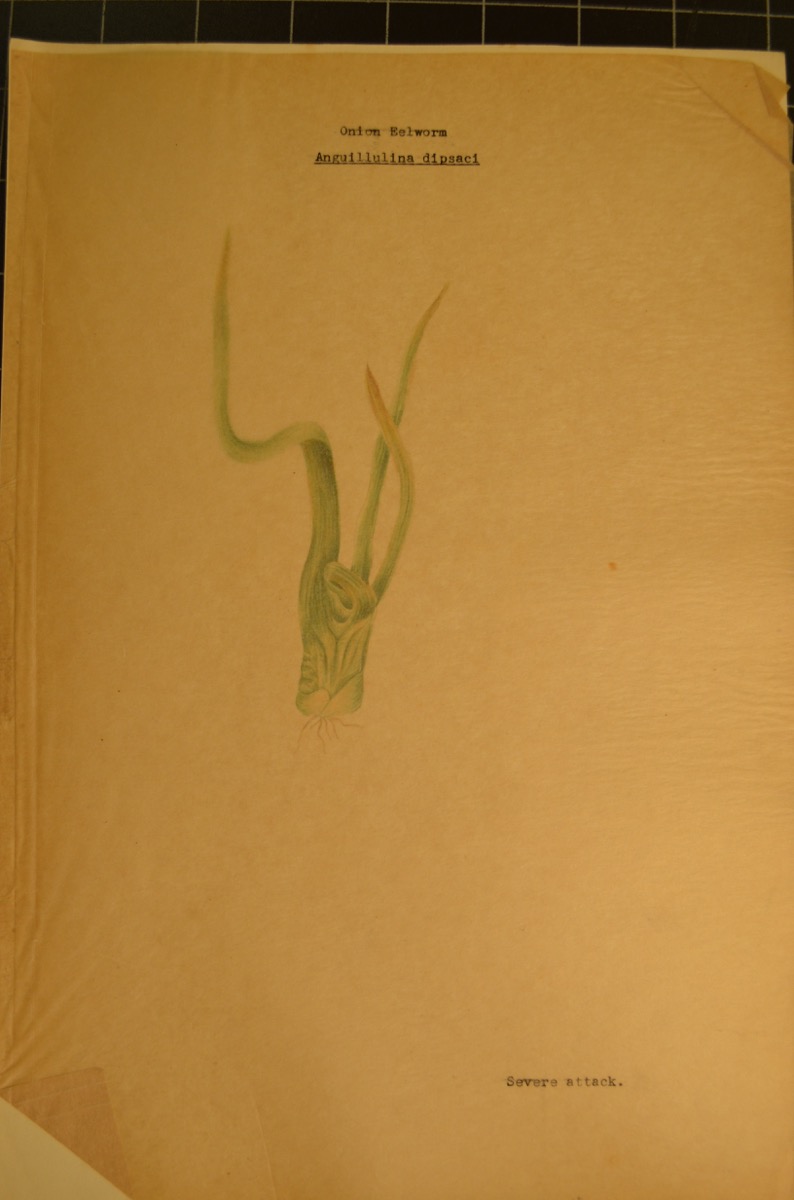
6662.11.i -- "Onion Eelworm Anguillulina dispaci"
A watercolour painting of an attacked onion plant.
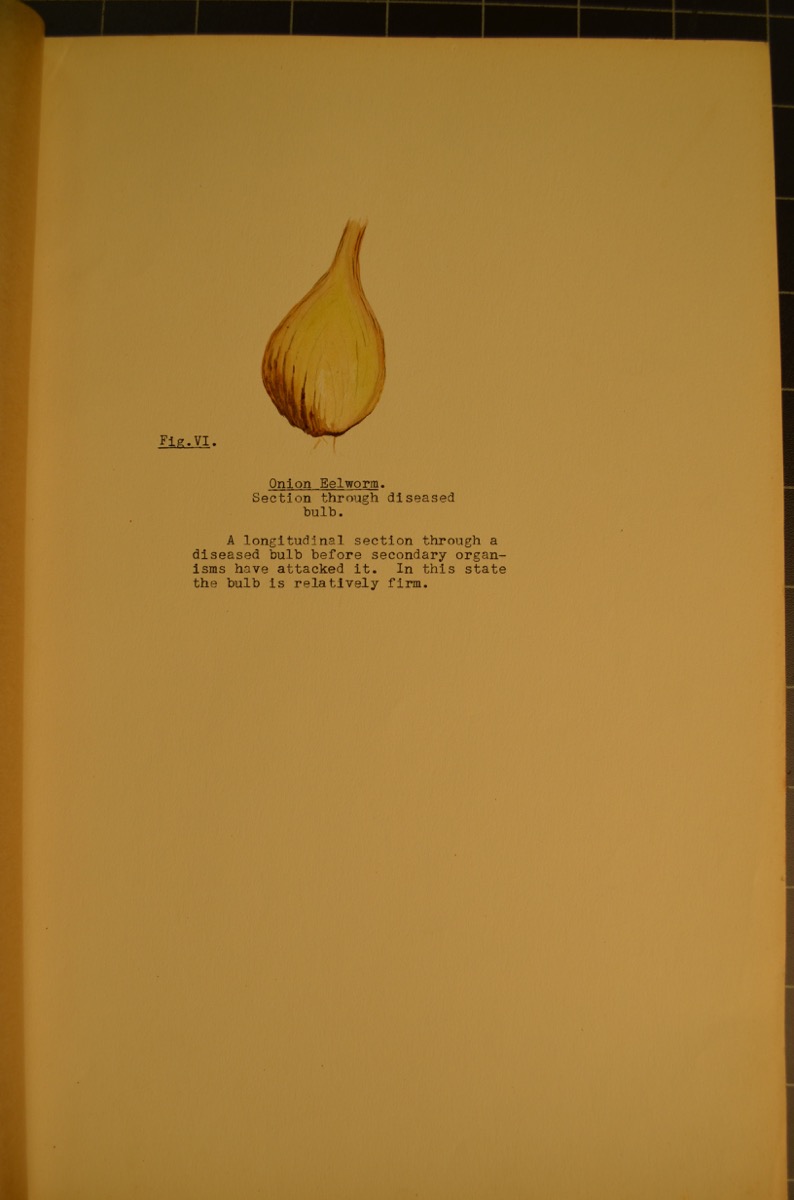
6662.11.j -- "Onion Eelworm."
A watercolour painting of a section of a diseased onion bulb.
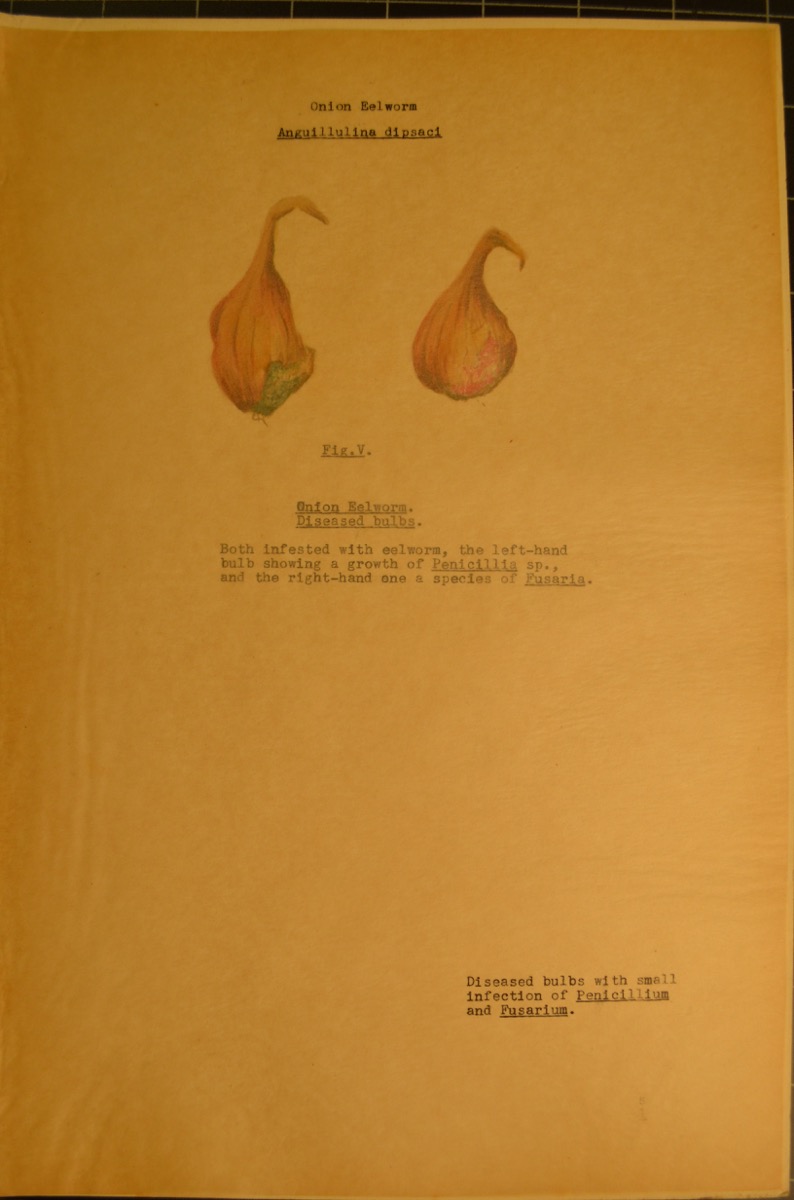
6662.11.k -- "Onion Eelworm."
A watercolour painting of two onion bulbs infested with eelworms.
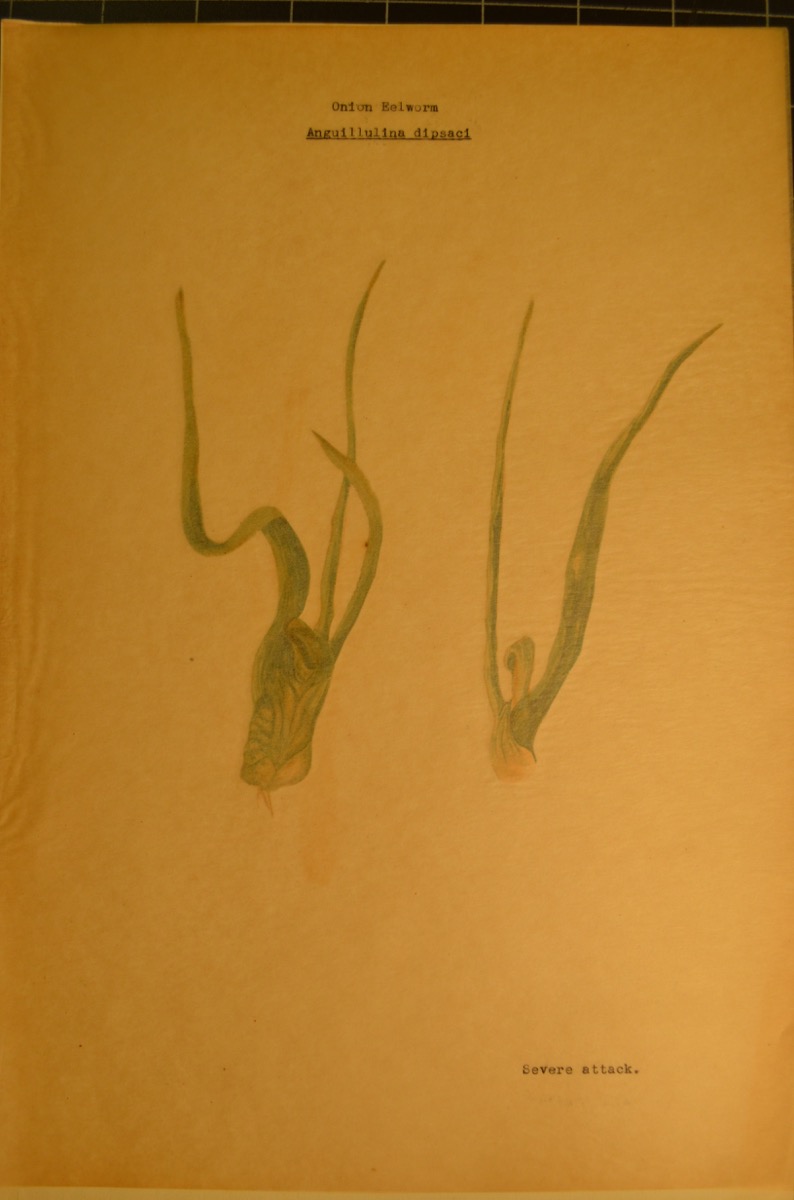
6662.11.l -- "Onion Eelworm Anguillulina dispaci"
A watercolour painting of two attacked onion plants.
6662.11.m -- "Onion Eelworm Anguillulina dispaci"
A watercolour painting of an attacked onion plant.
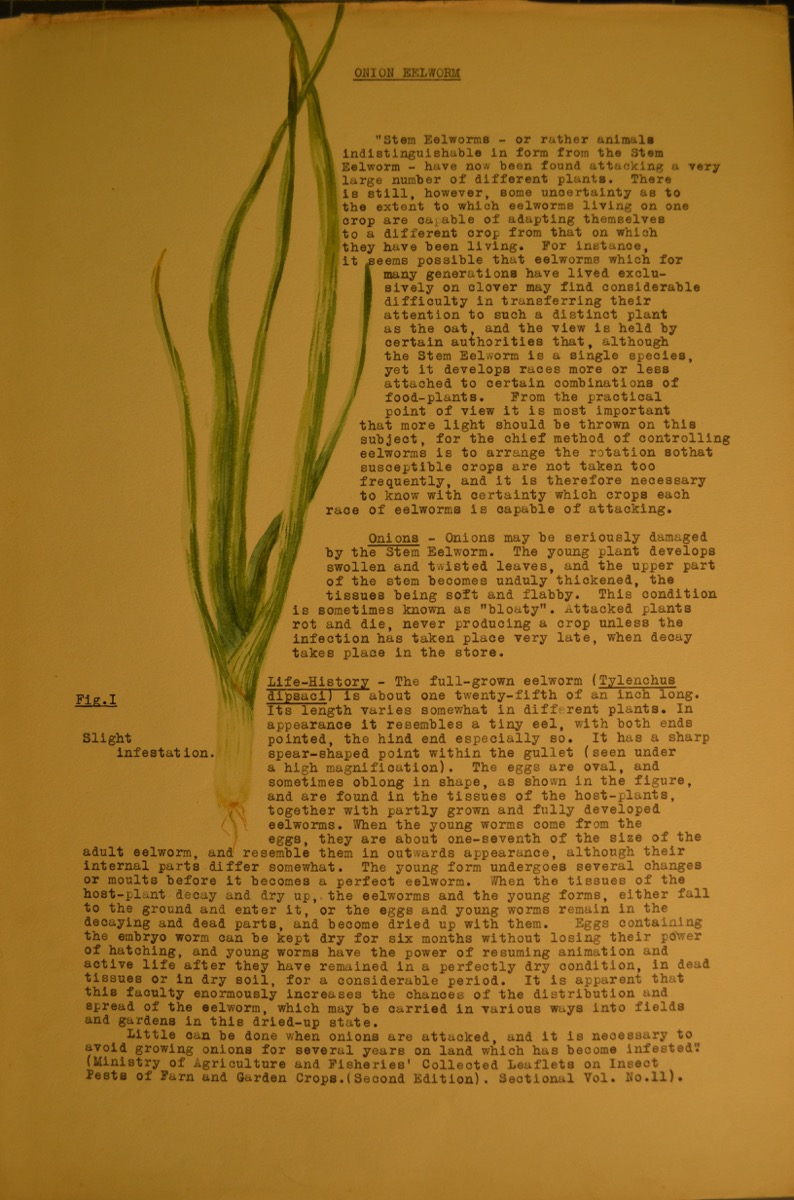
6662.11.n -- "Onion Eelworm"
A watercolour painting of an attacked onion plant. The typed notes describe eelworms: their life cycle, reaction of onions to infection, and methods for prevention.
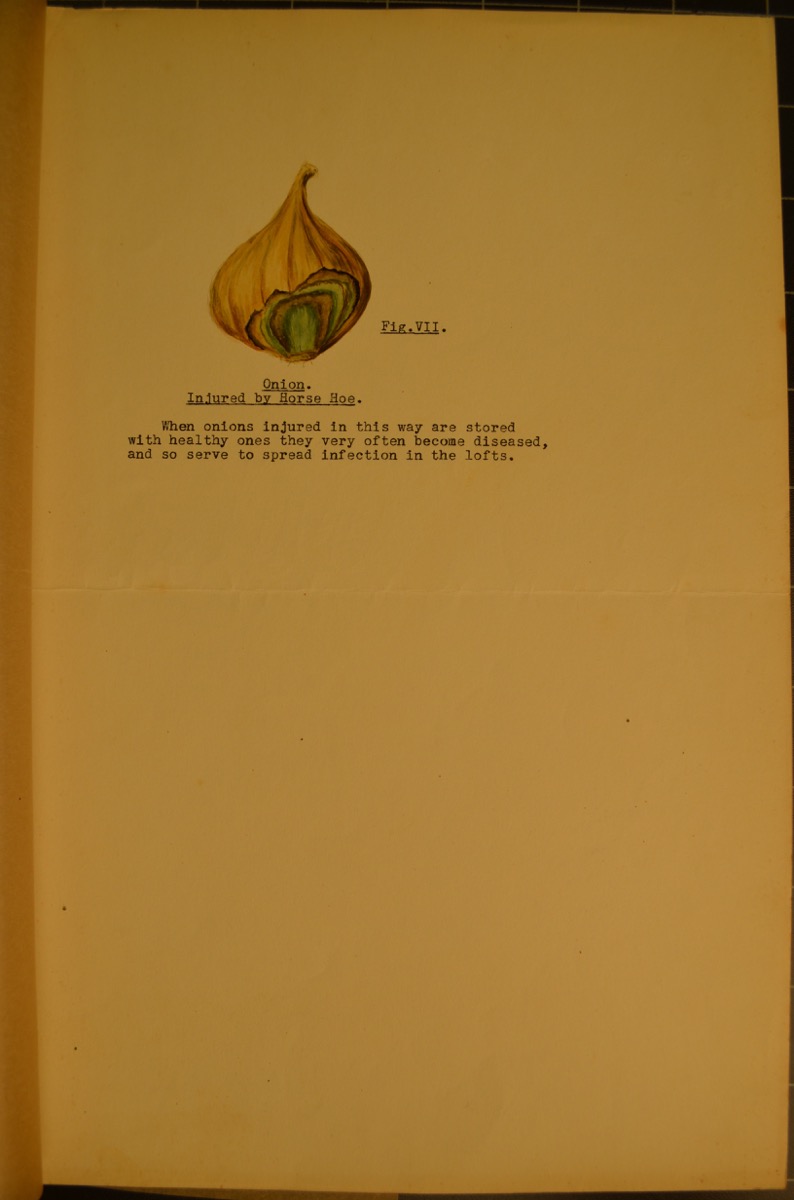
6662.11.o -- "Onions injured by horse-hoe."
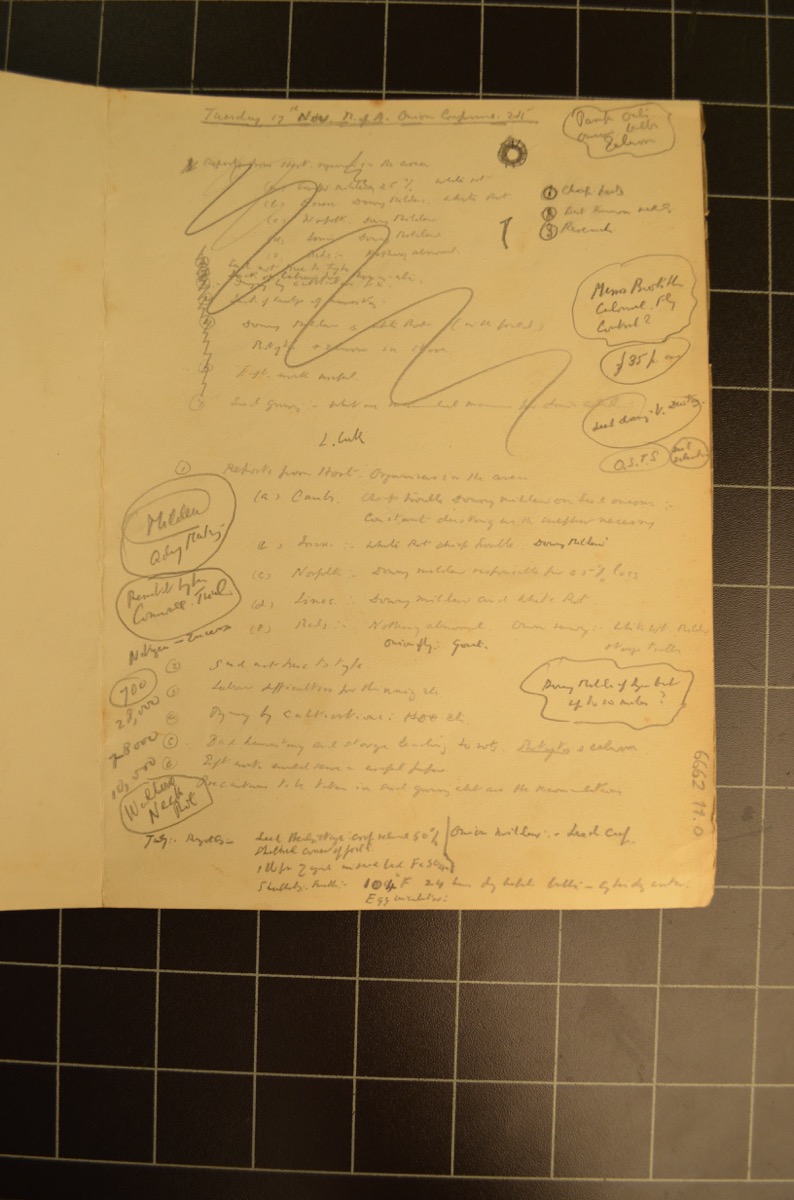
A watercolour painting of an injured onion bulb. Many barely legible scribbled notes in pencil on the back of the page, may become more legible with some effort.
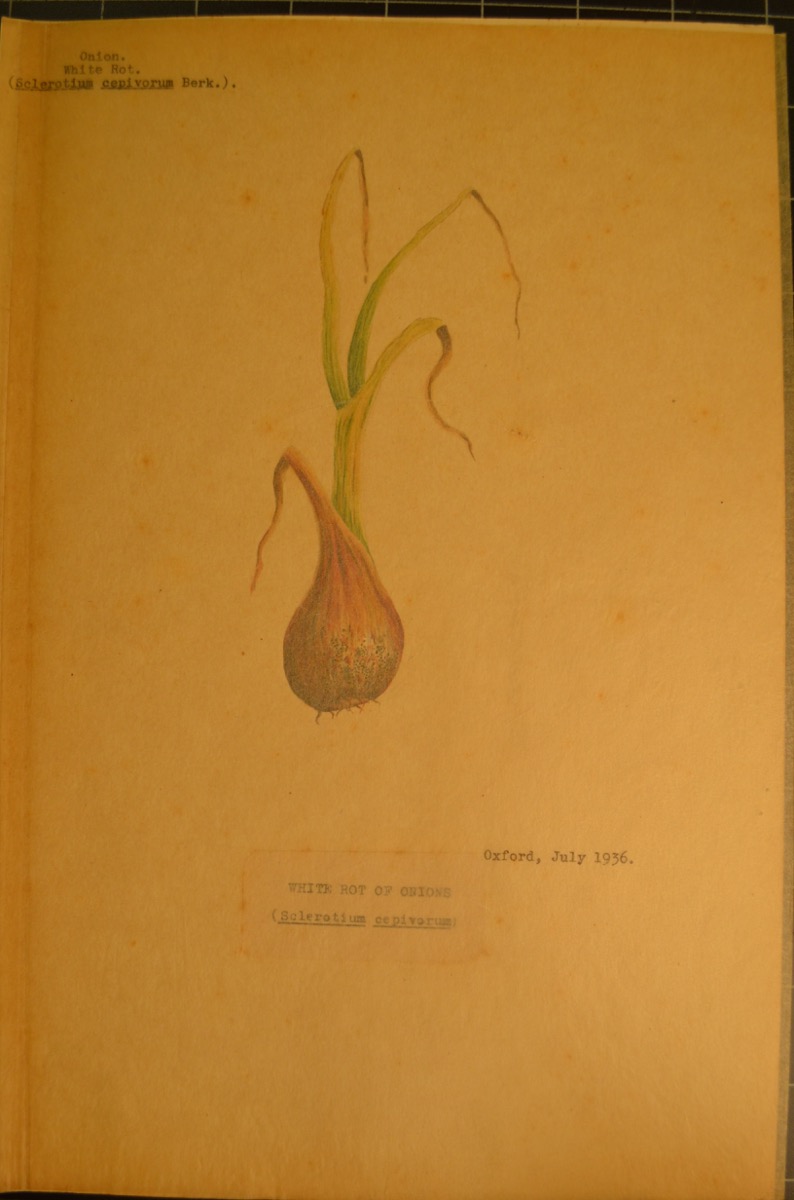
6662.11.p -- "Onion White rot. (Sclerotium cepivorum Berk.)"
A watercolour painting of an onion plant, labelled Oxford, July 1936.
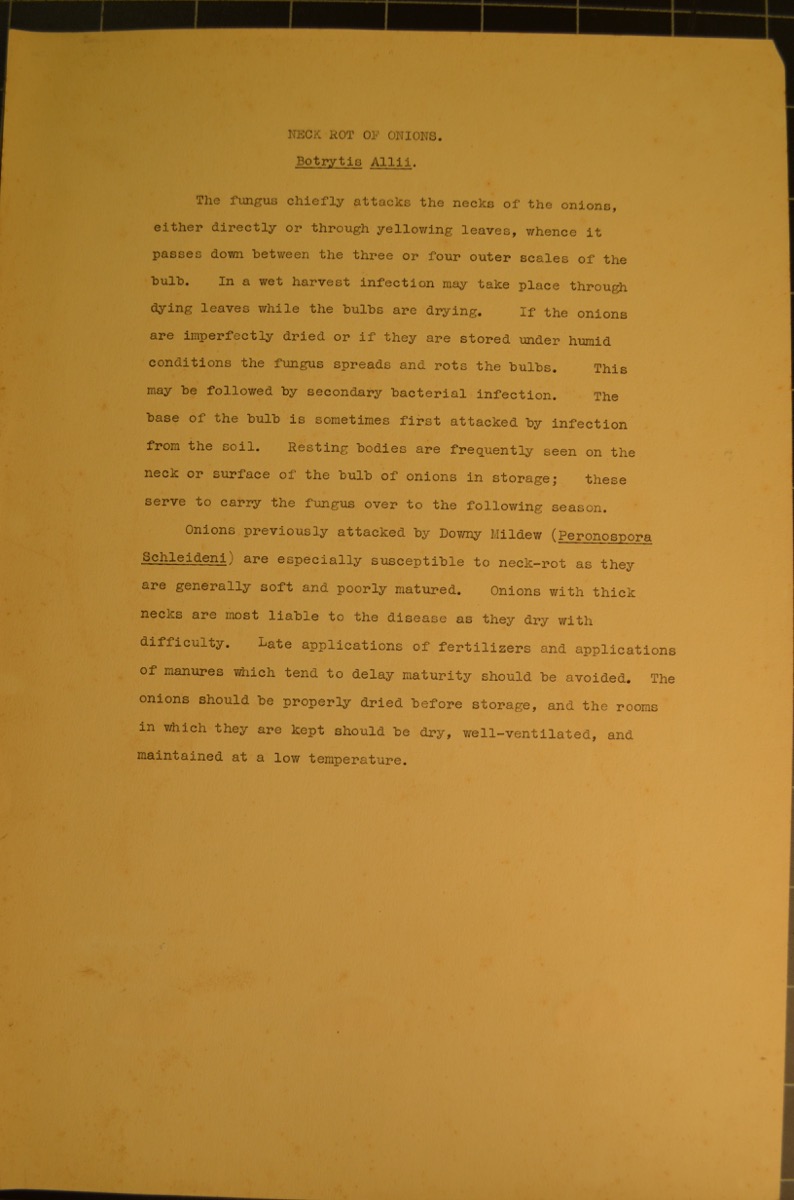
6662.11.q -- "NECK ROT OF ONIONS. Botrytis Allii"
A typed page describing the fungus.
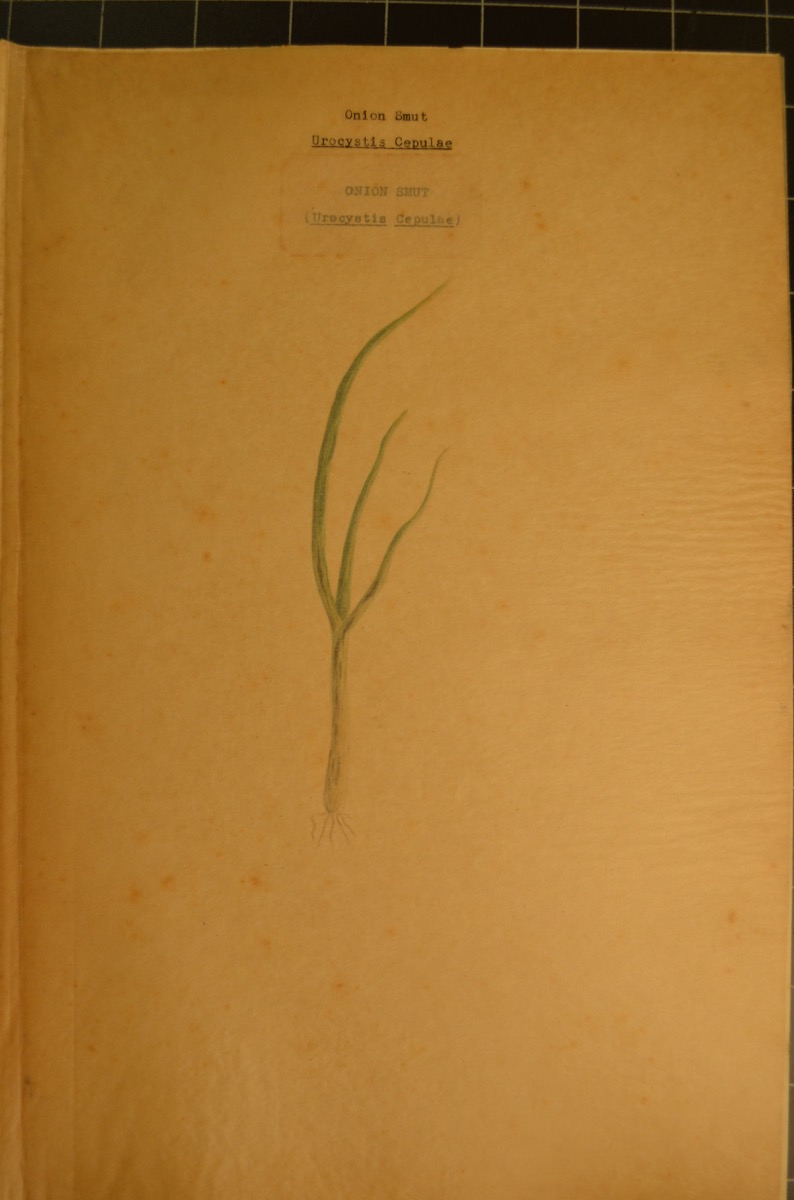
6662.11.r --"Onion Smut Urocystis capulae"
A watercolour painting of an infected onion.
References
Events
Description
Dr. W.A.R. Dillon Weston spent all of his professional life in Cambridge. After obtaining his degree in Natural Sciences at St. Catharine’s College, Dr. Dillon Weston gained employment as a mycologist (an expert in the study of fungi) at the Ministry of Agriculture and Fisheries. Ministry Pathologists at that time were stationed at universities, where teaching and supervision of students were included as part of their duties.
During the 1930’s, Dillon Weston produced nearly 1,000 watercolour paintings of plants suffering from a wide variety of afflictions: mostly various fungal infections, but also pest attacks, nutrient deficiencies, and bad farming practices. These drawings were produced in connection with his position at the Ministry, which he described as forming a “link between the farm and the research station.” Farmers would send samples of afflicted crops to the Ministry, and Dillon Weston would diagnose the problem and offer solutions. This work was an example of the emerging school of “New” or “Economic” Botany, in which economically important plant diseases were studied with an eye to increasing crop yields.
Typed notes accompanying the paintings suggest that many of them were depictions of samples received by Dillon Weston at the Ministry, though it is unclear why he made them. Like his glass fungi models, also held by the Whipple (Wh.5826), the paintings may have been a hobby undertaken during bouts of insomnia. Some of the paintings are demonstrative or didactic in nature, and Dillon Weston may have used them in his lectures at the university, which he endeavoured to make “as interesting as possible,” according to a 1952 profile in Varsity, the Cambridge student newspaper.
The paintings demonstrate a careful attention to detail and a desire for accurate representation, which sometimes led Dillon Weston to push up against the limits of flat, two-dimensional representation. For example, he used painted cotton stuffing underneath layers of paper to imitate spores bulging up underneath a scab on an apple tree (Wh.6662.28, Wh.6662.29), and splashes of blue watercolour paint to demonstrate how far fungal spores can be spread by raindrops (6662.10).
12/09/2018
Created by: Matthew Green on 12/09/2018
FM:47333
Images (Click to view full size):