Accession No
6714
Brief Description
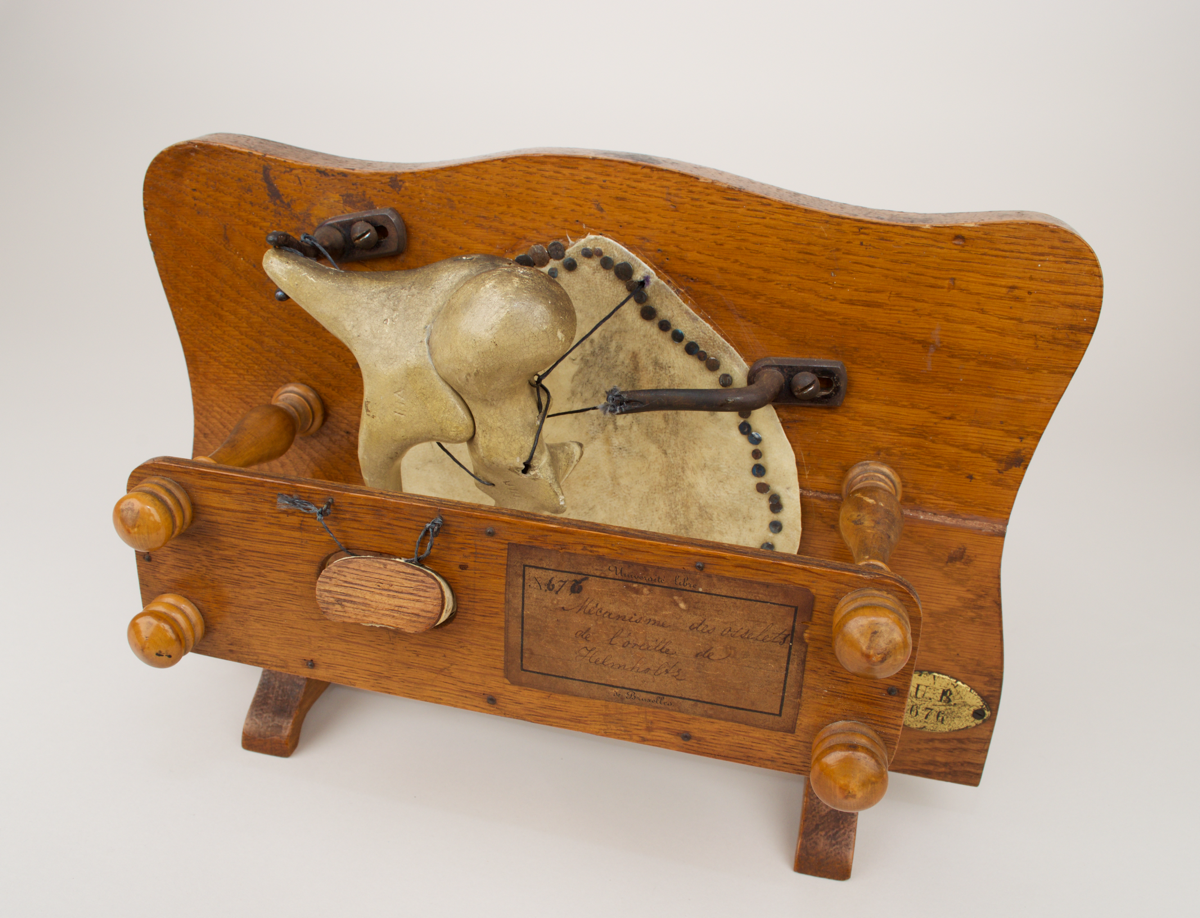
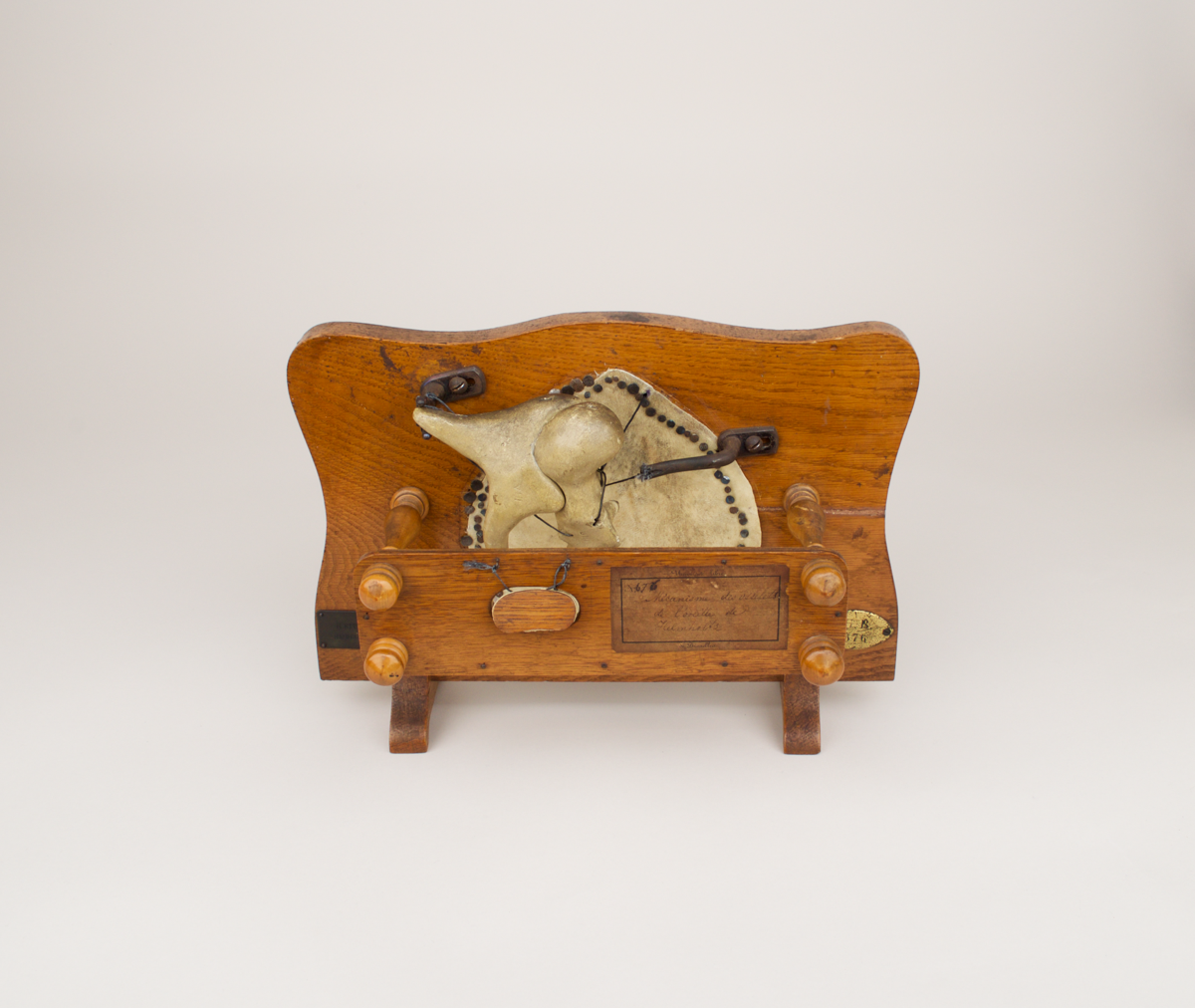
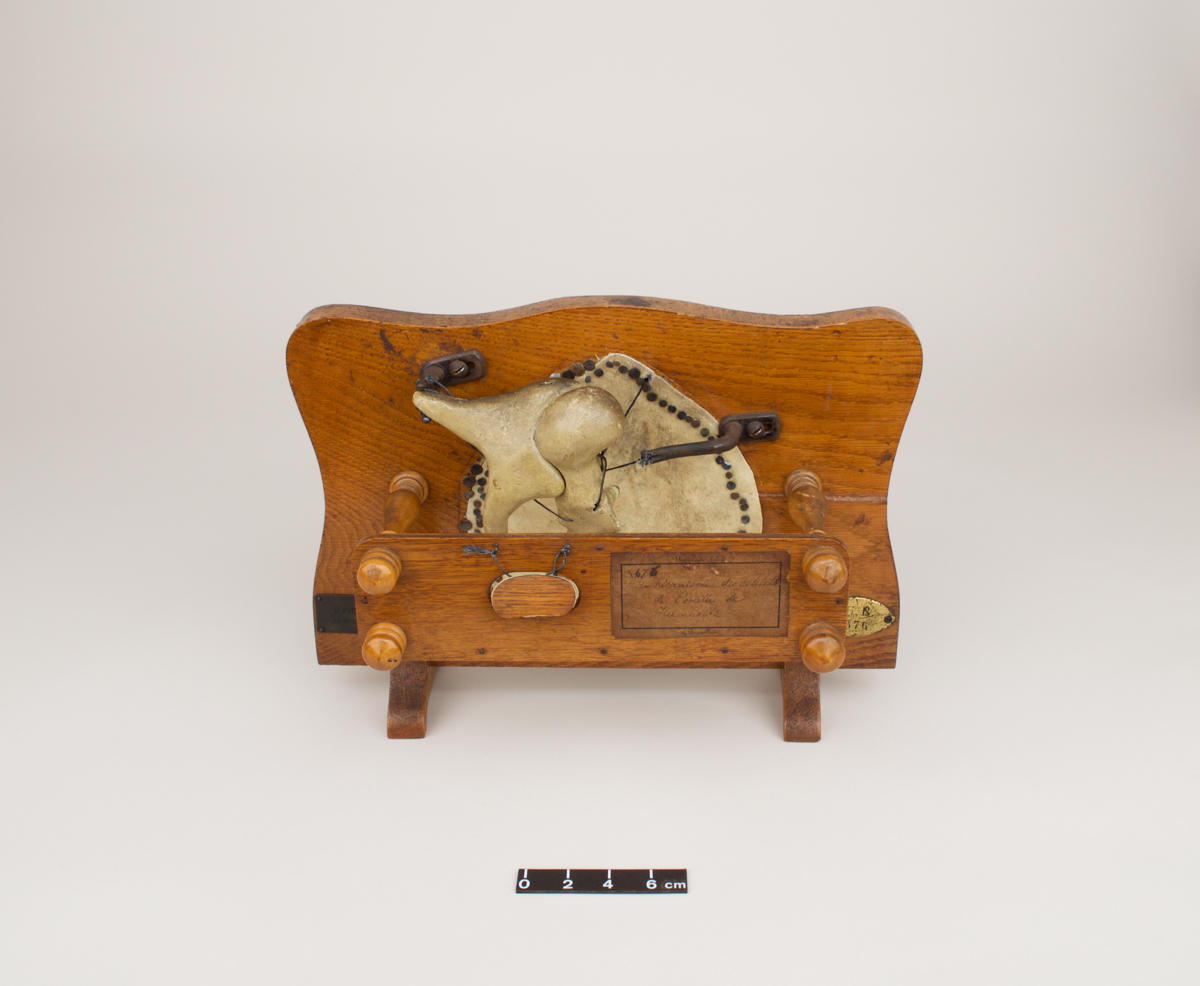
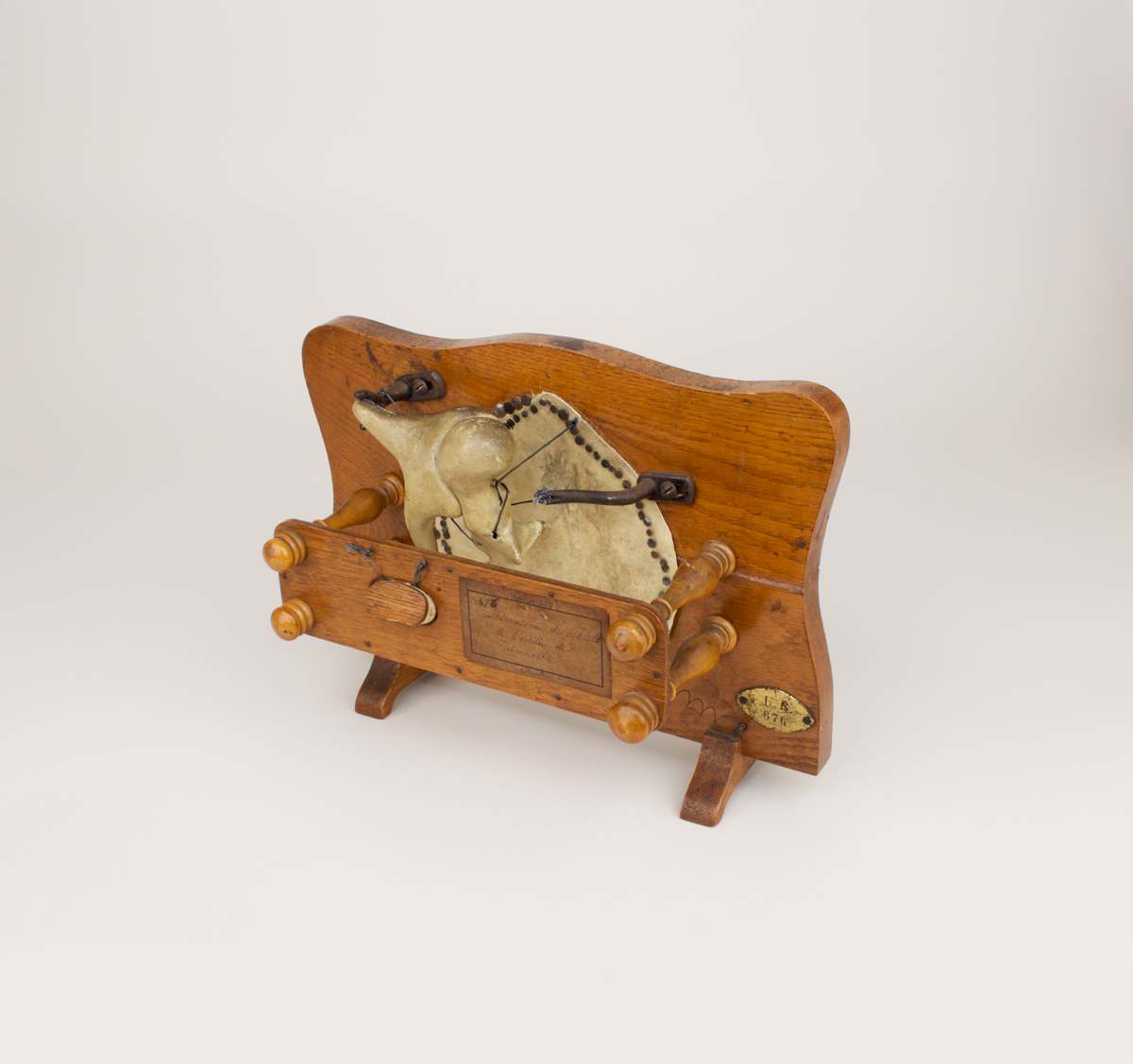
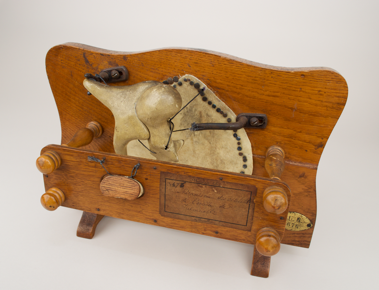
demonstration model of the human middle ear with eardrum and three auditory bones (malleus, incus, and stapes), labelled Working Mechanism of the Bones of Helmholtz's Ear, by H. Sittel, German, 1858-1870 (c)
Origin
Germany; Heidelberg
Maker
Sittel, H.
Class
demonstration; physiology; medical;
Earliest Date
1858
Latest Date
1870
Inscription Date
Material
wood; metal (iron, steel, brass, wire); paper; hide (leather)
Dimensions
335mm (max width); 190mm (max depth); 240mm (height)
Special Collection
Provenance
Purchased from Van Leest Antiques in 2018.
Inscription
Universite Libre de Bruxelles
No. 676
Mechanisme des Osselets de l’oreille de Helmholtz
[paper label]
H. Sittel
Heidelberg
[brass plaque]
U.B. 676
[brass plaque]
Description Notes
Demonstration model of the human middle ear with eardrum and three auditory bones (malleus, incus, and stapes), labelled Working Mechanism of the Bones of Helmholtz's Ear, by H. Sittel, German, 1858-1870 (c).
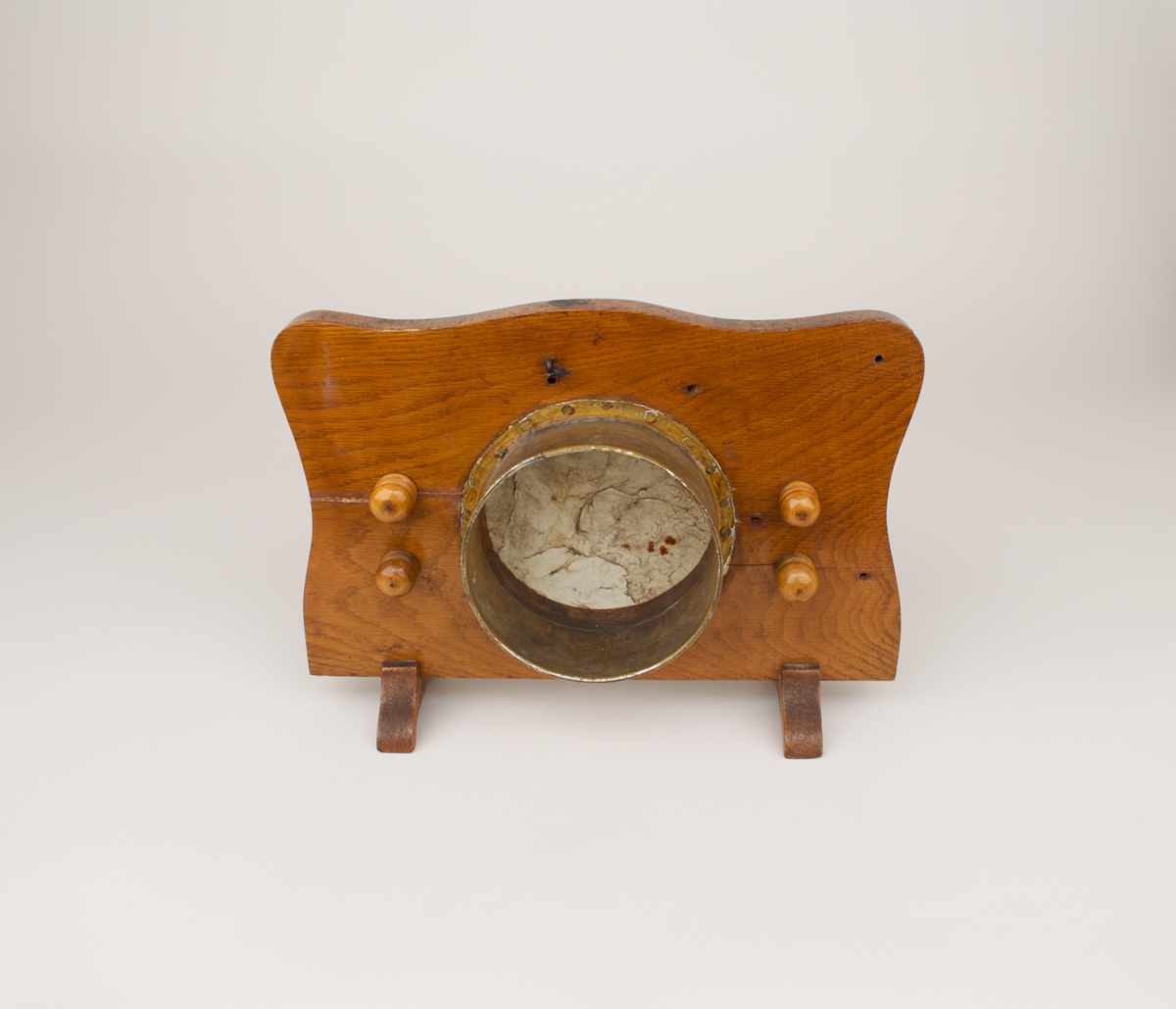
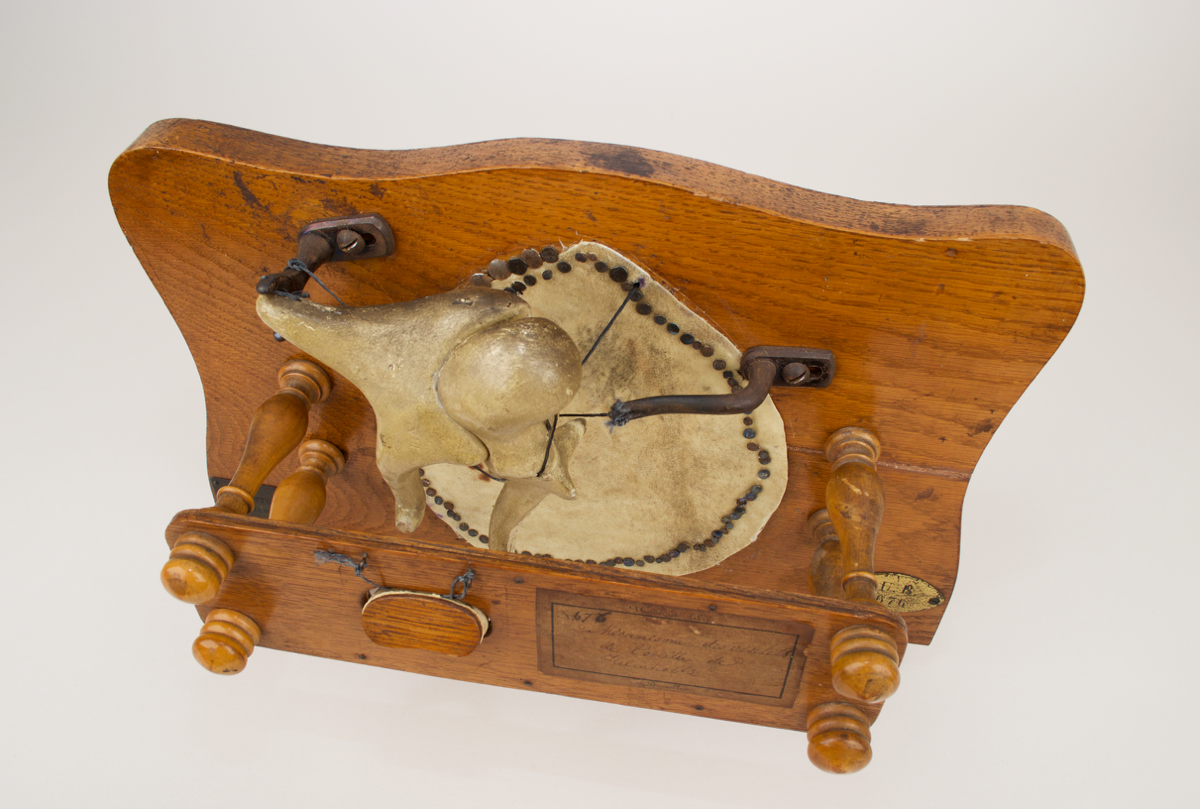
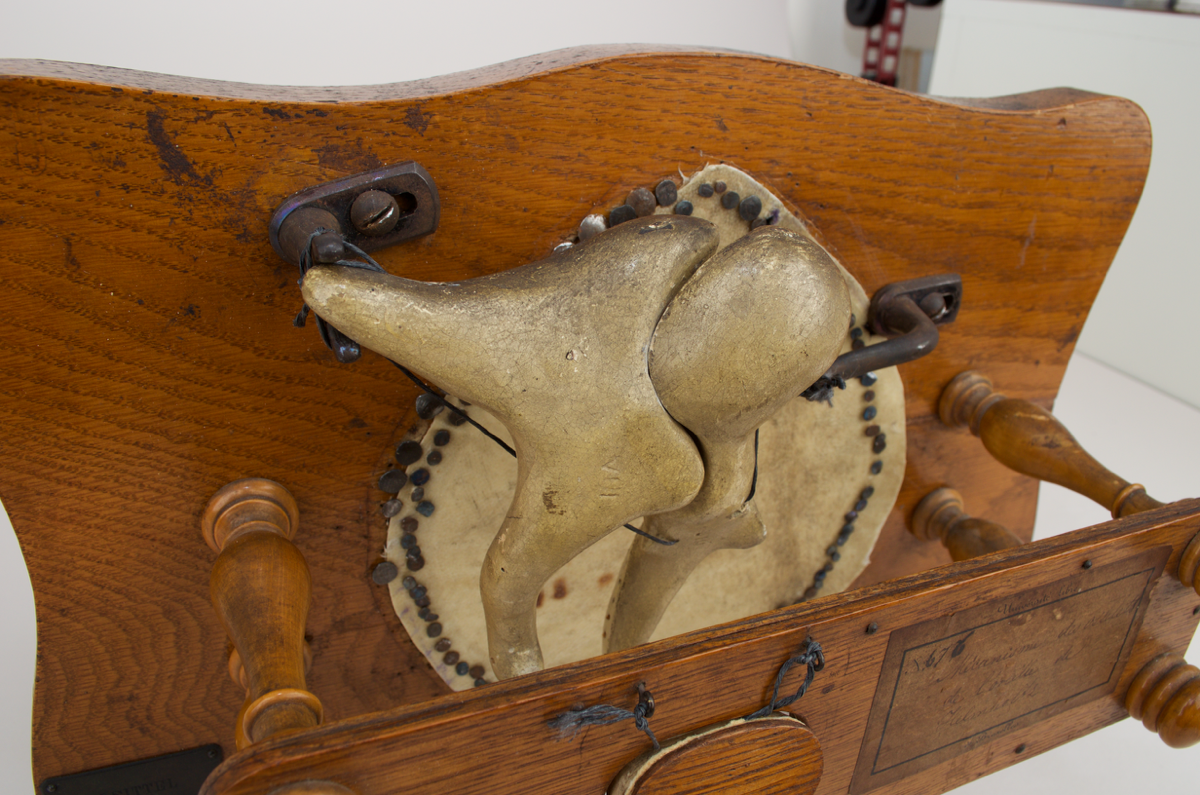
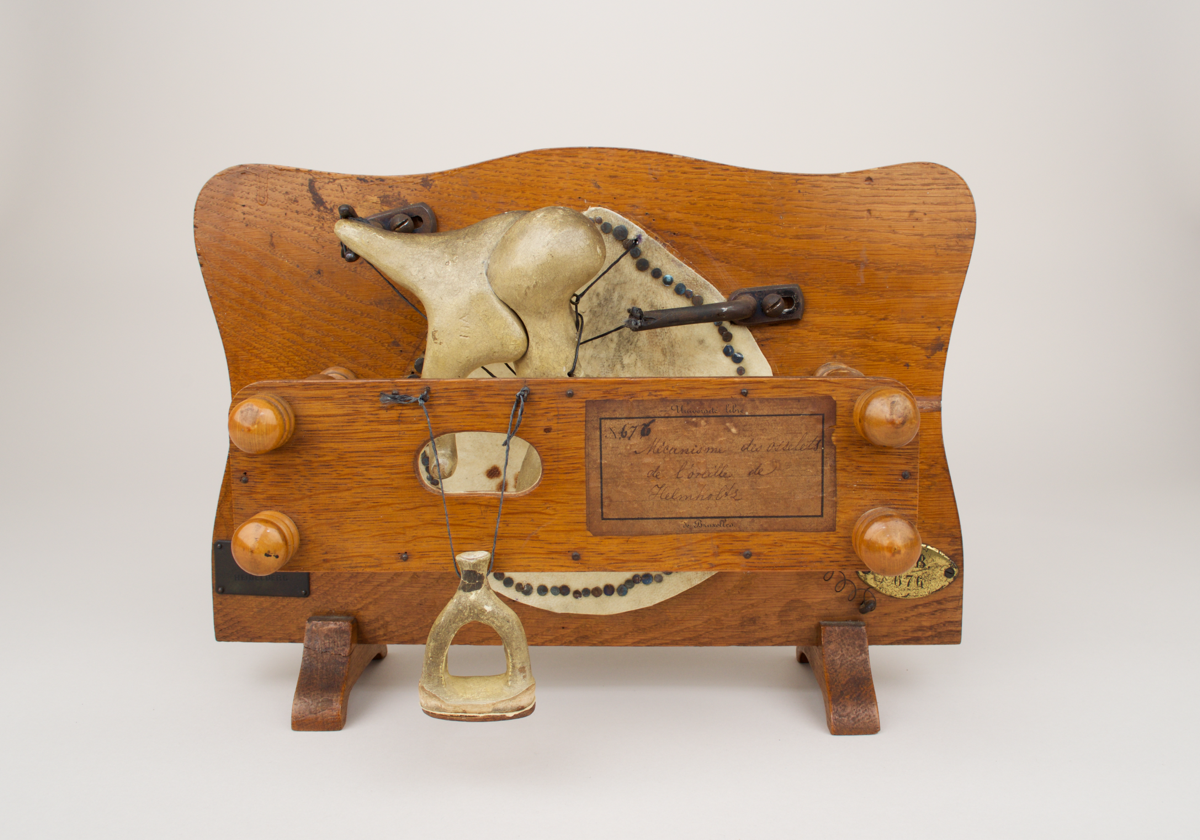
The model is housed on a wooden base/stand with feet. A cut-out circular hole in the wooden stand, covered with leather, represents the eardrum. The leather is nailed flat on the front and on the back, the cut-out is surrounded by a large metal ring. Three auditory bones (malleus, incus, and stapes) are attached to the front of the wooden block using metal mounts and string, meaning they wobble (showing the vibrations of the bones when sound waves enter the ear). Two brass plaques and a paper label describing the model are also on the front:
[paper label]
"Universite Libre de Bruxelles
No. 676
Mechanisme des Osselets de l’oreille de Helmholtz"
[brass plaque]
H. Sittel
Heidelberg
[brass plaque]
U.B. 676
Complete.
References
Events
Description
This model demonstrates how the three small bones of the middle ear work to transmit sound from the air into the fluid-filled inner-ear. The eardrum is modelled by a taught leather drum; when soundwaves cause it to vibrate this motion is passed on to the bone that rests against it, the malleus (Latin for ‘hammer’), then on to the connecting incus (Latin for ‘anvil’), and finally to the stapes (Latin for ‘stirrup’), which passes through an opening into the cochlea.
A label on the model indicates that it was constructed to the design of famed German acoustic physicist Hermann von Helmholtz, who worked in Heidelberg—where this model was made—between 1858 and 1870.
16/03/2023
Created by: Morgan Bell on 16/03/2023
Description
This model demonstrates how the three small bones of the middle ear work to transmit sound from the air into the fluid-filled inner-ear. The eardrum is modelled by a taught leather drum; when soundwaves cause it to vibrate this motion is passed on to the bone that rests against it, the malleus (Latin for ‘hammer’), then on to the connecting incus (Latin for ‘anvil’), and finally to the stapes (Latin for ‘stirrup’), which passes through an opening into the cochlea.
A label on the model indicates that it was constructed to the design of famed German acoustic physicist Hermann von Helmholtz, who worked in Heidelberg—where this model was made—between 1858 and 1870.
19/11/2021
Created by: Morgan Bell on 19/11/2021
FM:47453
Images (Click to view full size):