Accession No
L2021.IN049.1
Brief Description
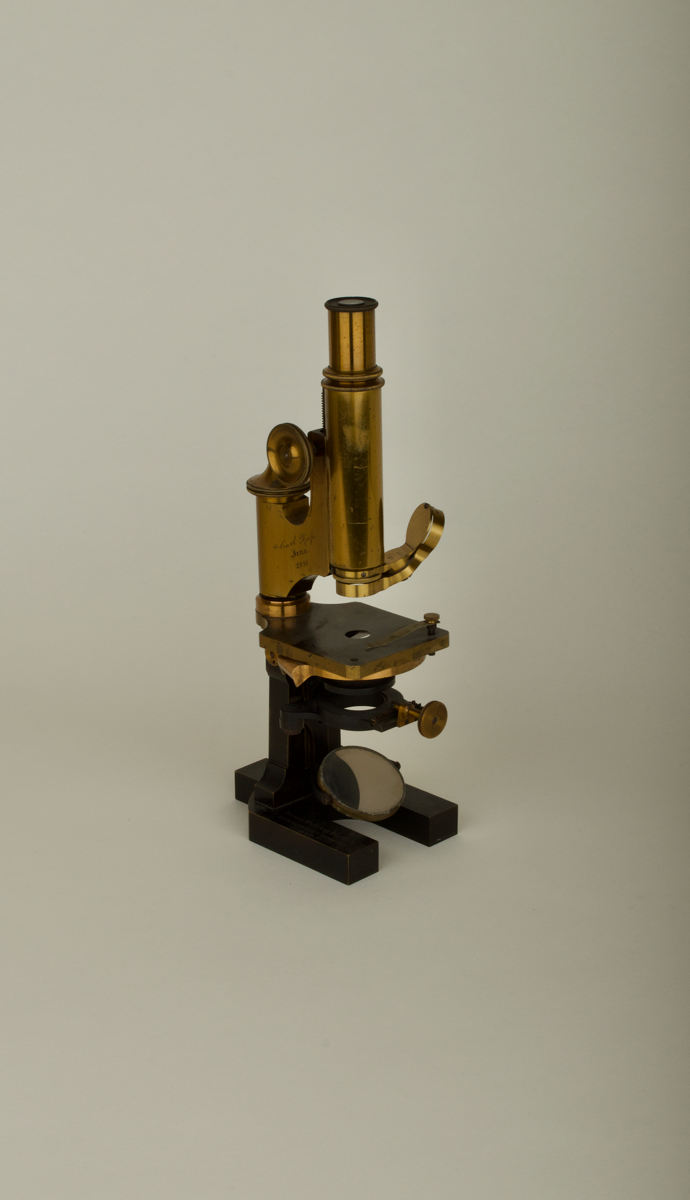
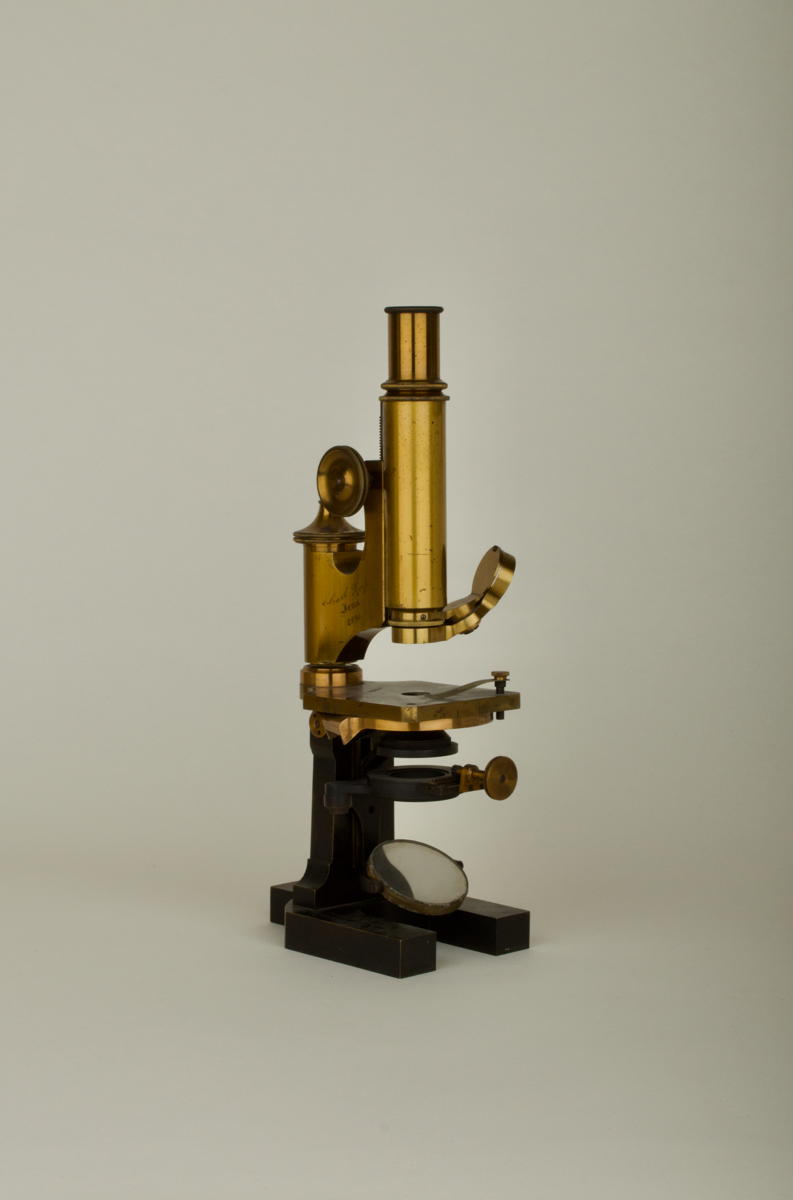
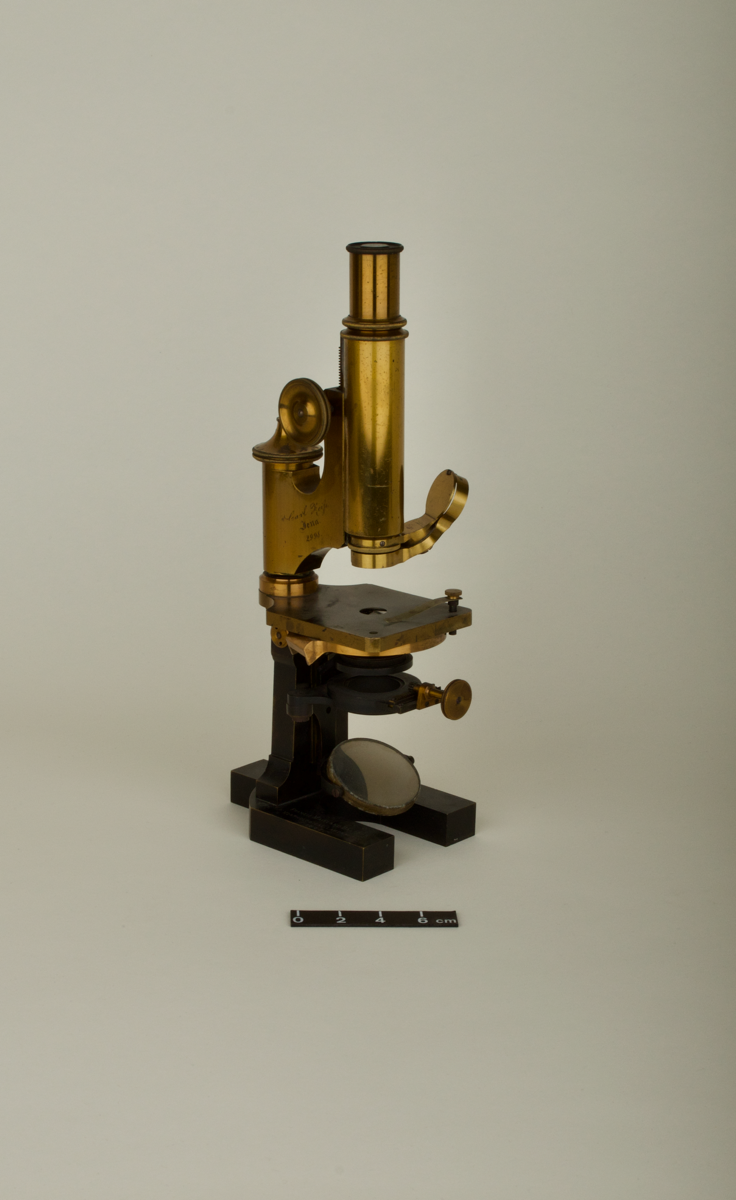
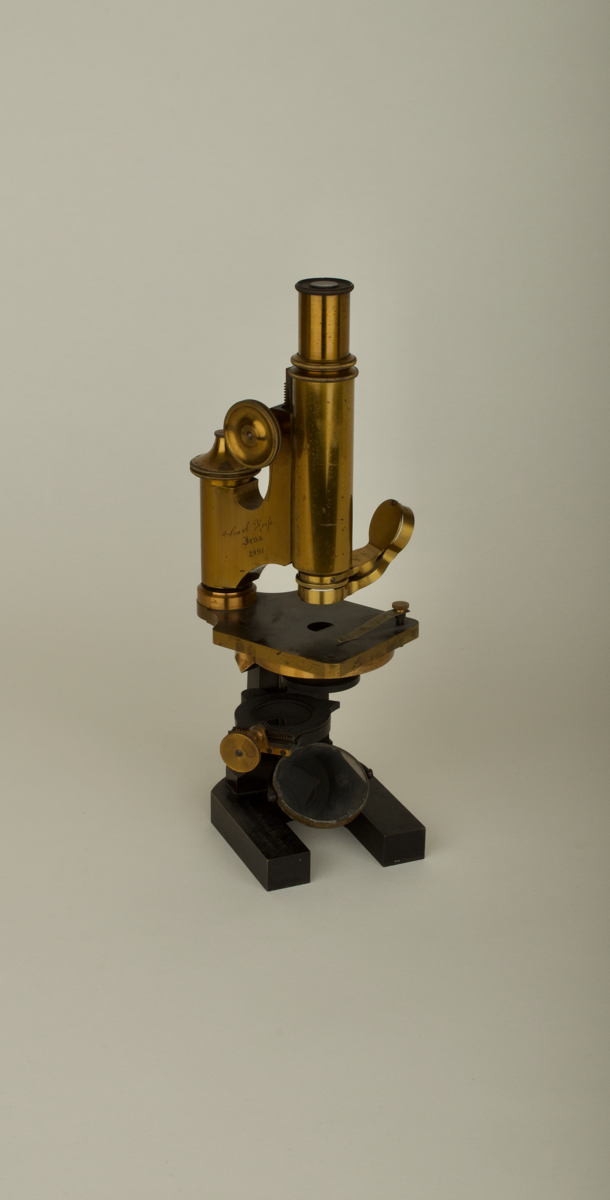
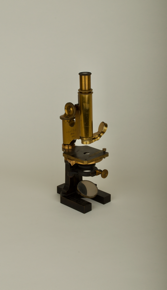
compound microscope, used by embryologist Francis Maitland Balfour, by Carl Zeiss, German, 1876
Origin
Germany; Jena
Maker
Carl Zeiss
Class
microscopes
Earliest Date
1876
Latest Date
1876
Inscription Date
Material
metal (brass, steel alloy); glass
Dimensions
95mm (width), 124mm (depth), 290-423mm (height - adjustable)
Special Collection
Provenance
On loan from the Department of Zoology from December 2021. Purchased directly from Carl Zeiss Jena by Balfour on 22nd September 1876.
Inscription
[On microscope body]
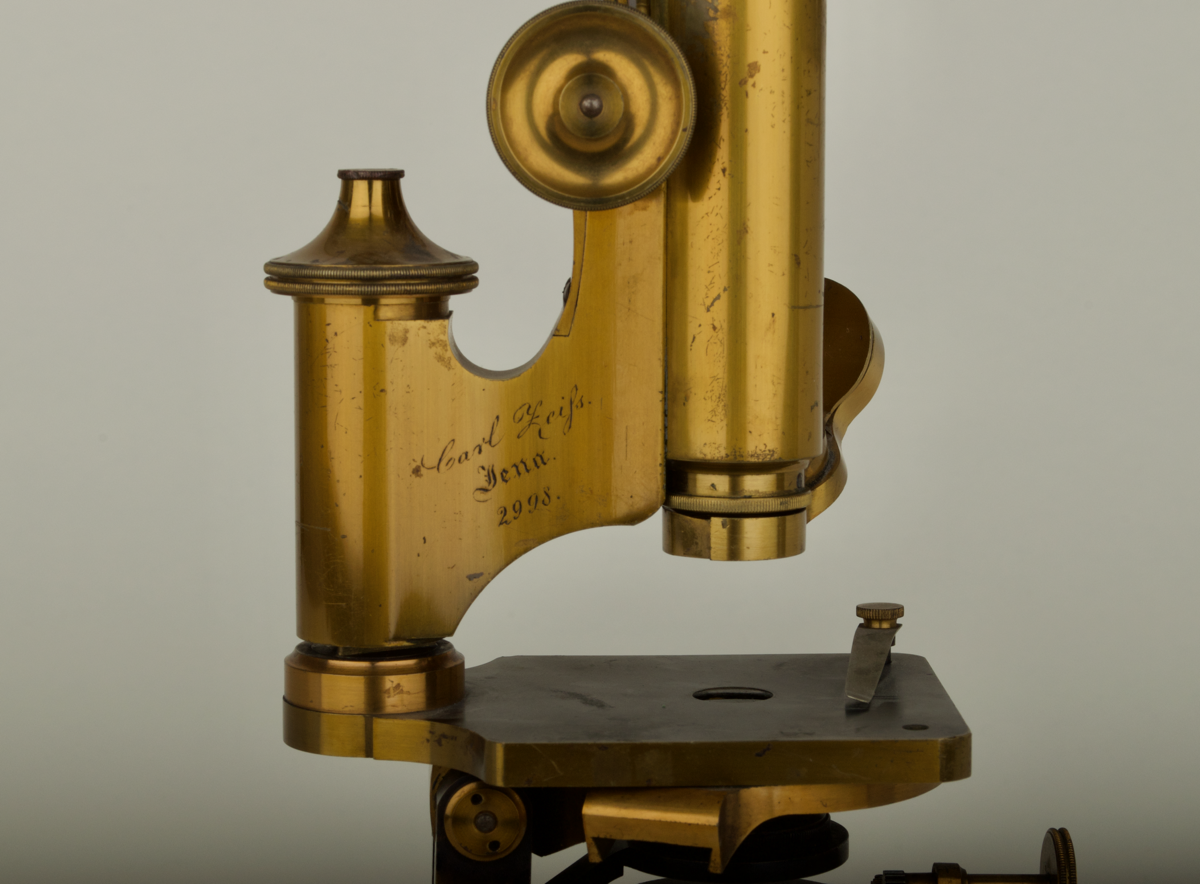
Carl Zeiss
Jena
2998
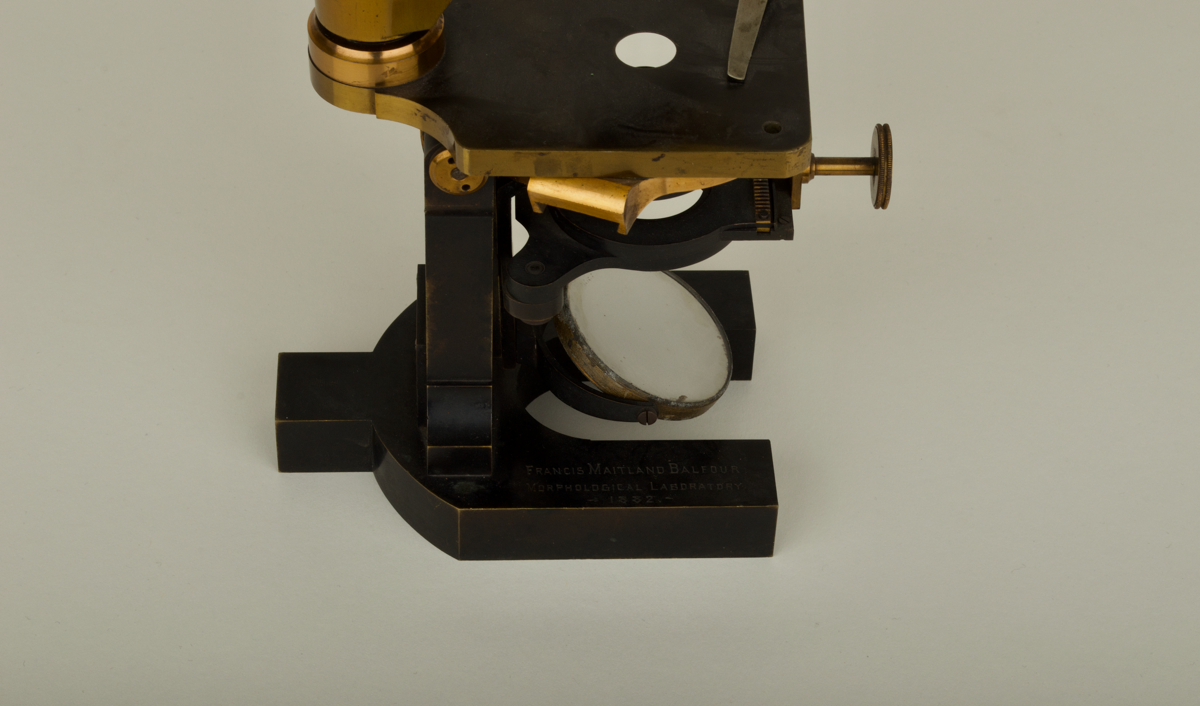
[On microscope foot]
FRANCIS MAITLAND BALFOUR
MORPHOLOGICAL LABORATORY
1882
[On eyepiece lens]
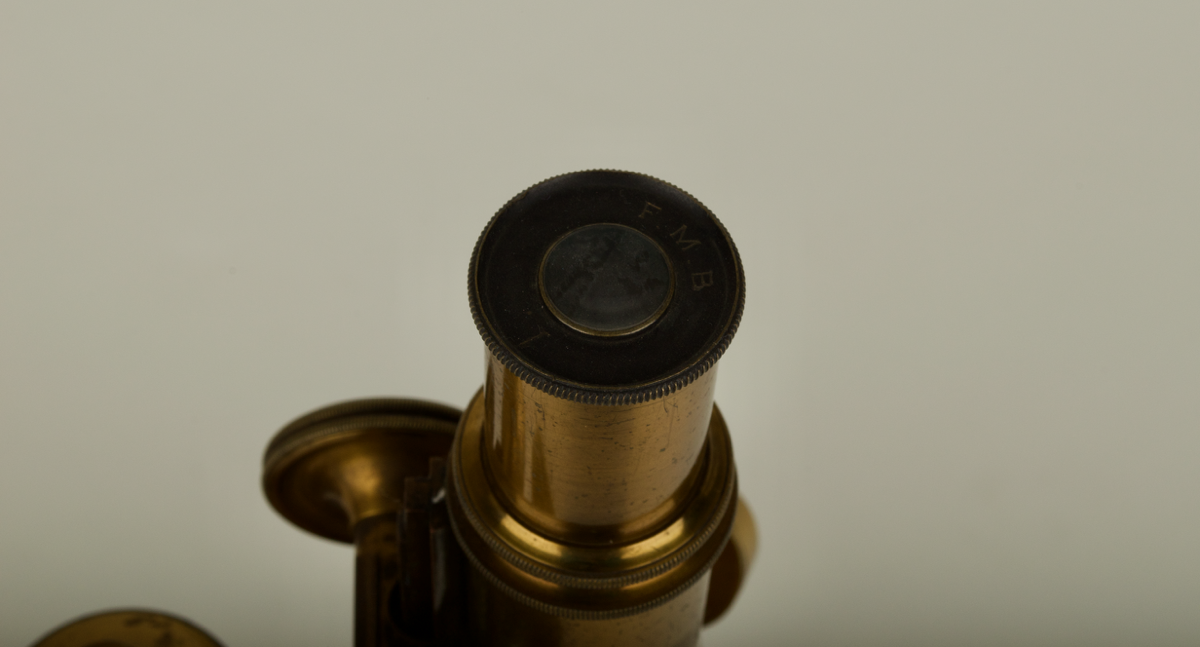
FMB
1
Description Notes
Compound microscope, used by Francis Maitland Balfour, by Carl Zeiss, German, 1876.
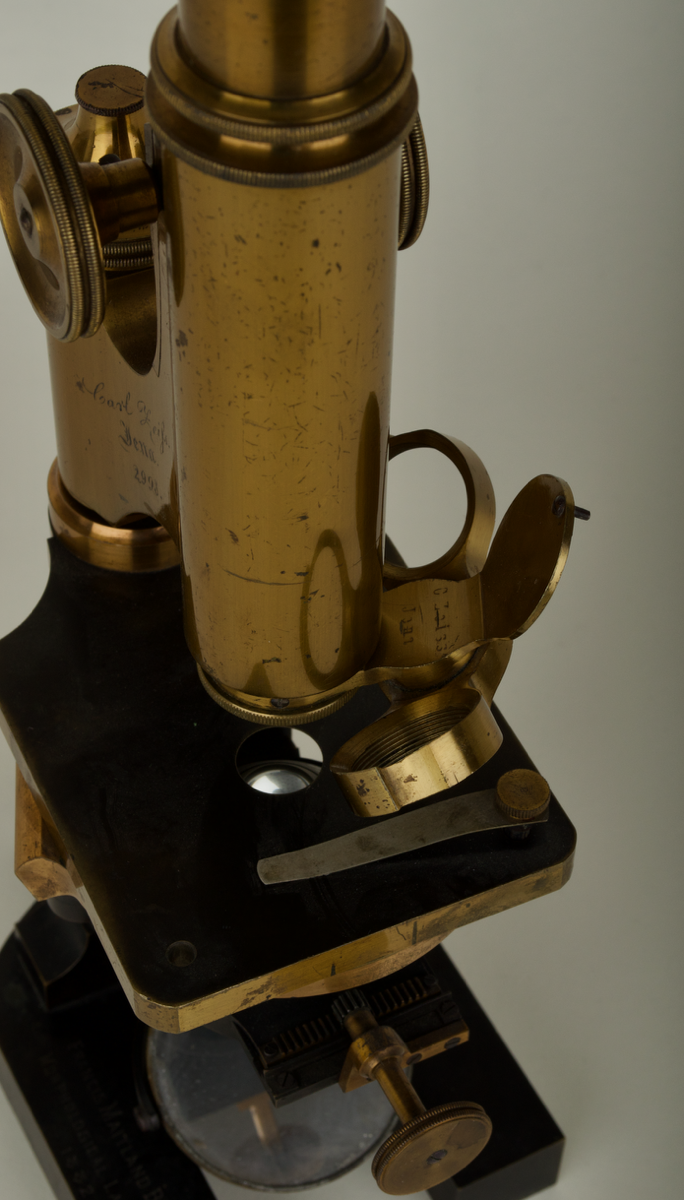
Brass and black-painted metal monocular, compound microscope on a Y-shaped stand. The body tube extends and the eyepiece lens can be removed. There is a double nosepiece at the bottom of the tube. One stage clip is missing. The stage and tube can be rotated horizontally over the substage. There is a condenser between the stage and the substage. The substage rotates horizontally. The mirror beneath the substage rotates. On the Y-shaped stand, the following is inscribed: 'FRANCIS MAITLAND BALFOUR / MORPHOLOGICAL LABORATORY / 1882'.
Incomplete (one stage clip missing)
References
Events
Description
Francis Maitland Balfour (1851-1882) was an embryologist and the first (and only) Professor of Animal Morphology at the University of Cambridge.
Balfour went to Trinity College in 1870 and published his first paper, on the embryology on the chick, before he graduated. After graduating, he was elected Fellow of Trinity in 1874 and and worked for two years at the Stazione Zoological in Naples. His research there was on the embryology of elasmobranch fishes, on which he published several papers and a major book (1878). Using his intellect and charm, Balfour formed around him a major school of embryologists - the first in this country. His Treatise on Comparative Embryology, which summarised the whole field and contained new observations, was judged to be a 'a work full of new light from beginning to end'. He was elected Fellow of the Royal Society in 1878 and was awarded their Royal Medal in 1881.
In 1882, a special chair of Animal Morphology at the University of Cambridge was created for Balfour. However, in June that year, while in Switzerland to recuperate from typhoid fever, he and his guide died trying to ascend the Aiguille Blanche de Peuterey mountain in the Mont Blanc Massif.
Michael Foster, his first teacher in Cambridge, wrote, "The remarkable powers which Balfour possessed of rapid yet exact observation, of quick insight into the meaning of things observed, of imaginative daring in hypothesis kept straight by the singularly clear logical sense, through which the proved was sharply distinguished from the merely probable, made all biologists hope that the striking work which he had already accomplished was but the earnest of still greater things to come."
Balfour purchased this microscope directly from Carl Zeiss and it was delivered on 22nd September 1876.
[Adapted from a label at the Department of Zoology]
23/05/2022
Created by: Morgan Bell on 23/05/2022
FM:47526
Images (Click to view full size):