Accession No
6748
Brief Description
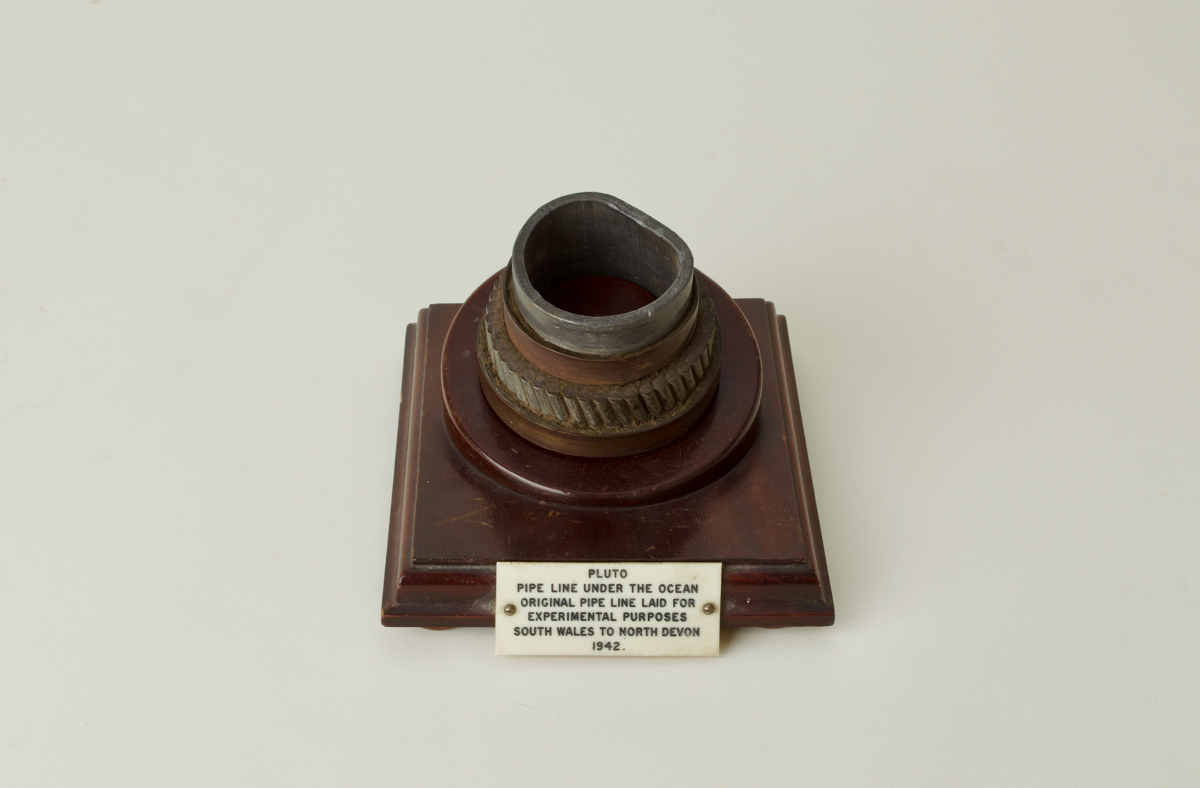
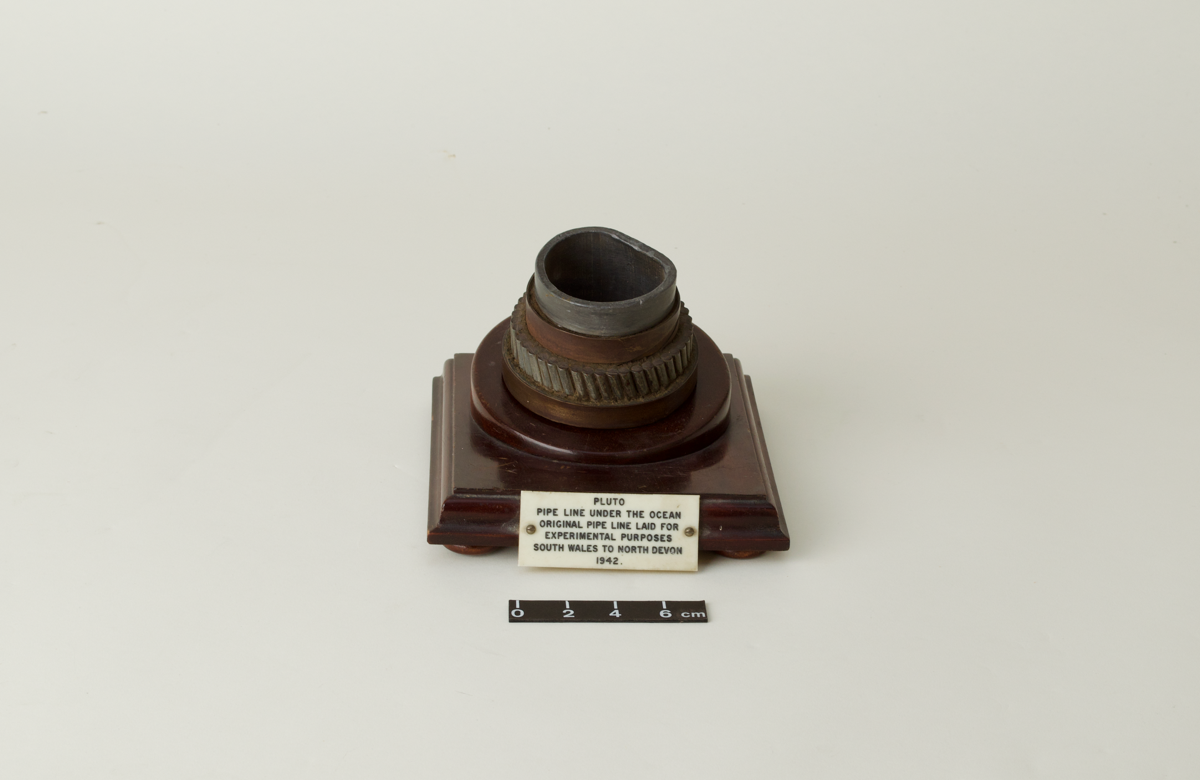
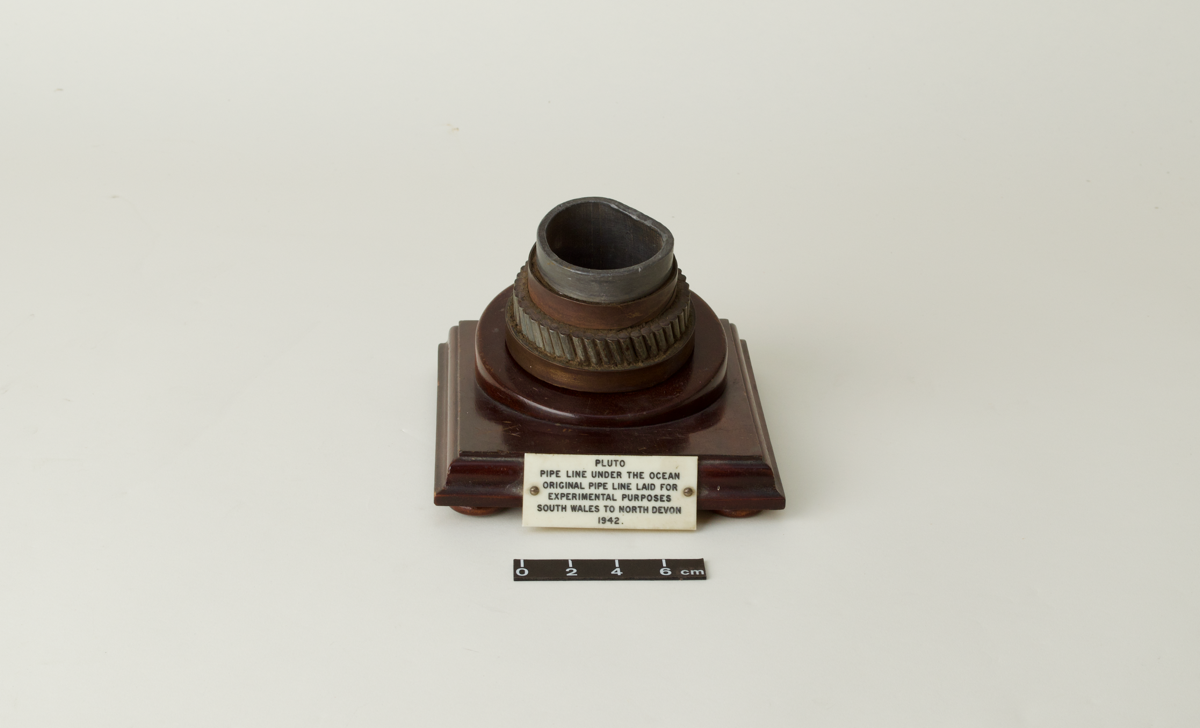
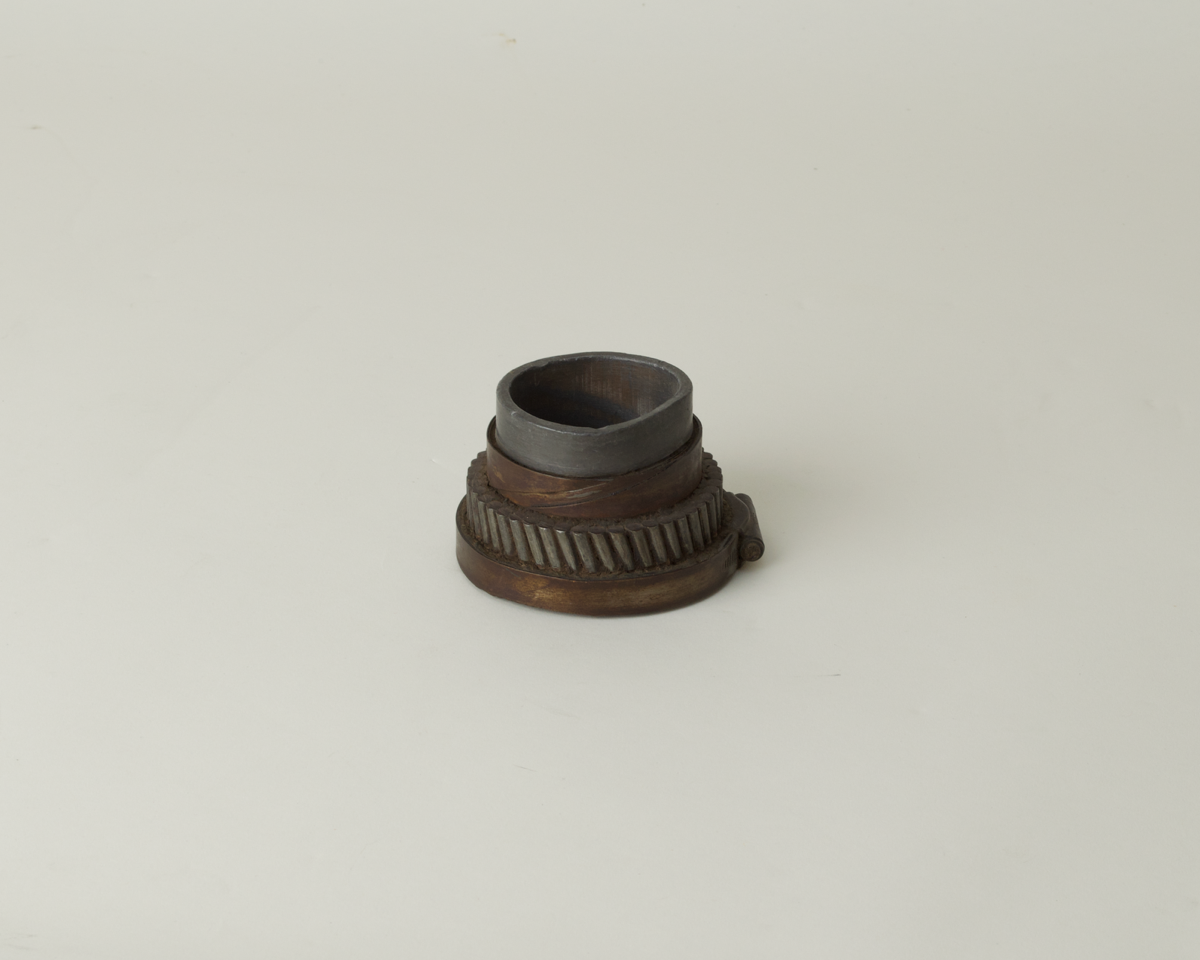
mounted section of pipe from 'PLUTO' (WW2 Pipe Line Under The Ocean), English, 1942
Origin
England
Maker
Class
engineering; military
Earliest Date
1942
Latest Date
1942
Inscription Date
Material
metal (lead, steel, other); plastic; wood
Dimensions
153mm (width of mount), 184mm (depth of mount), 117mm (height of mount and pipe section)
Special Collection
Provenance
Gifted from private individual 03/03/1998
Inscription
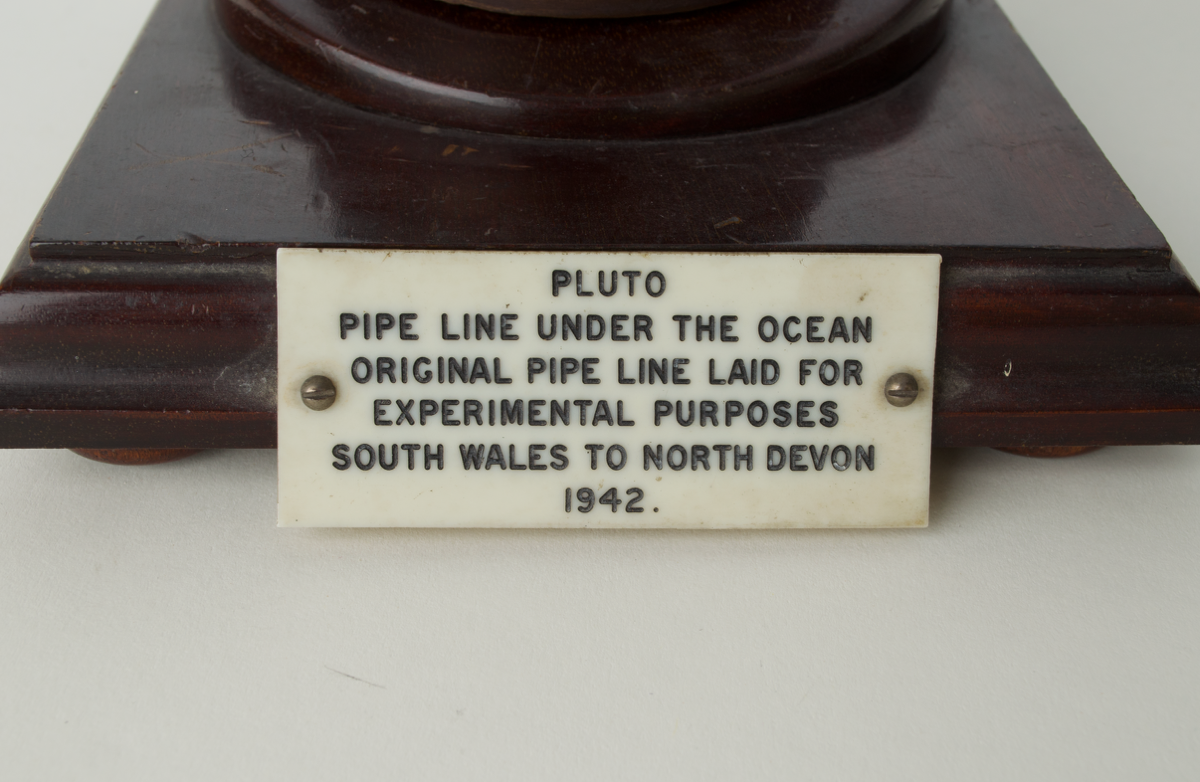
'PLUTO
PIPE LINE UNDER THE OCEAN
ORIGINAL PIPE LINE LAID FOR
EXPERIMENTAL PURPOSES
SOUTH WALES TO NORTH DEVON
1942' (plaque on mount)
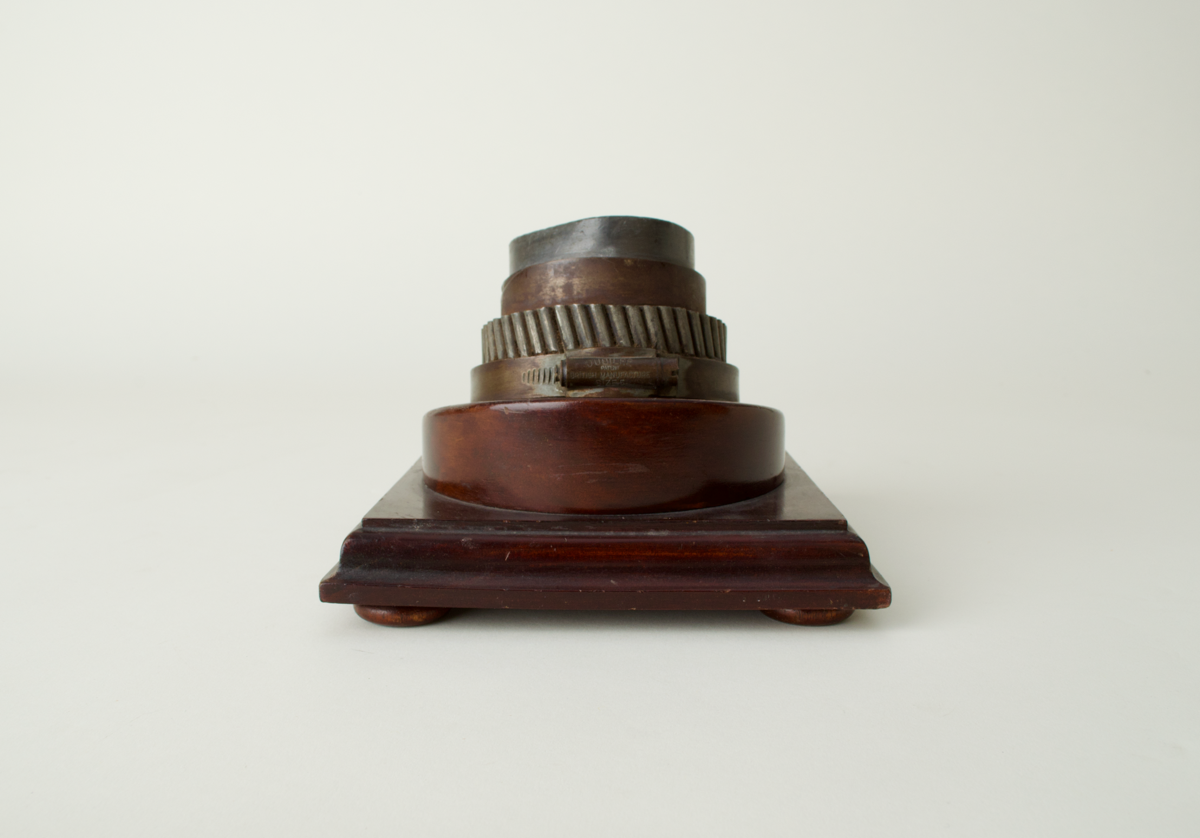
'JUBILEE
PATENT
BRITISH MANUFACTURE
SIZE 5' (fastener)
Description Notes
Mounted section of pipe from 'PLUTO' (WW2 Pipe Line Under The Ocean), English, 1942
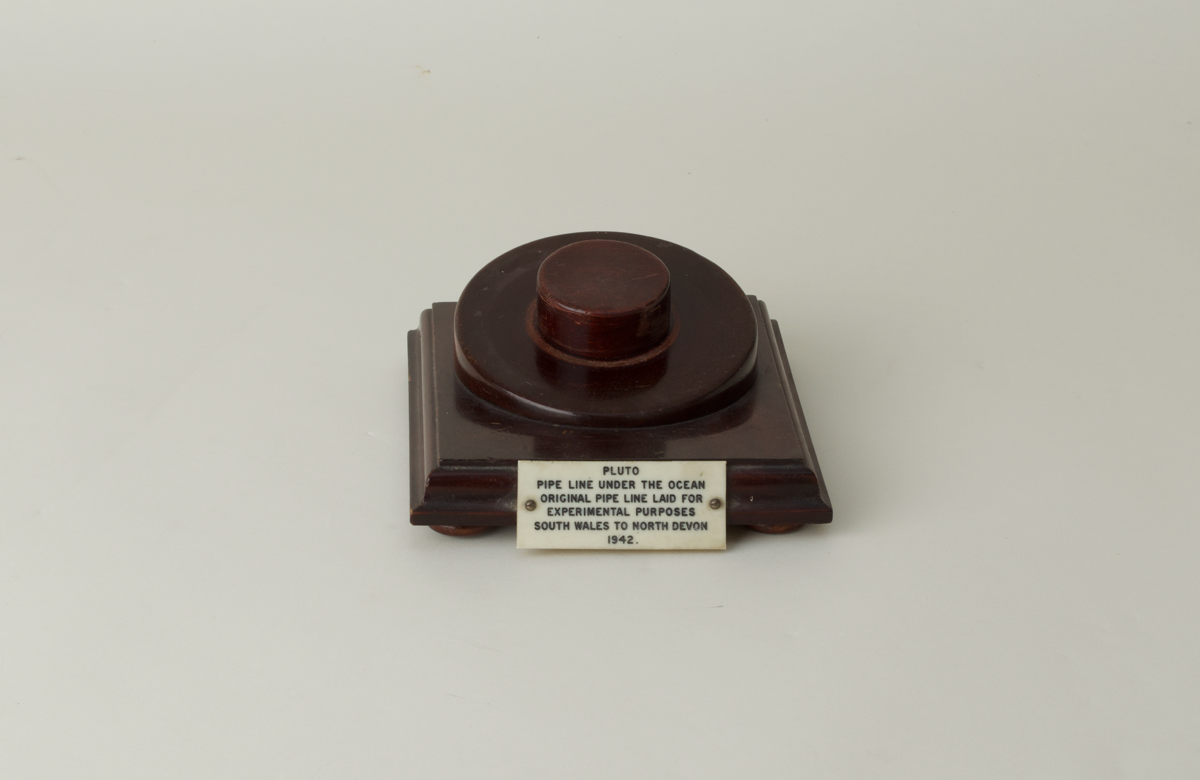
Cross-section of a segment of the experimental pipeline made from steel and lead in four layers. It is displayed on a wooden mount, with commemorative inscription plaque which states 'PLUTO, PIPE LINE UNDER THE OCEAN, ORIGINAL PIPE LINE LAID FOR EXPERIMENTAL PURPOSES SOUTH WALES TO NORTH DEVON, 1942'. It is a section of the original pipeline laid for trialling this underwater system during WW2, in size 5. The pipe has a Jubilee patent, and was manufactured in England.
References
Events
Description
UK government and military personnel recognised the centrality of oil supplies to the war effort. Oil tankers were the conventional method used to transport oil and fuel into war zones. However, these were susceptible to attack by the enemy and were vulnerable to changing weather conditions. Not to mention the fact that they could also block beaches and thus obstruct the movement of men and armaments. So, Project PLUTO was conceived as an innovative method to transport oil safely under the ocean. A specifically designed pipeline crossing the English Channel between England and France was drawn up by scientists, engineers, the armed forces and oil companies: no one had ever attempted to lay a pipeline over such a long distance. The project was centrally orchestrated by Arthur Hartley, chief engineer from the Anglo-Iranian Oil Company, based on the original idea of Admiral Louis Mountbatten. It was planned that storage tanks in southern England would supply petrol to the Allies in France through this underwater pipe. It was a greatly daring and innovative project, lauded by many commentators at the time, including US President Eisenhower.
The first stages of Operation PLUTO began in 1942. The people behind the project were tasked with constructing flexible yet pressure-resistant pipes and leak-free couplings, which was a challenging and slow process. Eventually, a pipeline based on submarine telephone cables, with an armoured outer layer and specially adapted core, was devised. An integrated network of pipelines was deemed to be the safest and least prone to attack system. Fuel was redirected from ports in Liverpool and Bristol through such a network to Dungeness and Shanklin and Sandown, and thereafter onwards to France. There were delays to the completion of the pipelines due to the project's complexity and unprecedented engineering, so PLUTO was not fully operational until the 12th of August 1944. Yet, trials had begun as early as 1942, as this object exemplifies. Indeed, it is likely this section of pipe comes from the 1942 long term trial, which stretched a prototype pipeline from Swansea oil refinery to North Devon. This 27 mile long stretch delivered 38,000 gallons/day for three weeks. Further deep water trials followed and eventually PLUTO was fully operational. Overall, around 500 miles of pipeline were laid across the Channel, by 600 workers and officers. It is estimated that between August 1944 and May 1945 PLUTO delivered over 172 million gallons of fuel to France - significantly aiding the Allies in their advance.
The project was deeply secret from the start, and codes such as PLUTO were used to maintain its hidden identity. Other Disney-related code-names were used for specific sections of pipeline, such as BAMBI and DUMBO. Pumping stations too, were disguised as bungalows, barns, garages and even an ice cream shop!
PLUTO was an innovative and important wartime development, integral to Allied successes, but its impacts did not end in 1945. It was the world's first under-the-ocean pipeline and this influenced subsequent pipeline development too.
26/07/2022
Created by: Eleanor Brittain on 26/07/2022
FM:47536
Images (Click to view full size):