Accession No
6758
Brief Description
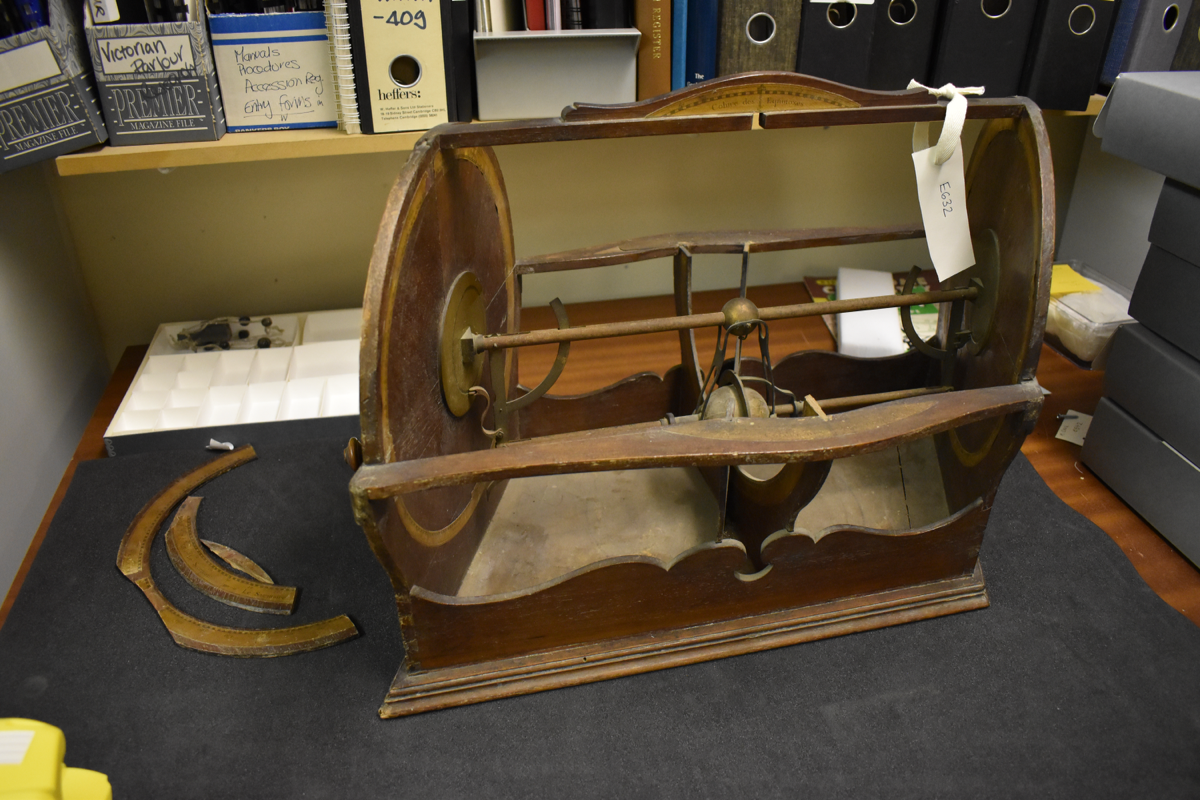
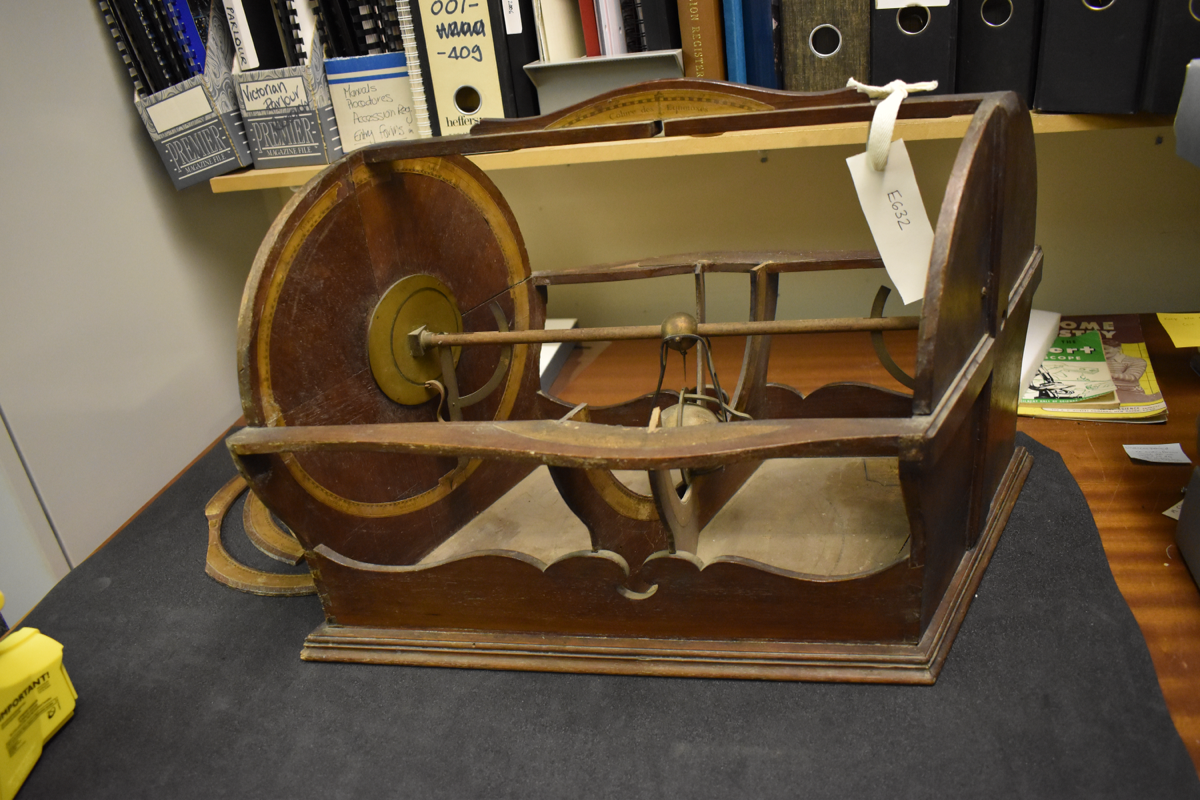
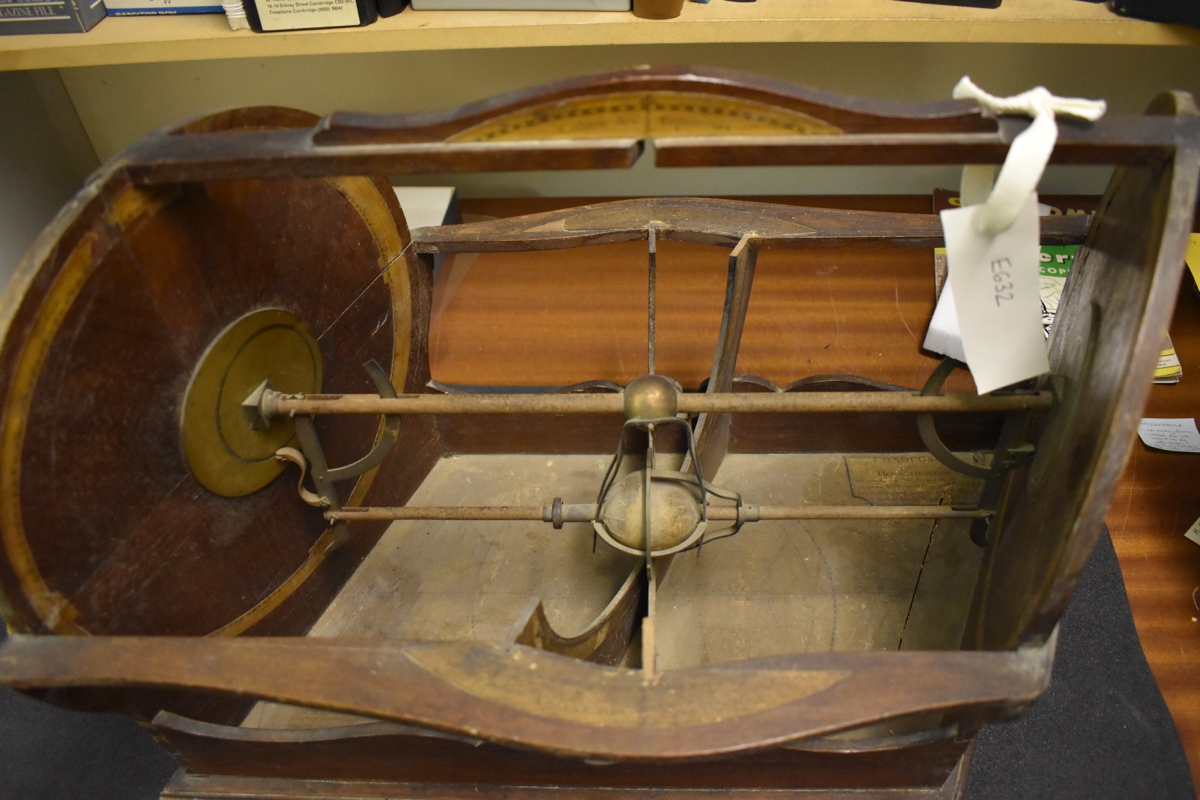
loxocosm, by Mr Flecheux, French, 1780 (c)
Origin
France
Maker
Flecheux [inventor]
Class
astronomy; demonstration
Earliest Date
1780
Latest Date
1780
Inscription Date
Material
wood; paper (card); metal (steel, brass, other)
Dimensions
600mm (width), 300mm (depth), 400mm (height)
Special Collection
Provenance
Purchased from Aguttes, October 2020
Inscription
The same inscription on two labels:
"Loxocosm or demonstrator of the movements of the terrestrial globe, the phenomena behind the seasons and inequality of the days, sunrise and sunset all over the Earth. Approved by the Royal Academy of Sciences in December 1780. Invented by Mr FLECHEUX in 1780"
"Loxocosme ou démonstrateur des mouvements du globe terrestre, des phénomènes qui opèrent les Saisons et l'inégalité des jours, le lever et le coucher du Soleil par toute la Terre. Approuvé par l'Académie Royale des Sciences en décembre 1780. Inventé par Mr FLECHEUX en 1780."
Description Notes
Loxocosm, by Mr Flecheux, French, 1780c.
Rare loxocosm, a device for demonstrating the earth's movements in relation to the sun each year.
Large wooden structure with metal parts and a handle which turns around, to make the earth rotate. Zodiac and equinox print details on the wood, and two labels with the same inscription on each half of base.
Wooden with steel rods, brass arcs and paper/card labels.
Some damage and missing parts, and three broken off bits are now separate from object.
References
Events
Description
A loxocosm, also known as a tellurion, is a device which shows how the inclination of the earth's axis causes the day's length to vary from season to season. It is an astronomical demonstration device, invented by Sieur Flecheux. It is related to the orrery, which illustrates the relative positions and motions of the planets and moons in the Solar System in a heliocentric model. They were often used to teach astronomy at universities.
09/09/2022
Created by: Eleanor Brittain on 09/09/2022
FM:47551
Images (Click to view full size):