Accession No
6777
Brief Description
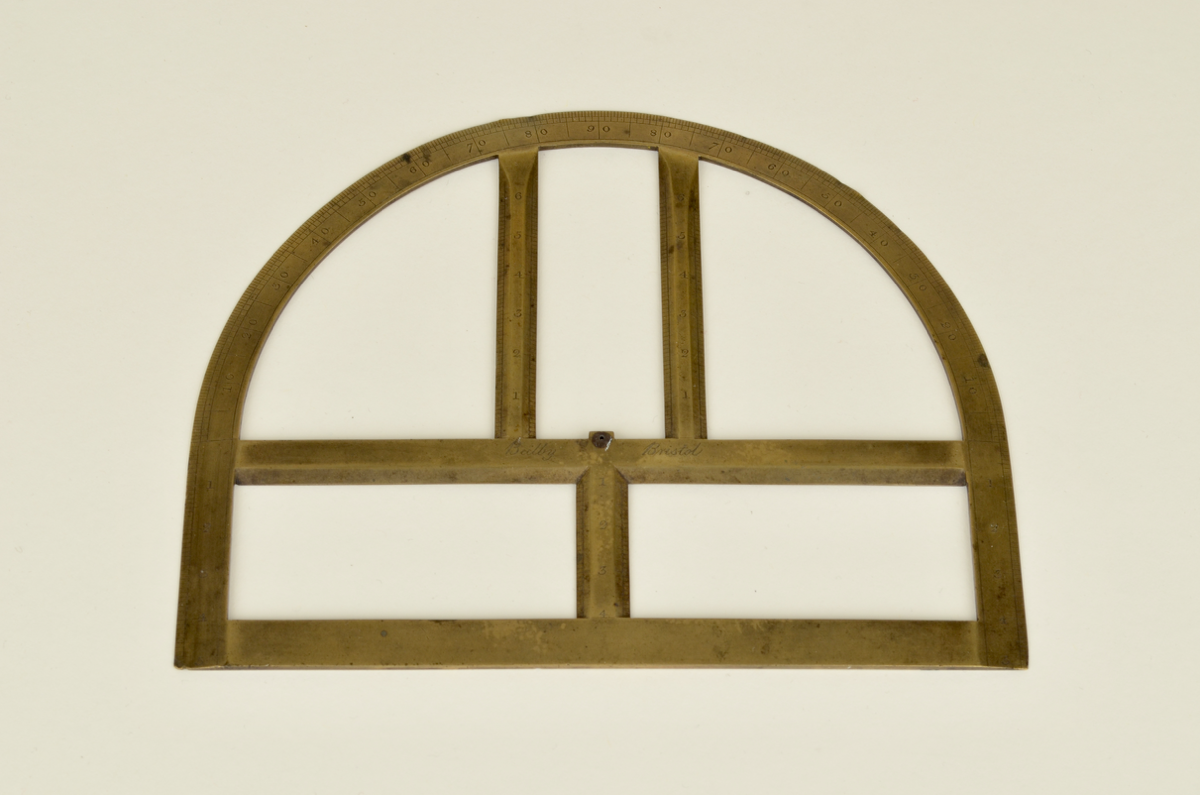
brass protractor, by Beilby, English, 1815 (c)
Origin
England; Bristol
Maker
Beilby
Class
surveying; mathematics
Earliest Date
1815
Latest Date
1815
Inscription Date
Material
metal (brass)
Dimensions
width 170mm, depth 137mm
Special Collection
Provenance
Purchase from Flints Auctions in February 2023.
Inscription
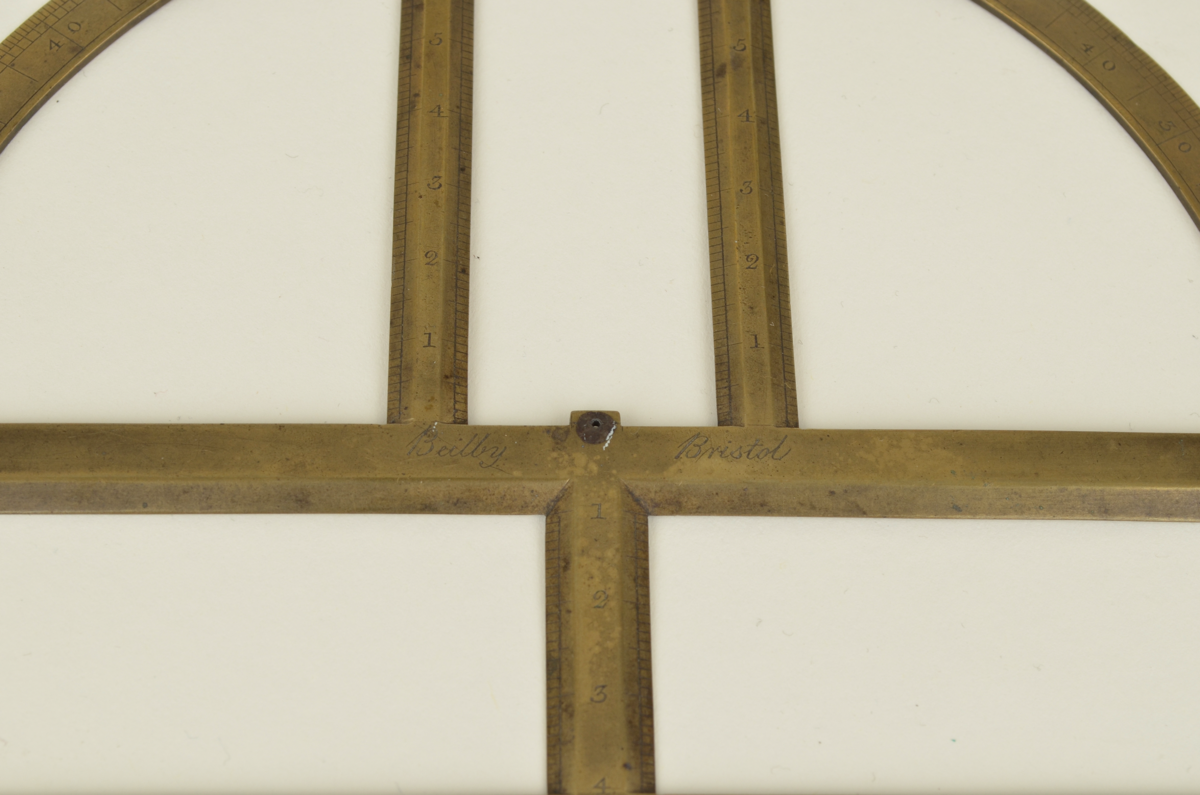
"Beilby Bristol"
Description Notes
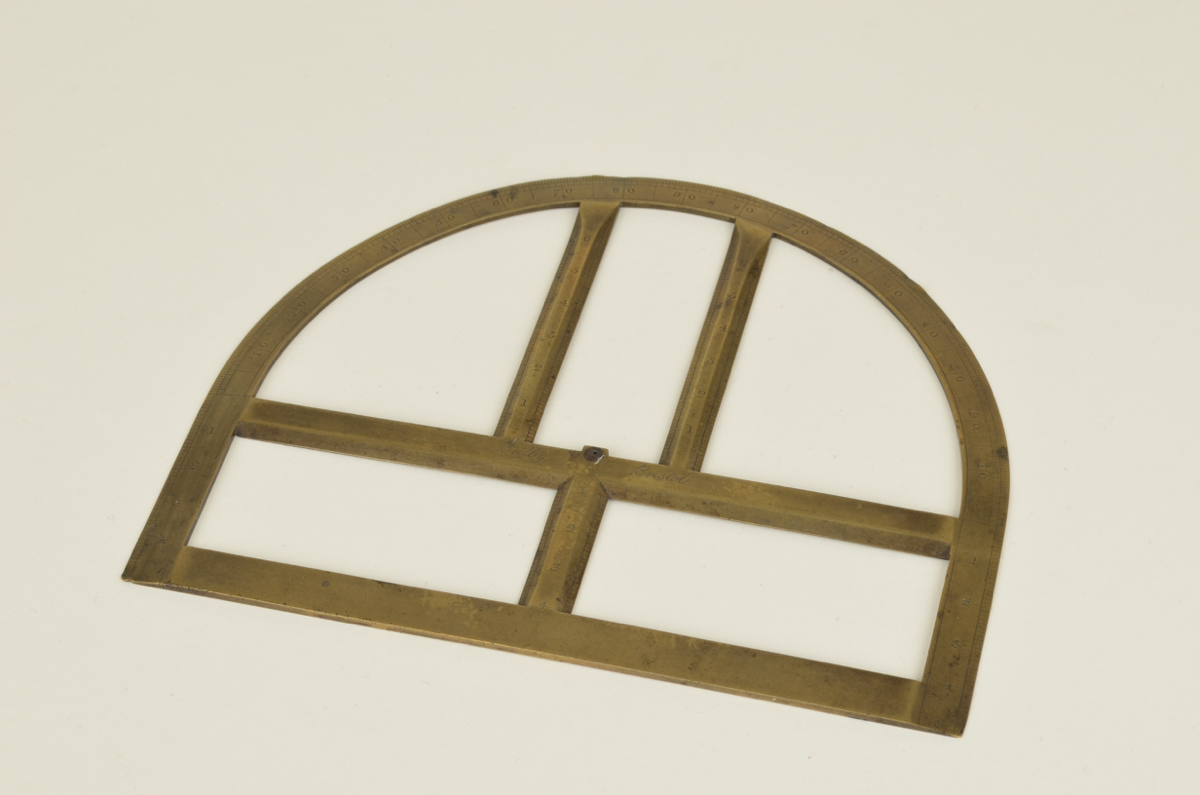
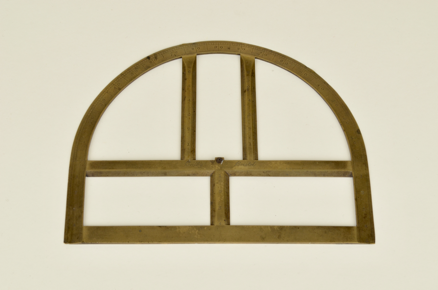
Brass protractor, by Beilby of Bristol, English, c. 1815.
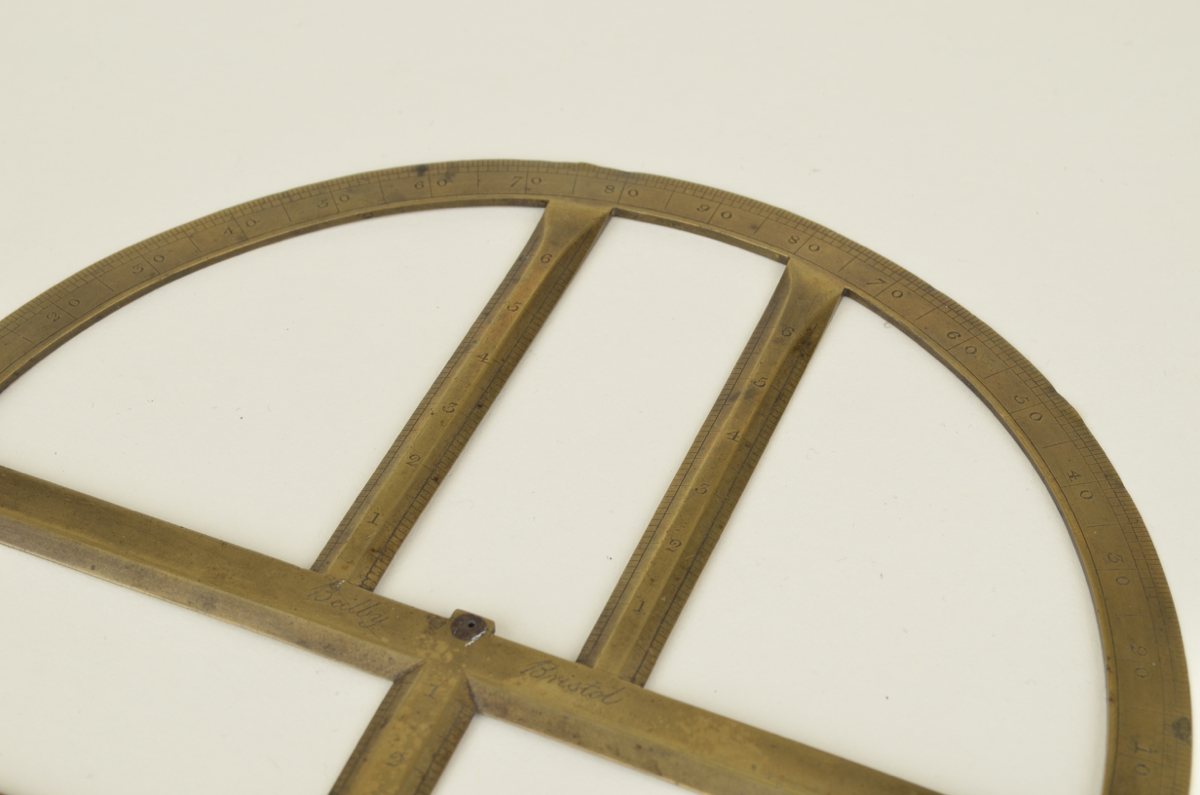
This instrument has a 180-degree protractor divided to half a degree, two upright bars 10 degrees away from the vertical 90 degree, both with 1 to 6 engravings. A hole is situated in the middle of the upper horizontal bar, with "Beilby Bristol" inscribed on it and three extra vertical bars beneath, the left and right of which were engraved 1 to 5, and the middle 1 to 4. All engravings on vertical bars are in metric measurement.
Complete.
References
Events
Description
A protractor is an instrument that measures angles. It can be semi-circular (180 degrees) or full circular (360 degrees).
What is special about this one is that the lower part beneath the semi-circular, which bears three bars that form two sections, allowing viewers to see through. This could be a later adaptation of Thomas Heath (1714-1757, possibly active time)'s product, which involves two smaller windows on the bottom of a protractor. The best presumption nowadays is that both collections are transversals, which are early models before the vernier scale was invented in 1631 and allowed people to measure in finer graduation and gain better accuracy.
The (possible) transversal manufactured by Thomas Heath is now in Science Museum Collection, obj. no. 1928-941, "semi-circular protractor 12-inch".
Charles and Richard Beilby were brothers. They were scientific instrument makers and owned a business in Bristol between 1808 and 1821, which was taken over by Thomas D. King and his father, John King, who were also scientific instrument makers.
Thomas Heath (1719-1773), English instrument maker. He was in the business in London with his apprentice and later partner Tycho Wing (1726-1773), and the brand was named Heath and Wing (1751-1773).
17/03/2023
Created by: Guey-Mei Hsu on 17/03/2023
FM:47593
Images (Click to view full size):