Accession No
6792
Brief Description
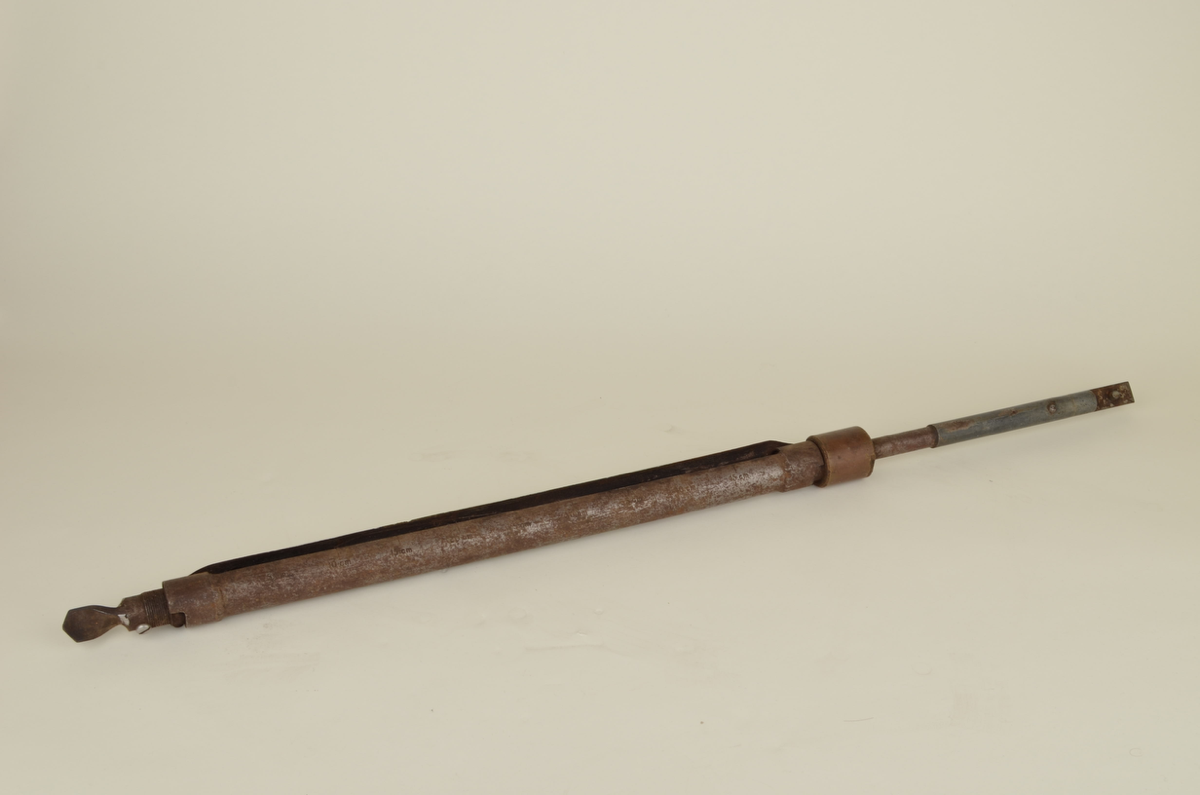
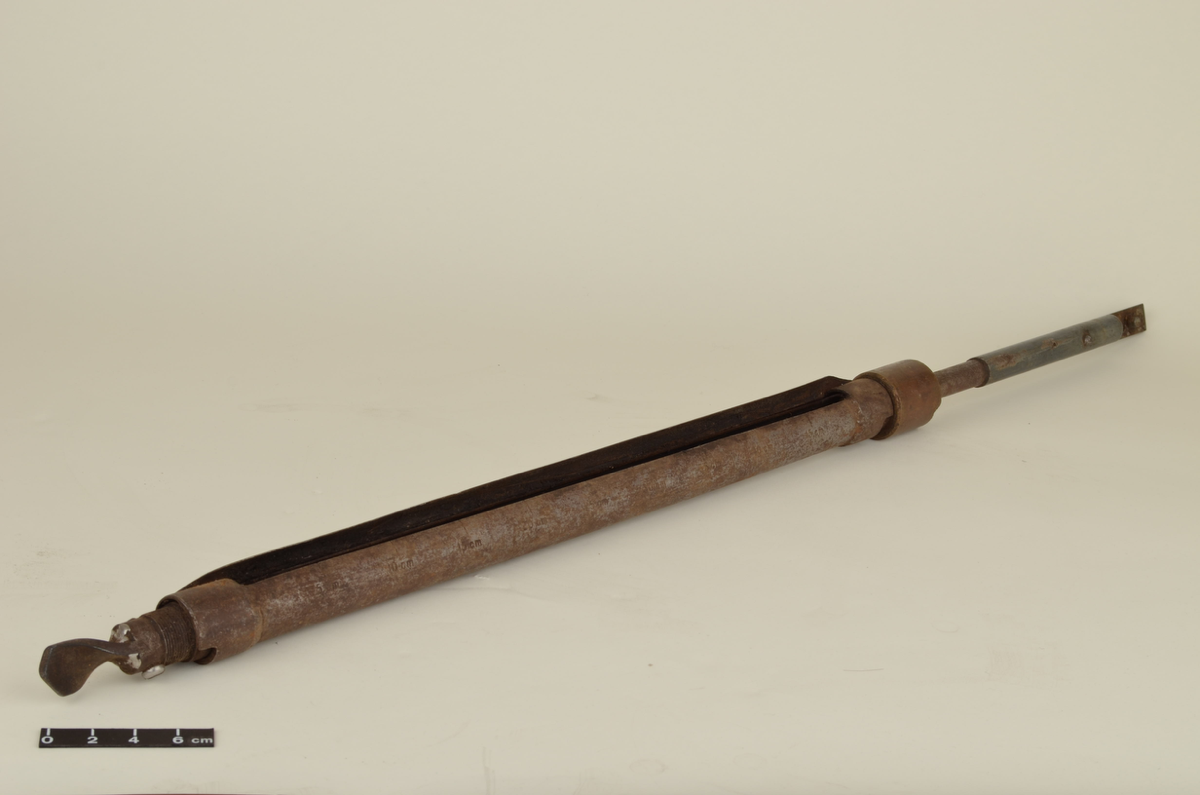
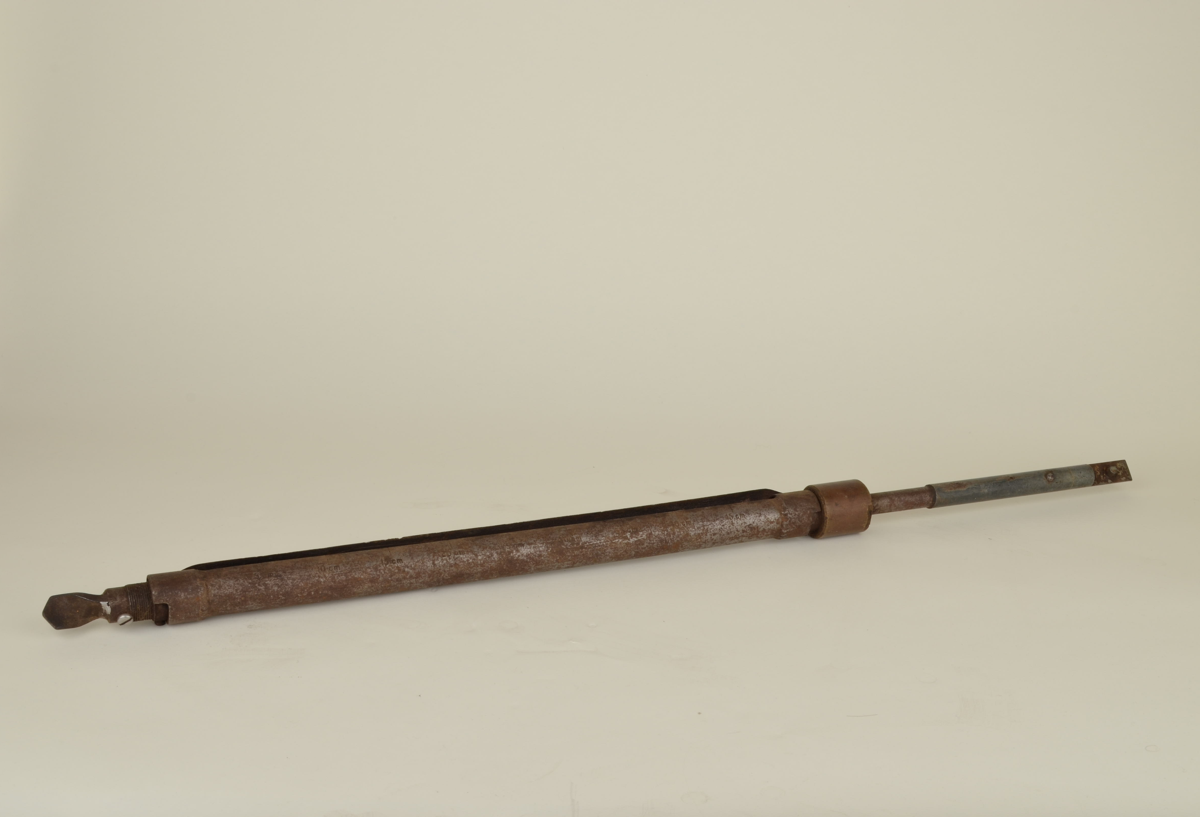
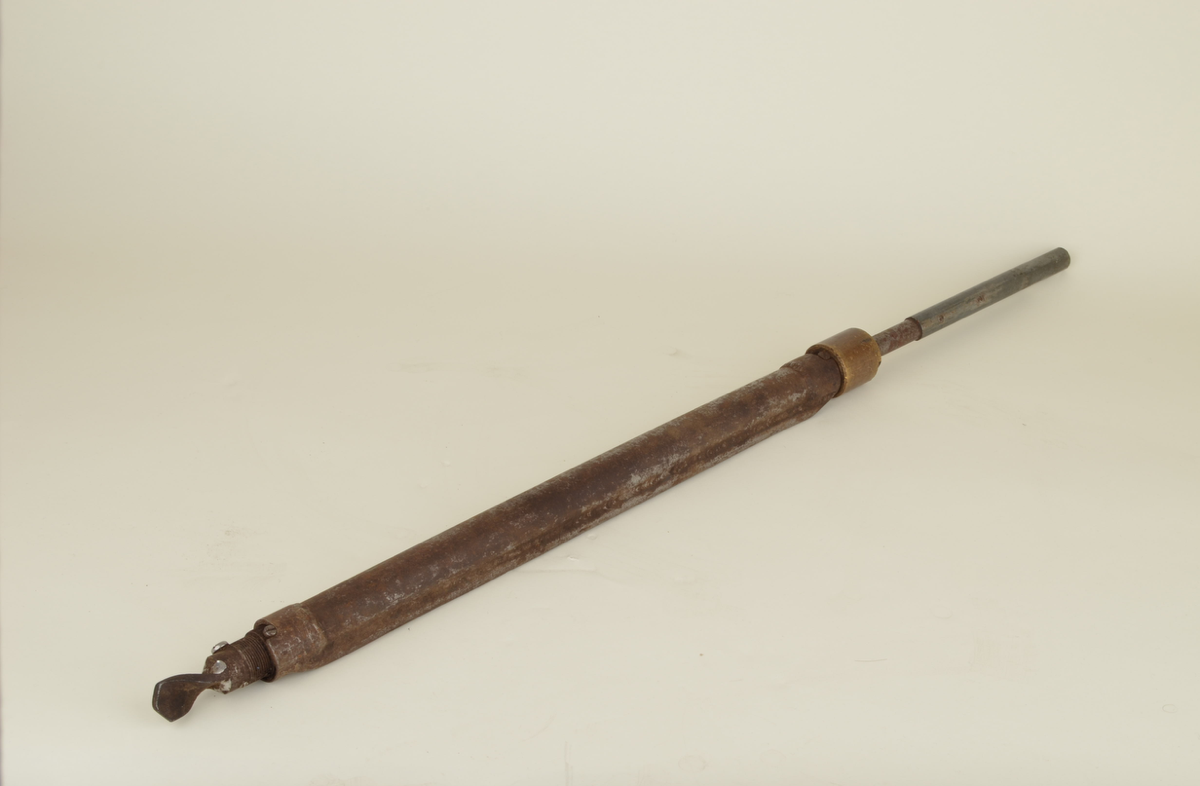
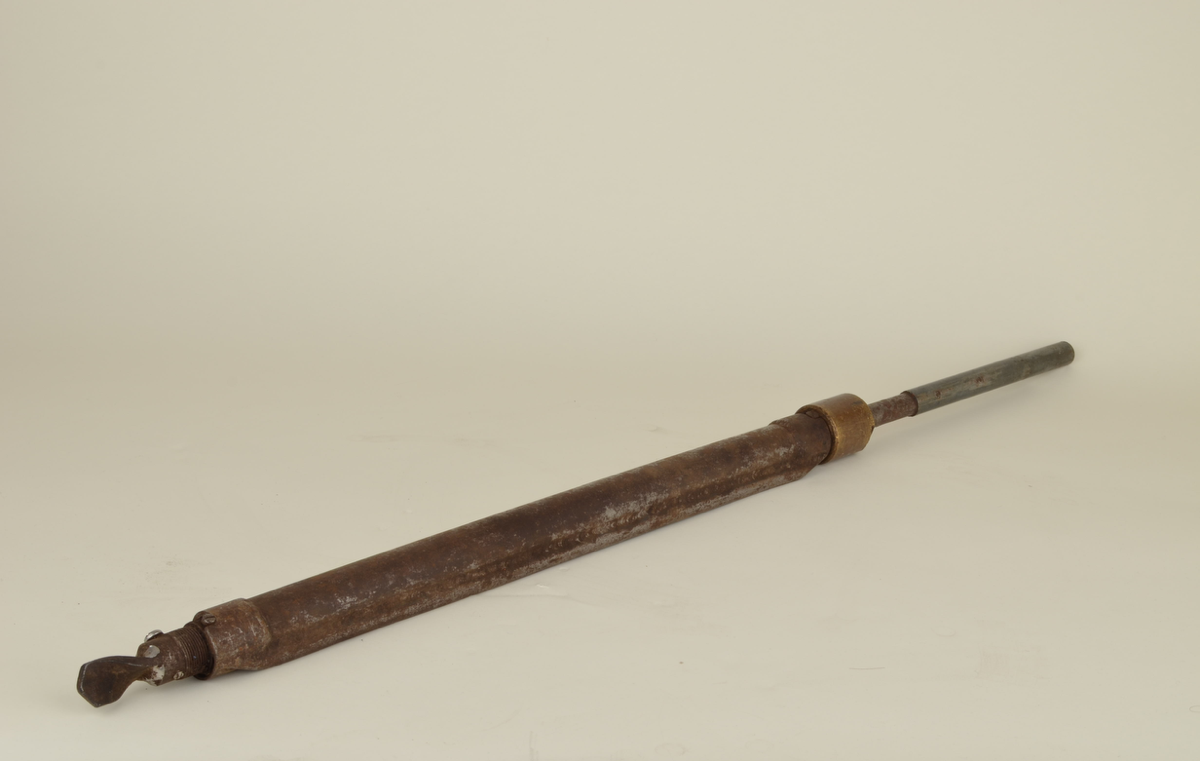
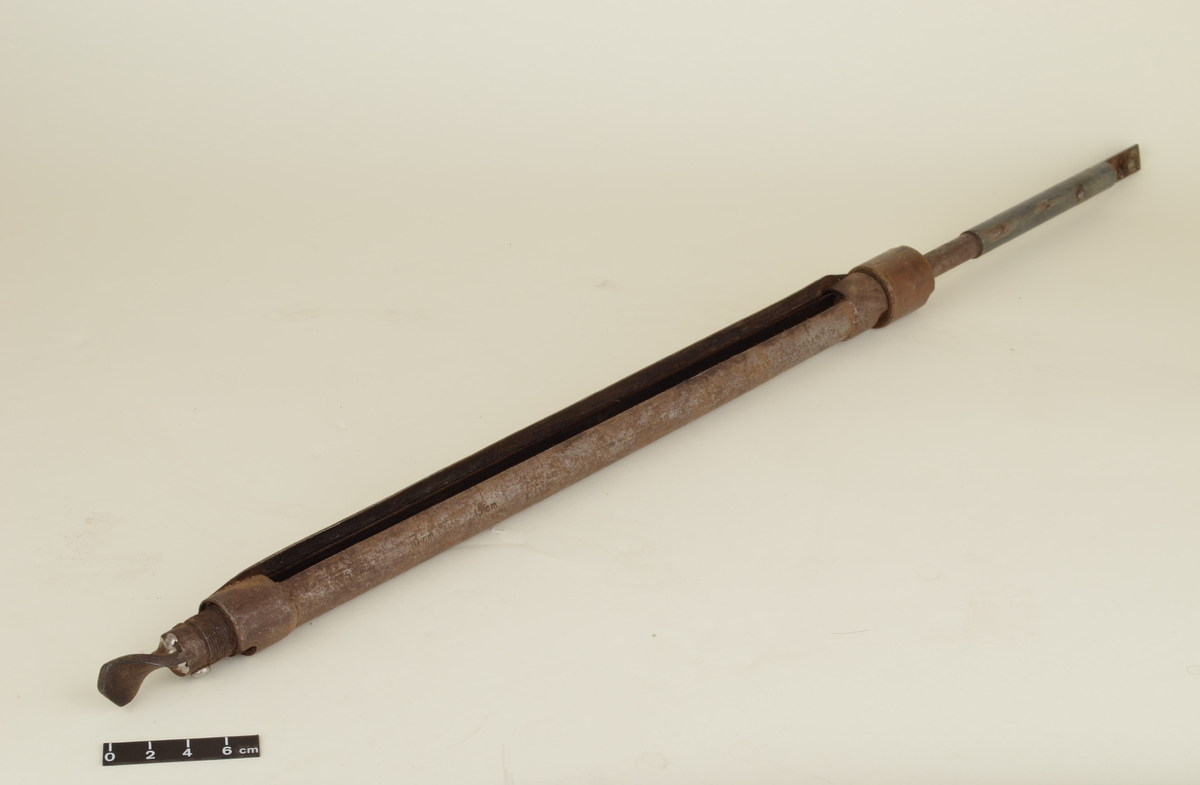
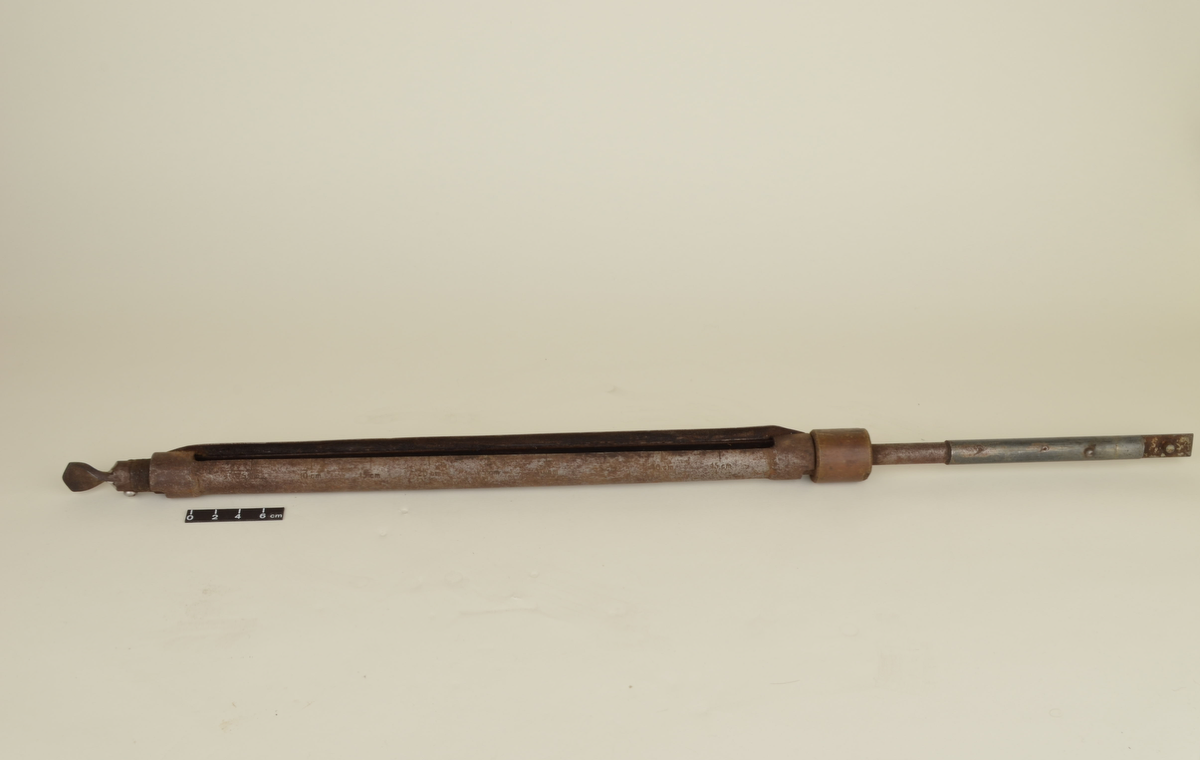
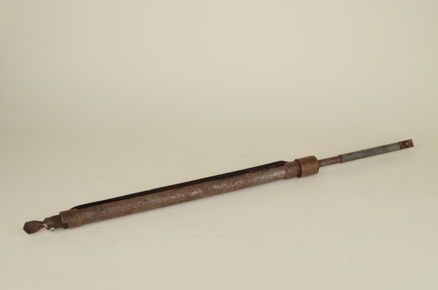
borer, used by Sir Harry Godwin, mid-20th Century
Origin
Maker
Class
earth science
Earliest Date
1900
Latest Date
1985
Inscription Date
Material
metal (steel?)
Dimensions
length 1014mm; diameter 50mm
Special Collection
Cambridge Quaternary Research Collection
Provenance
Donated by the Department of Geography, University of Cambridge. Used by Sir Harry Godwin, founder and first director of the Subdepartment of Quaternary Research (SDQR)
Inscription
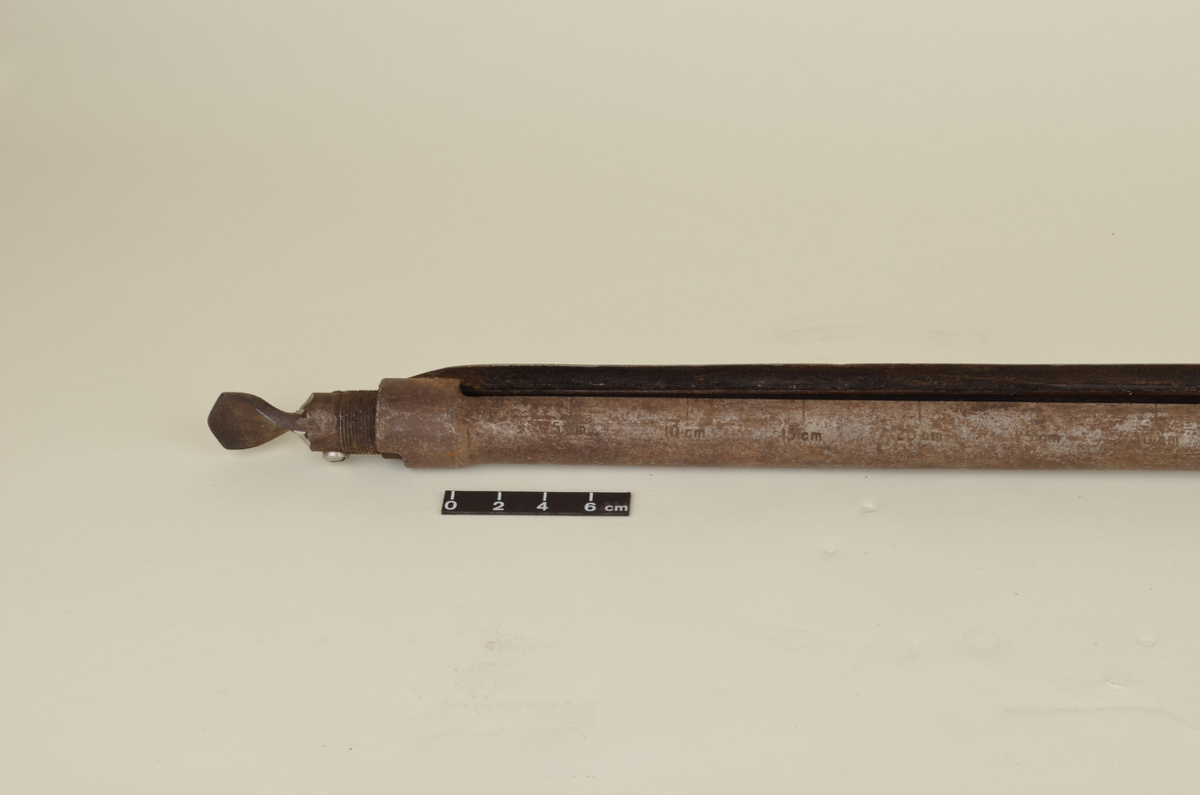
'L.H.' [on top of body]
Description Notes
The object is a long tool of sturdy metal. The handle is narrow, while the main body is slightly wider. The main body contains a hollow cavity, and the outer sleeve can rotate to enclose it. The outer sleeve has a bladed edge that stands slightly proud. The bottom tip of the device has a drill head with two flanges. Along one side of the outer sleeve is a scale from 5cm–45cm in 5cm increments. The top end of the handle is flattened and has a lug to allow a cross-bar to be mounted.
No distinguishing marks. Unclear origin.
References
Events
Description
This tool is used for taking samples of soil – as you can see, it’s been well-used! Its long, narrow shape and sharp end allow it to be driven into the earth.
The centre is hollow, and a twisting motion allows it to open and close. The blade on the edge scoops soil into the chamber. This soil is then taken to a laboratory to be examined, or inspected on-site to get a quick assessment of its contents.
Harry Godwin
---
Sir Harry Godwin was a botanist and ecologist who founded the Subdepartment of Quaternary Research (SDQR) within the Department of Geography. As a child, he was a dedicated boy scout, which possibly helped develop his taste for outdoor work. He was interested in a wide range of subjects starting from the time he was at school, and never let his curiosity go unsatisfied. At Clare College, he studied botany, geology, and chemistry, and was encouraged by his supervisor to study fungi and plant diseases, too. After he had graduated and began his own research, he was torn between plant physiology and ecology. He picked both.
Godwin worked to combine botany with ecology, studying plants in the field rather than under laboratory conditions.
In addition to founding the SDQR in 1948, he served as its director until 1966, and he was also the Professor of Botany at Clare College between 1960 and 1968. Even after he retired from academia, he wasn’t idle. He threw himself back into his field work and research, and published several books which are considered foundational to the subject of Quaternary research.
Quaternary Research
---
The Quaternary Period is the period from about 2.58 million years ago up to the present. Quaternary Research, then, is the study of this period: it’s the study of the rocks, plants and animals found in this time period, and how they have changed over time. The Quaternary period is also known as the Ice Age due to the presence of permanent ice sheets at the poles, and it is characterised by alternating glaciations and interglacial periods.
Because the goal of the subject is to understand everything about the period, Quaternary Research requires contributions from scientists in many different fields: from zoologists and botanists to geologists and physicists, and more besides. Quaternary research is particularly focussed on the environment and ecosystems, and changes in the climate. The field is especially important for understanding the impact that humans are having on the environment. It’s also important for archaeology, providing a reference point when studying human activity.
The objects in this case represent the various stages of research, from field work, to cataloguing, to intensive laboratory study, but this is only a small part of what Quaternary Research is all about.
18/05/2023
Created by: Ewan Wilson on 18/05/2023
FM:47618
Images (Click to view full size):