Accession No
6827
Brief Description
standard metre, used in the Cavendish Laboratory, English, 1882
Origin
England; London
Maker
L. Oertling London
Class
weights & measures
Earliest Date
1882
Latest Date
1882
Inscription Date
1882
Material
metal (brass, silver); wood; felt
Dimensions
box: 1120mm (width), 100mm (depth), 60mm (height); standard metre: 1090mm (width), 26mm (depth), 30mm (height)
Special Collection
Provenance
Donated by the Cavendish Laboratory in April 2025.
Inscription
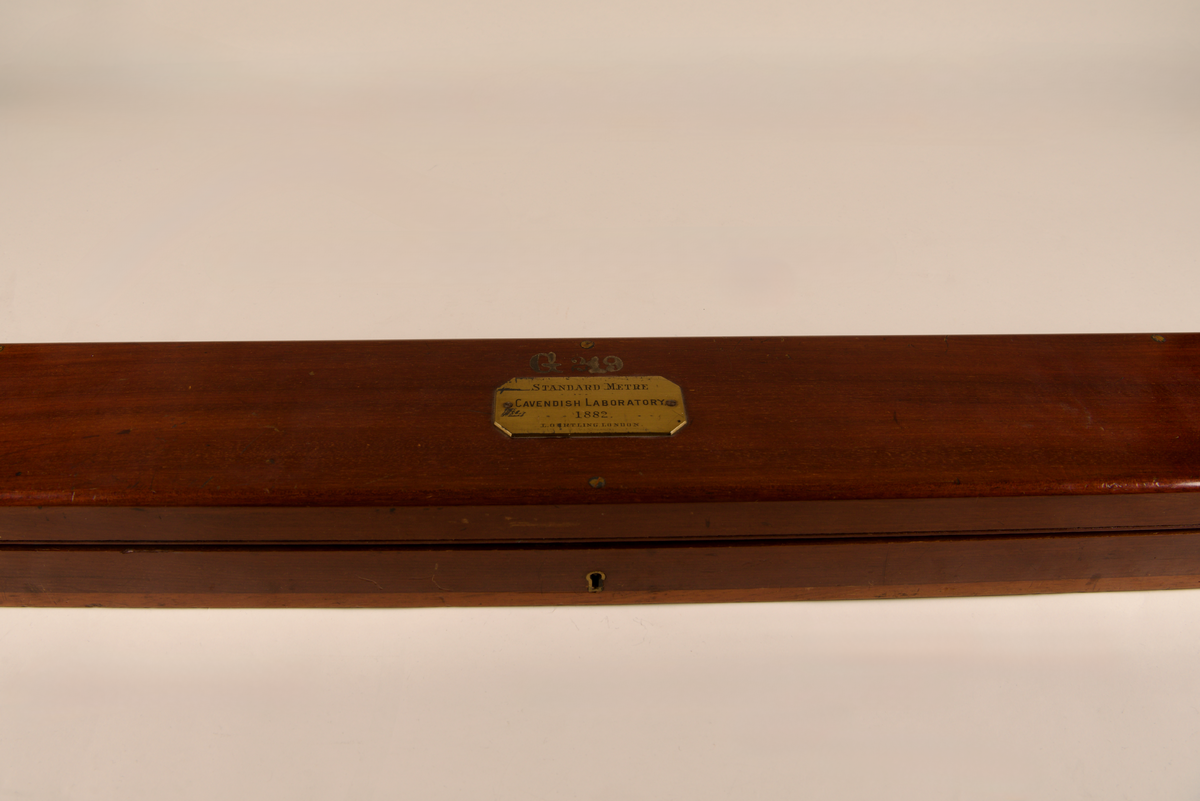
STANDARD METRE
CAVENDISH LABORATORY
1882
L. OERTLING LONDON [plaque on top of box]
G 219 [above plaque on box]
SECURE LEVER
VR [on clasp fixing inside box]
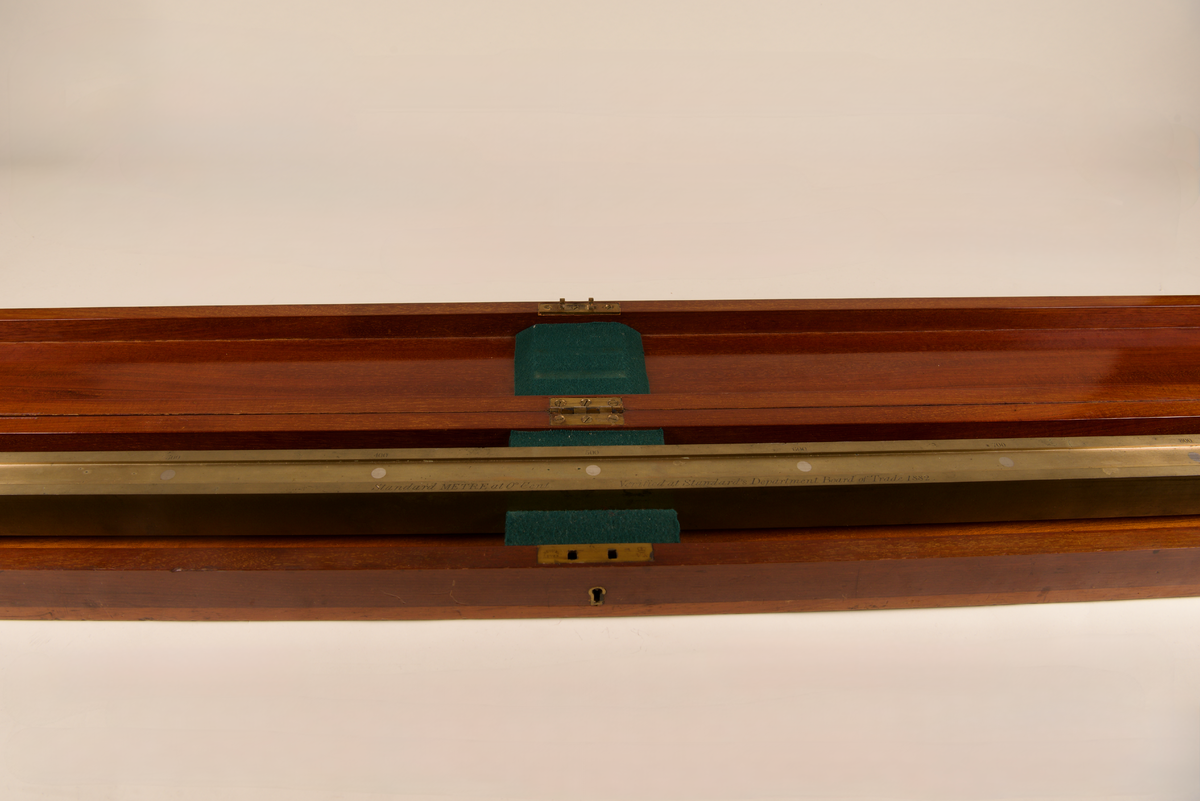
Standard METRE at 0° Cent.
Verified at Standard's Department Board of Trade 1882.
L. Oertling London [on standard metre]
Description Notes
Standard metre, English, 1882.
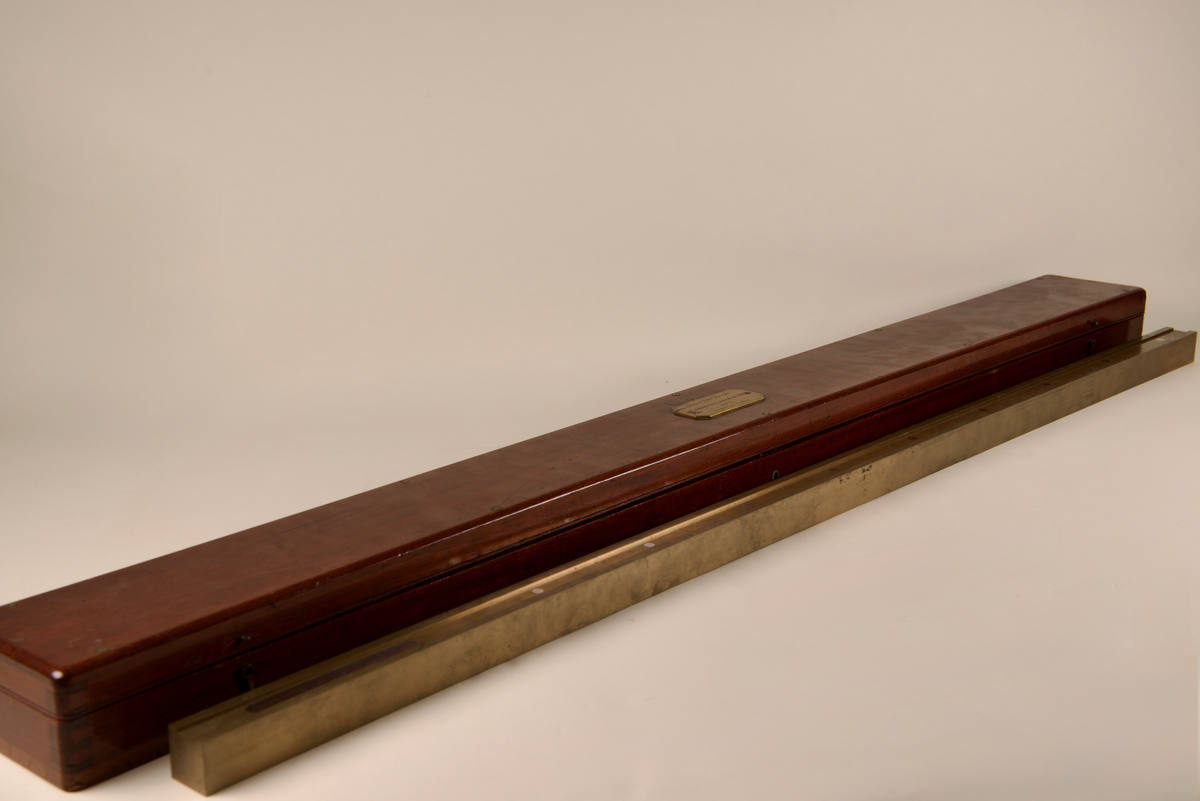
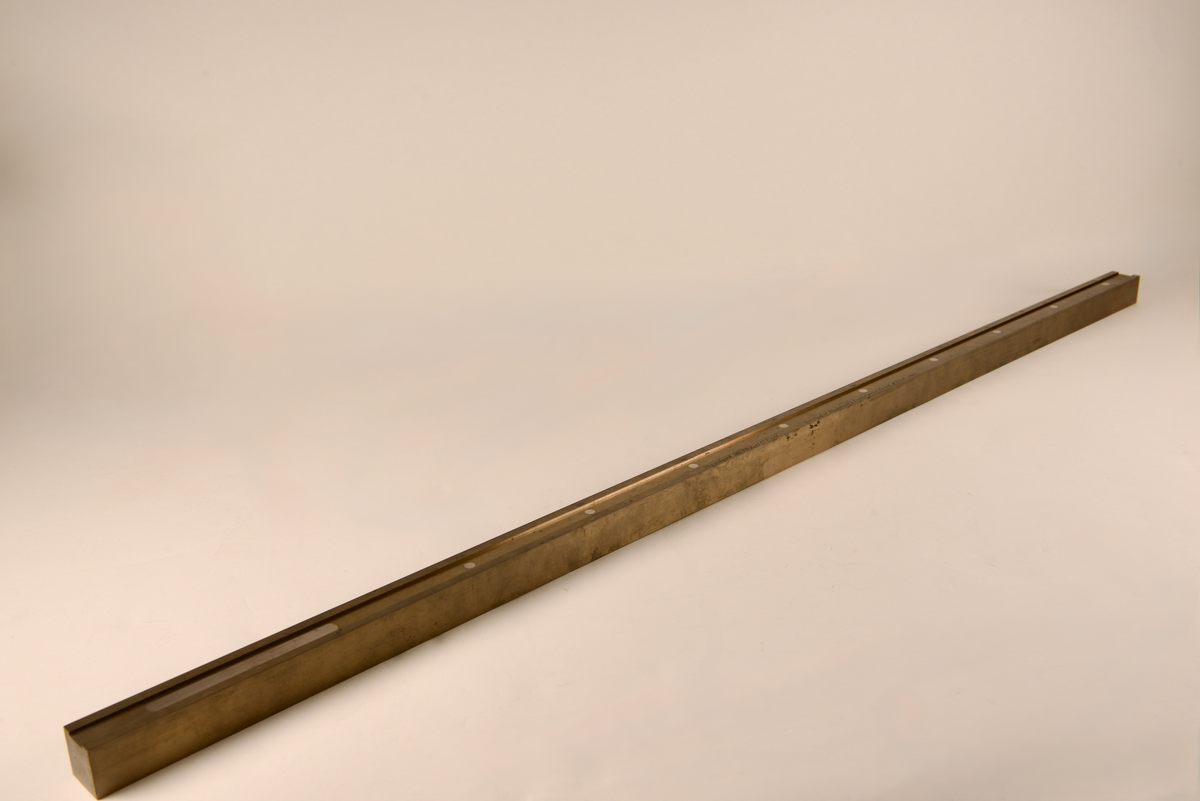
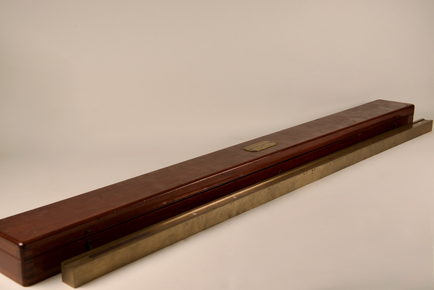
Metre rule in fitted wooden box. The metre rule itself is a square-ended rectangular prism, and is made of solid brass. The top of the object has an indentation running the entirety of its length, with silver circles marking every 100mm. There is a longer silver plaque which also includes marks for each individual millimetre. These silver marks are matched by numerical markings, indicating every centimetre for the first 10cm, and then only at every 100mm up to 1000mm. The brass shows tarnishing and dulling consistent with its age.
The wooden box is notably wider than the metre rule. It is made from two types of wood; one a deep red-brown used for the most of the sides and the lid, and the second a duller, more orange wood, of which there is a single piece to comprise the base of the box on the interior and the bottom of the sides of the exterior. The box is hinged for opening, and there are two metal clasp hooks for fastening. There is also a key hole, though no key was present at time of accessioning. The top of the box includes a plaque labelling the object as a standard metre, naming the Cavendish Laboratory as the owner, listing L. Oertling as maker, and dating the object to 1882.
On the interior of the box, there are three indented felt holders, two at the extremities of the box and one in the middle, to hold the metre rule. There are a further corresponding three felt pads on the inside of the lid of the box, to stop the metal from rattling against the wood of the box.
References
Events
FM:47714
Images (Click to view full size):