Accession No
6835
Brief Description
replica silver sundial, by Gebrüder Deyhle, German, 1977
Origin
Germany
Maker
Gebrüder Deyhle
Class
dials
Earliest Date
1977
Latest Date
1977
Inscription Date
1977
Material
metal (silver, brass); wood; cloth
Dimensions
box: 195mm (width), 220mm (depth), 213mm (height); dial: 135mm (width), 135mm (depth), 180mm (height)
Special Collection
Provenance
Purchased from Tesseract July 2025. Purchased by a private individual at auction c. 2000.
Inscription
G.F.Brunder fecit Aug. Vind: [outside of collar around circular plate]
MADE IN GERMANY [base of object]
DEYHLE - ARGENTARIUM
Hoc instrumentum, quod pertinet ad usum scientiae,
DEYHLE summa arte imitando exemplar,
quod est in Museo Germanico Nationali Nuernbergensi,
argento vero 925/000 effinxit.
100/004 A.D.MCMLXXVII [brass plaque inside lid of box]
Description Notes
Replica silver sundial, by Gebrüder Deyhle, German, 1977.
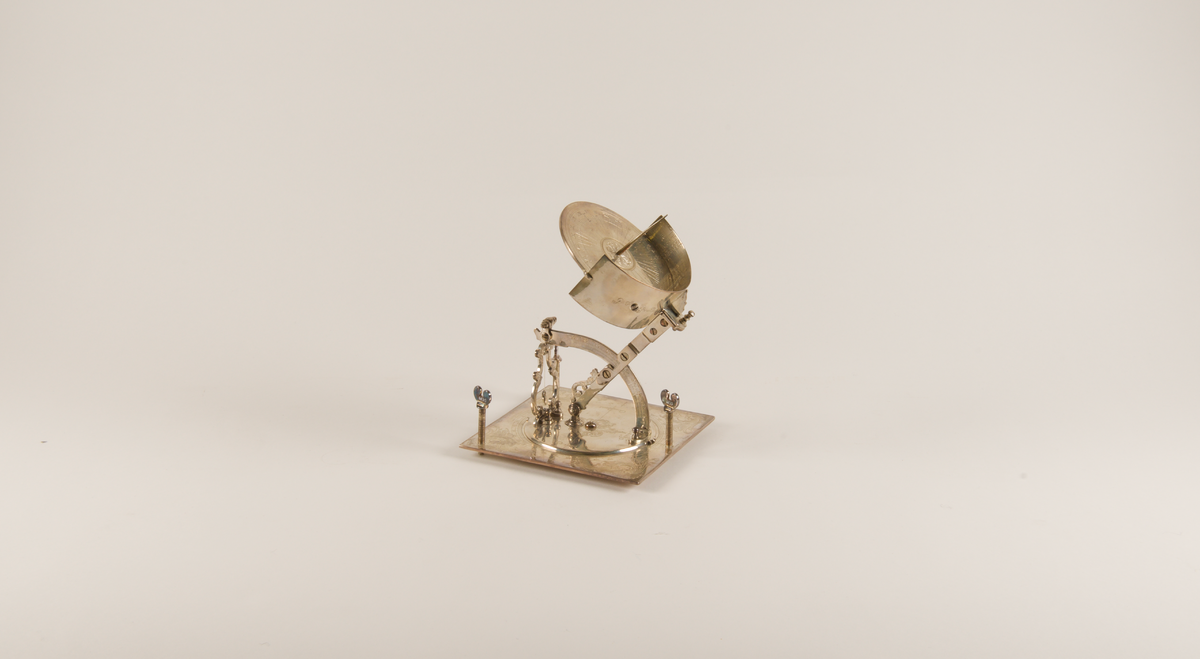
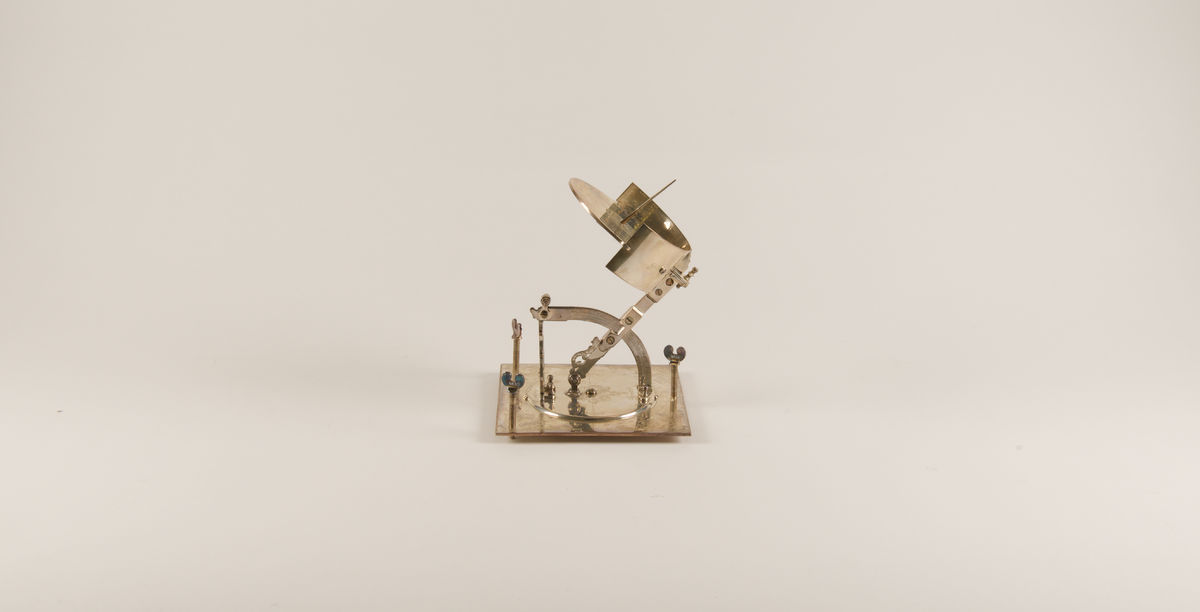
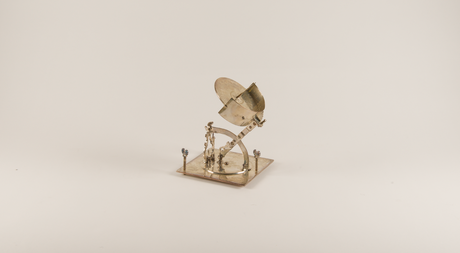
Circular silver sundial set by way of a hinged arm onto a square base. The top plate of the dial is inscribed with hour lines, marked twice with Roman numerals I-XII. The hour lines are further subdivided into four parts. A gnomon sits perpendicular to the plate, with a floral decorative element at the point of intersection. The plate is surrounded by a half-collar, which extends downwards so that it is proud of the plate both above and below. The inside of the collar is inscribed with gridlines, the vertical lines of which correspond to the hour and half-hour lines on the plate. These are labelled with Roman numerals VI-XII and I-VI. The ends of the collar are labelled "Sommer" and "Frühling", and the horizontal gridlines are labelled on one side as 23, 13, 3 Sept, and 23, 13, 3 Aug. The other is labelled as 21, 31 Mart, 10, 20, 30 Apr, and 10 Maj. The reverse of the plate is near identical to the obverse, with the exception of the collar inscriptions, which instead read "Herbst" and "Winter". The dates also differ, instead reading 12, 2 Nov, 23, 13, 3 Oct and 23 Sept on one side, and 31 Jan, 10, 20 Febr, and 1, 11, 21 Mart on the other.
The plate is attached to the square base with an arm, which can be adjusted along a quarter-circular bracket. This bracket is itself attached to the base, and it is from this that a piece of string with attached plumb bob is suspended. The bracket is inscribed with angle-lines 0-90˚, numerically marked every 10˚. Both the hinged arm and bracket are attached to the base on a circular insert, which can rotate a full 360˚. This circular insert has a central floral decorative motif, and cardinal point lines, labelled in Latin. At the north and south cardinal points, there are pointers which extrude a small distance out from the circle, which can be lined up to a surrounding degree scale on the main body of the base plate. This is broken into four sets of 0-90˚ scales, marked down to the individual degree, and then numerically at every 10˚. The rest of the base plate is richly decorated with floral patterns. There are 3 screws, on which the object rests. The underside of the base plate features a central bolt, and Gebrüder Deyhle's maker's mark.
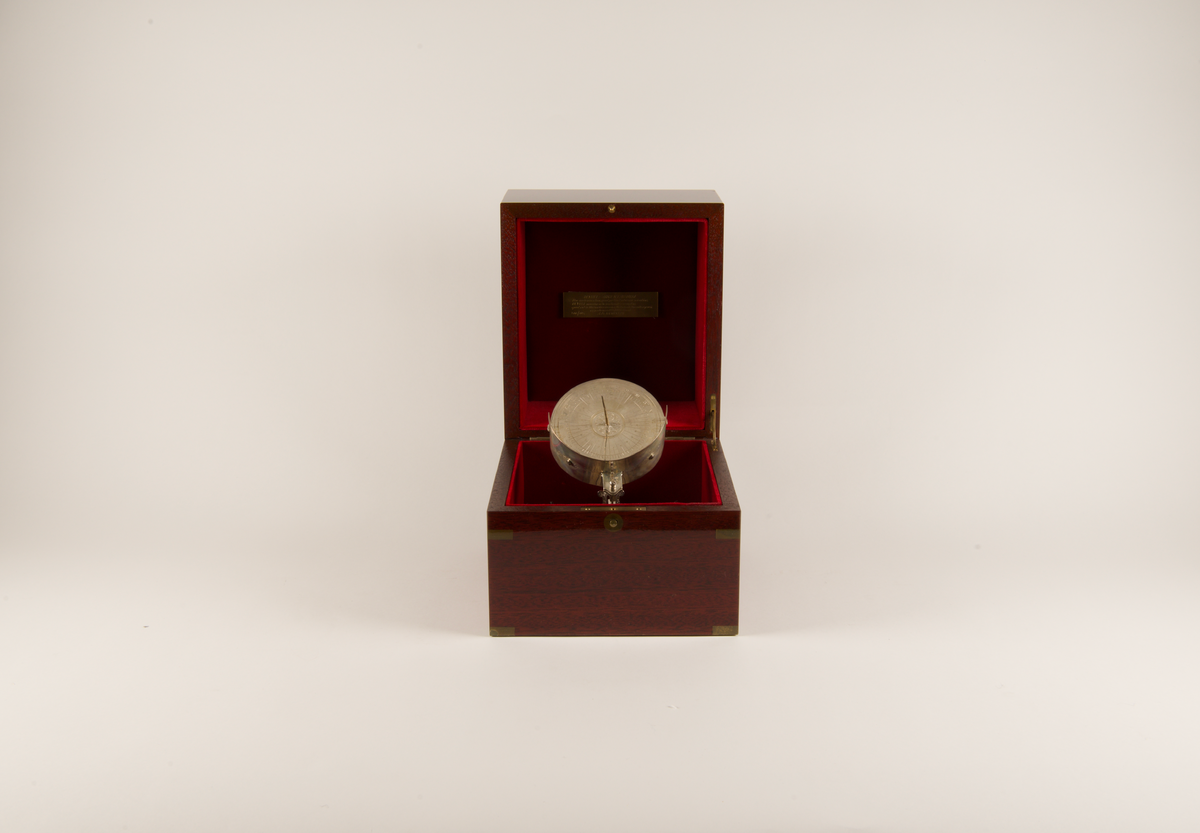
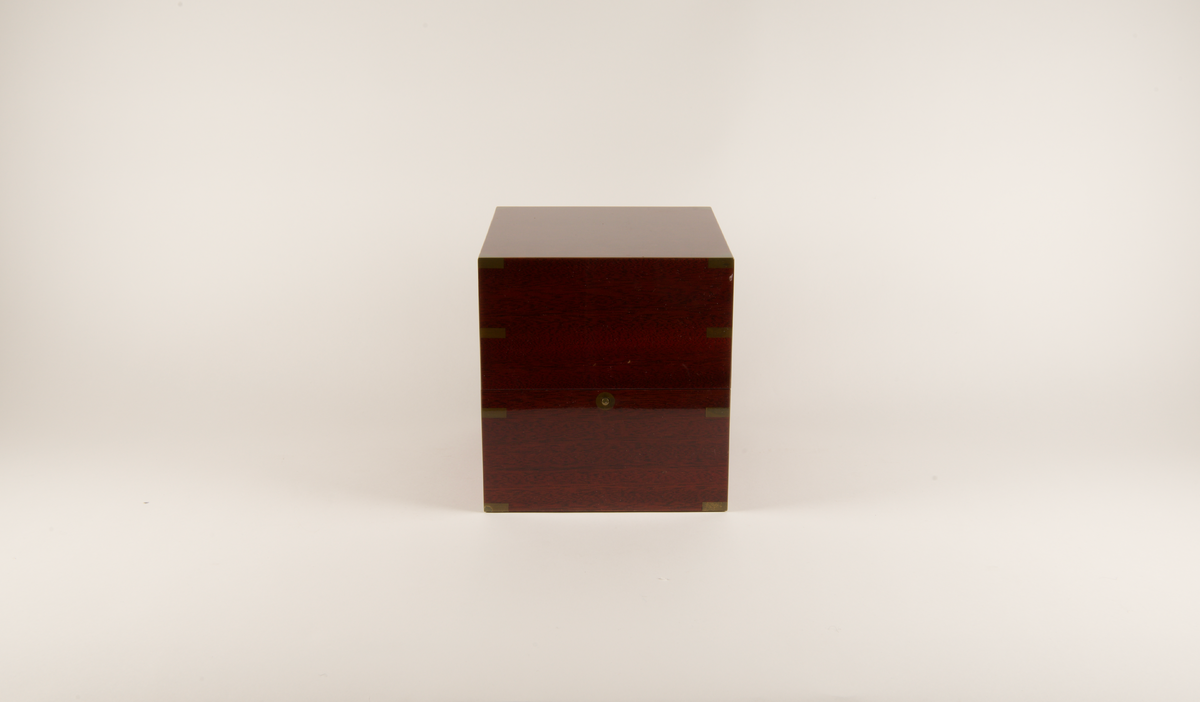
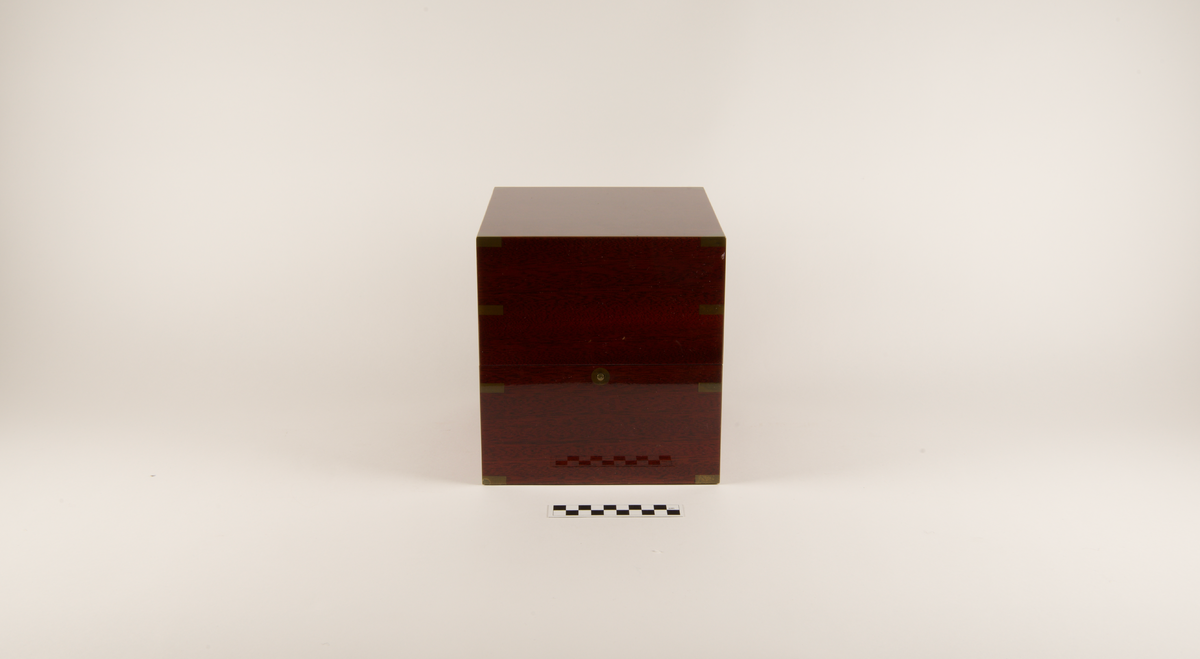
The box is made from polished wood, with brass detailing. A piece of fabric covers the underside of the box. The box is opened by pushing a brass button on its front, and lifting the lid, which opens with a brass hinge. The inside of the box is covered in a pink-red fabric, and has a cavity in which the sundial sits. Two fabric-coated strips can be swung across the object from the bottom of the box to keep it in place. On the inside of the lid of the box, there is a brass plaque with an inscription naming Deyhle as maker, and 1977 as the year of manufacture. It also notes that this is a replica of an object held by the Germanisches National Museum, Nuremberg.
References
Events
FM:47725
Images (Click to view full size):