Accession No
6878
Brief Description
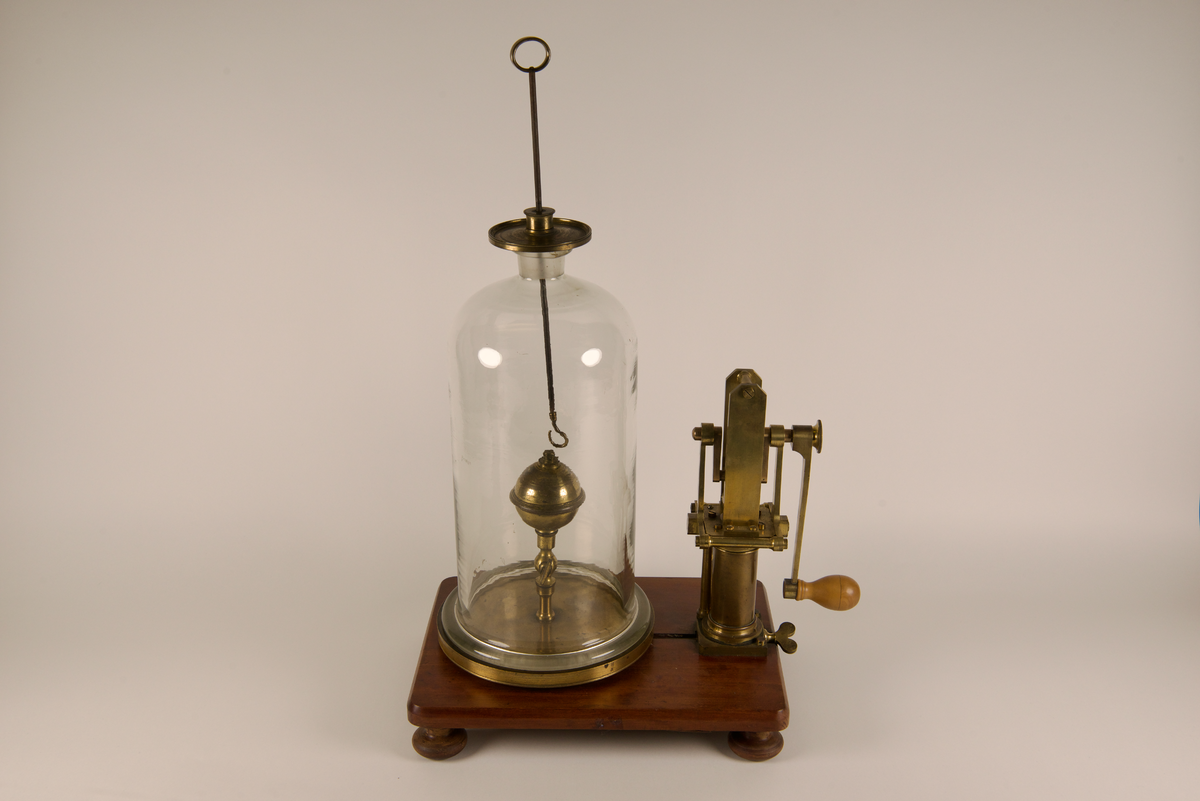
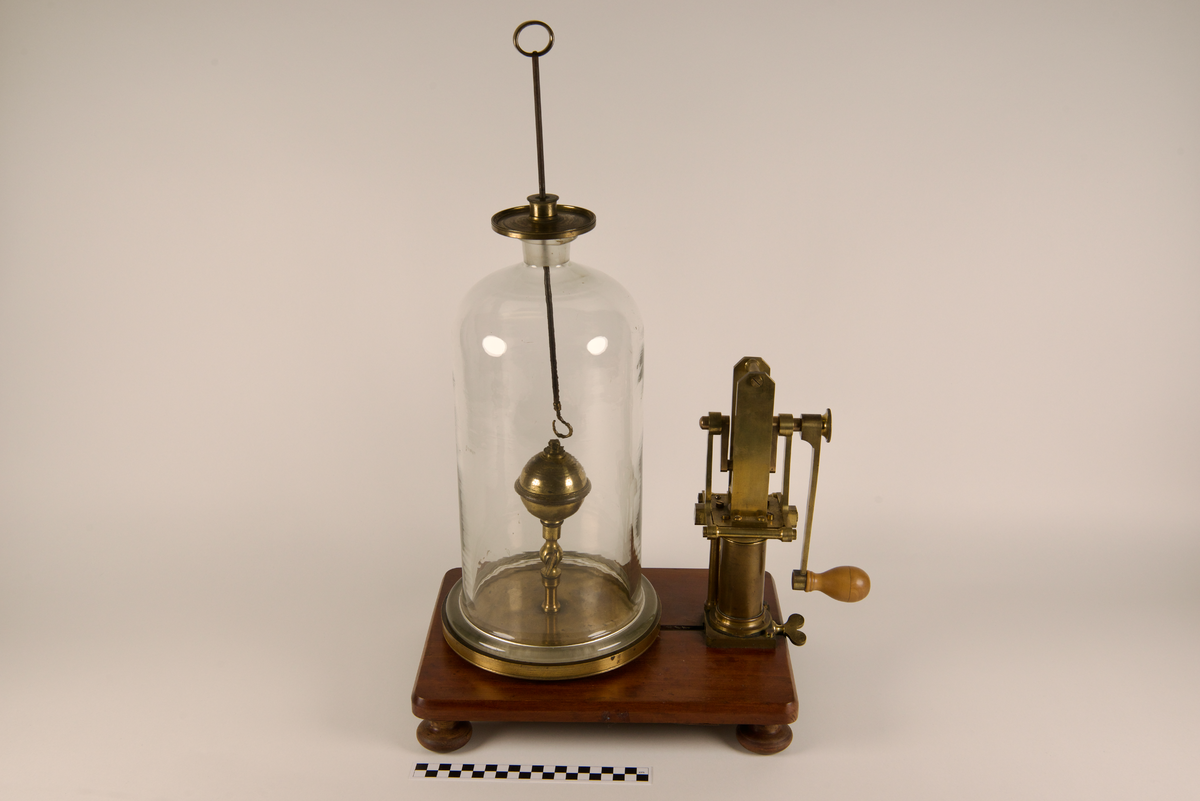
vacuum pump, by Cornelius Varley, English, 1820 (c)
Origin
England; London
Maker
Varley, Cornelius
Class
physics
Earliest Date
Latest Date
Inscription Date
Material
metal (brass); wood; glass
Dimensions
250mm (width), 340mm (depth), 620mm (height)
Special Collection
Provenance
Purchased from Flints Auctions Ltd in January 2026.
Inscription
VARLEY
LONDON [brass upright]
Description Notes
Vacuum pump, by Cornelius Varley, English, 1820 (c).
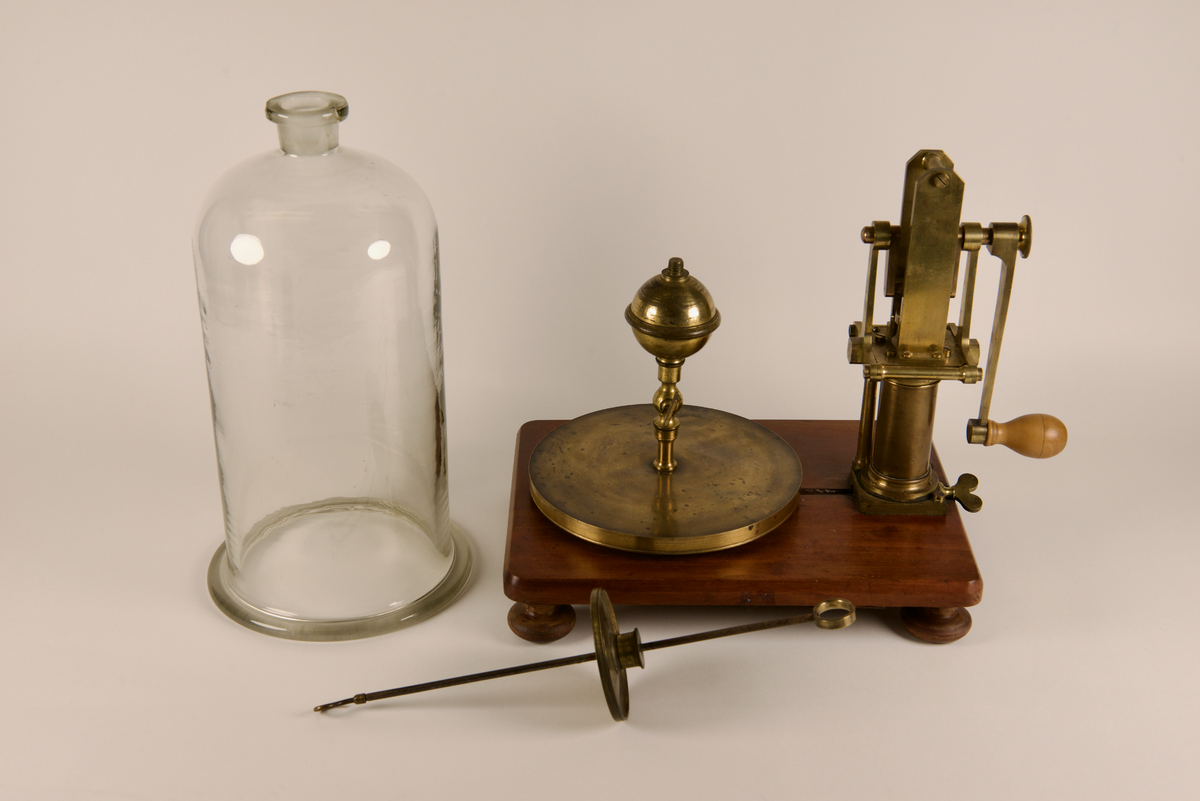
Vacuum pump comprising of several brass elements set onto a flat wooden base. Wooden base rests on four bun feet. At one end of the base, there is a brass upright is attached, onto which the handle is attached. A brass tube passes from brass upright through a gusset in the wooden base, to the centre of a large circular brass disc. Onto this brass disc attaches another, smaller upright, at the top of which is the lower of two Magdenburgh hemispheres. The second hemisphere rests on top of this. A glass bell jar can sit on top of the brass disc, and a further part of the object, a brass hook with a ring loop at the top and a brass disc halfway up, can be placed on the bell jar to cover its open top.
References
Events
Description
The vacuum pump has played an important role in experimental science ever since its invention in the seventeenth century. It enables the removal of air molecules to create a vacuum, which has been essential for studying the scientific properties of air.
This vacuum pump was made by the artist and scientific instrument designer Cornelius Varley (1781-1873). Varley became famous for his watercolour paintings and design of optical instruments. He likely designed this vacuum pump because of his personal interest in scientific instrument design. By turning the crank, air is removed from the bell jar via the brass barrel. When placing objects and animals inside the jar, scientists could demonstrate the importance of air to sustain life.
Label by Emmy Östberg.
24/06/2026
Created by: Hannah Price on 24/06/2026
FM:47765
Images (Click to view full size):