Accession No
3199
Brief Description
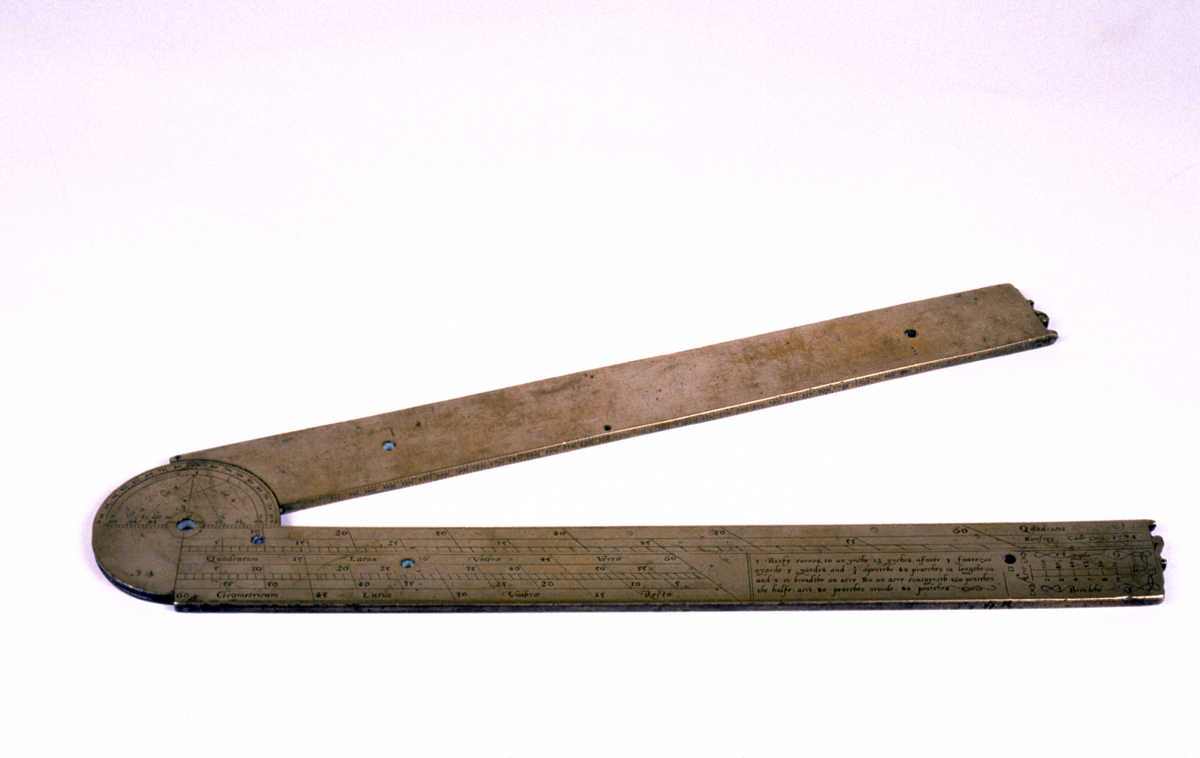
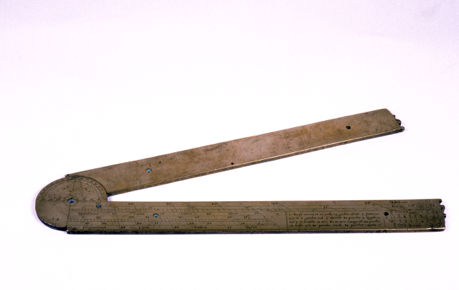
surveyor’s rule, by Humfrey Cole, English, 1574
Origin
England; London
Maker
Cole, Humfrey
Class
surveying; drawing
Earliest Date
1574
Latest Date
1574
Inscription Date
1574
Material
metal (brass)
Dimensions
length 336mm; breadth 66mm
Special Collection
Provenance
Purchased from John Beazor and Sons Ltd., Cambridge, 1985.
Inscription
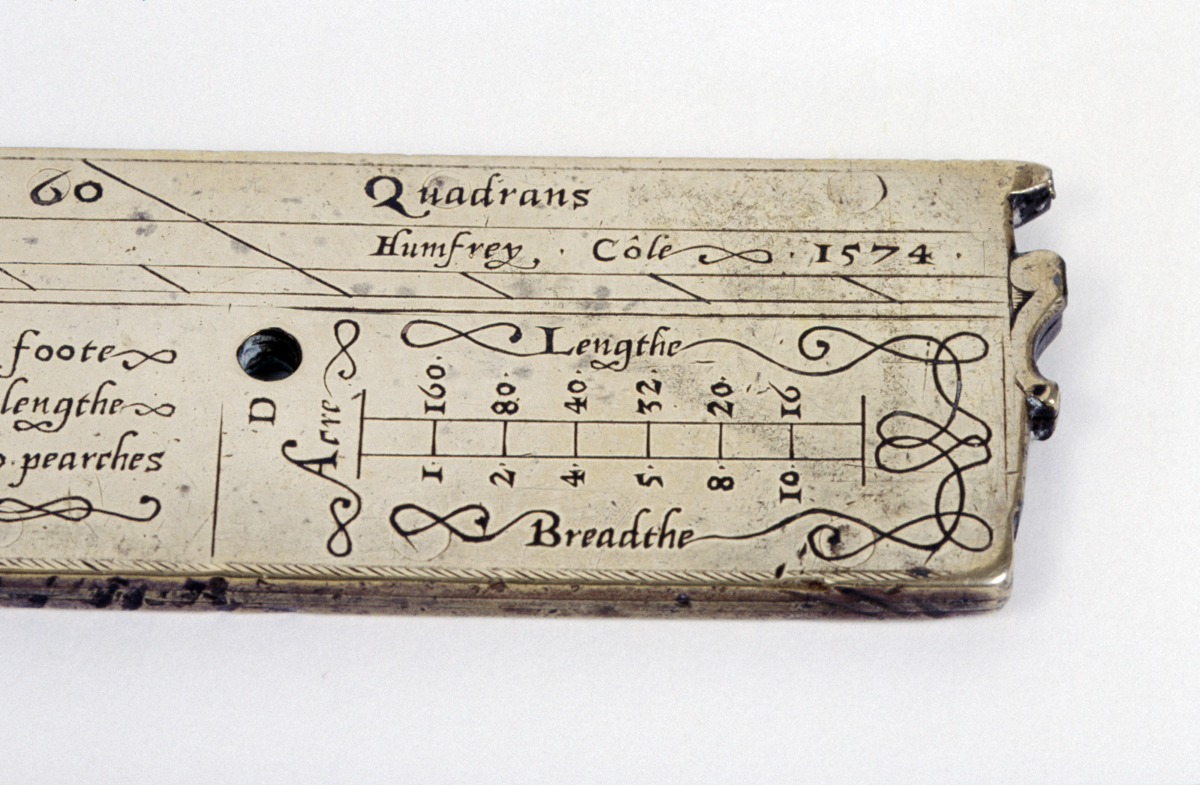
‘Humfrey . Cole 1574’ (reverse)
Description Notes
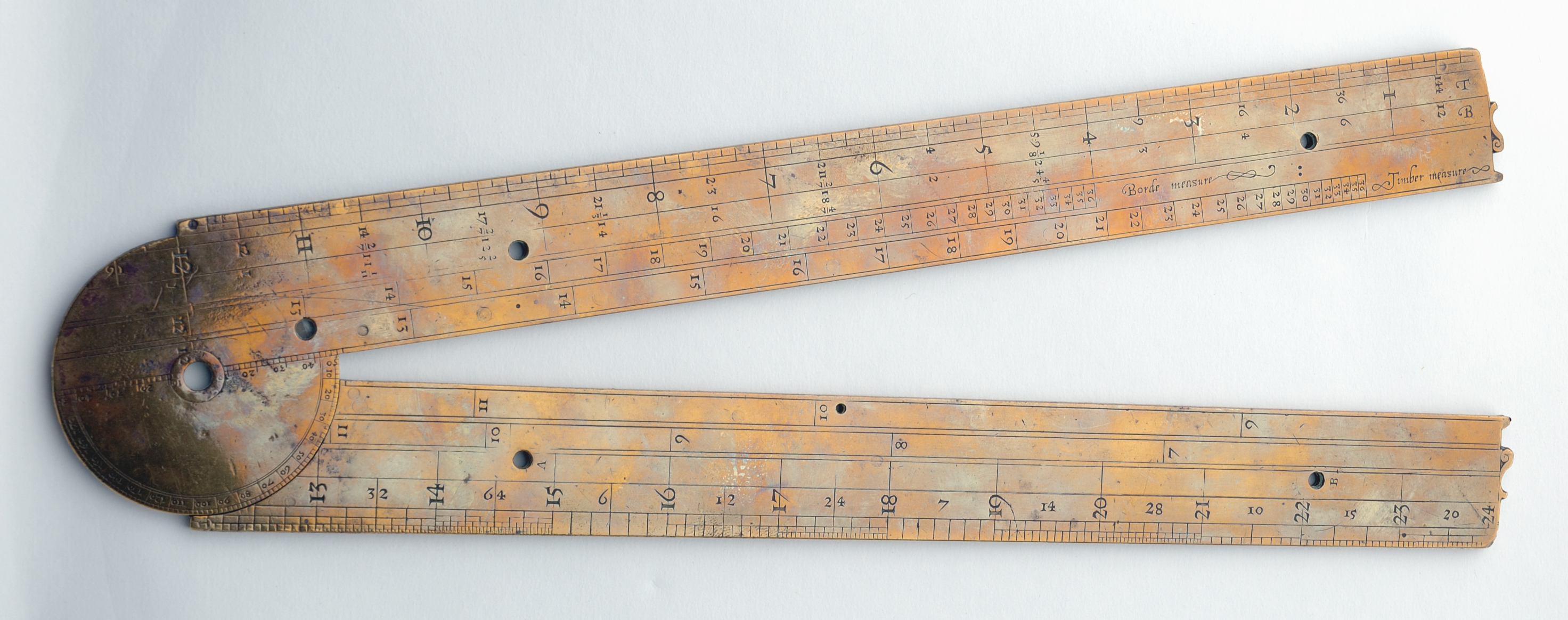
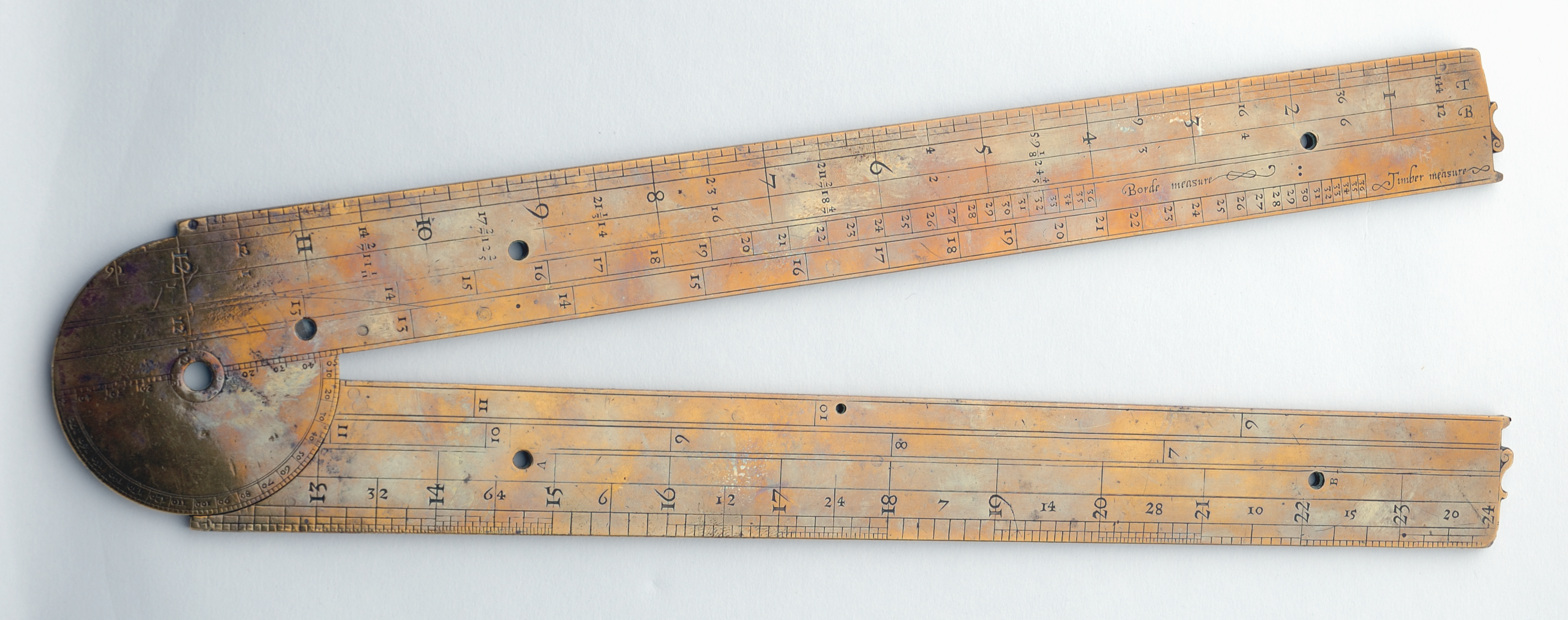
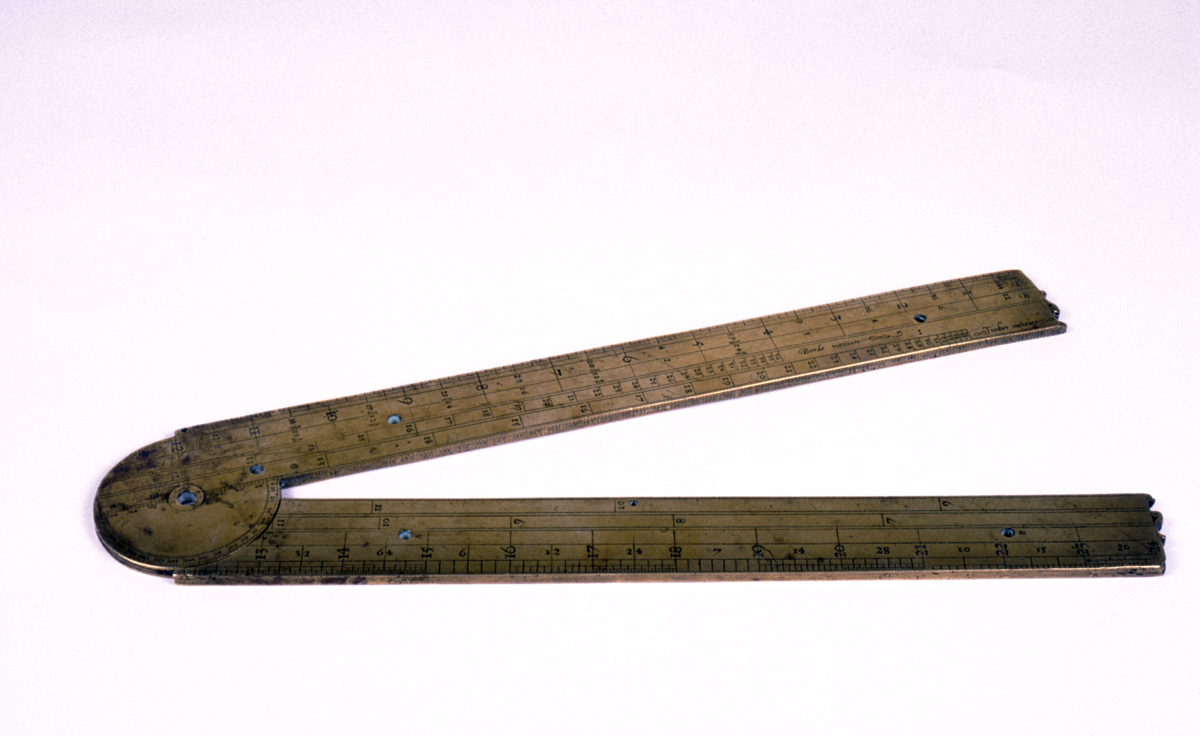
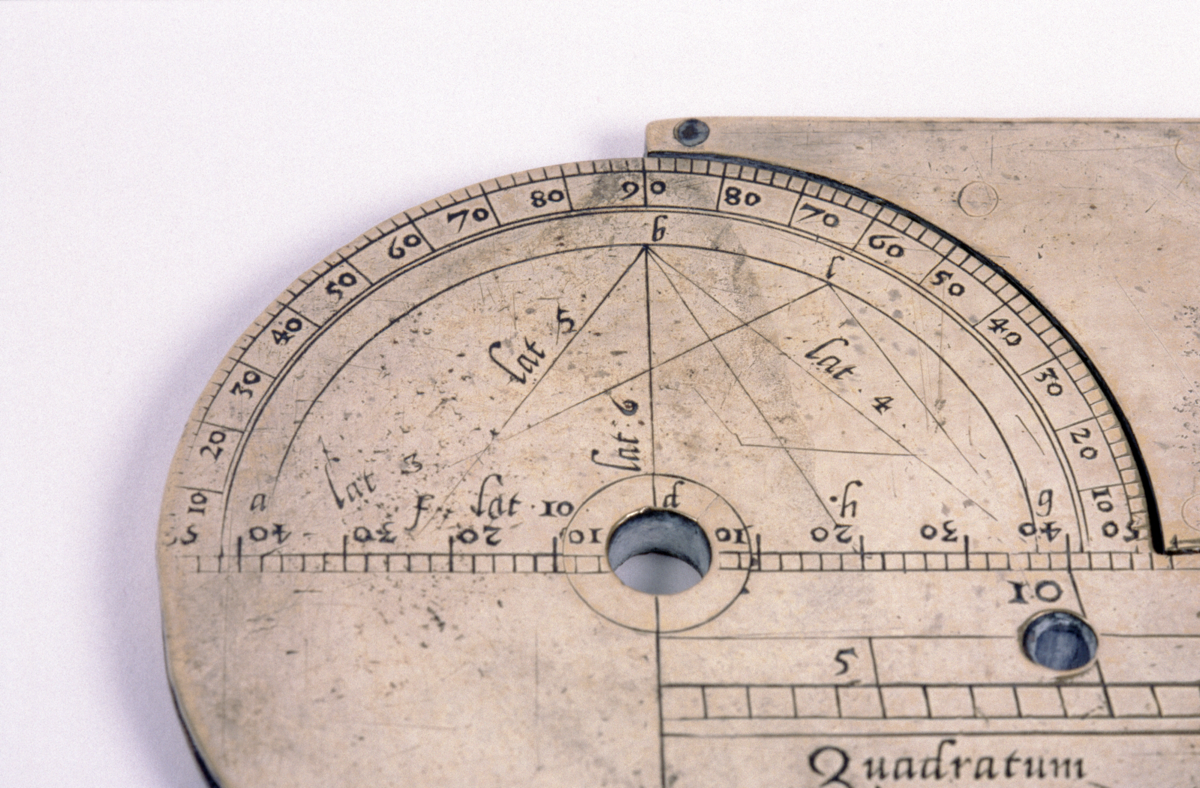
Folding brass surveyor’s rule consisting of two limbs held together by a flat circular hinge.
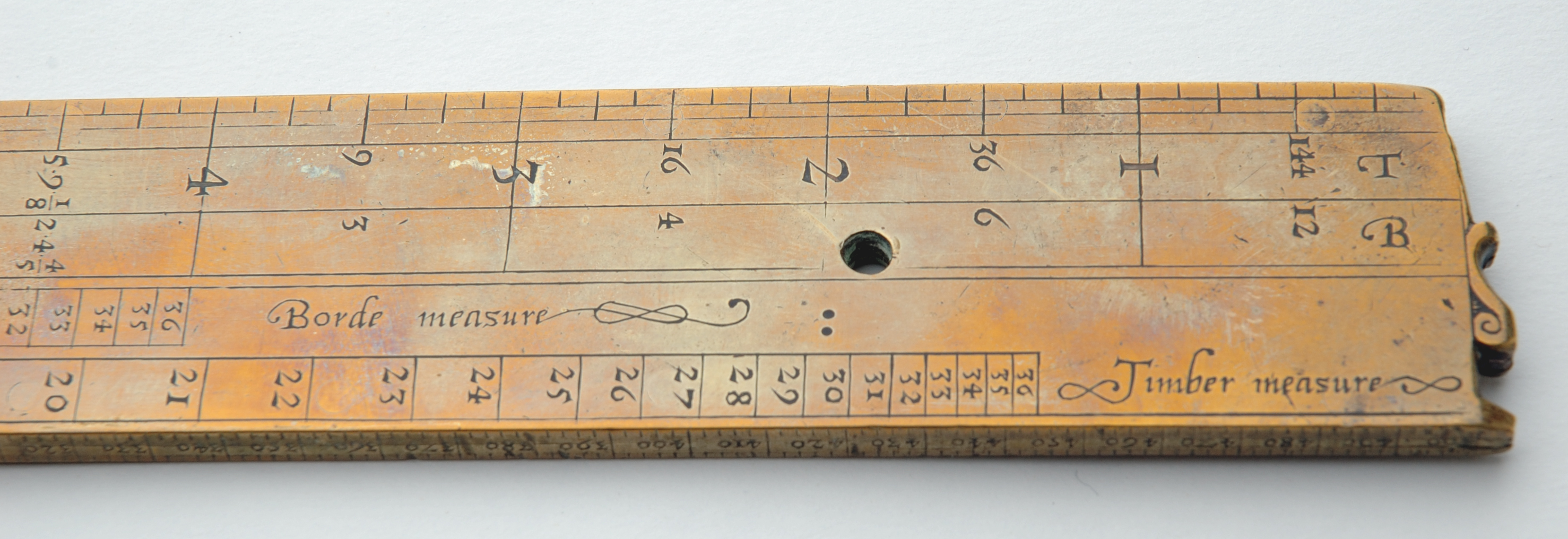
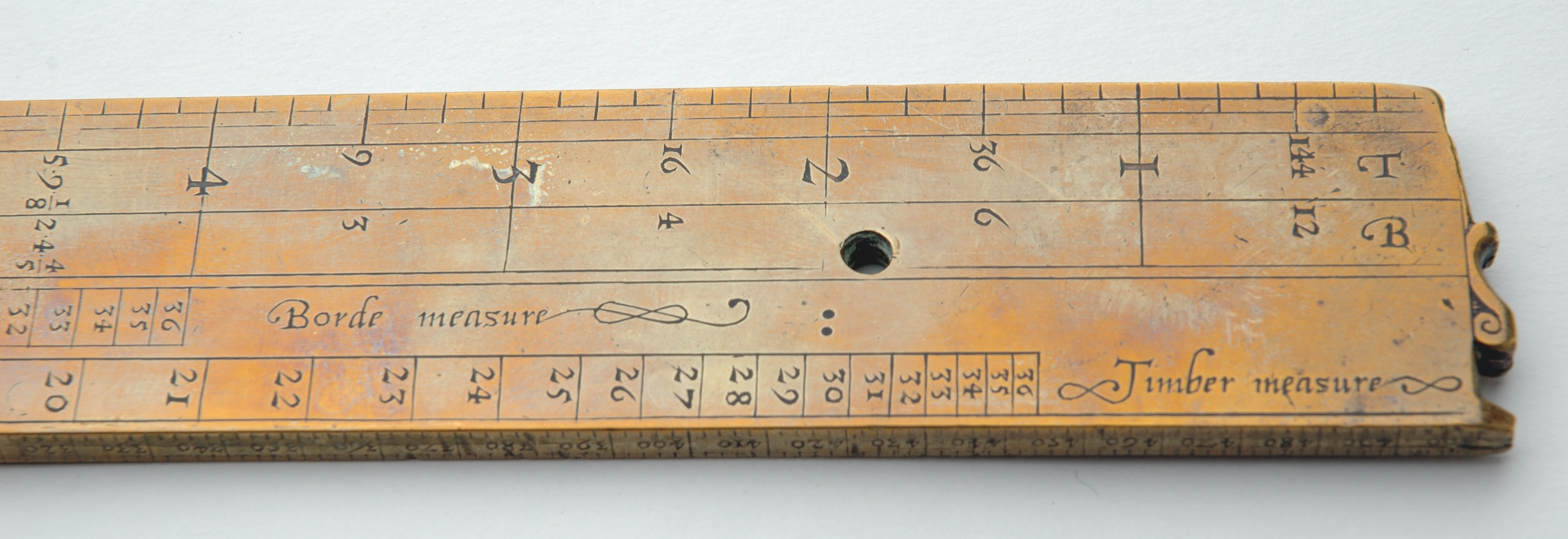
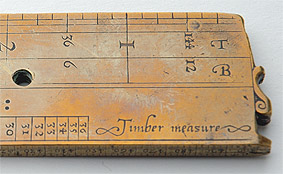
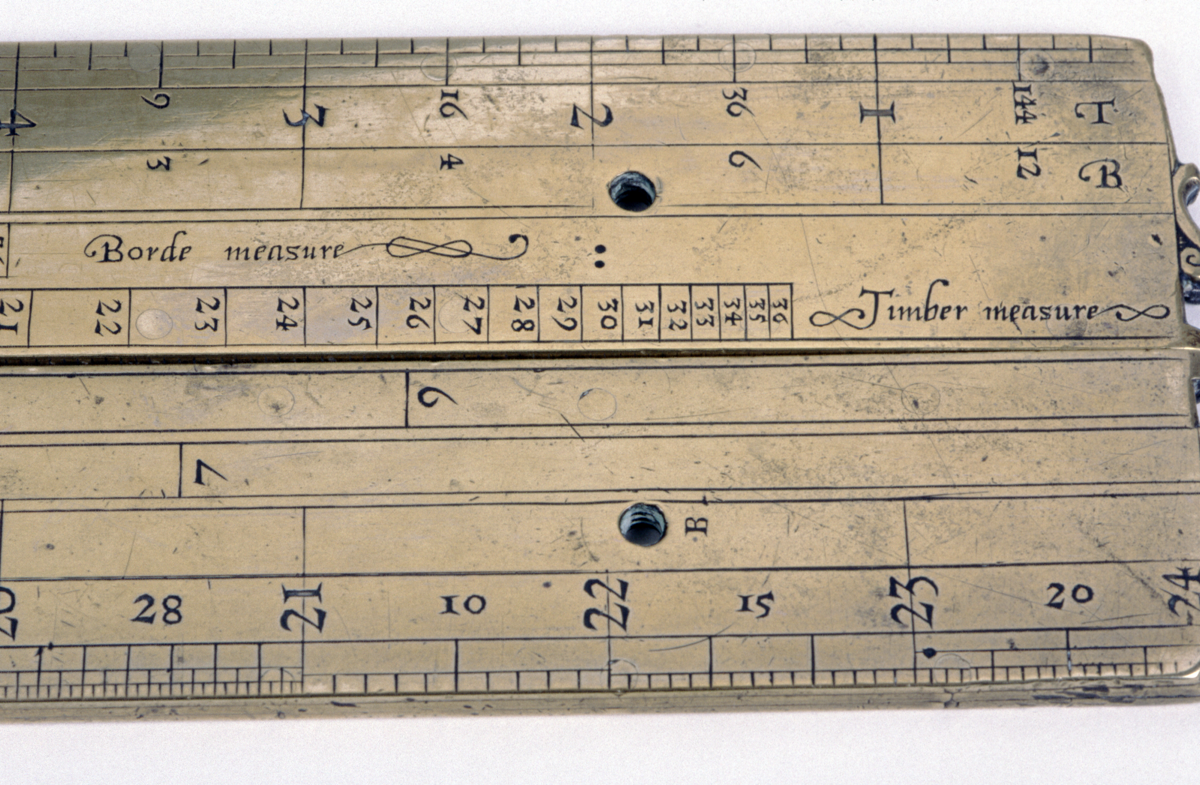
Obverse of rule carries a degree scale around the hinge divided 0 - [180˚], numbered by 10˚, graduated to 2˚. Inches scale along the edge divided [0] - 24, numbered by 1; first half of scale divided to eighths of an inch, remainder divided to various different fractions which are marked as 32, 64, 6, 12, 24, 7, 14, 28, 10, 15 and 20. Within this scale are several scales for measure of timber and board.
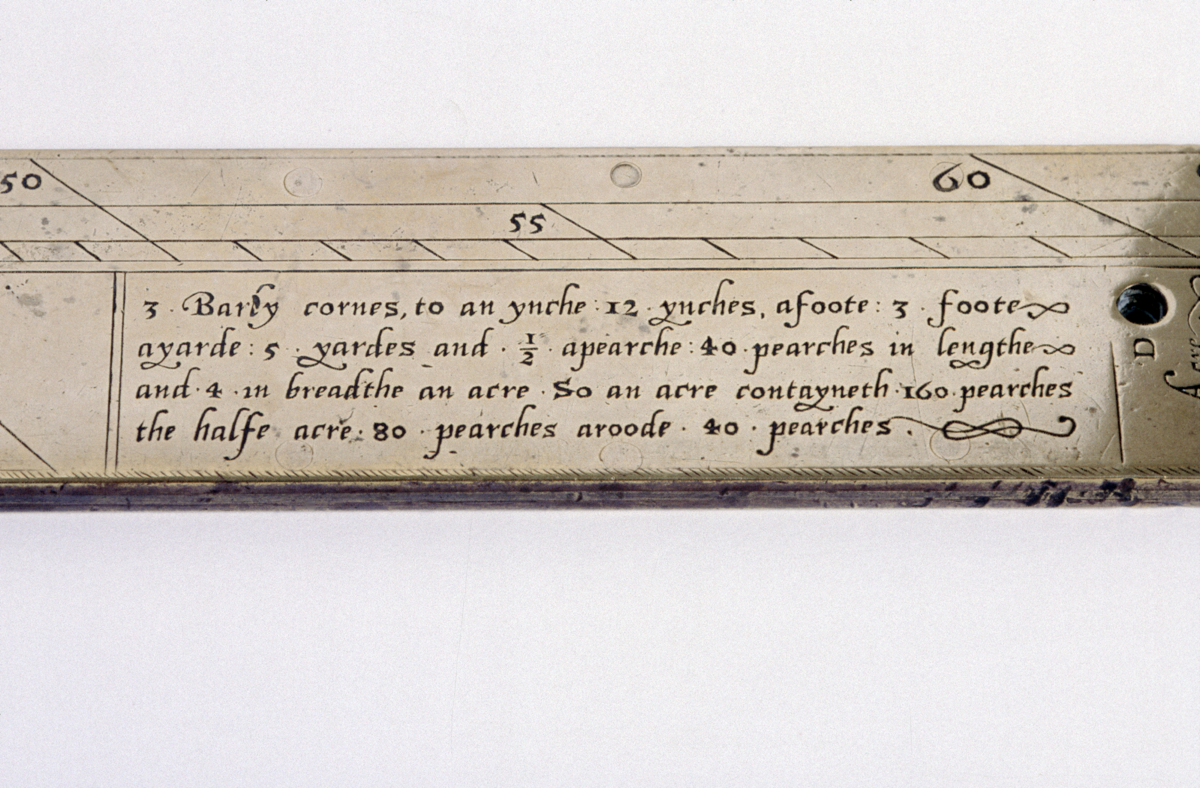
Reverse of rule carries a degree scale around the hinge divided [0] - 90˚ - [0], numbered by 10˚, graduated 2˚. One limb carries the scales for a shadow square (originally used in conjuction with a plumb bob and sights) and also a summary of the measures used in the imperial system: ‘3 Barly cornes to an ynche: 12 ynches afoote: 3 foote a yarde: 5 yardes and 1/2 a pearche: 40 pearches in lengthe and 4 in breadthe an acre. So an acre contayneth 160 pearches the halfe acre 80 pearches a roode 40 pearches.’
Condition good; incomplete (plumb bob and sights missing)
References
Events
Description
This elegantly folded ruler can be used for many tasks. It could be mounted on a pole and used to survey land. It could measure vertical angles. And its scales could be used for measuring timber, plotting maps and calculating distances.
Its maker, Humfrey Cole, was one of the most important craftsmen in Elizabethan England. His shop was near St Paul's Cathedral, and over a long career he became famous for his fine craftsmanship and ability to invent new devices.
16/09/2025
Created by: Hannah Price on 16/09/2025
Description
This folding brass rule is the earliest signed English instrument in the collection of the Whipple Museum. Originally fitted with sights and a plumb-bob, it could be mounted on a staff or tripod and used for taking horizontal and vertical angles. It was also intended for use as a plane-table alidade. Further engraved scales allowed the surveyor to calculate areas and volumes of timber and to draw maps to various scales.
Humphry Cole was the first native English maker of mathematical instruments, and a such he represents a vital development in the history of science in England. The rule itself also reflects the growing importance of the mathematical sciences in England, one aspect of which was the application of geometrical methods to the traditional practice of surveying. The scales engraved on the rule were those recommended by Leonard Digges in Tectonicon (1556) and Pantometria (1571).
This rule was purchased with assistance from the PRISM fund and from the National Heritage Memorial Fund.
11/08/2006
Created by: updated by Ruth Horry on 11/08/2006
FM:39601
Images (Click to view full size):