Accession No
1899
Brief Description
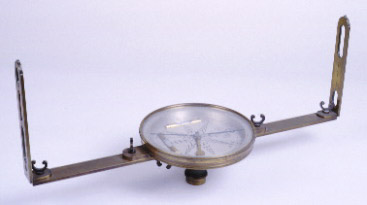
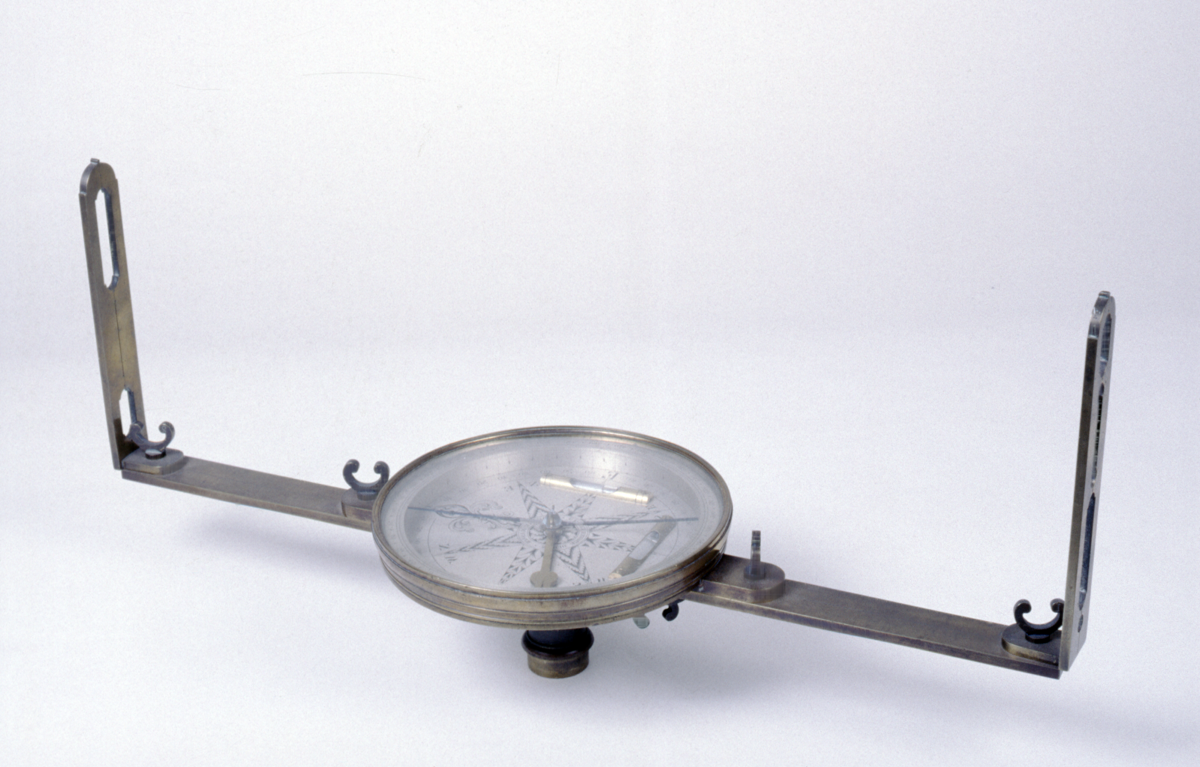
circumferentor, by Seacome Mason, Irish, 1790 (c)
Origin
Ireland; Dublin; 6 Essex Bridge
Maker
Mason, Seacome
Class
surveying
Earliest Date
1790
Latest Date
1790
Inscription Date
Material
metal (brass, silver); glass; wood (mahogany, other)
Dimensions
height (on tripod) 1138mm; breadth 485mm; depth 380mm; box length 565mm; breadth 217mm; height 158mm
Special Collection
Provenance
Purchased from R. A. and D.H. Morgan, Turret House, Wymondham, Norfolk in 11/04/1975.
Inscription
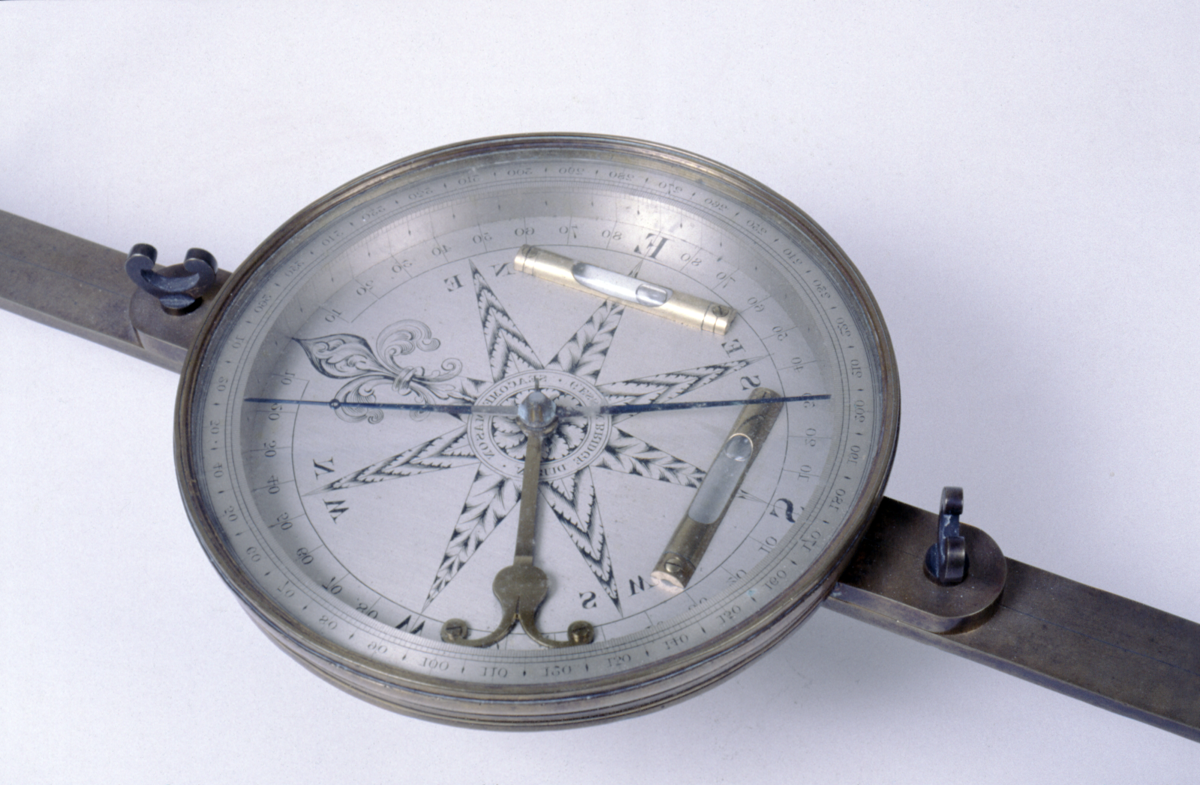
‘Seacome Mason 6 Essex Bridge DUBLIN’ (on compass rose)
Description Notes
Brass. Fixed linear member. Centrally mounted compass. Silvered 8 point rose with fleur-de-lis north. Graduated 0-90-0˚ twice and 0-360˚ in single degrees. Pair of bubbles set into rose; locking bar in brass. Slit and window sights attached by thumb screws to linear member. All thumb screws and locations numbered 1, 2, 3, 4, etc. Push fit lid for compass. Brass staff head; ball and socket adjustment and slow motion tangent screw. Tripod legs in three sections of mahogany. Brass ferrules. Fitted wooden box.
Condition: good.
References
Events
Description
The circumferentor is an instrument that derives from the reverse side of an astrolabe. It is used to measure horizontal angles, or vertical angles by suspending the instrument from its shackle.
The circumferentor was described by Arthur Hopton in 1611, though passing references had been made to it in earlier works. It became one of the standard pieces of equipment of the surveyor throughout the 17th and 18th centuries.
31/08/2006
Created by: updated by Ruth Horry on 31/08/2006
FM:39637
Images (Click to view full size):