Accession No
1685
Brief Description
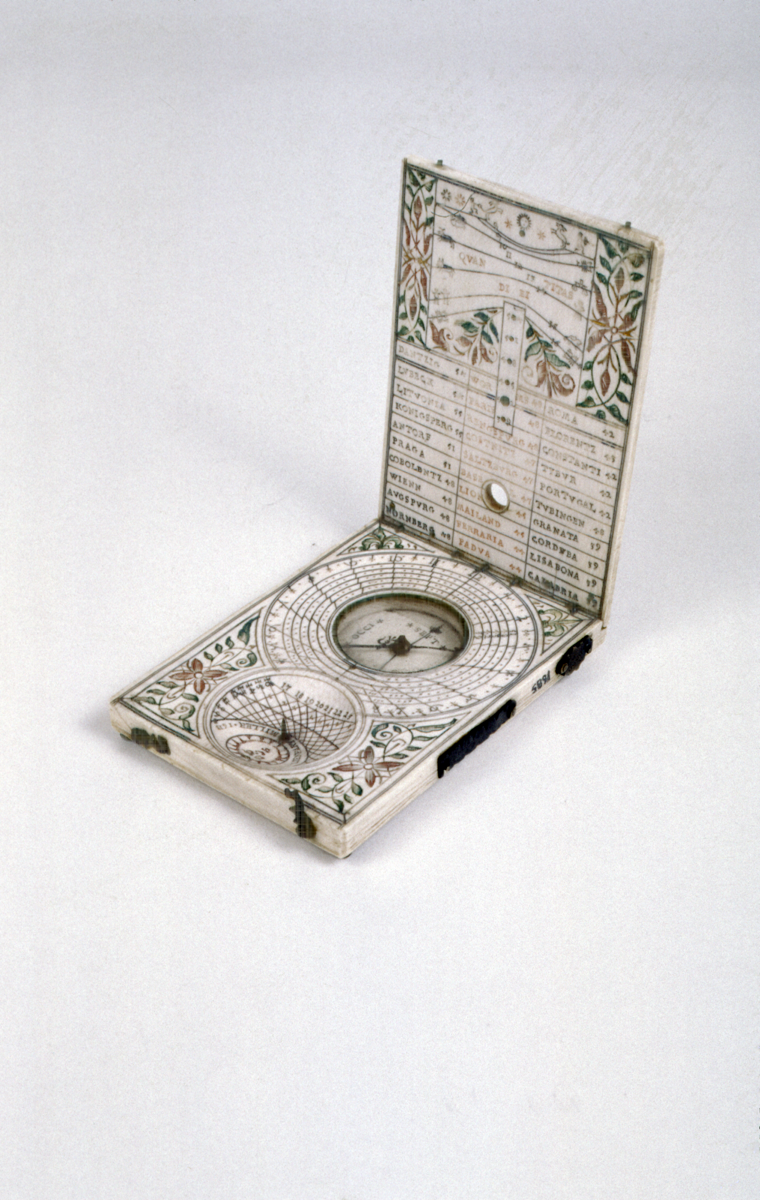
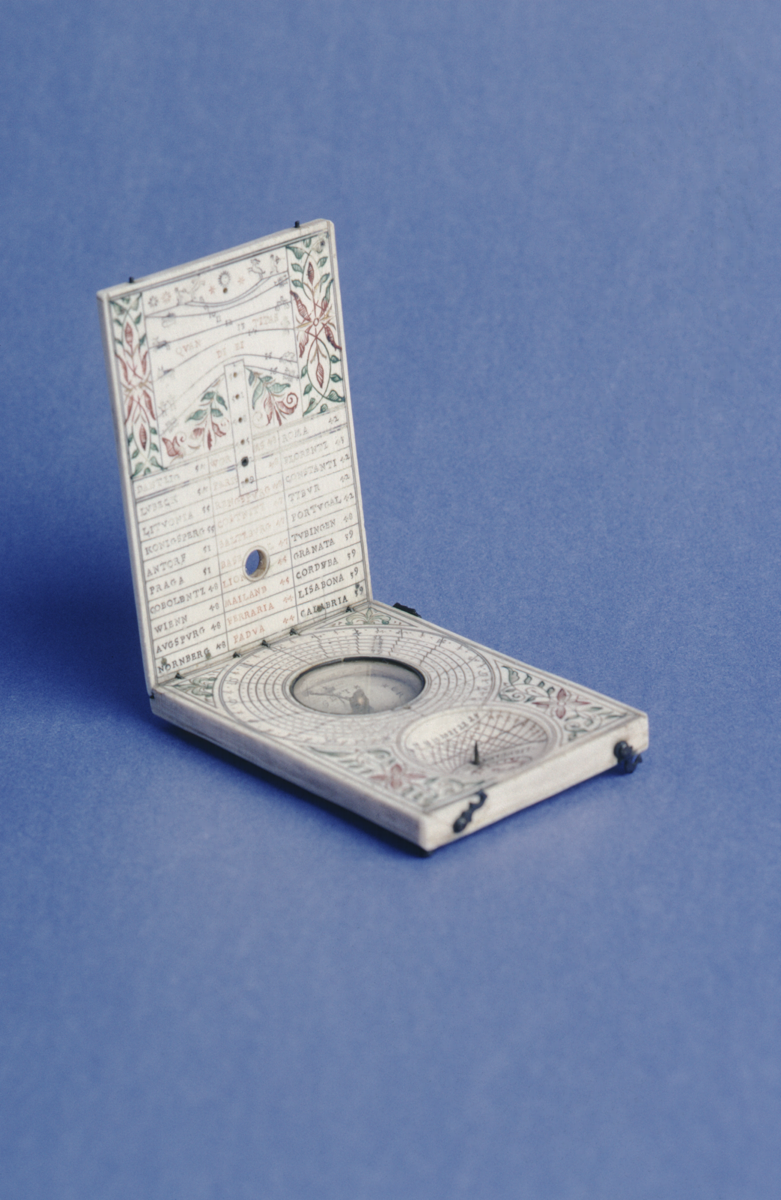
ivory diptych dial, by Leonhart Miller, German, 1613
Origin
Germany; Nuremberg (Nürnberg)
Maker
Miller, Leonhart
Class
dials
Earliest Date
1613
Latest Date
1613
Inscription Date
1613
Material
ivory; metal (brass, steel); glass
Dimensions
length 103mm; width 71mm; height open 110mm
Special Collection
Holden-White collection
Provenance
On loan from The Fitzwilliam Museum, University of Cambridge. Donated by Charles Holden-White to the Fitzwilliam Museum. Charles Holden-White collection no. 1935-39.
Inscription
‘LIENHART MILLER 1613’ (leaf IIa)
Description Notes
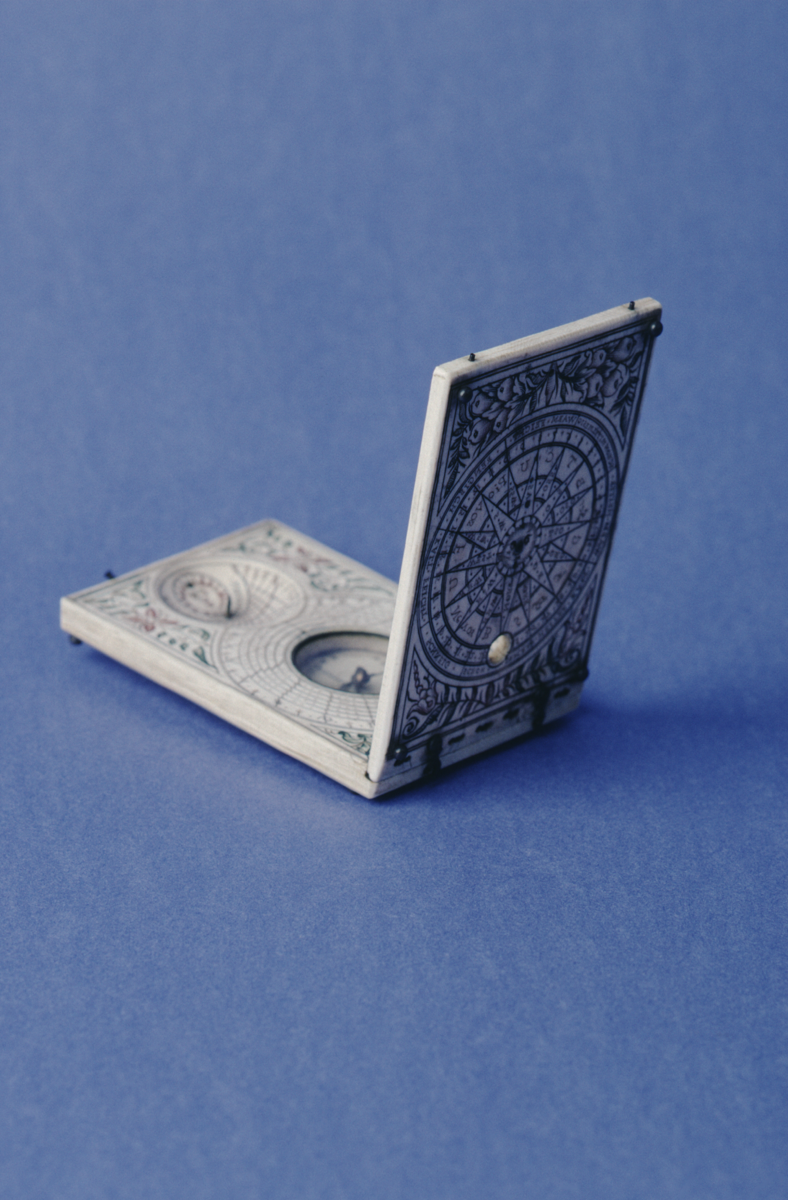
Rectangular ivory diptych dial with brass fittings.
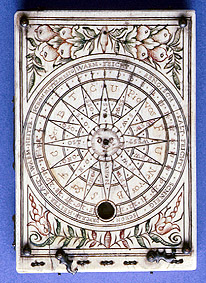
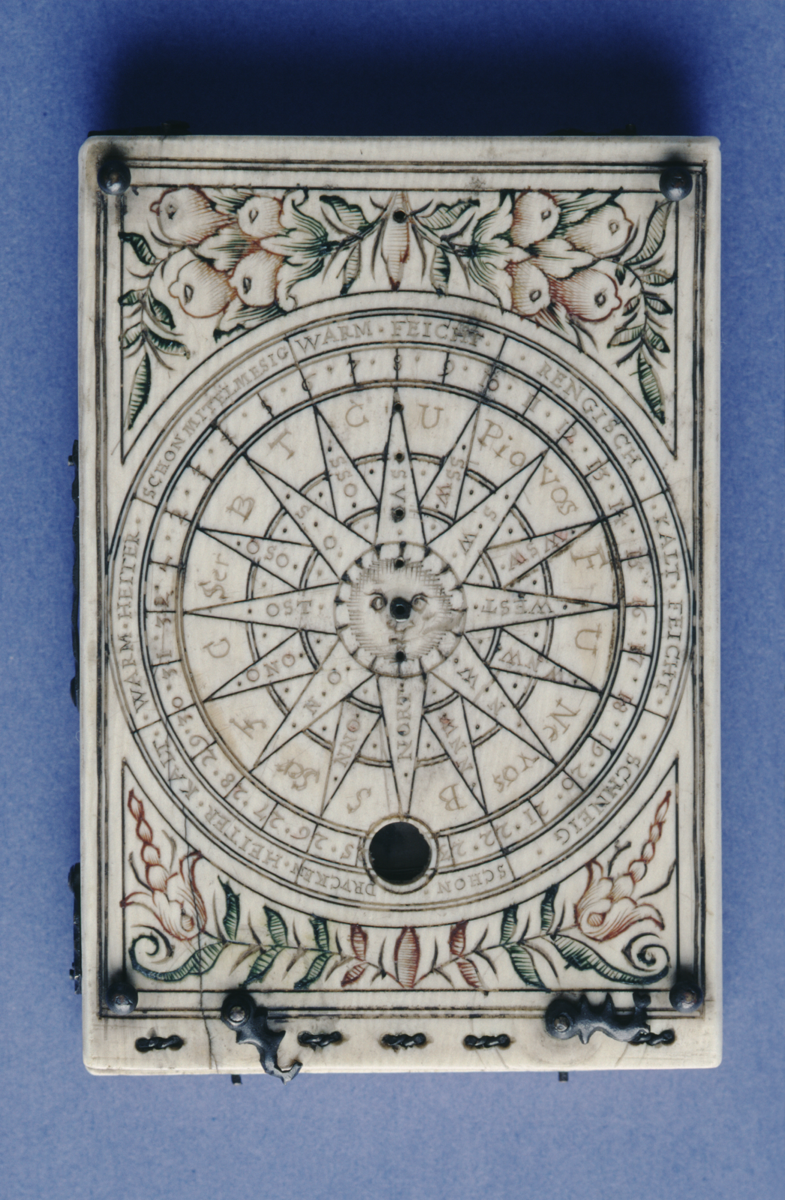
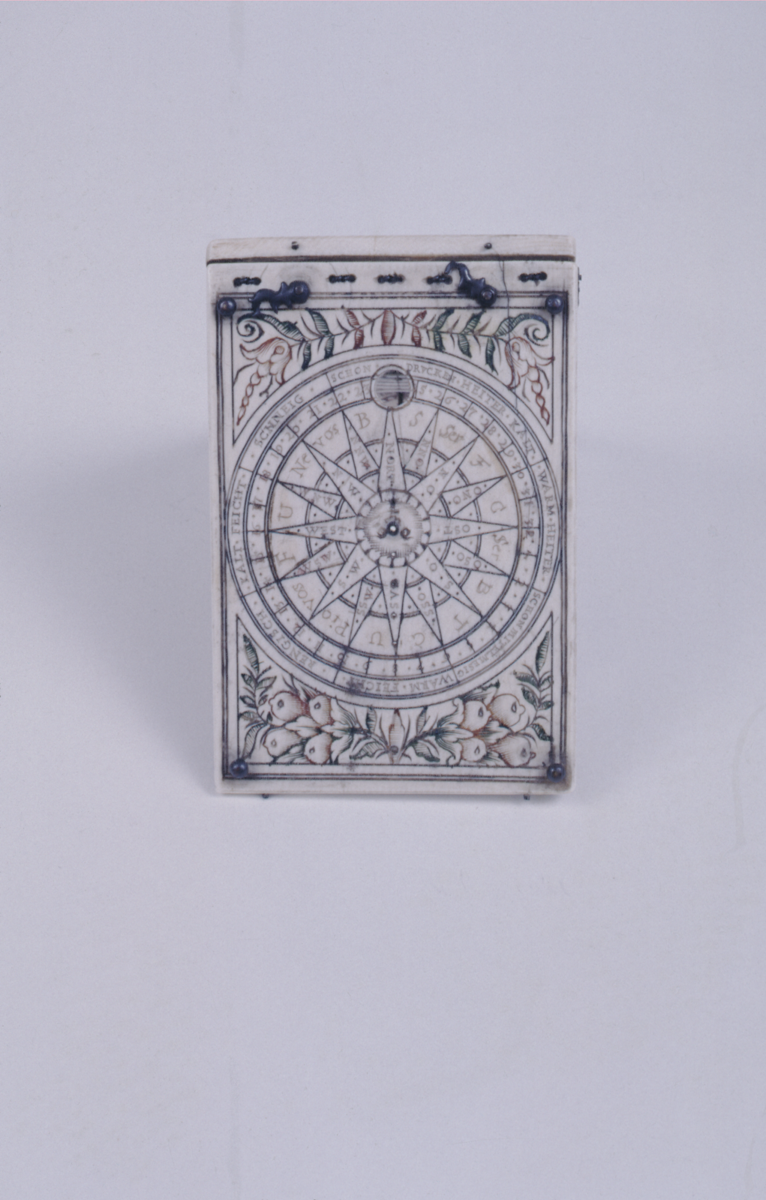
Leaf Ia: four small feet; foliage and fruit decoration picked out in red and green. Wind rose (lacks vane); named weather/winds: ‘SCHON. DRUCKEN. HEITER. KALT WARM. HEITER SCHONMITELMESIG. WARM. FEICHT. RENGISCH. KALT. FEICHT. SCHNEIG.’; 32 numbered points starting from East and proceeding clockwise; 16 named points. Later series of letters scratched between points. Leaf pierced to show N point of compass.
Leaf Ib: foliage decoration, picked out in gilt, red and green. Vertical dial (lacks pin gnomon) for day length, marked ‘QUANTITAS DIEI’, divided 8 - 16, numbered by 1; also marked with zodiacal symbols. Attachment points for string gnomon at 39˚, 42˚, 45˚, 48˚, 49˚, 51˚ and 54˚. Table of towns and latitudes (full list in history file).
Leaf IIa: horizontal string gnomon dial for latitudes 39, 42, 45, 48, 51 and 54˚ N; scale divided 4 - 12, 1 - 8, numbered by 1, subdivided to 15 minutes. Central inset compass with cardinal points marked in Latin and maker’s mark (fleur-de-lys); NS line offset for magnetic variation by 5˚E of N. String gnomon missing. Foliage decoration as before. Scaphe dial with pin gnomon for Italian and Babylonian hours, divided 8 - 23 and 1 - 16, numbered by 1.
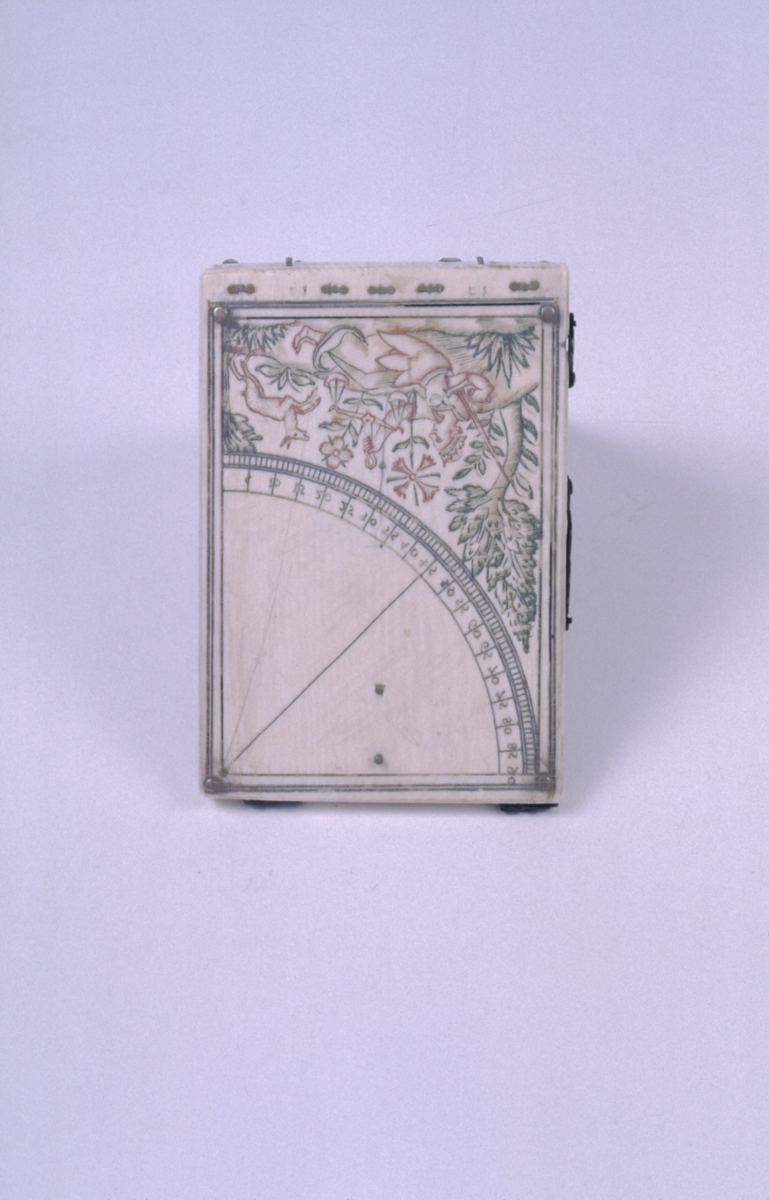
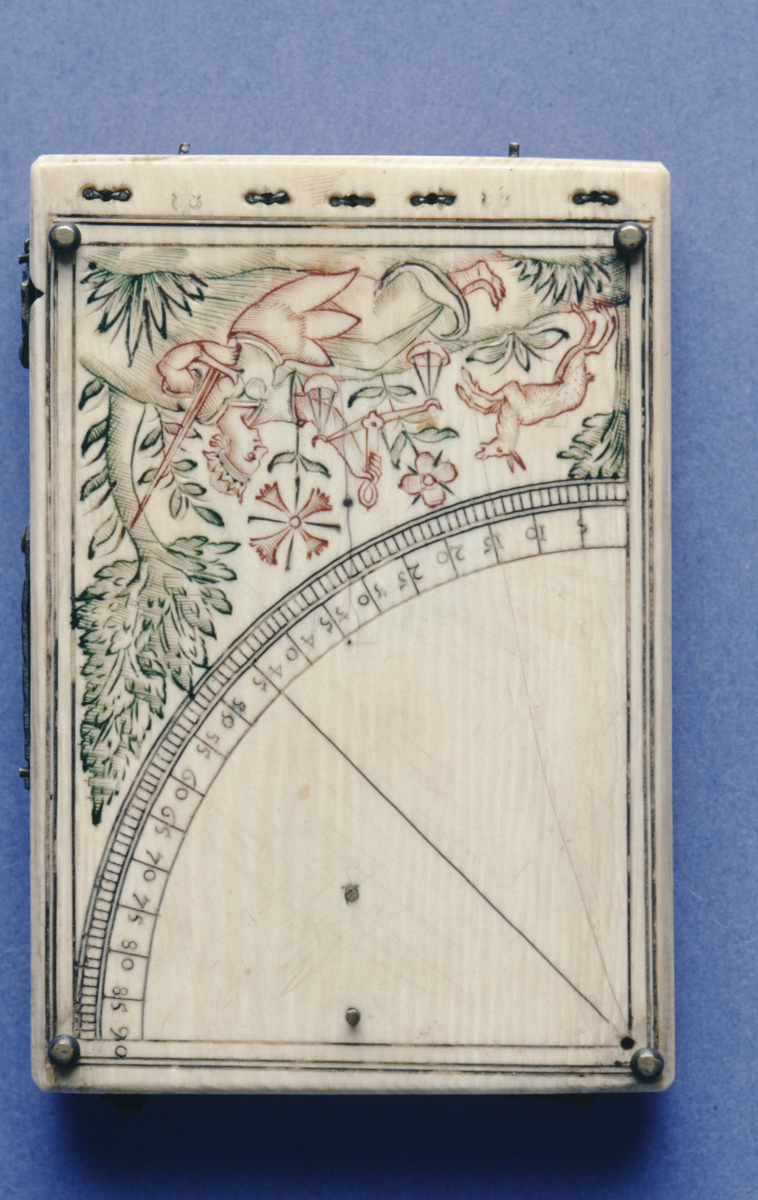
Leaf IIb: 4 small brass feet; quadrant divided 0 - 90˚, numbered by 5˚, subdivided to 1˚ (plumb bob missing). Vignette of Justice seated on a mound, sword in left hand, balance in right, with dog, tree and flower.
Compartments in side of lower leaf for wind vane and plumb bob.
fair condition
missing string and pointer
missing plumbob
References
Events
Description
The Diptych dial is a common form of portable multi-function sundial. Diptych dials were made popular by the instrument makers in Nuremberg during the sixteenth and seventeenth centuries. They are usually made of ivory with brass fittings, and are often elaborately decorated. The name of the device derives from the Greek diptychos for a pair of folding writing tablets, which the instrument resembles.
Diptych dials consist of two leaves hinged together, with a string ‘gnomon’ stretched between the inner surfaces of the leaves for casting a shadow. To use the device as a sundial the lower leaf must be placed parallel to the horizon and the upper leaf must be at a right angle vertically to it. The gnomon must then be aligned with the meridian of the place where it is being used by using the inbuilt magnetic compass. Time can then be read from the horizontal or vertical dial by the location of the shadow cast by the string gnomon.
In addition to the horizontal and vertical dials, diptych dials normally carry a number of other features, such as equinoctial dials, windroses, tables of latitude for adjusting the string gnomon for different locations, epact tables, lunar volvelles for telling time at night by the moon, and various pin-gnomon dials for telling the time according to Babylonian or Italian hours, or for calculating the position of the Sun in the zodiac.
27/05/2009
Created by: Joshua Nall on 27/05/2009
FM:39770
Images (Click to view full size):