Accession No
0335
Brief Description
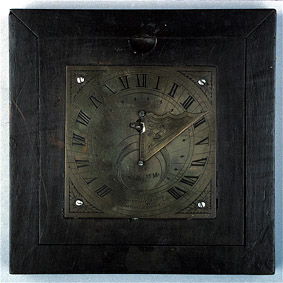
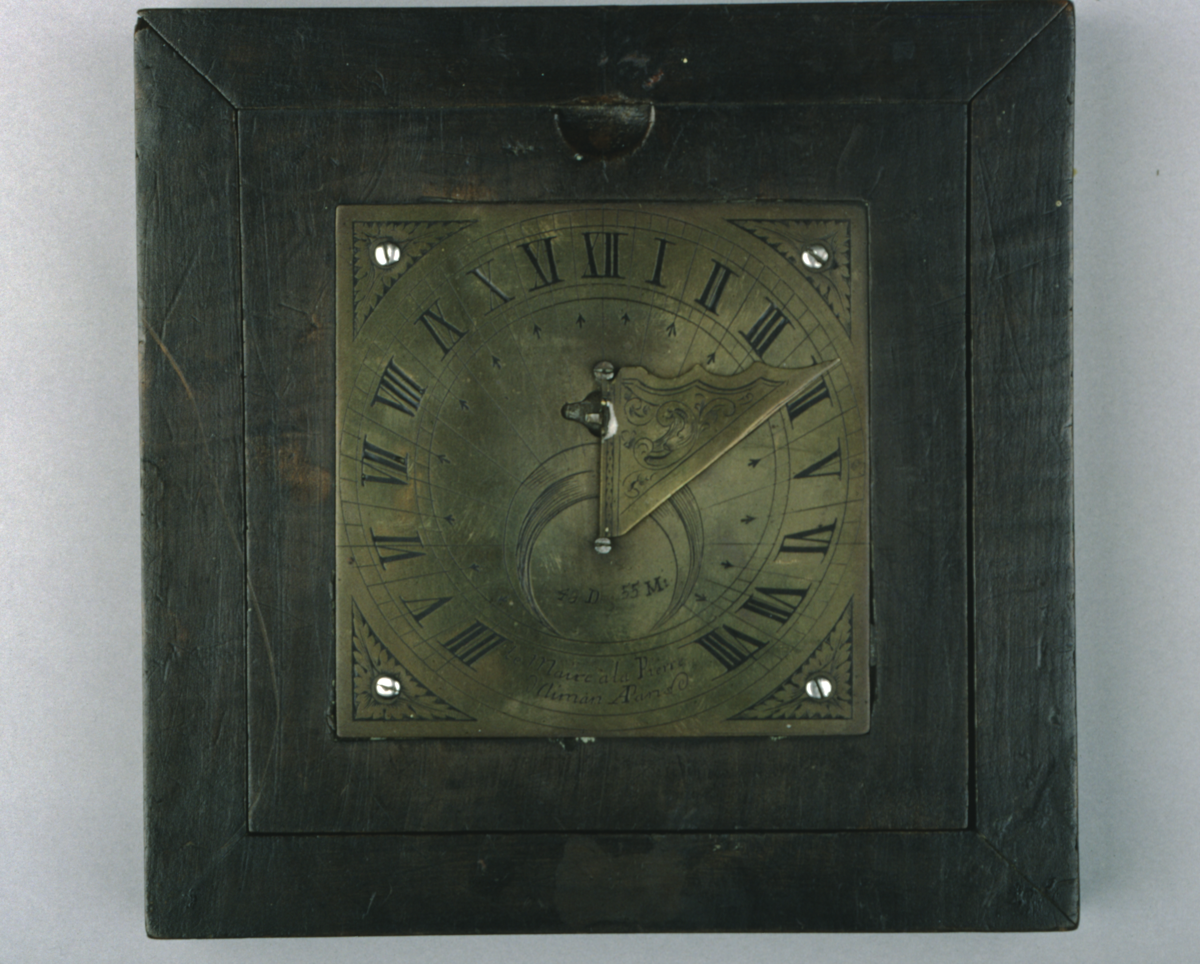
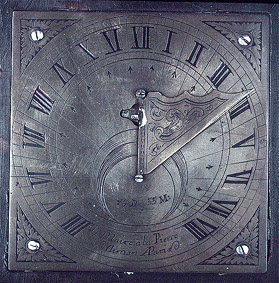
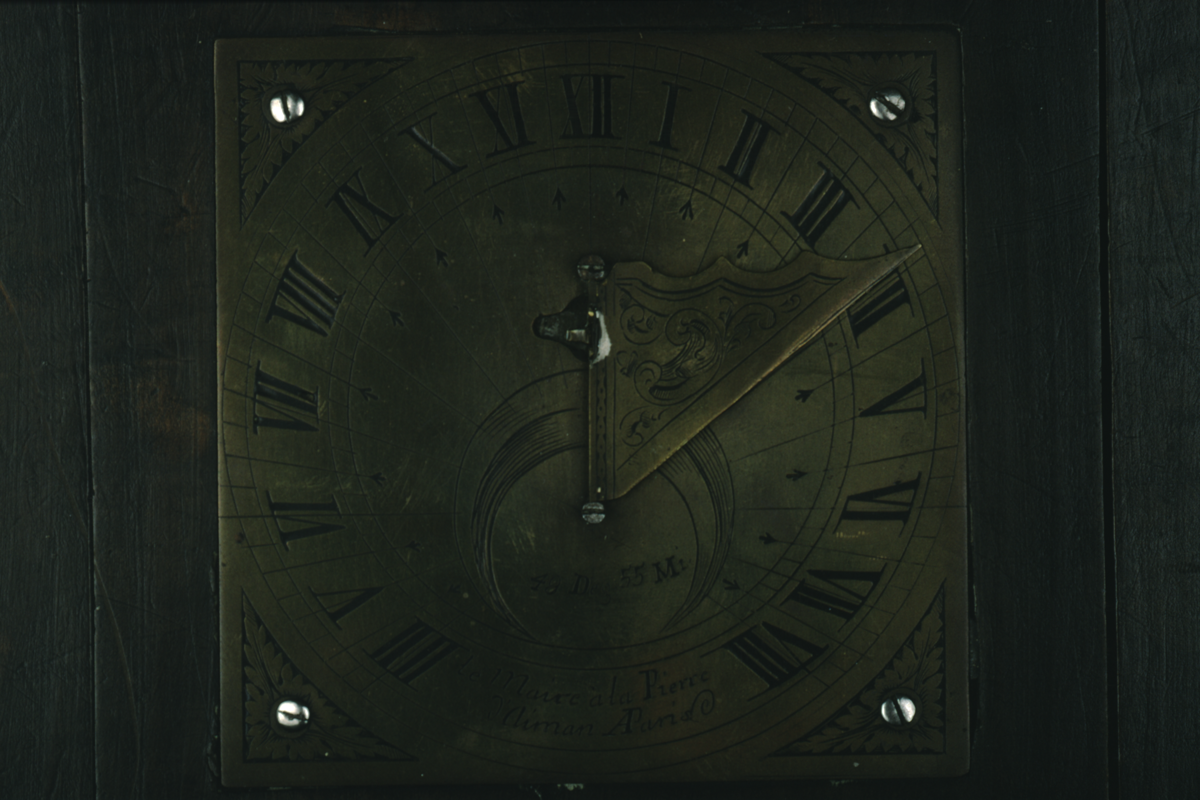
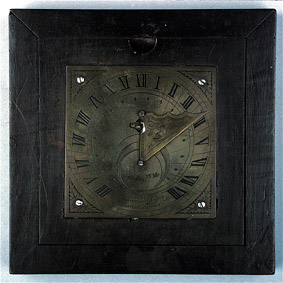
horizontal dial, brass, by Pierre Le Maire, French, 1720 (c), or a modern fake?
Origin
France; Paris
Maker
Le Maire, Pierre [signature may be fake]
Class
dials
Earliest Date
1700
Latest Date
1745
Inscription Date
Material
metal (brass); glass; wood
Dimensions
case 161 x 161 x 28 mm; dial plate 92 x 92 mm
Special Collection
Robert Whipple collection
Provenance
Purchased by Robert Stewart Whipple from Antique Art Galleries on 20/01/1928.
Inscription
‘Le Maire a la Pierre d’Aiman [sic] A Paris’ (on dial plate)
Description Notes
Horizontal dial, brass, by Pierre Le Maire, French, c. 1750.
Wooden case with brass fittings; inset on the sliding lid is a brass dial plate divided IIII - XII, I - VIII, numbered by I, subdivided to 15 minutes and marked ‘48 deg 55 Mi’; Folding gnomon [50deg] with scroll work engraved decoration. Inset in the base a compass with 8 point rose marked ‘N T L/C M P/C M’ and fleur de lys for north. On the rim a silvered ring divided 0 - 180˚ - 0, numbered by 10˚, subdivided to1˚. On the underside fittings for a (?) tripod.
Condition fair (wood cracked); complete.
References
Events
Description
The horizontal dial is the most common form of sundial. The portable version proved very popular with the upper classes during the 19th Century. During this period it could best be described as the wristwatch of its day.
The hour lines are engraved onto a horizontal surface, with a gnomon (pointer) in the centre. Seasonal variations (caused by the earth’s orbit being elliptical, not circular) have to be compensated for, as they can affect the raw reading by up to 18 minutes.
18/10/2002
Created by: Saffron Clackson and Boris Jardine on 18/10/2002
FM:39820
Images (Click to view full size):